Kirjojen hintavertailu. Mukana 12 595 353 kirjaa ja 12 kauppaa.

Kirjailija

William DeBuys

Kirjat ja teokset yhdessä paikassa: 13 kirjaa, julkaisuja vuosilta 2001-2022, suosituimpien joukossa Playing the Odds. Vertaile teosten hintoja ja tarkista saatavuus suomalaisista kirjakaupoista.

13 kirjaa

Kirjojen julkaisuhaarukka 2001-2022.

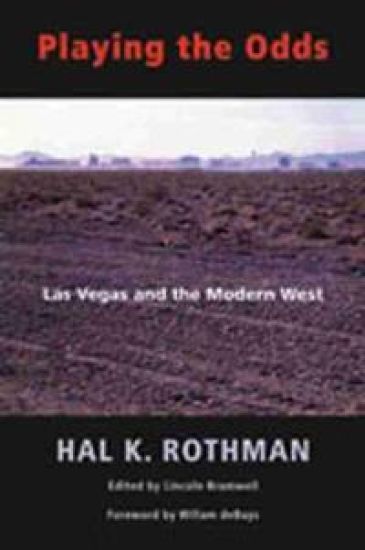
Playing the Odds

Playing the Odds

Hal K. Rothman; William DeBuys

University of New Mexico Press
2007
nidottu
"This collection of Hal Rothman's wide-ranging, brash, and brilliant essays on Las Vegas offers up a treasury of insights on the follies and possibilities of the New West. Confident, passionate, learned and, yes, wise, Rothman is simply one of the most important voices writing on the region today. He is also a hell of a lot of fun to read."--Virginia Scharff, professor of history and Director, Center for the Southwest, University of New Mexico, Albuquerque, and Women of the West chair at the Institute for the Study of the American West, Autry National Center, Los Angeles"Hal Rothman has been enlightening me, irritating me, surprising me, and making me laugh for twenty years. Reading his columns reminds me why. He has long been one of the brashest, loudest, smartest, and most original voices in the West. Not even ALS could quiet him. These columns aren't the same as talking to him, but they come close."--Richard White, Margaret Byrne Professor of American History, Stanford University"Hal Rothman is both the greatest Western historian of his generation and an H. L. Mencken in cowboy boots. Here is a magnificent collection of his opinion, wit, and wisdom."--Mike Davis, author of Planet of Slums and Buda's Wagon
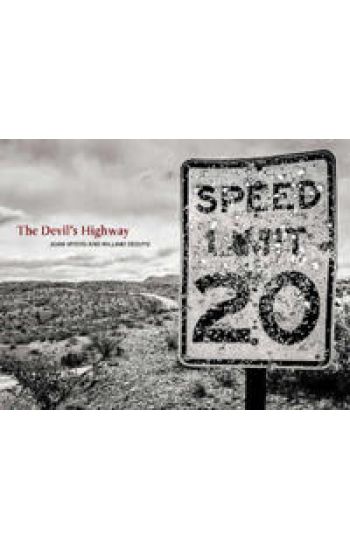
The Devil's Highway

The Devil's Highway

Joan Myers; William Debuys

Briscoe Center for American History
2022
sidottu
With this haunting new collection of photographs, Joan Myers continues the decades-long journey she began in Where the Buffalo Roamed (with Lucy Lippard), documenting the changing landscape and culture of the American West. The images in this new collection are more personal, more elegiac-and all black-and-white. They bear witness to the fracturing of the American Dream, the demise of cowboy culture, and the shrinking of small towns, ranches, and farms throughout western rural America. The themes she examines are reflected in The Devil’s Highway, a powerfully evocative short story by Pulitzer finalist William deBuys, first published in 1992 in Story magazine and reproduced here for the first time. Myers and deBuys previously collaborated on Salt Dreams: Land and Water in Low-Down California, which inspired the highly acclaimed film, The Colorado.Myers has spent much of her time roaming the American West, but has also worked in India, the Canary Islands, Antarctica, Java, Sicily, Sardinia, Hawaii, and more. Her extensive photo archive is now housed at the Briscoe Center for American History on the University of Texas at Austin campus.
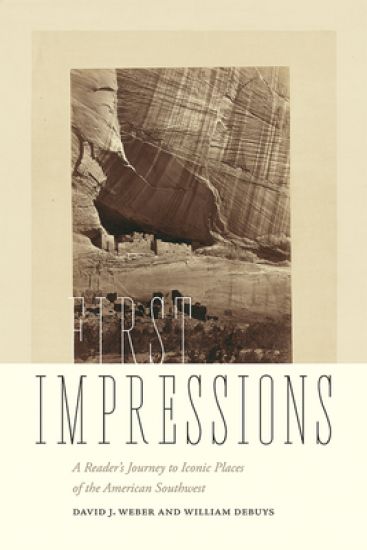
First Impressions

First Impressions

David J. Weber; William deBuys

UNIVERSITY OF NEW MEXICO PRESS
2022
pokkari
First Impressions: A Reader's Journey to Iconic Places of the American Southwest tells the story of fifteen iconic sites across Arizona, Utah, New Mexico, and southern Colorado through the eyes of the explorers, missionaries, and travelers who were the first nonnatives to describe them. Noted borderlands historians David J. Weber and William deBuys lead readers through centuries of historical, cultural, and environmental change at sites ranging from Carlsbad Caverns, the Grand Canyon, and Mesa Verde to such living Native communities as Ácoma and Zuni. Lovers of the Southwest, both residents and visitors alike, will delight in the authors' skillful evocation of the region's sweeping landscapes, its rich Hispanic and Native heritage, and the sense of discovery that so enchanted its early explorers.
The Trail To Kanjiroba

The Trail To Kanjiroba

William deBuys

Seven Stories Press,U.S.
2021
sidottu
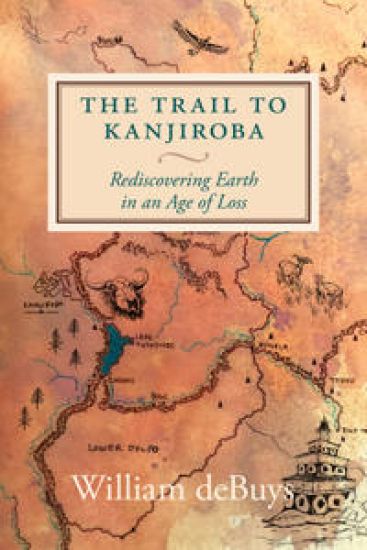
A revitalizing new perspective on Earthcare, from National Book Award finalist William deBuys. In 2016 and 2018 acclaimed author and conservationist William deBuys joined extended medical expeditions into Upper Dolpo, a remote, ethnically Tibetan region of northwestern Nepal, to provide basic medical services to the residents of the region. Having written about climate change and species extinction, DeBuys went on those journeys seeking solace. He needed to find a constructive way of living with the discouraging implications of what he had learned in recent years about the diminishing chances of reversing the damage humans have done to Earth--a way of holding onto hope in the face of devastating loss. As DeBuys describes these journeys through one of the earth's most remote regions, his writing celebrates the staggering natural beauty and biodiversity he finds there, and gives his readers a history lesson of two scientific discoveries--evolution and plate tectonics--that forever changed sapiens' understanding of our planet. Written in a lush and nuanced style evocative of Paul Theroux or Peter Matthiessen, The Trail to Kanjiroba offers a surprising and revitalizing new way to think about Earthcare, one that may enable us to continue the difficult work that needs to be done.
Enchantment and Exploitation

Enchantment and Exploitation

William deBuys

University of New Mexico Press
2015
nidottu
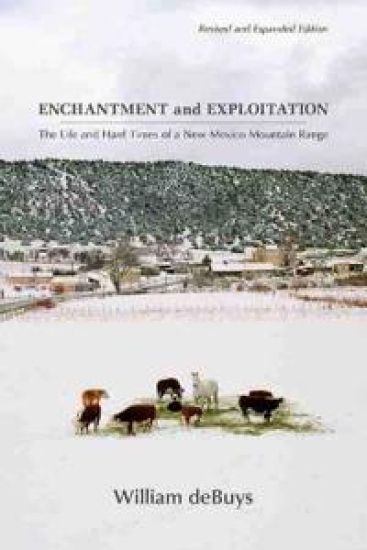
First published in 1985, William deBuys’s Enchantment and Exploitation has become a New Mexico classic. It offers a complete account of the relationship between society and environment in the Sangre de Cristo Mountains of northern New Mexico, a region unique in its rich combination of ecological and cultural diversity. Now, more than thirty years later, this revised and expanded edition provides a long-awaited assessment of the quality of the journey that New Mexican society has traveled in that time—and continues to travel.In a new final chapter deBuys examines ongoing transformations in the mountains’ natural systems—including, most notably, developments related to wildfires—with significant implications for both the land and the people who depend on it. As the climate absorbs the effects of an industrial society, deBuys argues, we can no longer expect the environmental future to be a reiteration of the environmental past.
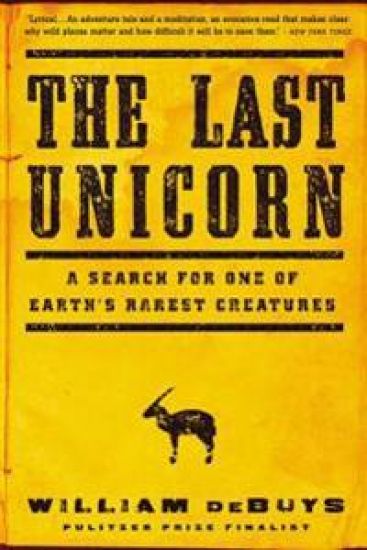
The Last Unicorn

The Last Unicorn

William DeBuys

Back Bay Books
2015
pokkari
In 1992, in a remote mountain range, a team of scientists discovered the remains of an unusual animal with beautiful long horns. It turned out to be a living species new to western science -- a saola, the first large land mammal discovered in 50 years.Rare then and rarer now, no westerner had glimpsed a live saola before Pulitzer Prize finalist and nature writer William deBuys and conservation biologist William Robichaud set off to search for it in the wilds of central Laos. The team endured a punishing trek, up and down whitewater rivers and through mountainous terrain ribboned with the snare lines of armed poachers.In the tradition of Bruce Chatwin, Colin Thubron, and Peter Matthiessen, THE LAST UNICORN is deBuys's look deep into one of the world's most remote places. As in the pursuit of the unicorn, the journey ultimately becomes a quest for the essence of wildness in nature, and an encounter with beauty.
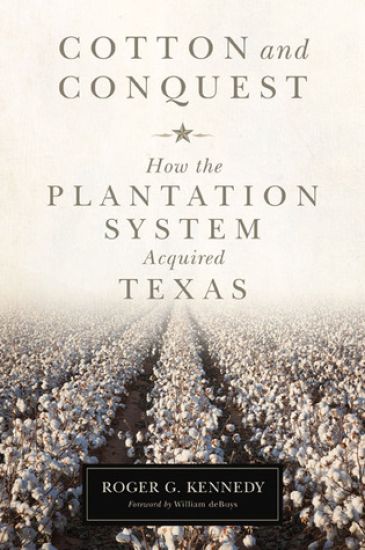
Cotton and Conquest

Cotton and Conquest

Roger G. Kennedy; William DeBuys

University of Oklahoma Press
2013
sidottu
This sweeping work of history explains the westward spread of cotton agriculture and slave labor across the South and into Texas during the decades before the Civil War. In arguing that the U.S. acquisition of Texas originated with planters' need for new lands to devote to cotton cultivation, celebrated author Roger G. Kennedy takes a long view. Locating the genesis of Southern expansionism in the Jeffersonian era, Cotton and Conquest stretches from 1790 through the end of the Civil War, weaving international commerce, American party politics, technological innovation, Indian-white relations, frontier surveying practices, and various social, economic, and political events into the tapestry of Texas history.The innumerable dots the author deftly connects take the story far beyond Texas. Kennedy begins with a detailed chronicle of the commerce linking British and French textile mills and merchants with Southern cotton plantations. When the cotton states seceded from the Union, they overestimated British and French dependence on Southern cotton. As a result, the Southern plantocracy believed that the British would continue supporting the use of slaves in order to sustain the supply of cotton - a miscalculation with dire consequences for the Confederacy.As cartographers and surveyors located boundaries specified in new international treaties and alliances, they violated earlier agreements with Indian tribes. The Indians were to be displaced yet again, now from Texas cotton lands. The plantation system was thus a prime mover behind Indian removal, Kennedy shows, and it yielded power and riches for planters, bankers, merchants, millers, land speculators, Indian-fighting generals and politicians, and slave traders.In Texas, at the plantation system's farthest geographic reach, cotton scored its last triumphs. No one who seeks to understand the complex history of Texas can overlook this book.
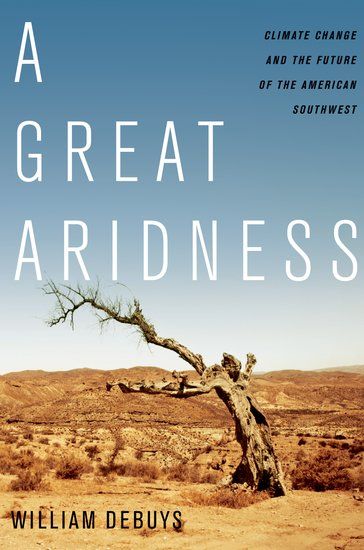
A Great Aridness: Climate Change and the Future of the American Southwest
With its soaring azure sky and stark landscapes, the American Southwest is one of the most hauntingly beautiful regions on earth. Yet staggering population growth, combined with the intensifying effects of climate change, is driving the oasis-based society close to the brink of a Dust-Bowl-scale catastrophe. In A Great Aridness, William deBuys paints a compelling picture of what the Southwest might look like when the heat turns up and the water runs out. This semi-arid land, vulnerable to water shortages, rising temperatures, wildfires, and a host of other environmental challenges, is poised to bear the heaviest consequences of global environmental change in the United States. Examining interrelated factors such as vanishing wildlife, forest die backs, and the over-allocation of the already stressed Colorado River--upon which nearly 30 million people depend--the author narrates the landscape's history--and future. He tells the inspiring stories of the climatologists and others who are helping untangle the complex, interlocking causes and effects of global warming. And while the fate of this region may seem at first blush to be of merely local interest, what happens in the Southwest, deBuys suggests, will provide a glimpse of what other mid-latitude arid lands worldwide--the Mediterranean Basin, southern Africa, and the Middle East--will experience in the coming years. Written with an elegance that recalls the prose of John McPhee and Wallace Stegner, A Great Aridness offers an unflinching look at the dramatic effects of climate change occurring right now in our own backyard.
Great Aridness: Climate Change and the Future of the American Southwest
With its soaring azure sky and stark landscapes, the American Southwest is one of the most hauntingly beautiful regions on earth. Yet staggering population growth, combined with the intensifying effects of climate change, is driving the oasis-based society close to the brink of a Dust-Bowl-scale catastrophe. In A Great Aridness, William deBuys paints a compelling picture of what the Southwest might look like when the heat turns up and the water runs out. This semi-arid land, vulnerable to water shortages, rising temperatures, wildfires, and a host of other environmental challenges, is poised to bear the heaviest consequences of global environmental change in the United States. Examining interrelated factors such as vanishing wildlife, forest die backs, and the over-allocation of the already stressed Colorado River--upon which nearly 30 million people depend--the author narrates the landscape's history--and future. He tells the inspiring stories of the climatologists and others who are helping untangle the complex, interlocking causes and effects of global warming. And while the fate of this region may seem at first blush to be of merely local interest, what happens in the Southwest, deBuys suggests, will provide a glimpse of what other mid-latitude arid lands worldwide--the Mediterranean Basin, southern Africa, and the Middle East--will experience in the coming years. Written with an elegance that recalls the prose of John McPhee and Wallace Stegner, A Great Aridness offers an unflinching look at the dramatic effects of climate change occurring right now in our own backyard.
The Walk

The Walk

William DeBuys

Trinity University Press,U.S.
2009
pokkari
In The Walk, William deBuys writes about personal loss and the power of the landscape to nurture the recovery of hope. The book consists of three interrelated essays that move from a period of strife in the author's life to a kind of limbo and eventually to a place of peace. The setting is deBuys' small farm in New Mexico's Sangre de Cristo Mountains. Each morning, he takes the same walk through the woods, arriving, as he describes in the first essay, at a clarity that comes from looking at the same vantage point for years. The middle essay, "Geranium," takes its name from a mare deBuys had to put down, and whose remains become one with the forest. In the final essay, deBuys reflects on drought, the loss of a friend, and the resurgence of land and hope. Contemplative, compassionate, and quietly humorous, The Walk is nature writing at its finest.
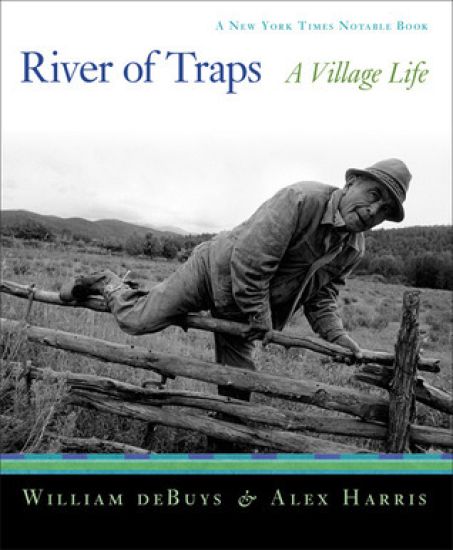
River of Traps

River of Traps

William deBuys; Alex Harris

Trinity University Press,U.S.
2007
pokkari
"Combines words and photographs to tell the story of Jacobo Romero, an oldtime northern New Mexico villager. Romero befriends writer William deBuys and photographer Alex Harris and teaches them about the region's land and water, and a way of life long rooted in the mountain valley that became their home"--Provided by publisher.
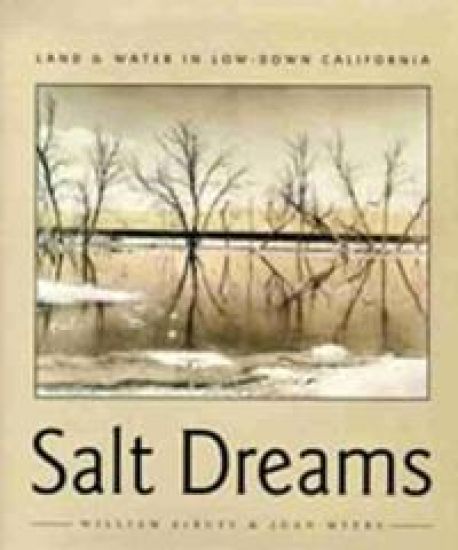
Salt Dreams

Salt Dreams

William DeBuys; Joan Myers; Wiliam Buys

University of New Mexico Press
2001
nidottu
In low places consequences collect, and in all North America you cannot get much lower than the Imperial Valley of southern California, where one town, 186 feet below sea level, calls itself the Lowest Down City in the Western Hemisphere, and where the waters of the Colorado River sustain a billion-dollar agricultural industry. The consequences of that industry drain from the valley into the accidentally man-made Salton Sea, California's largest lake and a vital stopping place for migratory waterfowl. Today the Salton Sea is in desperate environmental trouble. Beginning with the Yuman-speaking tribes encountered by the Spanish in the sixteenth century, deBuys traces the exploration and development of the region through the Gold Rush of 1849, the government-sponsored surveys that followed, and the inept tinkering with the river by an assortment of irrigation and development interests that resulted in the floods that formed the Salton Sea nearly a century ago. He introduces us to a gallery of rogues and dreamers who saw a great future for this arid wilderness but could never refrain from interference with the forces of nature.