Kirjailija
William Desmond
Kirjat ja teokset yhdessä paikassa: 31 kirjaa, julkaisuja vuosilta 1986-2025, suosituimpien joukossa Wayward and Homebound. Vertaile teosten hintoja ja tarkista saatavuus suomalaisista kirjakaupoista.
31 kirjaa
Kirjojen julkaisuhaarukka 1986-2025.
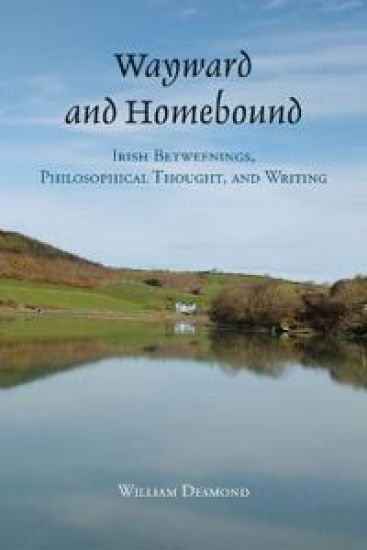
Offers an expansion of Desmond's explorations in the philosophy of the between by considering in a fresh way the distinctive features of Irish thought, with reference to religion, culture, and poetry. In Wayward and Homebound, William Desmond explores the philosophy of the between in connection with traditions of Irish thought and culture, especially poetry, drawing upon the metaxological philosophy developed most systematically in the award-winning Being and the Between, Ethics and the Between,and God and the Between. It begins with a broad overview of this notion in connection with Irish thinking and culture by contrast with French, German, and Greek variations of the notion. It touches on figures like John Scotus Eriugena, John Toland, George Berkeley, and Edmund Burke as well as major poets and writers like Swift, Yeats, Joyce, and Beckett. The paradoxical twinning of being at home and not being at home and the relation of thought and exile, in an Irish as well as more cosmopolitan setting, are explored. Desmond presents a synopsis of metaxological philosophy and how it contributes to aesthetics, ethics, religion, and metaphysics. In an extended exploration of Irish betweenings, reflections are offered that move from nature to culture, with four sequences of reflections on islanding, naturing, homing, and wording. Additional concerns come to light such as insular thinking, the ecology of land and sea, religion, postcolonialsm, and the dialogue of poet and philosopher.
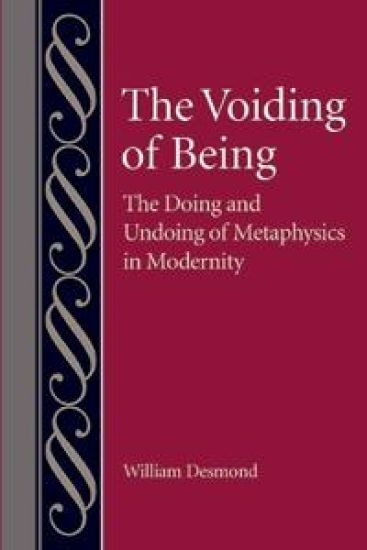
In contemporary philosophy the status, indeed the very viability of metaphysics is a much contested issue. The reflections offered here explore diverse aspects of this contested status and offer a defence of metaphysics. In other works, perhaps most fully in Being and the Between, William Desmond has tried to develop what he calls a metaxological metaphysics in response to different skeptical, if not hostile approaches to metaphysics quite common in our time. The Voiding of Being complements the systematic dimensions of this metaxological metaphysics outlined in Being and the Between. It presents a set of studies which amplify important themes in the unfolding of modern metaphysics, in relation to major earlier and contemporary thinkers, while adding nuance to what is involved in the more systematic articulation of a metaxological metaphysics. There is what the author calls a voiding of being in modernity, expressed in diverse developments of thought. "The Voiding of Being," might seem to conjure up too negative associations but the aim of the thoughts gathered here is not at all negative. While attempting to understand the voiding of being in modern thought, our appreciation of the promise of metaphysical thinking can also be renewed and indeed extended – extended beyond skepticism and hostility to metaphysics. Desmond engages many interlocutors along the way, from the long tradition, such as Heraclitus, Aquinas and Hegel, as well as more contemporary thinkers like Heidegger and Marion. As the book’s subtitle suggests, it is concerned with the continued doing of metaphysics and not only the contemporary undoing of it.
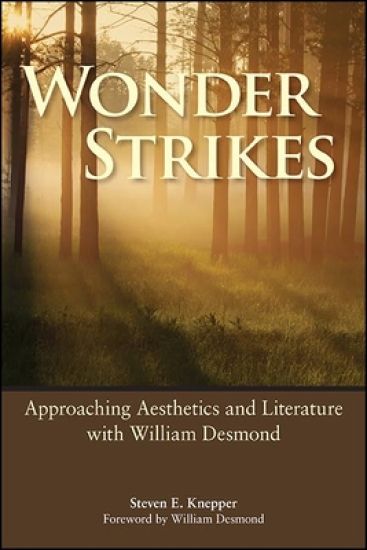
The first book-length examination of the prominent contemporary philosopher William Desmond's approach to aesthetics, art, and literature.William Desmond argues that philosophy, religion, and art begin in wonder. Desmond is widely recognized for his original metaphysics and his provocative philosophy of religion. Desmond's extensive writings on aesthetics, art, and literature, however, have received much less attention. Wonder Strikes is the first book-length examination of these dimensions of Desmond's thought. It offers nuanced commentary on his treatment of beauty and the sublime; his accounts of tragedy and comedy; and his argument that, having asked "too much" of art in modernity, we now ask "too little." Desmond claims that art, philosophy, and religion must recover their ancient kinship and their shared roots in wonder if they are to counter the destructive instrumentalism of our time.
Godsends is William Desmond's newest addition to his masterwork on the borderlines between philosophy and theology. For many years, William Desmond has been patiently constructing a philosophical project—replete with its own terminology, idiom, grammar, dialectic, and its metaxological transformation—in an attempt to reopen certain boundaries: between metaphysics and phenomenology, between philosophy of religion and philosophical theology, between the apocalyptic and the speculative, and between religious passion and systematic reasoning. In Godsends, Desmond's newest addition to his ambitious masterwork, he presents an original reflection on what he calls the "companioning" of philosophy and religion. Throughout the book, he follows an itinerary that has something of an Augustinian likeness: from the exterior to the interior, from the inferior to the superior. The stations along the way include a grappling with the default atheism prevalent in contemporary intellectual culture; an exploration of the middle space, the metaxu between the finite and the infinite; a dwelling with solitudes as thresholds between selving and the sacred; a meditation on idiot wisdom and transcendence in an East-West perspective; an exploration of the different stresses in the mysticisms of Aurobindo and the Arnhem Mystical Sermons; a dream monologue of autonomy, a suite of Kantian and post-Kantian variations on the story of the prodigal son; a meditation on the beatitudes as exceeding virtue, in light of Aquinas's understanding; and culminating in an exploration of Godsends as telling us something significant about the surprise of revelation in word, idea, and story. Godsends is written for thoughtful persons and scholars perplexed about the place of religion in our time and hopeful for some illuminating companionship from relevant philosophers. It will also interest students of philosophy and religion, especially philosophical theology and philosophical metaphysics.
Being Unfolded
Thomas Gricoski; William Desmond
The Catholic University of America Press
2020
sidottu
Being Unfolded responds to the question, ‘What is the meaning of being for Edith Stein.’ In Finite and Eternal Being Stein tentatively concludes that ‘being is the unfolding of meaning.’ Neither Stein nor her commentators have elaborated much on this suggestive phrase. Thomas Gricoski argues that Stein’s mature metaphysical project can be developed into an ‘ontology of unfolding.’ The differentiating factor of this ontology is its resistance to both existentialism and essentialism. The ‘ontology of unfolding’ is irreducibly relational.Being Unfolded proceeds by testing a relational hypothesis against Stein’s theory of the modes of being (actual, essential, and mental being). From the phenomenological perspective, Gricoski examines Stein’s theory of the relation of consciousness and being. From the scholastic perspective, he examines Stein’s account of the relation of essence and existence in material being, living being, and human being. And from both perspectives he considers the relation of divine being to actual being and their essences. This book is limited to Stein’s theory of the meaning of being, without making an explicit confrontation with Heidegger. It offers two primary contributions to Stein studies: a systematic analysis of Stein’s modes of being, especially essential being, and an exposition and expansion of her overlooked concept of unfolding. Being Unfolded also contributes to the broader field of contemporary metaphysics by developing Stein’s theory of being as an experiment in fundamental ontology. While other relational ontologies focus on relations between beings, this exploration of unfolding examines being’s inner self-relationality.
Contemporary philosopher William Desmond has many companions in thought, and one of the most important of these is Augustine. In lucid prose that draws on the riches of a vibrant philosophical-theological tradition, Renee Kӧhler-Ryan explores Desmond's metaxological philosophy. She elaborates on how Desmond's philosophical work in discovering how humans are constantly ""between"" remains in conversation with a tradition of thinkers that includes Plato, Augustine, Thomas Aquinas, and Shakespeare. This book concentrates especially on how Desmond both draws upon and develops some of the central insights in Augustine. At the same time, it brings together philosophy, theology, and literature into a rich engagement of ideas that impact the way humans think and live. Whether considering how our elemental wonder at creation brings us closer to God, or how our most intimate revelations about being human happen in the interior space of prayer, reading Desmond with Augustine illuminates a porous and interdisciplinary space of inquiry. Companions in the Between is a unique contribution to the growing body of scholarship on William Desmond's thought. It opens with a foreword from Desmond. Its pages will entice any reader who wants to know more about how contemporary philosophy can contest a space where philosophers are formulaically expected to shy away from divine transcendence.
In contemporary philosophy the status, indeed the very viability of metaphysics is a much contested issue. The reflections offered here explore diverse aspects of this contested status and offer a defense of metaphysics. In other works, perhaps most fully in Being and the Between, William Desmond has tried to develop what he calls a metaxological metaphysics in response to different skeptical, if not hostile approaches to metaphysics quite common in our time. The Voiding of Being complements the systematic dimensions of this metaxological metaphysics outlined in Being and the Between. It presents a set of studies which amplify important themes in the unfolding of modern metaphysics, in relation to major earlier and contemporary thinkers, while adding nuance to what is involved in the more systematic articulation of a metaxological metaphysics. There is what the author calls a voiding of being in modernity, expressed in diverse developments of thought. “The Voiding of Being,” might seems to conjure up negative associations but the aim of the thoughts gathered here is not at all negative. While attempting to understand the voiding of being in modern thought, our appreciation of the promise of metaphysical thinking can also be renewed and indeed extended—extended beyond skepticism and hostility to metaphysics. Desmond engages many interlocutors along the way, from the long tradition, such as Heraclitus, Aquinas and Hegel, as well as more contemporary thinkers like Heidegger and Marion. As the book’s subtitle suggests, it is concerned with the continued doing of metaphysics and not only the contemporary undoing of it.
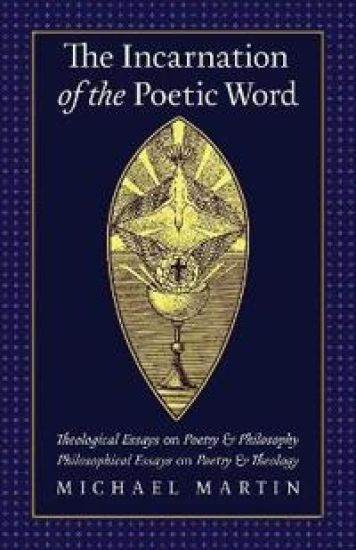
The Incarnation of the Poetic Word
Michael Martin; William Desmond; Therese Schroeder-Sheker
Angelico Press
2017
sidottu
The Incarnation of the Poetic Word
Michael Martin; William Desmond; Therese Schroeder-Sheker
Angelico Press
2017
pokkari
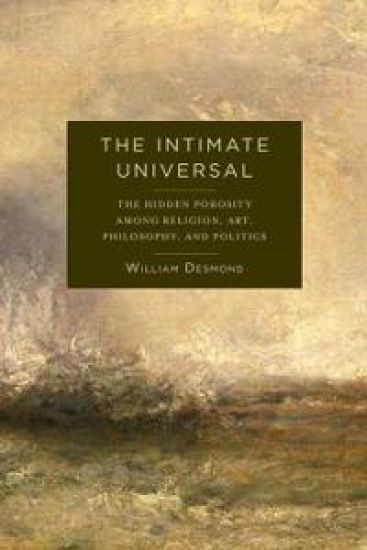
William Desmond sees religion, art, philosophy, and politics as essential and distinctive modes of human practice, manifestations of an intimate universality that illuminates individual and social being. They are also surprisingly permeable phenomena, and by observing their relations, Desmond captures notes of a clandestine conversation that transforms ontology.
One of the most celebrated of Plato's ideas was that if human society was ever to function successfully then philosophers would need to become kings, or kings philosophers. In a perfect state, therefore, philosophic wisdom should be wedded to political power.In antiquity, who were or aspired to be philosopher-kings? What was their understanding of wisdom and the limits of knowledge? What influence have they had on periods beyond antiquity? This volume focuses on Plato and his contemporaries; Alexander the Great and his Hellenistic successors; Marcus Aurelius and the ‘good emperors'; Moses, Solomon and early Hebrew leaders; and Julian the Apostate, the last of the pagans. In conclusion it looks at the re-emergence of the Platonic ideal in important moments of European history, such as the Enlightenment. The theme of the philosopher-king is significant for Greco-Roman antiquity as a whole, and this work is unique in detailing the development of an idea through major periods of Greek and Roman history, and beyond.
The William Desmond Reader
William Desmond; John D. Caputo
State University of New York Press
2012
sidottu
Career-spanning selections from the writings of William Desmond.Known especially for his original system of metaphysics in a trilogy of books published between 1995 and 2008, and for his scholarship on Hegel, William Desmond has left his mark on the philosophy of religion, ethics, and aesthetics. The William Desmond Reader provides for the first time in a single book a point of entry into his original and constructive philosophy, including carefully chosen selections of his works that introduce the key ideas, perspectives, and contributions of his philosophy as a whole. Also featured is an original essay by Desmond himself reflecting synthetically on the topics covered, as well as an interview by Richard Kearney.
The Intimate Strangeness of Being
William Desmond
The Catholic University of America Press
2012
sidottu
This book explores the contested place of metaphysics since Kant and Hegel, arguing for a renewed metaphysical thinking about the intimate strangeness of being. There is a mysterious strangeness to being at all, and yet there is also something intimate. Without the intimacy, argues William Desmond, we become strangers in being; without the mystery, we take being for granted. The book locates the origin of metaphysics’ contested place in recessed equivocations in Kantian critique and Hegelian dialectic, equivocations that keep from view the more original sources of metaphysical thinking. It takes issue with contemporary claims about the “overcoming of metaphysics” associated with Heidegger, the “deconstruction of metaphysics” associated with Derrida, as well as with claims that a new “post-metaphysical thinking” is necessary. The book begins with an exploration of the status of metaphysics in light of equivocations in Hegelian dialectic. It then offers an assessment of metaphysics in light of critique and deconstruction. Finally, it proposes an affirmative rethinking of the constant perplexities of being in terms of a metaxological metaphysics. This metaphysics involves a thinking of the between (metaxu) that characterizes Desmond’s singular approach. Addressing the problematic state of metaphysics in recent centuries, this metaxological metaphysics tries to be true to both the strange mystery and the intimacy, to be faithful to the constant perplexities of being, and to recuperate appreciatively some of the rich resources of the longer philosophical tradition.
One of the most celebrated of Plato's ideas was that if human society was ever to function successfully then philosophers would need to become kings, or kings philosophers. In a perfect state, therefore, philosophic wisdom should be wedded to political power. In antiquity, who were or aspired to be philosopher-kings? What was their understanding of wisdom and the limits of knowledge? What influence have they had on periods beyond antiquity? This volume focuses on Plato and his contemporaries; Alexander the Great and his Hellenistic successors; Marcus Aurelius and the 'good emperors'; Moses, Solomon and early Hebrew leaders; and Julian the Apostate, the last of the pagans. In conclusion it looks at the re-emergence of the Platonic ideal in important moments of European history, such as the Enlightenment. The theme of the philosopher-king is significant for Greco-Roman antiquity as a whole, and this work is unique in detailing the development of an idea through major periods of Greek and Roman history, and beyond.
Once regarded as a minor Socratic school, Cynicism is now admired as one of the more creative and influential philosophical movements in antiquity. First arising in the city-states of late classical Greece, Cynicism thrived through the Hellenistic and Roman periods, until the triumph of Christianity and the very end of pagan antiquity. In every age down to the present, its ideals of radical simplicity and freedom have alternately inspired and disturbed onlookers. This book offers a survey of Cynicism, its varied representatives and ideas, and the many contexts in which it operated. William Desmond introduces important ancient Cynics and their times, from Diogenes 'the Dog' in the fourth century BC to Sallustius in the fifth century AD. He details the Cynics' rejection of various traditional customs and the rebellious life-style for which they are notorious.The central chapters locate major Cynic themes (nature and the natural life, Fortune, self-sufficiency, cosmopolitanism) within the rich matrix of ideas debated by the ancient schools. The final chapter reviews some moments in the diverse legacy of Cynicism, from Jesus to Nietzsche.
God and the Between
William Desmond
Wiley-Blackwell (an imprint of John Wiley Sons Ltd)
2007
nidottu
An original work which rethinks the question of God in a constructive spirit, drawing its conclusions by considering ideas received from both philosophy and religion. Makes an important new contribution to the ongoing scholarly debates surrounding the intersection of philosophy and religion Suggests that this junction is not just dictated by religion having to prove its credentials to rational philosophy, but that it is also a matter of philosophy wondering if religion is the ultimate partner in dialogue Includes discussion of a wide range of significant thinkers, both traditional and contemporary, such as Plotinus, Spinoza, Kant, Hegel, and Nietzsche and his successors Completes a trilogy of works by William Desmond, complementing its companion volumes, Being and the Between and Ethics and the Between.