Kirjojen hintavertailu. Mukana 12 595 353 kirjaa ja 12 kauppaa.

Kirjailija

William E Berry

Kirjat ja teokset yhdessä paikassa: 2 kirjaa, julkaisuja vuosilta 1995-2008, suosituimpien joukossa Last Rights. Vertaile teosten hintoja ja tarkista saatavuus suomalaisista kirjakaupoista.

Mukana myös kirjoitusasut: William E. Berry

2 kirjaa

Kirjojen julkaisuhaarukka 1995-2008.

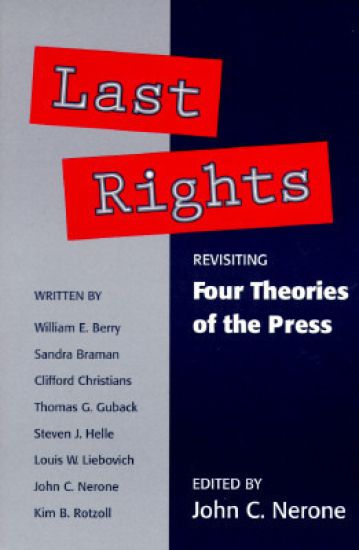
Last Rights

Last Rights

William E Berry; Sandra Braman; Clifford G. Christians; Thomas Guback; Steve J Helle; Louis W Liebovich; John C. Nerone; Kim B Rotzoll

University of Illinois Press
1995
nidottu
Though subjected to years of criticism, Four Theories of the Press remains a core text in communications. Its influence on the field, impact on generations of journalists, and ability to spark debate on why the press acts as it does continue to make it an oft-quoted source and classroom staple. In Last Rights, eight communications scholars critique and expand on the classic text. The authors argue that Four Theories spoke to and for a world beset by a cold war ended long ago. At the same time, they praise the book for offering an alternative view of the press and society and as a useful tool for helping scholars and citizens alike grapple with contradictions in classical liberalism. They also raise important questions about the Internet and other major changes in communications systems and society since the original publication of Four Theories. Contributors: William E. Berry, Sandra Braman, Clifford Christians, Thomas G. Guback, Steven J. Helle, Louis W. Liebovich, John C. Nerone, and Kim B. Rotzoll
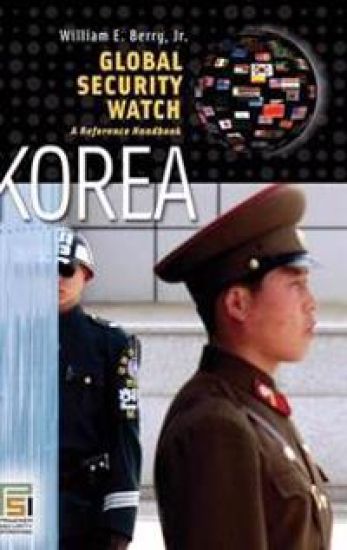
Global Security Watch—Korea

Global Security Watch—Korea

William E. Berry

Praeger Publishers Inc
2008
sidottu
Since the end of World War II, primarily through the actions of external powers, the Korean peninsula has been divided—with North and South Korea engaged in a competition for the heart and soul of the Korean nation and international legitimacy. President Bill Clinton called the peninsula one of the scariest places on earth and some experts have referred to it as one of the last vestiges of the Cold War.Now, well into the first decade of the 21st century and many years after the end of the Cold War, President Clinton's observation remains accurate. In fact, the argument can be made that the Korean peninsula is even more dangerous than it was in 1993. How did this happen when, throughout most of its more than 2,000 year history, Korea was one of the most homogeneous countries among the world's nation states, with its people sharing a common language and ethnicity?Berry compares the ways in which the two Koreas developed their respective political and economic systems over the past 50 years, as well as the competition between them. He examines the North Korean nuclear weapons program, analyzes the challenge to peace and stability it represents, and concludes with predictions of possible outcomes in this volatile area.