Kirjojen hintavertailu. Mukana 12 595 353 kirjaa ja 12 kauppaa.
Kirjailija
William Edgar
Kirjat ja teokset yhdessä paikassa: 21 kirjaa, julkaisuja vuosilta 2013-2024, suosituimpien joukossa A Supreme Love – The Music of Jazz and the Hope of the Gospel. Vertaile teosten hintoja ja tarkista saatavuus suomalaisista kirjakaupoista.
The Gospel Coaltion Award of Distinction—Arts and Culture ECPA Top Shelf Award Winner For practitioners and fans, jazz expresses the deepest meanings of life. Its rich history and its distinctive elements like improvisation and syncopation unite to create an unrepeatable and inexpressible aesthetic experience. But for others, jazz is an enigma. Might jazz be better appreciated and understood in relation to the Christian faith? In this volume, theologian and jazz pianist William Edgar argues that the music of jazz cannot be properly understood apart from the Christian gospel, which like jazz moves from deep lament to inextinguishable joy. By tracing the development of jazz, placing it within the context of the African American experience, and exploring the work of jazz musicians like Miles Davis, Duke Ellington, John Coltrane, Ella Fitzgerald, and Louis Armstrong, Edgar argues that jazz deeply resonates with the hope that is ultimately found in the good news of Jesus Christ. Grab a table. The show is about to begin.
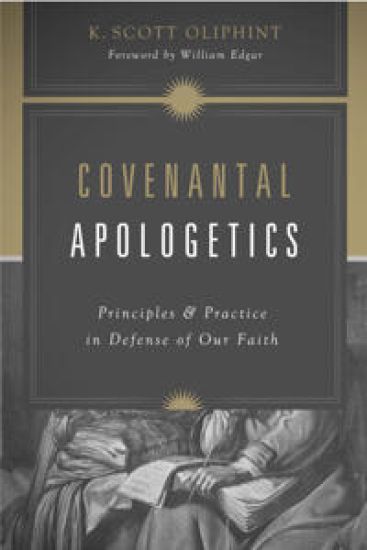
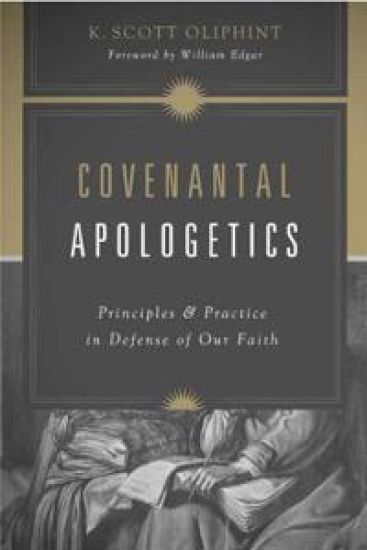
Practical, Effective Guidance for Sharing the Christian Faith with Unbelievers, Based on Biblical Principles In an age when the works of “New Atheists” such as Christopher Hitchens and Richard Dawkins fill bookstores and top best-seller lists, the topic of Christian apologetics has never been more timely. Yet the thought of defending the faith against the attacks of unbelievers is daunting to many Christians. Following in the footsteps of groundbreaking apologist Cornelius Van Til, Scott Oliphint has written an accessible introduction to Reformed apologetics, explaining the biblical and theological principles behind a distinctly “covenantal” approach and offering practical guidance for interacting with and persuading those who don’t believe. Written for leaders and laypeople alike, this book will encourage and equip Christians to boldly proclaim the gospel and answer the challenges of skeptics in an increasingly skeptical world. Equips Christians to Share Their Faith: Includes practical examples of apologetic conversations with unbelievers Written by a Respected Apologist: K. Scott Oliphint coedited Christian Apologetics Past and Present, a two-volume overview of apologetics throughout church history Theologically Rich: Defends presuppositionalism and covenantal apologetics while offering the most practical application
The Huguenots and their struggle for freedom of conscience and freedom of worship are largely unknown outside of France. The entrance of the sixteenth-century Reformation in France, first through the teachings of Luther, then of Calvin, brought three centuries of religious wars before Protestants were considered fully French and obtained the freedom to worship God without repression and persecution from the established church and the tyrannical state. From the first martyrs early in the sixteenth century to the last martyrs at the end of the eighteenth century, Protestants suffered from the intolerance of church and state, the former refusing genuine reform and unwilling to relinquish privileges, the latter rejecting any threats to the absolute monarchy. The rights gained with one treaty or edict of pacification were snatched away with another royal decree declaring Protestants heretics and outlaws. Political and religious intrigues, conspiracies, assassinations, and broken promises contributed to the turmoil and tens of thousands were exiled or fled to places of refuge. Others spent decades as slaves on the king's galleys or imprisoned. They lost their possessions; they lost their lives. They did not lose their faith in a sovereign God.
The Huguenots and their struggle for freedom of conscience and freedom of worship are largely unknown outside of France. The entrance of the sixteenth-century Reformation in France, first through the teachings of Luther, then of Calvin, brought three centuries of religious wars before Protestants were considered fully French and obtained the freedom to worship God without repression and persecution from the established church and the tyrannical state. From the first martyrs early in the sixteenth century to the last martyrs at the end of the eighteenth century, Protestants suffered from the intolerance of church and state, the former refusing genuine reform and unwilling to relinquish privileges, the latter rejecting any threats to the absolute monarchy. The rights gained with one treaty or edict of pacification were snatched away with another royal decree declaring Protestants heretics and outlaws. Political and religious intrigues, conspiracies, assassinations, and broken promises contributed to the turmoil and tens of thousands were exiled or fled to places of refuge. Others spent decades as slaves on the king's galleys or imprisoned. They lost their possessions; they lost their lives. They did not lose their faith in a sovereign God.
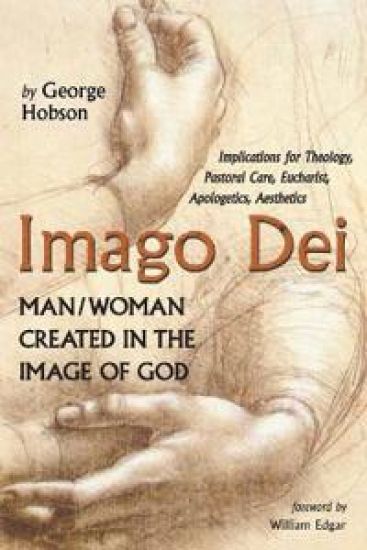
The question ""What is human nature?"" is in vogue today. Like everything else, this concept is being deconstructed in the context of the reigning ideology of individualistic materialism. Is there a fixed human nature, or is this simply a manipulatable social construct with no objective reference? This book says: ""Yes, there is: the imago Dei: man/woman created in the image of God."" Hobson argues that this text from Genesis 1:26-28 is a God-given anthropological revelation that establishes the relational bond of human beings with their Creator and also with his creation, for which the imago equips us to be responsible stewards. Many of Hobson's essays were delivered as talks in parishes. They explore from multiple angles the import of the imago Dei for theological and sacramental reflection, apologetics, aesthetics, art, and, at a hands-on practical level, for pastoral counseling and inner healing. His texts, one of which opens with a discussion of genocide, contain incisive critiques of the dark side of modernity alongside wide-ranging demonstrations of the pertinence of the imago Dei to the current debates about human dignity and rights. His book is a ringing call to the church to take the measure of the value of this anthropological revelation for its proclamation of the gospel.
The question ""What is human nature?"" is in vogue today. Like everything else, this concept is being deconstructed in the context of the reigning ideology of individualistic materialism. Is there a fixed human nature, or is this simply a manipulatable social construct with no objective reference? This book says: ""Yes, there is: the imago Dei: man/woman created in the image of God."" Hobson argues that this text from Genesis 1:26-28 is a God-given anthropological revelation that establishes the relational bond of human beings with their Creator and also with his creation, for which the imago equips us to be responsible stewards. Many of Hobson's essays were delivered as talks in parishes. They explore from multiple angles the import of the imago Dei for theological and sacramental reflection, apologetics, aesthetics, art, and, at a hands-on practical level, for pastoral counseling and inner healing. His texts, one of which opens with a discussion of genocide, contain incisive critiques of the dark side of modernity alongside wide-ranging demonstrations of the pertinence of the imago Dei to the current debates about human dignity and rights. His book is a ringing call to the church to take the measure of the value of this anthropological revelation for its proclamation of the gospel.
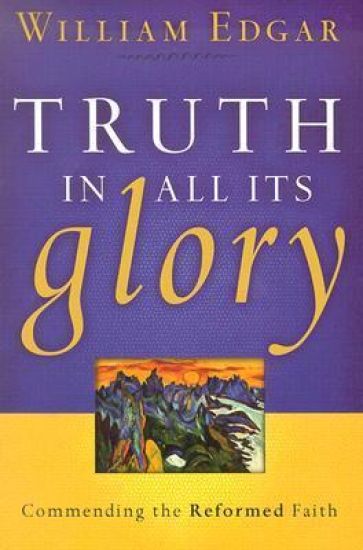
When we properly worship Jesus Christ in our hearts, we will begin to have the words to tell our generation about him. The Apostle Peter tells us as Christians that our purpose is to ‘proclaim the excellencies of him who called you out of darkness into his marvelous light’ (1 Peter 2:9). The term ‘apologetics’ is just a fancy way of describing our privilege to proclaim the excellencies of our God. One of the ways of doing that is simply by answering questions – about you, me and God. William Edgar takes key questions often asked and gives us the basics to respond graciously and adequately to them: Who Am I? Only One Way? Must I Be Civil? Why Jesus Christ? What Kind of Book Is the Bible? Why Is there Cruelty? Is Sex a Problem? Has Darwin Refuted Genesis? How Hard Are Questions from Muslims? How to Change the World?
The story of Paul's visit to the city of Athens with its speech delivered before the Areopagus council is one of the best-known and most-celebrated passages of the Acts of the Apostles. Being the only complete example of an apostolic address to ""pure pagans"" recorded, it has consistently attracted the attention of historians, biblical scholars, theologians, missionaries, apologists, artists, and believers over the centuries. Interpretations of the pericope are many and variegated, with opinions ranging from deeming the speech to be a foreign body in the New Testament to acclaiming it as the ideal model of translation of the Christian kerygma into a foreign idiom. At the heart of the debate is whether the various parts of the speech must be understood as Hellenistic or biblical in nature--or both. Paul Against the Idols defends and develops an integrated contextual study of the episode. Reading the story in its Lukan theological, intertextual, narrative, linguistic, and historical context enables an interpretation that accounts for its apparent ambivalence. This book thus contributes to the ongoing hermeneutical and exegetical scholarly discussions surrounding this locus classicus and suggests ways in which it can contribute to a Christian theology of religions and missiology. ""Pardigon provides a creative and timely reading of the famous speech at Mars Hill, where Paul proclaims the one true God in a 'context of arrogance, ignorance, mockery and confusion.' By reading this speech within the framework of Luke's theology and the canonical context of Exodus and Isaiah, Pardigon sheds fresh light on many aspects of the text. A valuable contribution to a theology of religions for our times "" --Jos Colijn, Theological University of the Reformed Churches ""I am truly delighted that Pardigon's study on Paul's Areopagus speech is at last being published. It's a tour de force and my recommendation of it has already been evidenced in the number of times I refer to the unpublished thesis in my own theology of religions. Now one can access it unfiltered and in full. Highly recommended."" --Daniel Strange, Director Oak Hill College, author of Their Rock is Not Like Our Rock: A Theology of Religions ""Dr. Flavien Pardigon here offers a tightly argued riposte to the widespread view that Paul's speech in Athens is congenial to an 'inclusivist' reading which sees paganism (and its modern equivalents) as merely needing correction rather than wholesale replacement by the gospel which Paul proclaims. His work engages well with linguistics, and shows an admirable knowledge of the vast literature. It will be invaluable to others who engage with the details of the Athens speech."" --Steve Walton, Professor, Associate Research Fellow, Trinity College, Bristol Flavien Pardigon teaches at a variety of theological institutions on four continents.
Being able to think and reason is part of what makes us human. However clever we may or may not be, our minds matter. The Bible helps us to understand our minds more fully. It shows us that when people become Christians, their minds are made new. This mini-guide to the Christian Mind explores the far-reaching implications of having a renewed mind.
The gospel of Jesus Christ is always situated within a particular cultural context: but how should Christians approach the complex relationship between their faith and the surrounding culture? Should we simply retreat from culture? Should we embrace our cultural practices and mindset? How important is it for us to be engaged with our culture and mindset? How might we do that with discernment and faithfulness? William Edgar offers a biblical theology in the light of our contemporary culture that contends that Christians should -- and indeed, must -- engage with the surrounding culture. By exploring what Scripture has to say about the role of culture and gleaning insights from a variety of theologians -- including Abraham Kuyper, T. S. Eliot, H. Richard Niebuhr and C. S. Lewis -- Edgar contends that cultural engagement is a fundamental aspect of human existence. He does not shy away from those passages that emphasize the distinction between Christians and the world. Yet he finds, shining through the biblical witness, evidence that supports a robust defence of the cultural mandate to 'be fruitful and multiply, and fill the earth and subdue it' (Genesis 1:28). With clarity and wisdom, Edgar argues that we are most faithful to our calling as God's creatures when we participate in creating culture.
The gospel of Jesus Christ is always situated within a particular cultural context. But how should Christians approach the complex relationship between our faith and our surrounding culture?Should we simply retreat from culture? Should we embrace our cultural practices and mindset? How important is it for us to be engaged in our culture? And how might we do that with discernment and faithfulness? William Edgar offers a rich biblical theology in light of our contemporary culture that contends that Christians should--indeed, must--be engaged in the surrounding culture. By exploring what Scripture has to say about the role of culture and by gleaning insights from a variety of theologians of culture--including Abraham Kuyper, T. S. Eliot, H. Richard Niebuhr, and C. S. Lewis--Edgar contends that cultural engagement is a fundamental aspect of human existence. He does not shy away from those passages that emphasize the distinction between Christians and the world. Yet he finds, shining through the biblical witness, evidence that supports a robust defense of the cultural mandate to "be fruitful and multiply, and fill the earth and subdue it" (Genesis 1:28). With clarity and wisdom, Edgar argues that we are most faithful to our calling as God's creatures when we participate in creating culture.IVP Instructor Resources forthcoming
Culture plays an undeniable role in the Christian's vocational calling in the world. How might we engage our culture with discernment and faithfulness? Exploring Scripture and gleaning insights from a variety of theologians, William Edgar offers a biblical defense of the cultural mandate, arguing that we are most faithful to our calling when we participate in creating culture.
tre chr tien et d fendre notre foi n'est pas plus facile aujourd'hui qu'hier. Nous mourons d'envie d'avoir une influence et un impact dans notre soci t , mais nous faisons face un foss de cr dibilit entre l' vangile du Christ et notre culture. La Parole de Dieu nous montre toutefois que nous avons besoin de l'apolog tique, cet art de la persuasion qui m ne la foi.Dans ce livre, l'auteur nous pr sente les fondements bibliques sur lesquels repose l'apolog tique, puis il nous invite utiliser plusieurs m thodes efficaces pour toucher et persuader le coeur des non-croyants.
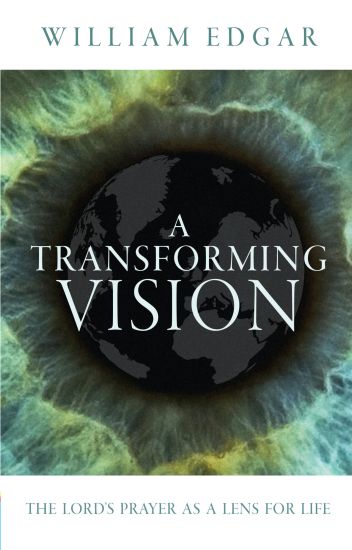
We can be in danger of no longer really understanding the meaning of the Lord's Prayer simply because it is heard and spoken so often. Edgar illustrates the depth of the prayer as he shows it in the original context, and shows what that means for us in our context today and in the future. The Lord's Prayer defines our faith and defines the Biblical worldview.
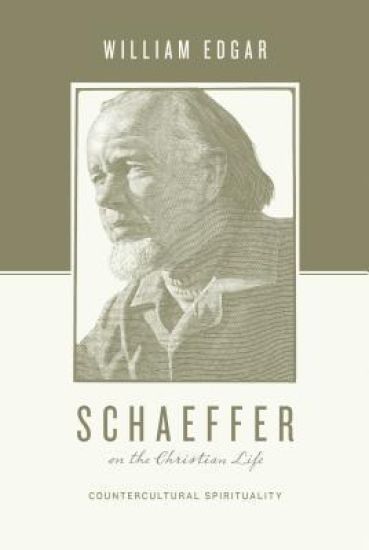
Francis Schaeffer was one of the most influential apologists of the twentieth century. Through his speaking, writing, and filmmaking, Schaeffer successfully transformed the way people thought of the Christian faith, from a rather private kind of piety to a worldview that addresses every sphere of life. This volume—written by a man converted from agnosticism within days of meeting Schaeffer—is the first book devoted to exploring the heart and soul of Schaeffer’s approach to the Christian life, and will help readers strive after the same kind of marriage of thought and life, of orthodoxy and love. Part of the Theologians on the Christian Life series.