Kirjojen hintavertailu. Mukana 12 473 506 kirjaa ja 12 kauppaa.

Kirjailija

William Egginton

Kirjat ja teokset yhdessä paikassa: 18 kirjaa, julkaisuja vuosilta 2002-2025, suosituimpien joukossa Medialogies. Vertaile teosten hintoja ja tarkista saatavuus suomalaisista kirjakaupoista.

18 kirjaa

Kirjojen julkaisuhaarukka 2002-2025.

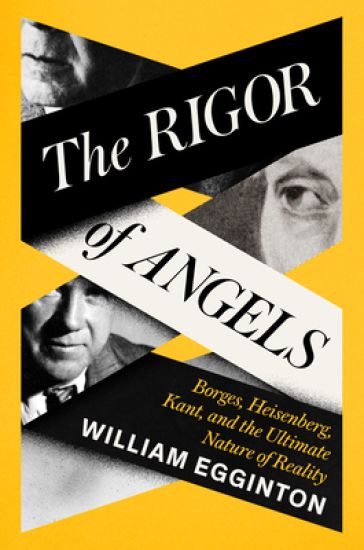
The Rigor of Angels

The Rigor of Angels

William Egginton

PUSHKIN PRESS
2025
nidottu
A poet, a physicist, and a philosopher explore the greatest enigmas of the universe in this scintillatingly original book about the limits of human knowledge 'Fascinating' Carlo Rovelli 'Remarkable... Exciting, provocative, and illuminating' John Banville, Wall Street Journal Argentine writer Jorge Luis Borges was madly in love when his life was shattered by painful heartbreak. But the breakdown that followed illuminated an incontrovertible truth - that love is necessarily imbued with loss, that the one doesn't exist without the other. German physicist Werner Heisenberg was fighting with the scientific establishment about the absurdity of the quantum realm when he had his own epiphany - that there is no such thing as a complete, perfect description of reality. Prussian philosopher Immanuel Kant pushed the assumptions of human reason as far as they could go, concluding that the human mind has fundamental limits, and those limits undergird both our greatest achievements and our missteps. Through fiction, science, and philosophy, the work of these three thinkers coalesced around one powerful, haunting truth: there is an irreconcilable difference between reality "out there" and reality as we experience it. In this soaring, lucid narrative, William Egginton profoundly demonstrates the enduring mystery of the world, and our place within it.
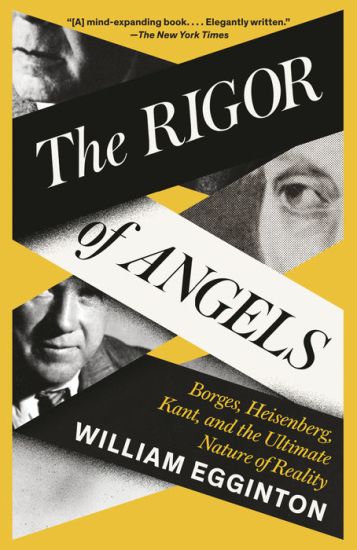
The Rigor of Angels: Borges, Heisenberg, Kant, and the Ultimate Nature of Reality
A NEW YORK TIMES AND NEW YORKER BEST BOOK OF THE YEAR - A poet, a physicist, and a philosopher explored the greatest enigmas in the universe--the nature of free will, the strange fabric of the cosmos, the true limits of the mind--and each in their own way uncovered a revelatory truth about our place in the world " A] mind-expanding book. . . . Elegantly written." --The New York Times "A remarkable synthesis of the thoughts, ideas, and discoveries of three of the greatest minds that our species has produced." --John Banville, The Wall Street Journal Argentine poet Jorge Luis Borges was madly in love when his life was shattered by painful heartbreak. But the breakdown that followed illuminated an incontrovertible truth--that love is necessarily imbued with loss, that the one doesn't exist without the other. German physicist Werner Heisenberg was fighting with the scientific establishment on the meaning of the quantum realm's absurdity when he had his own epiphany--that there is no such thing as a complete, perfect description of reality. Prussian philosopher Immanuel Kant pushed the assumptions of human reason to their mind-bending conclusions, but emerged with an idea that crowned a towering philosophical system--that the human mind has fundamental limits, and those limits undergird both our greatest achievements as well as our missteps. Through fiction, science, and philosophy, the work of these three thinkers coalesced around the powerful, haunting fact that there is an irreconcilable difference between reality "out there" and reality as we experience it. Out of this profound truth comes a multitude of galvanizing ideas: the notion of selfhood, free will, and purpose in human life; the roots of morality, aesthetics, and reason; and the origins and nature of the cosmos itself. As each of these thinkers shows, every one of us has a fundamentally incomplete picture of the world. But this is to be expected. Only as mortal, finite beings are we able to experience the world in all its richness and breathtaking majesty. We are stranded in a gulf of vast extremes, between the astronomical and the quantum, an abyss of freedom and absolute determinism, and it is in that center where we must make our home. A soaring and lucid reflection on the lives and work of Borges, Heisenberg, and Kant, The Rigor of Angels movingly demonstrates that the mysteries of our place in the world may always loom over us--not as a threat, but as a reminder of our humble humanity.
The Rigor of Angels

The Rigor of Angels

William Egginton

PUSHKIN PRESS
2024
sidottu
A poet, a physicist, and a philosopher explore the greatest enigmas of the universe in this scintillatingly original book about the limits of human knowledge 'Fascinating' Carlo Rovelli 'Remarkable... Exciting, provocative, and illuminating' John Banville, Wall Street Journal Argentine writer Jorge Luis Borges was madly in love when his life was shattered by painful heartbreak. But the breakdown that followed illuminated an incontrovertible truth - that love is necessarily imbued with loss, that the one doesn't exist without the other. German physicist Werner Heisenberg was fighting with the scientific establishment about the absurdity of the quantum realm when he had his own epiphany - that there is no such thing as a complete, perfect description of reality. Prussian philosopher Immanuel Kant pushed the assumptions of human reason as far as they could go, concluding that the human mind has fundamental limits, and those limits undergird both our greatest achievements and our missteps. Through fiction, science, and philosophy, the work of these three thinkers coalesced around one powerful, haunting truth: there is an irreconcilable difference between reality "out there" and reality as we experience it. In this soaring, lucid narrative, William Egginton profoundly demonstrates the enduring mystery of the world, and our place within it.
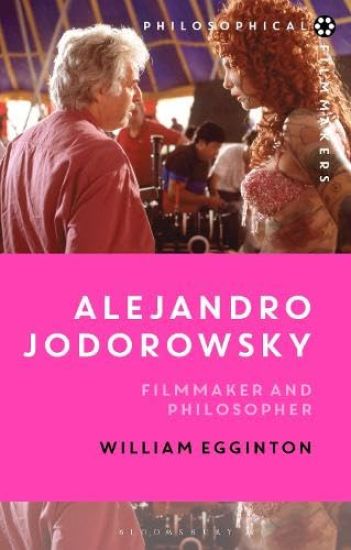
Alejandro Jodorowsky

Alejandro Jodorowsky

William Egginton

BLOOMSBURY PUBLISHING PLC
2024
nidottu
Alejandro Jodorowsky is a force of nature. At 90 years old he is still making films and is a cultural phenomenon who has influenced other artists as disparate as John Waters and Yoko Ono. Although his body of work has long been considered disjointed and random, William Egginton claims that Jodorowsky’s writings, theatre work and mime, and his films, along with the therapeutic practice he calls psychomagic, can all be tied together to form the philosophical programme that underpins his films. Incorporating surrealism and thinkers including Lacan, Kant, Hegel, and Žižek into his interpretation of Jodorowsky's work, Egginton shows how his diverse films are connected by interpretive practices with a fundamental similarity to Lacanian psychoanalysis. Using case studies of Jodorowsky's cult films, El Topo, Fando y Lis and Holy Mountain and more, this book provides a unique perspective on a filmmaker whose work has been notoriously difficult to analyse.
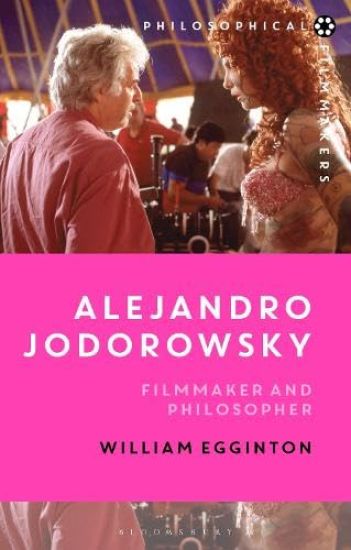
Alejandro Jodorowsky

Alejandro Jodorowsky

William Egginton

BLOOMSBURY PUBLISHING PLC
2024
sidottu
Alejandro Jodorowsky is a force of nature. At 90 years old he is still making films and is a cultural phenomenon who has influenced other artists as disparate as John Waters and Yoko Ono. Although his body of work has long been considered disjointed and random, William Egginton claims that Jodorowsky’s writings, theatre work and mime, and his films, along with the therapeutic practice he calls psychomagic, can all be tied together to form the philosophical programme that underpins his films. Incorporating surrealism and thinkers including Lacan, Kant, Hegel, and Žižek into his interpretation of Jodorowsky's work, Egginton shows how his diverse films are connected by interpretive practices with a fundamental similarity to Lacanian psychoanalysis. Using case studies of Jodorowsky's cult films, El Topo, Fando y Lis and Holy Mountain and more, this book provides a unique perspective on a filmmaker whose work has been notoriously difficult to analyse.
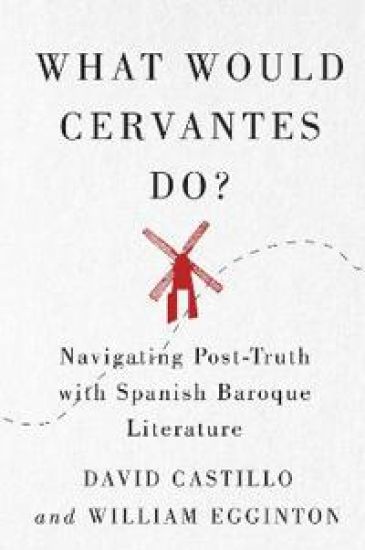
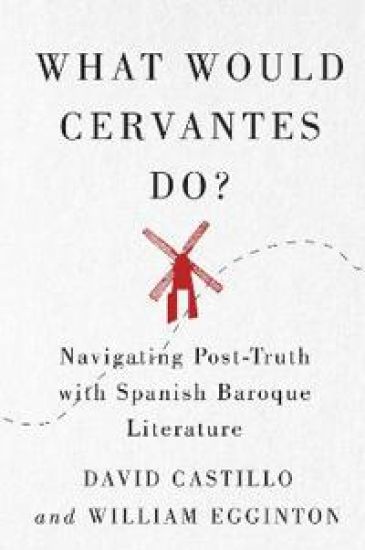
What Would Cervantes Do?

What Would Cervantes Do?

David Castillo; William Egginton

McGill-Queen's University Press
2022
nidottu
The attack on the US Capitol on 6 January 2021 was a tragic illustration of the existential threat that the viral spread of disinformation poses in the age of social media and twenty-four-hour news. From climate change denialism to the frenzied conspiracy theories and racist mythologies that fuel antidemocratic white nationalist movements in the United States and abroad, What Would Cervantes Do? is a lucid meditation on the key role the humanities must play in dissecting and combatting all forms of disinformation.David Castillo and William Egginton travel back to the early modern period, the first age of inflationary media, in search of historically tested strategies to overcome disinformation and shed light on our post-truth market. Through a series of critical conversations between cultural icons of the twenty-first century and those of the Spanish Golden Age, What Would Cervantes Do? provides a tour-de-force commentary on current politics and popular culture. Offering a diverse range of Cervantist comparative readings of contemporary cultural texts –movies, television shows, and infotainment – alongside ideas and issues from literary and cultural texts of early modern Spain, Castillo and Egginton present a new way of unpacking the logic of contemporary media.What Would Cervantes Do? is an urgent and timely self-help manual for literary scholars and humanists of all stripes, and a powerful toolkit for reality literacy.
What Would Cervantes Do?

What Would Cervantes Do?

David Castillo; William Egginton

McGill-Queen's University Press
2022
sidottu
The attack on the US Capitol on 6 January 2021 was a tragic illustration of the existential threat that the viral spread of disinformation poses in the age of social media and twenty-four-hour news. From climate change denialism to the frenzied conspiracy theories and racist mythologies that fuel antidemocratic white nationalist movements in the United States and abroad, What Would Cervantes Do? is a lucid meditation on the key role the humanities must play in dissecting and combatting all forms of disinformation.David Castillo and William Egginton travel back to the early modern period, the first age of inflationary media, in search of historically tested strategies to overcome disinformation and shed light on our post-truth market. Through a series of critical conversations between cultural icons of the twenty-first century and those of the Spanish Golden Age, What Would Cervantes Do? provides a tour-de-force commentary on current politics and popular culture. Offering a diverse range of Cervantist comparative readings of contemporary cultural texts –movies, television shows, and infotainment – alongside ideas and issues from literary and cultural texts of early modern Spain, Castillo and Egginton present a new way of unpacking the logic of contemporary media.What Would Cervantes Do? is an urgent and timely self-help manual for literary scholars and humanists of all stripes, and a powerful toolkit for reality literacy.
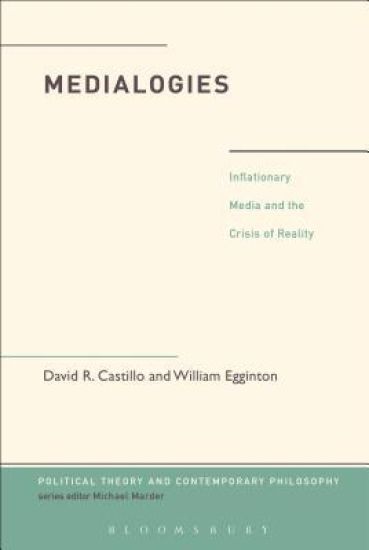
Medialogies

Medialogies

David R. Castillo; William Egginton

Bloomsbury Academic USA
2016
nidottu
We are living in a time of inflationary media. While technological change has periodically altered and advanced the ways humans process and transmit knowledge, for the last 100 years the media with which we produce, transmit, and record ideas have multiplied in kind, speed, and power. Saturation in media is provoking a crisis in how we perceive and understand reality. Media become inflationary when the scope of their representation of the world outgrows the confines of their culture's prior grasp of reality. We call the resulting concept of reality that emerges the culture's medialogy. Medialogies offers a highly innovative approach to the contemporary construction of reality in cultural, political, and economic domains. Castillo and Egginton, both luminary scholars, combine a very accessible style with profound theoretical analysis, relying not only on works of philosophy and political theory but also on novels, Hollywood films, and mass media phenomena. The book invites us to reconsider the way reality is constructed, and how truth, sovereignty, agency, and authority are understood from the everyday, philosophical, and political points of view. A powerful analysis of actuality, with its roots in early modernity, this work is crucial to understanding reality in the information age.
Medialogies

Medialogies

David R. Castillo; William Egginton

Bloomsbury Academic USA
2016
sidottu
We are living in a time of inflationary media. While technological change has periodically altered and advanced the ways humans process and transmit knowledge, for the last 100 years the media with which we produce, transmit, and record ideas have multiplied in kind, speed, and power. Saturation in media is provoking a crisis in how we perceive and understand reality. Media become inflationary when the scope of their representation of the world outgrows the confines of their culture's prior grasp of reality. We call the resulting concept of reality that emerges the culture's medialogy. Medialogies offers a highly innovative approach to the contemporary construction of reality in cultural, political, and economic domains. Castillo and Egginton, both luminary scholars, combine a very accessible style with profound theoretical analysis, relying not only on works of philosophy and political theory but also on novels, Hollywood films, and mass media phenomena. The book invites us to reconsider the way reality is constructed, and how truth, sovereignty, agency, and authority are understood from the everyday, philosophical, and political points of view. A powerful analysis of actuality, with its roots in early modernity, this work is crucial to understanding reality in the information age.
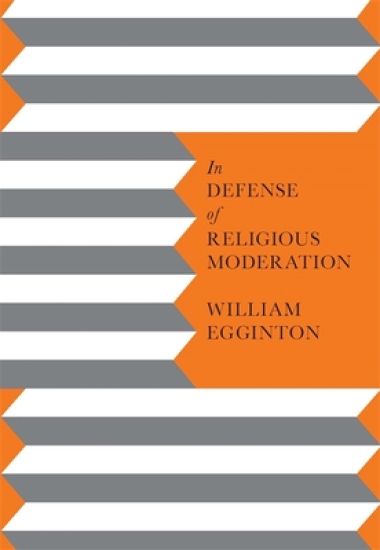
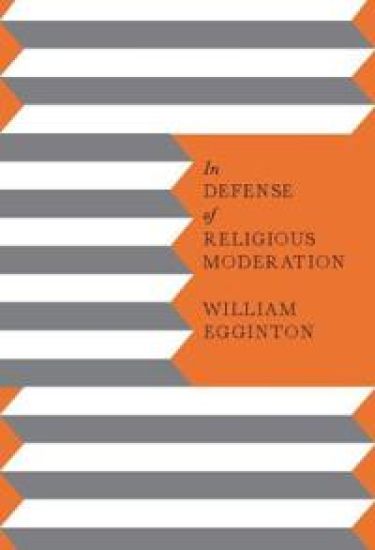
In Defense of Religious Moderation

In Defense of Religious Moderation

William Egginton

Columbia University Press
2016
pokkari
In his latest book, William Egginton laments the current debate over religion in America, in which religious fundamentalists have set the tone of political discourse-no one can get elected without advertising a personal relation to God, for example-and prominent atheists treat religious belief as the root of all evil. Neither of these positions, Egginton argues, adequately represents the attitudes of a majority of Americans who, while identifying as Christians, Jews, and Muslims, do not find fault with those who support different faiths and philosophies. In fact, Egginton goes so far as to question whether fundamentalists and atheists truly oppose each other, united as they are in their commitment to a "code of codes." In his view, being a religious fundamentalist does not require adhering to a particular religious creed. Fundamentalists-and stringent atheists-unconsciously believe that the methods we use to understand the world are all versions of an underlying master code. This code of codes represents an ultimate truth, explaining everything. Surprisingly, perhaps the most effective weapon against such thinking is religious moderation, a way of believing that questions the very possibility of a code of codes as the source of all human knowledge. The moderately religious, with their inherent skepticism toward a master code, are best suited to protect science, politics, and other diverse strains of knowledge from fundamentalist attack, and to promote a worldview based on the compatibility between religious faith and scientific method.
In Defense of Religious Moderation

In Defense of Religious Moderation

William Egginton

Columbia University Press
2011
sidottu
In his latest book, William Egginton laments the current debate over religion in America, in which religious fundamentalists have set the tone of political discourse-no one can get elected without advertising a personal relation to God, for example-and prominent atheists treat religious belief as the root of all evil. Neither of these positions, Egginton argues, adequately represents the attitudes of a majority of Americans who, while identifying as Christians, Jews, and Muslims, do not find fault with those who support different faiths and philosophies. In fact, Egginton goes so far as to question whether fundamentalists and atheists truly oppose each other, united as they are in their commitment to a "code of codes." In his view, being a religious fundamentalist does not require adhering to a particular religious creed. Fundamentalists-and stringent atheists-unconsciously believe that the methods we use to understand the world are all versions of an underlying master code. This code of codes represents an ultimate truth, explaining everything. Surprisingly, perhaps the most effective weapon against such thinking is religious moderation, a way of believing that questions the very possibility of a code of codes as the source of all human knowledge. The moderately religious, with their inherent skepticism toward a master code, are best suited to protect science, politics, and other diverse strains of knowledge from fundamentalist attack, and to promote a worldview based on the compatibility between religious faith and scientific method.
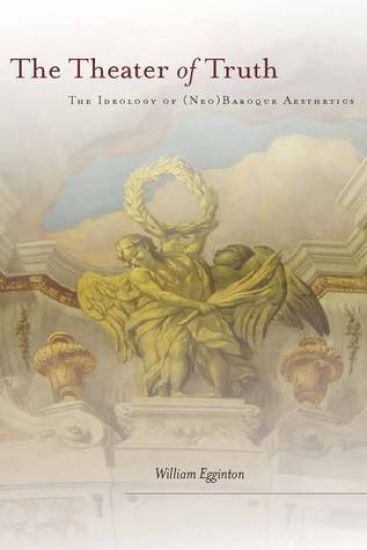
The Theater of Truth

The Theater of Truth

William Egginton

Stanford University Press
2009
sidottu
The Theater of Truth argues that seventeenth-century baroque and twentieth-century neobaroque aesthetics have to be understood as part of the same complex. The Neobaroque, rather than being a return to the stylistic practices of a particular time and place, should be described as the continuation of a cultural strategy produced as a response to a specific problem of thought that has beset Europe and the colonial world since early modernity. This problem, in its simplest philosophical form, concerns the paradoxical relation between appearances and what they represent. Egginton explores expressions of this problem in the art and literature of the Hispanic Baroques, new and old. He shows how the strategies of these two Baroques emerged in the political and social world of the Spanish Empire, and how they continue to be deployed in the cultural politics of the present. Further, he offers a unified theory for the relation between the two Baroques and a new vocabulary for distinguishing between their ideological values.
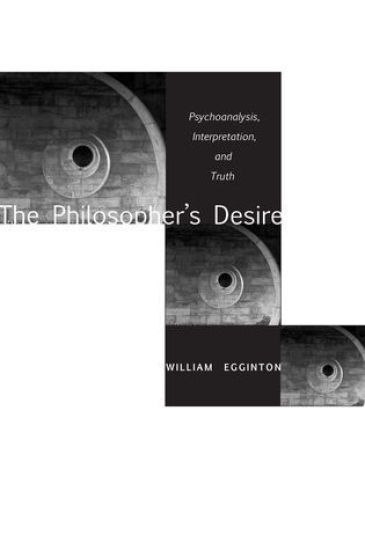
The Philosopher's Desire

The Philosopher's Desire

William Egginton

Stanford University Press
2007
pokkari
This book is about interpretation as it pertains to literature, philosophy, and psychoanalysis. It argues against certain trends of thought that claim we should do without interpretation by demonstrating that interpretation, as described by psychoanalysis, is already a fundamental aspect of all human experience. Egginton examines the idea of interpretation developed by Freud; how that notion was in turn changed by Lacan; the debate around psychoanalytic interpretation staged by philosophers like Deleuze and Derrida; and finally how a psychoanalytic notion of interpretation is necessary for even the most basic experience of consciousness.
The Philosopher's Desire

The Philosopher's Desire

William Egginton

Stanford University Press
2007
sidottu
This book is about interpretation as it pertains to literature, philosophy, and psychoanalysis. It argues against certain trends of thought that claim we should do without interpretation by demonstrating that interpretation, as described by psychoanalysis, is already a fundamental aspect of all human experience. Egginton examines the idea of interpretation developed by Freud; how that notion was in turn changed by Lacan; the debate around psychoanalytic interpretation staged by philosophers like Deleuze and Derrida; and finally how a psychoanalytic notion of interpretation is necessary for even the most basic experience of consciousness.
Perversity and Ethics

Perversity and Ethics

William Egginton

Stanford University Press
2005
pokkari
William Egginton argues that the notion of the ethical cannot be understood outside of its relation to perversity—that is, the impulse to do what one knows and feels is wrong. The allure of the perverse, moreover, should not be understood as merely the necessary obverse of ethically motivated behavior; rather, from the perspective of a psychoanalytic understanding of the ethical, the two drives are structurally identical. This discovery leads the author to engagements with deconstructive thought and with contemporary gender theory. In the first, he shows that the insistent resurgence of the ethical fault-line inevitably drives even the most stalwart atheism to a theological moment. In the second, he argues that while "female philosophy" has successfully repudiated the subject-centered exceptionalism of "male philosophy," it is precisely to the extent that it is understood to offer a kind of release from the perversity of ethics that it must fail as ethical utterances.
Perversity and Ethics

Perversity and Ethics

William Egginton

Stanford University Press
2005
sidottu
William Egginton argues that the notion of the ethical cannot be understood outside of its relation to perversity—that is, the impulse to do what one knows and feels is wrong. The allure of the perverse, moreover, should not be understood as merely the necessary obverse of ethically motivated behavior; rather, from the perspective of a psychoanalytic understanding of the ethical, the two drives are structurally identical. This discovery leads the author to engagements with deconstructive thought and with contemporary gender theory. In the first, he shows that the insistent resurgence of the ethical fault-line inevitably drives even the most stalwart atheism to a theological moment. In the second, he argues that while "female philosophy" has successfully repudiated the subject-centered exceptionalism of "male philosophy," it is precisely to the extent that it is understood to offer a kind of release from the perversity of ethics that it must fail as ethical utterances.
How the World Became a Stage

How the World Became a Stage

William Egginton

State University of New York Press
2002
pokkari
Argues that the experience of modernity is fundamentally spatial rather than subjective. What is special, distinct, modern about modernity? In How the World Became a Stage, William Egginton argues that the experience of modernity is fundamentally spatial rather than subjective and proposes replacing the vocabulary of subjectivity with the concepts of presence and theatricality. Following a Heideggerian injunctive to search for the roots of epochal change not in philosophies so much as in basic skills and practices, he describes the spatiality of modernity on the basis of a close historical analysis of the practices of spectacle from the late Middle Ages to the early modern period, paying particular attention to stage practices in France and Spain. He recounts how the space in which the world is disclosed changed from the full, magically charged space of presence to the empty, fungible, and theatrical space of the stage.