Kirjojen hintavertailu. Mukana 12 390 323 kirjaa ja 12 kauppaa.

Kirjailija

William F. Keegan

Kirjat ja teokset yhdessä paikassa: 6 kirjaa, julkaisuja vuosilta 2007-2022, suosituimpien joukossa Talking Taino. Vertaile teosten hintoja ja tarkista saatavuus suomalaisista kirjakaupoista.

6 kirjaa

Kirjojen julkaisuhaarukka 2007-2022.

Talking Taino

Talking Taino

William F. Keegan; Lisabeth A. Carlson

The University of Alabama Press
2008
nidottu
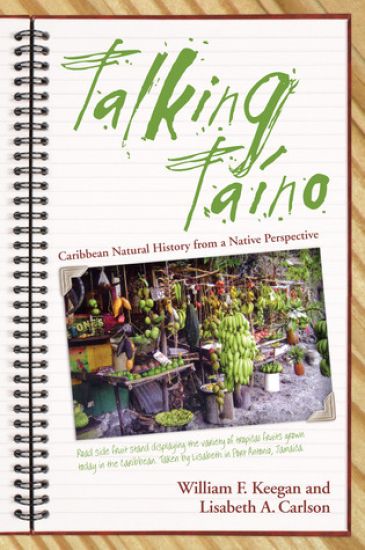
Talking Taino combines more than 45 years that the authors spent conducting archaeological research in the Caribbean, directing projects in Trinidad, Grenada, St. Lucia, Puerto Rico, the Dominican Republic, Haiti, Cuba, Jamaica, Grand Cayman, the Turks & Caicos Islands, and throughout the Bahamas. Walking hundreds of miles of beaches, working without shade in the Caribbean sun, diving in refreshing and pristine waters, and studying the people and natural environment around them has given them insights into the lifeways of the people who lived in the Caribbean before the arrival of Christopher Columbus. Sadly, harsh treatment extinguished the culture that we today call Taino or Arawak.In an effort to repay their debt to the past and the present, the authors have focused on the relationship between the Tainos of the past (revealed through archaeological investigations) and the present natural history of the islands. Bringing the past to life and highlighting commonalities between past and present, they emphasize Taino words and beliefs about their worldview and culture.
Talking Taino

Talking Taino

William F. Keegan; Lisabeth A. Carlson

The University of Alabama Press
2008
sidottu
Talking Taino combines more than 45 years that the authors spent conducting archaeological research in the Caribbean, directing projects in Trinidad, Grenada, St. Lucia, Puerto Rico, the Dominican Republic, Haiti, Cuba, Jamaica, Grand Cayman, the Turks & Caicos Islands, and throughout the Bahamas. Walking hundreds of miles of beaches, working without shade in the Caribbean sun, diving in refreshing and pristine waters, and studying the people and natural environment around them has given them insights into the lifeways of the people who lived in the Caribbean before the arrival of Christopher Columbus. Sadly, harsh treatment extinguished the culture that we today call Taino or Arawak.In an effort to repay their debt to the past and the present, the authors have focused on the relationship between the Tainos of the past (revealed through archaeological investigations) and the present natural history of the islands. Bringing the past to life and highlighting commonalities between past and present, they emphasize Taino words and beliefs about their worldview and culture.
Taíno Indian Myth and Practice

Taíno Indian Myth and Practice

William F. Keegan

University Press of Florida
2022
pokkari
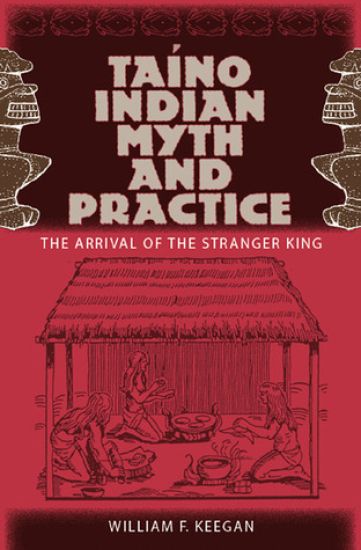
Applying the legend of the "stranger king" to Caonabo, the mythologized Taino chief of the Hispaniola settlement Columbus invaded in 1492, Keegan examines how myths come to resonate as history--created by the chaotic interactions of the individuals who lived the events of the past as well as those who write and read about them. The "stranger king" story told in many cultures is that of a foreigner who comes from across the water, marries the king's daughter, and deposes the king. In this story, Caonabo, the most important Taíno chief at the time of European conquest, claimed to be imbued with Taino divinity, while Columbus, determined to establish a settlement called La Navidad, described himself as the "Christbearer."Keegan's ambitious historical analysis--knitting evidence from Spanish colonial documents together with data gathered from the archaeological record--provides a new perspective on the encounters between the two men as they vied for control of the settlement, a survey of the early interactions of the Tainos and Spanish people, and a complex view of the interpretive role played by historians and archaeologists. Presenting a new theoretical framework based on chaos and complexity theories, this book argues for a more comprehensive philosophy of archaeology in which oral myths, primary source texts, and archaeological studies can work together to reconstruct a particularly rich view of the past.
The Caribbean before Columbus

The Caribbean before Columbus

William F. Keegan; Corinne L. Hofman

Oxford University Press Inc
2017
nidottu
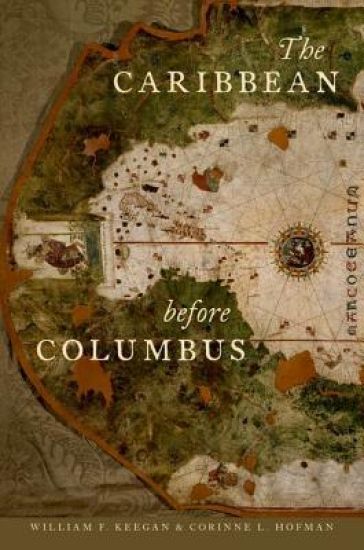
The Caribbean before Columbus is a new synthesis of the region's insular history. It combines the results of the authors' 55 years of archaeological research on almost every island in the three archipelagoes with that of their numerous colleagues and collaborators. The presentation operates on multiple scales: temporal, spatial, local, regional, environmental, social, and political. In addition, individual sites are used to highlight specific issues. For the first time, the complete histories of the major islands and island groups are elucidated, and new insights are gained through inter-island comparisons. The book takes a step back from current debates regarding nomenclature to offer a common foundation and the opportunity for a fresh beginning. In this regard the original concepts of series and ages provide structure, and the diversity of expressions subsumed by these concepts is embraced. Historical names, such as Taíno and Lucayan, are avoided. The authors challenge the long-held conventional wisdom concerning island colonization, societal organization, interaction and transculturation, inter- and intra-regional transactions (exchange), and other basic elements of cultural development and change. The emphasis is on those elements that unite the Bahamas, Lesser Antilles, and Greater Antilles as a culture area, and also on their divergent pathways. Colonization is presented as a multifaceted wave-like process. Continuing ties to the surrounding mainland are highlighted. Interactions between residents and new colonists are recognized, with individual histories contingent on these historical interactions. New solutions are offered to the "Huecoid problem" the "Carib problem," the "Taíno problem," and the evolution of social complexity, especially in Puerto Rico.These solutions required a rethinking of social organization and its expression on the landscape. There comes a time when the old foundation can no longer support the structure that was built upon it; this is that time.
The Caribbean before Columbus

The Caribbean before Columbus

William F. Keegan; Corinne L. Hofman

Oxford University Press Inc
2017
sidottu
The Caribbean before Columbus is a new synthesis of the region's insular history. It combines the results of the authors' 55 years of archaeological research on almost every island in the three archipelagoes with that of their numerous colleagues and collaborators. The presentation operates on multiple scales: temporal, spatial, local, regional, environmental, social, and political. In addition, individual sites are used to highlight specific issues. For the first time, the complete histories of the major islands and island groups are elucidated, and new insights are gained through inter-island comparisons. The book takes a step back from current debates regarding nomenclature to offer a common foundation and the opportunity for a fresh beginning. In this regard the original concepts of series and ages provide structure, and the diversity of expressions subsumed by these concepts is embraced. Historical names, such as Taíno and Lucayan, are avoided. The authors challenge the long-held conventional wisdom concerning island colonization, societal organization, interaction and transculturation, inter- and intra-regional transactions (exchange), and other basic elements of cultural development and change. The emphasis is on those elements that unite the Bahamas, Lesser Antilles, and Greater Antilles as a culture area, and also on their divergent pathways. Colonization is presented as a multifaceted wave-like process. Continuing ties to the surrounding mainland are highlighted. Interactions between residents and new colonists are recognized, with individual histories contingent on these historical interactions. New solutions are offered to the "Huecoid problem" the "Carib problem," the "Taíno problem," and the evolution of social complexity, especially in Puerto Rico.These solutions required a rethinking of social organization and its expression on the landscape. There comes a time when the old foundation can no longer support the structure that was built upon it; this is that time.
Taino Indian Myth and Practice

Taino Indian Myth and Practice

William F. Keegan

University Press of Florida
2007
sidottu
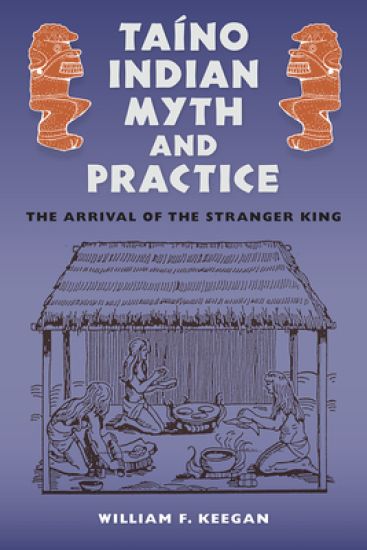
Applying the legend of the ""stranger king"" to Caonabo, the mythologized Taino chief of the Hispaniola settlement Columbus invaded in 1492, Keegan examines how myths come to resonate as history - created by the chaotic interactions of the individuals who lived the events of the past as well as those who write and read about them. The ""stranger king"" story told in many cultures is that of a foreigner who comes from across the water, marries the king's daughter, and deposes the king. In this story, Caonabo, the most important Taino chief at the time of European conquest, claimed to be imbued with Taino divinity, while Columbus, determined to establish a settlement called La Navidad, described himself as the ""Christbearer."" Keegan's ambitious historical analysis - knitting evidence from Spanish colonial documents together with data gathered from the archaeological record - provides a new perspective on the encounters between the two men as they vied for control of the settlement, a survey of the early interactions of the Tainos and Spanish people, and a complex view of the interpretive role played by historians and archaeologists. Presenting a new theoretical framework based on chaos and complexity theories, this book argues for a more comprehensive philosophy of archaeology in which oral myths, primary source texts, and archaeological studies can work together to reconstruct a particularly rich view of the past.