Kirjailija
William F. Pinar
Kirjat ja teokset yhdessä paikassa: 19 kirjaa, julkaisuja vuosilta 1995-2026, suosituimpien joukossa Toward a Poor Curriculum. Vertaile teosten hintoja ja tarkista saatavuus suomalaisista kirjakaupoista.
Mukana myös kirjoitusasut: William F Pinar
19 kirjaa
Kirjojen julkaisuhaarukka 1995-2026.
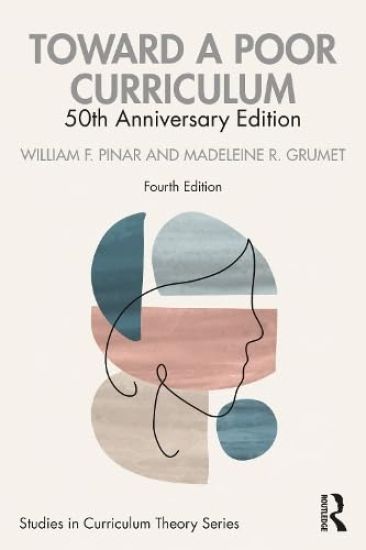
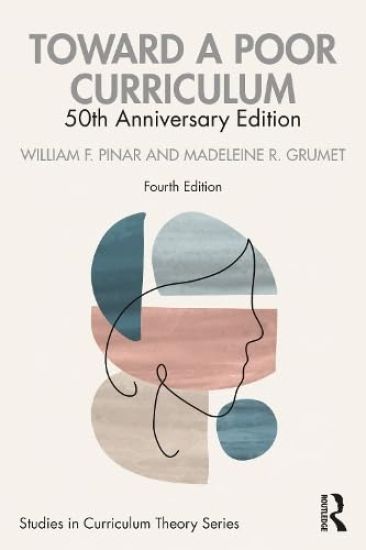
50 years since the publication of Toward a Poor Curriculum, William Pinar and Madeleine Grumet reflect on the ongoing need for a poor curriculum – one stripped of distractions such as technology to allow for the reflection and self-questioning at the heart of the book’s central methodology of currere. Featuring a brand-new preface cowritten by William Pinar and Madeleine Grumet, as well as revised chapters and a never-before included chapter on the four phases of currere, this anniversary edition invites scholars of curriculum theory and teaching methods to revisit the original essays and reconsider their relevance in light of present educational and political challenges.
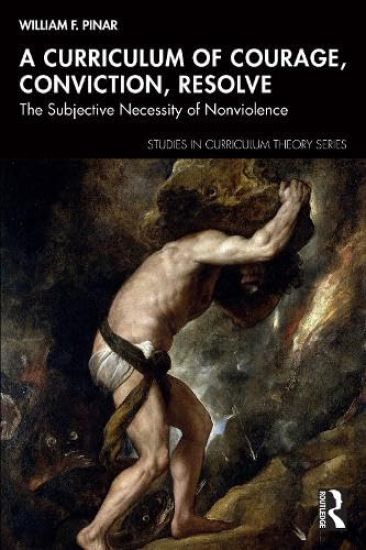
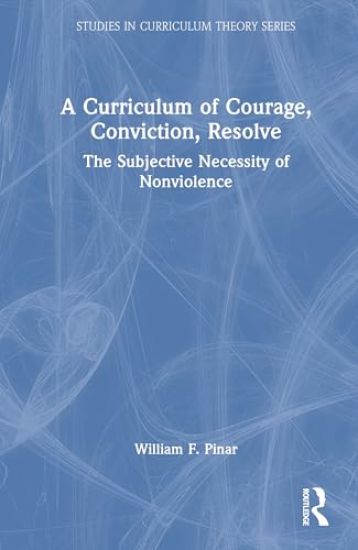
The world is periodically consumed in violence, in recent years by the Russian invasion of Ukraine, Hamas’ October 7th terrorism in Israel, and by the genocide of Palestinians in Gaza by Israelis in response. To this world-historical situation, this book attempts a curriculum studies response. Drawing on foundational texts from Hongyu Wang, James B. Burns, Christopher Cruz, and Molly Quinn, as well as his own work on violence, Pinar considers nonviolence as a counterpart to the many forms of violence - specifically gendered and racialized violence, including when the two are intertwined, but also in decolonization, imperialism, colonialism, as well as in classrooms – that are ever present in our modern world.Throughout the chapters, Pinar knits together fragments of scholarly thought on nonviolence and presents a rich and at times deeply personal study of the concepts, to create a curriculum from which students can study the absurdity of the human condition: how humanity requires nonviolence to flourish, but is too often drowned out by man’s inhumanity to man.This essential work in curriculum theory will inform researchers and students of curriculum theory, peace studies, justice studies, and authoritarianism.
Building on his seminal methodological contribution to the field – currere – here William F. Pinar posits a praxis of presence as a unique form of individual engagement against current cultural crises in education.Bringing together a series of updated essays, articles, and new writings to form this comprehensive volume, Pinar first demonstrates how a praxis of presence furthers the study of curriculum as lived experience to overcome self-enclosure, restart lived and historical time, and understand technology through a process of regression, progression, analysis, and synthesis. Pinar then further illustrates how this practice can inform curricular responses to countering presentism, narcissism, and techno-utopianism in educators’ work with "digital natives."Ultimately, this book offers researchers, scholars, and teacher educators in the fields of curriculum theory, the sociology of education, and educational policy more broadly the analytical and methodological tools by which to advance their understanding of currere, and in doing so, allows them to tackle the main cultural issues that educators face today.
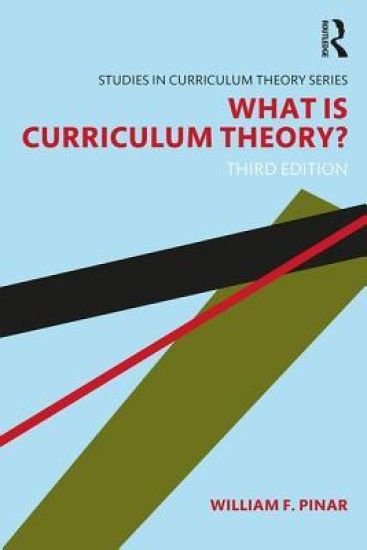
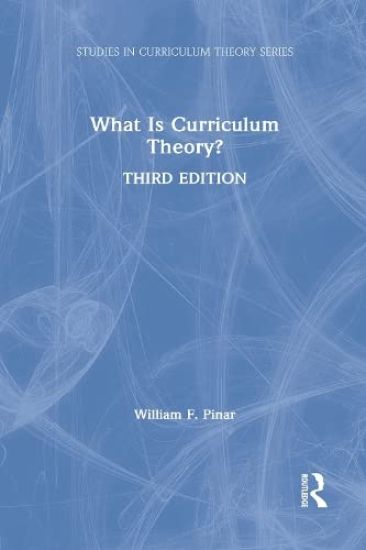
This primer for prospective and practicing teachers asks students to question the historical present and their relation to it, and in so doing, reflect on their own understandings of what it means to teach, to study, to educate, and to become educated in the present moment in the places we inhabit.Not only the implementation of objectives to be assessed by standardized tests, curriculum is communication among older and younger generations, informed by academic knowledge, and characterized by educational experience. Pinar’s concept of currere–the Latin infinitive of curriculum–is invoked to provide an autobiographical method for self-study, enabling both individuals and groups to understand teaching as passionate participation in the complicated conversation that is the curriculum.New to the Third Edition: A new allegory-of-the-present: the Harlem Renaissance New section on technology New section on the future of curriculum Expanded section on Freedom Schools Educators depicted as truth-tellers in this "post-truth" era of "fake news" Provocative, compelling, and controversial, What Is Curriculum Theory? remains indispensable for scholars and students of curriculum studies, teacher education, educational policy, and the foundations of education.
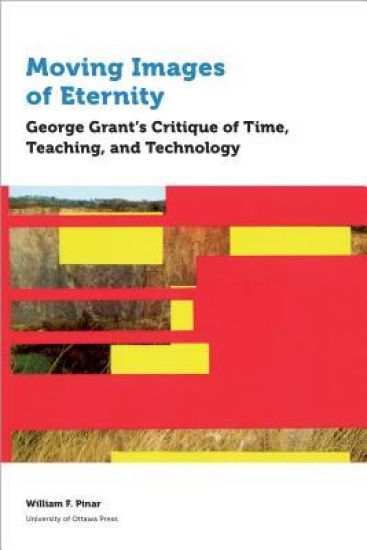
A comprehensive and original study that demonstrates the significance and pertinence of the scholarship of George Grant for teaching today. William F. Pinar presents a comprehensive and original study that demonstrates the significance and pertinence of the scholarship of George Grant for teaching today. While there are studies of Grant’s political philosophy, there has been no sustained study of his teaching. Pinar not only draws upon the collected works; he has also consulted Grant’s PhD thesis at Oxford, as well as the philosopher’s biography, collected letters, and the vast secondary literature. What emerges is a treatise that reveals Grant’s timeliness and his prescience in identifying and critiquing key educational issues nearly half a century ago, from academic vocationalism and educational technology to privatization and the ascendency of research—issues that are eminently relevant today. Beyond the classroom, Grant’s concerns extended to the impact of economic globalization which, he feared, would erase distinctive national histories and cultures. As such, Grant foresaw the current issues of right-wing populism, notably in the UK and the US, as reactions against these historical tendencies. This volume is destined to become an indispensable reference work for students of Grant in particular and for students of education in general. Published in English.
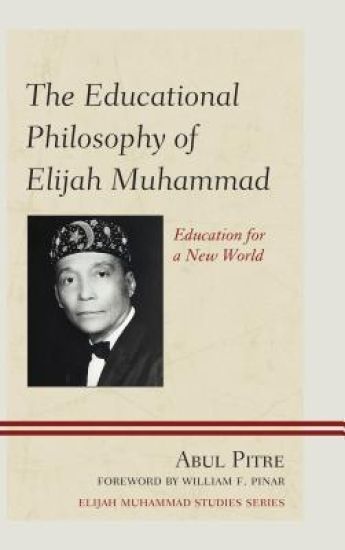
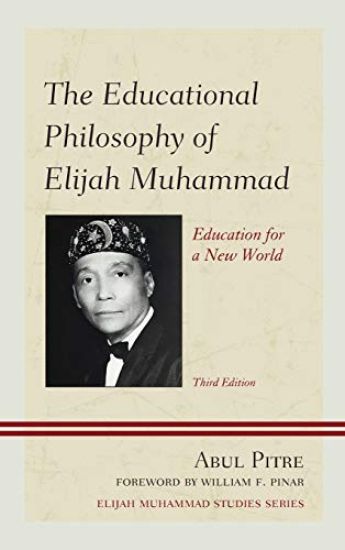
The Educational Philosophy of Elijah Muhammad
Abul Pitre; William F. Pinar
Hamilton Books
2017
nidottu
This work is the first to examine the educational philosophy of Elijah Muhammad, the patriarch of the Nation of Islam and a pivotal leader in America's history. This timely book outlines Elijah Muhammad's educational ideas in relation to critical pedagogy, multicultural education, and critical white studies, a branch of "critical race theory" popularized in the mid-1970s that reaches across disciplines to explore the relationship among race, the justice system, and society. The Educational Philosophy of Elijah Muhammad: Education for a New World is a must-read for those dedicated to creating a new paradigm that can transform individuals, schools, societies, and the world. Features new to this completely revised third edition include a more in-depth discussion of critical educational theory as it relates to the teachings of Elijah Muhammad and foreword by world renowned curriculum theorist William Pinar.
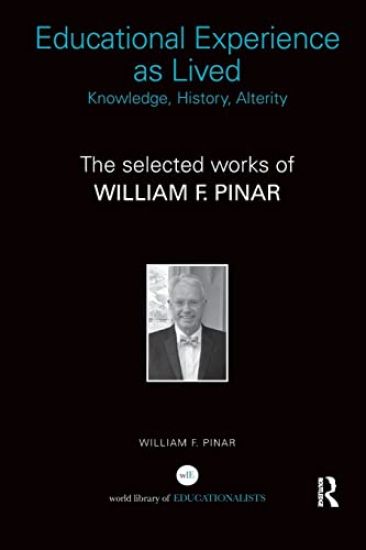
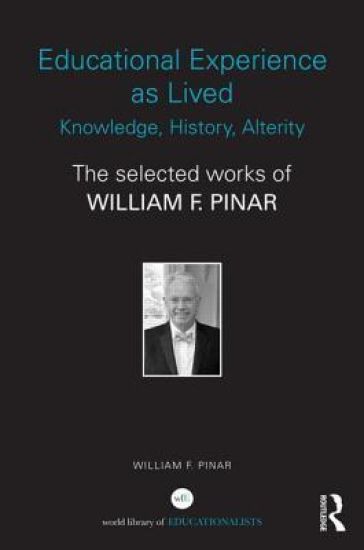
Educational Experience as Lived: Knowledge, History, Alterity
William F. Pinar
Routledge
2016
nidottu
In this volume, Pinar enacts his theory of curriculum, detailing the relations among knowledge, history, and alterity. The introduction is Pinar’s intellectual life history, naming the contributions he has made to understanding educational experience. Study is the center of educational experience, as he demonstrates in the opening chapter. The alterity of educational experience is evident in his conceptions of disciplinarity and internationalization, interrelated projects of historicization, dialogical encounter, and recontextualization. By reactivating the past, not by instrumentalizing the present, we can find the future, explicated in his studies of the Eight-Year Study, the Tyler Rationale, and the gendering and racialization of U.S. school reform. The interrelation of race and gender is emphasized in the chapters on Ida B. Wells and Jane Addams. The technologization of education is critiqued through analysis of the achievements of George Grant and Pier Paolo Pasolini. The educational project of subjective and social reconstruction is explored through study of Musil’s essayism, a genre that corrects the problems accompanying ethnography and created by identity politics.
The Educational Philosophy of Elijah Muhammad
Abul Pitre; William F. Pinar
University Press of America
2015
sidottu
This work is the first to examine the educational philosophy of Elijah Muhammad, the patriarch of the Nation of Islam and a pivotal leader in America's history. This timely book outlines Elijah Muhammad's educational ideas in relation to critical pedagogy, multicultural education, and critical white studies, a branch of "critical race theory" popularized in the mid-1970s that reaches across disciplines to explore the relationship among race, the justice system, and society. The Educational Philosophy of Elijah Muhammad: Education for a New World is a must-read for those dedicated to creating a new paradigm that can transform individuals, schools, societies, and the world. Features new to this completely revised third edition include a more in-depth discussion of critical educational theory as it relates to the teachings of Elijah Muhammad and foreword by world renowned curriculum theorist William Pinar.
Educational Experience as Lived: Knowledge, History, Alterity
William F. Pinar
Routledge
2015
sidottu
In this volume, Pinar enacts his theory of curriculum, detailing the relations among knowledge, history, and alterity. The introduction is Pinar’s intellectual life history, naming the contributions he has made to understanding educational experience. Study is the center of educational experience, as he demonstrates in the opening chapter. The alterity of educational experience is evident in his conceptions of disciplinarity and internationalization, interrelated projects of historicization, dialogical encounter, and recontextualization. By reactivating the past, not by instrumentalizing the present, we can find the future, explicated in his studies of the Eight-Year Study, the Tyler Rationale, and the gendering and racialization of U.S. school reform. The interrelation of race and gender is emphasized in the chapters on Ida B. Wells and Jane Addams. The technologization of education is critiqued through analysis of the achievements of George Grant and Pier Paolo Pasolini. The educational project of subjective and social reconstruction is explored through study of Musil’s essayism, a genre that corrects the problems accompanying ethnography and created by identity politics.
Pinar positions himself against three pressing problems of the profession: the crime of collectivism that identity politics commits, the devaluation of academic knowledge by the programmatic preoccupations of teacher education, and the effacement of educational experience by standardized testing. A cosmopolitan curriculum, Pinar argues, juxtaposes the abstract and the concrete, the collective and the individual: history and biography, politics and art, public service and private passion. Such a curriculum provides passages between the subjective and the social, and in so doing, engenders that worldliness a cosmopolitan education invites. Such worldliness is vividly discernible in the lives of three heroic individuals: Jane Addams (1860-1935), Laura Bragg (1881-1978), and Pier Paolo Pasolini (1922-1975). What these disparate individuals demonstrate is the centrality of subjectivity in the cultivation of cosmopolitanism. Subjectivity takes form in the world, and the world is itself reconstructed by subjectivity’s engagement with it.In this intriguing, thought-provoking, and nuanced work, Pinar outlines a cosmopolitan curriculum focused on passionate lives in public service, providing one set of answers to how the field accepts and attends to the inextricably interwoven relations among intellectual rigor, scholarly erudition, and intense but variegated engagement with the world.
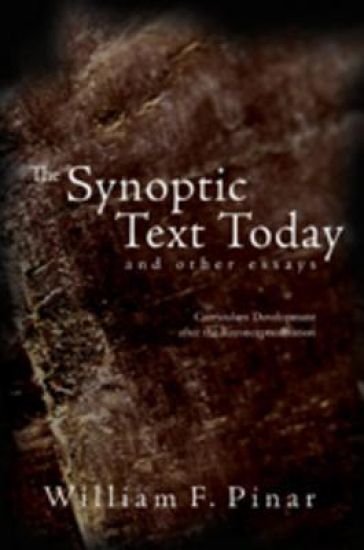
Synoptic textbooks have played a major role in the intellectual advancement of U.S. curriculum studies. William F. Pinar argues for a new synoptic text, summarizing recent and relevant research in the academic disciplines toward the subjective and social reconstruction of the public sphere that is the school classroom. Such a reconceptualization of curriculum development enables teachers to complicate the classroom conversations they themselves will lead. Subsequent essays demonstrate the thematic and methodological forms such curriculum development might take.
Understanding Curriculum
William F. Pinar; William M. Reynolds; Patrick Slattery; Peter M. Taubman
Peter Lang Publishing Inc
2006
nidottu
Perhaps not since Ralph Tyler's (1949) Basic Principles of Curriculum and Instruction has a book communicated the field as completely as Understanding Curriculum. From historical discourses to breaking developments in feminist, poststructuralist, and racial theory, including chapters on political theory, phenomenology, aesthetics, theology, international developments, and a lengthy chapter on institutional concerns, the American curriculum field is here. It will be an indispensable textbook for undergraduate and graduate courses alike.
Aesthetics, Politics, and Educational Inquiry
Tom Barone; William F. Pinar
Peter Lang Publishing Inc
2000
nidottu
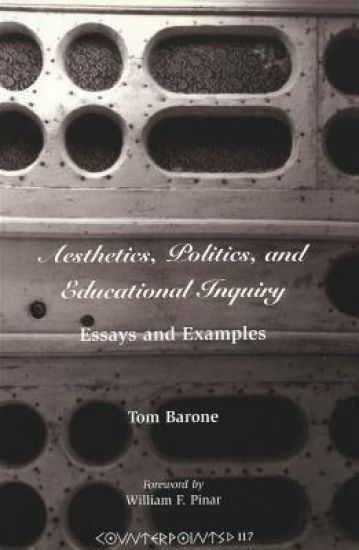
This collection of essays explores the possibilities of studying educational matters with the tools of narrative and literature. Written over the course of the 1980s and 1990s, these essays trace the literary turn in educational research toward forms of literary journalism, critical storytelling, and postmodern narrative. The articles are presented as biographical evidence of the author's ongoing quest for forms of educational research that are well-suited to the enormously complex nature of educational encounters. This collection includes both theoretical dissertations and actual case studies of schools and school people.
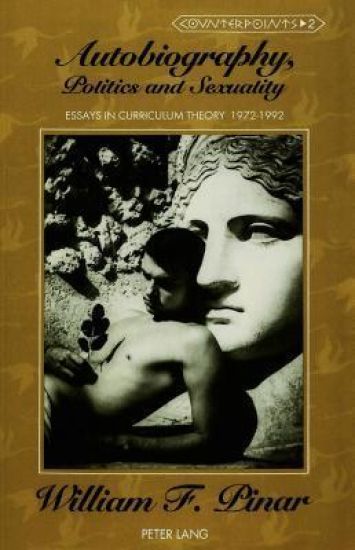
Like a particularly heartfelt letter to the reader, William Pinar's "Autobiography, Politics and Sexuality: Essays in Curriculum Theory 1972-1992" asserts the viability of autobiography as a tool of study in the area of curriculum and instruction. As an alternative to the sterile bureaucratic style of curriculum studies that dominated the field at one time, William Pinar has reconceptualized curriculum studies in a more organic, flexible and exciting way which honors the immediacy and complexity of students, teachers and their relationships by taking into account their lives as they live them. "Autobiography, Politics and Sexuality: Essays in Curriculum Theory 1972-1992" is a classic in the field of education studies.