Kirjojen hintavertailu. Mukana 12 595 353 kirjaa ja 12 kauppaa.

Kirjailija

William FitzGerald

Kirjat ja teokset yhdessä paikassa: 27 kirjaa, julkaisuja vuosilta 2000-2022, suosituimpien joukossa Forskning och skrivande - Konsten att skriva enkelt och effektivt. Vertaile teosten hintoja ja tarkista saatavuus suomalaisista kirjakaupoista.

27 kirjaa

Kirjojen julkaisuhaarukka 2000-2022.

Forskning och skrivande - Konsten att skriva enkelt och effektivt

Forskning och skrivande - Konsten att skriva enkelt och effektivt

Wayne C. Booth; Gregory G. Colomb; Joseph M. Williams; Joseph Bizup; William FitzGerald

Studentlitteratur AB
2019
nidottu
Forskning och skrivande är en bok för alla som står inför uppgiften att skriva en uppsats, en rapport eller ett större vetenskapligt arbete. I boken beskrivs bland annat hur man formulerar en intressant och relevant frågeställning, hur man söker ochhanterar källor, samt hur man formulerar stöd för sina åsikter och slutsatser.I denna andra upplaga har samtliga kapitel aktualiserats för att passa dagens forskningslandskap. Bland annat har de avsnitt som tar upp biblioteks- och internetforskning uppdaterats. Stor vikt har lagts vid nya forskningstekniker som blivit möjliga tack vare olika databaser, men också vid behovet att bedöma deras tillförlitlighet.Forskning och skrivande har blivit ett standardverk som ger vägledning oavsett ämnesområde. Boken vänder sig både till nybörjare som ska skriva sin första uppsats, och till mer erfarna forskare som ska skriva ett större arbete.
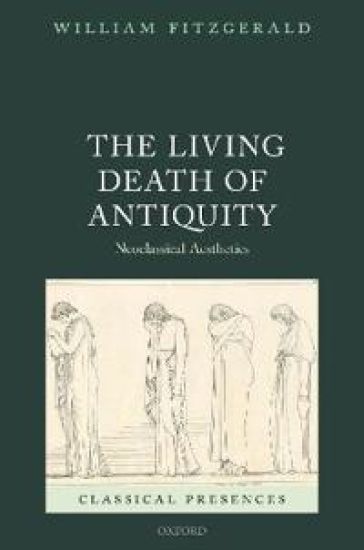
The Living Death of Antiquity

The Living Death of Antiquity

William Fitzgerald

Oxford University Press
2022
sidottu
The Living Death of Antiquity examines the idealization of an antiquity that exhibits, in the words of Johann Joachim Winckelmann, 'a noble simplicity and quiet grandeur'. Fitzgerald discusses the aesthetics of this strain of neoclassicism as manifested in a range of work in different media and periods, focusing on the late eighteenth and early nineteenth centuries. In the aftermath of Winckelmann's writing, John Flaxman's engraved scenes from the Iliad and the sculptors Antonio Canova and Bertel Thorvaldsen reinterpreted ancient prototypes or invented new ones. Earlier and later versions of this aesthetic in the ancient Greek Anacreontea, the French Parnassian poets and Erik Satie's Socrate, manifest its character in different media and periods. Looking with a sympathetic eye on the original aspirations of the neoclassical aesthetic and its forward-looking potential, Fitzgerald describes how it can tip over into the vacancy or kitsch through which a 'remaindered' antiquity lingers in our minds and environments. This book asks how the neoclassical value of simplicity serves to conjure up an epiphanic antiquity, and how whiteness, in both its literal and its metaphorical forms, acts as the 'logo' of neoclassical antiquity, and functions aesthetically in a variety of media. In the context of the waning of a neoclassically idealized antiquity, Fitzgerald describes the new contents produced by its asymptotic approach to meaninglessness, and how the antiquity that it imagined both is and is not with us.
Agonistic Poetry

Agonistic Poetry

William Fitzgerald

University of California Press
2021
sidottu
Pindar's poetry, although revered, remains one of the least read among great classical works, even within classical scholarship. His epinikion, or victory ode, is an unfamiliar genre, largely represented only by Pindar himself. Engaging with his work requires facing the challenges of his complex language, thought process, and narrative style. Despite such obstacles, Pindar has long been acknowledged as an essential poet, a symbol of inspiration and originality whose work has provided a model for poets seeking a break from conventional "classical" forms. Yet, Pindar's reputation as both a bold innovator and a flatterer of elite athletes has created a dual image of his character and work. In this study, the focus shifts from Pindar as a historical figure to the lasting significance of his poetic mode, which extends to modern works. Pindar's work is frequently invoked in discussions of lyric poetry to illustrate that lyricism can be more than subjective or inward; his poetry demonstrates a communal voice, albeit one that arises not from a predefined community but through the act of poetic resistance. By modeling community as an agon, or contest, the study explores how poetry can reflect communal forces rather than fixed groups. This approach contrasts with perspectives that interpret lyric poetry through individualistic or self-contained struggles, as seen in the theories of Harold Bloom and certain deconstructive readings, positioning the poetic voice instead as a dynamic, communal force. The analysis here extends beyond Pindar’s ancient Greek context to examine the Pindaric mode’s influence on the English ode and in the poetry of figures such as Hölderlin, as well as others like Claudel in French literature. While considering historical influences, this work does not aim to trace direct literary lineages; instead, it highlights shared problematics and poetic strategies. Through close readings, this study reframes the Pindaric tradition, not as a set of stylistic clichés but as a source of complex, communal expression within the broader field of lyric and odic poetry. This title is part of UC Press's Voices Revived program, which commemorates University of California Press’s mission to seek out and cultivate the brightest minds and give them voice, reach, and impact. Drawing on a backlist dating to 1893, Voices Revived makes high-quality, peer-reviewed scholarship accessible once again using print-on-demand technology. This title was originally published in 1987.
Agonistic Poetry

Agonistic Poetry

William Fitzgerald

University of California Press
2021
pokkari
Pindar's poetry, although revered, remains one of the least read among great classical works, even within classical scholarship. His epinikion, or victory ode, is an unfamiliar genre, largely represented only by Pindar himself. Engaging with his work requires facing the challenges of his complex language, thought process, and narrative style. Despite such obstacles, Pindar has long been acknowledged as an essential poet, a symbol of inspiration and originality whose work has provided a model for poets seeking a break from conventional "classical" forms. Yet, Pindar's reputation as both a bold innovator and a flatterer of elite athletes has created a dual image of his character and work. In this study, the focus shifts from Pindar as a historical figure to the lasting significance of his poetic mode, which extends to modern works. Pindar's work is frequently invoked in discussions of lyric poetry to illustrate that lyricism can be more than subjective or inward; his poetry demonstrates a communal voice, albeit one that arises not from a predefined community but through the act of poetic resistance. By modeling community as an agon, or contest, the study explores how poetry can reflect communal forces rather than fixed groups. This approach contrasts with perspectives that interpret lyric poetry through individualistic or self-contained struggles, as seen in the theories of Harold Bloom and certain deconstructive readings, positioning the poetic voice instead as a dynamic, communal force. The analysis here extends beyond Pindar’s ancient Greek context to examine the Pindaric mode’s influence on the English ode and in the poetry of figures such as Hölderlin, as well as others like Claudel in French literature. While considering historical influences, this work does not aim to trace direct literary lineages; instead, it highlights shared problematics and poetic strategies. Through close readings, this study reframes the Pindaric tradition, not as a set of stylistic clichés but as a source of complex, communal expression within the broader field of lyric and odic poetry. This title is part of UC Press's Voices Revived program, which commemorates University of California Press’s mission to seek out and cultivate the brightest minds and give them voice, reach, and impact. Drawing on a backlist dating to 1893, Voices Revived makes high-quality, peer-reviewed scholarship accessible once again using print-on-demand technology. This title was originally published in 1987.
Martial

Martial

William Fitzgerald

University of Chicago Press
2021
nidottu
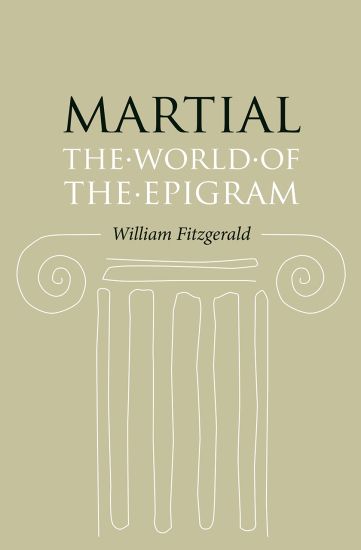
In this age of the sound bite, what sort of author could be more relevant than a master of the epigram? Martial, the most influential epigrammatist of classical antiquity, was just such a virtuoso of the form, but despite his pertinence to today’s culture, his work has been largely neglected in contemporary scholarship. Arguing that Martial is a major author who deserves more sustained attention, William Fitzgerald provides an insightful tour of his works, shedding new and much-needed light on the Roman poet’s world—and how it might speak to our own.Writing in the late first century CE—when the epigram was firmly embedded in the social life of the Roman elite—Martial published his poems in a series of books that were widely read and enjoyed. Exploring what it means to read such a collection of epigrams, Fitzgerald examines the paradoxical relationship between the self-enclosed epigram and the book of poems that is more than the sum of its parts. And he goes on to show how Martial, by imagining these books being displayed in shops and shipped across the empire to admiring readers, prophetically behaved like a modern author. Chock-full of epigrams itself—in both Latin and English versions—Fitzgerald’s study will delight classicists, literary scholars, and anyone who appreciates an ingenious witticism.
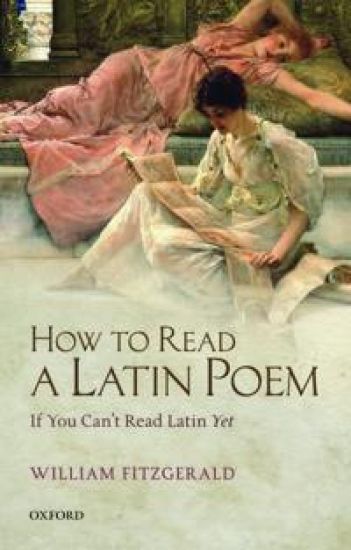
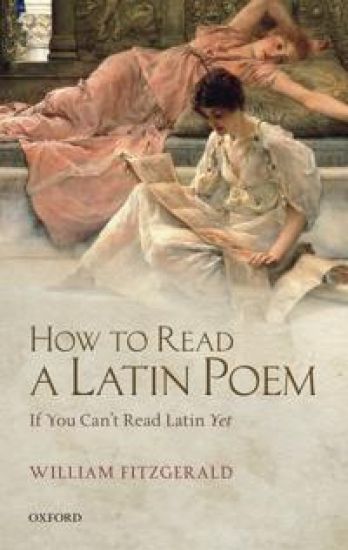
How to Read a Latin Poem

How to Read a Latin Poem

William Fitzgerald

Oxford University Press
2016
nidottu
Latin is very much alive in the poetry written by the great Latin poets, and this book is about their poetry, their language, and their culture. Fitzgerald shows the reader with little or no knowledge of the Latin language how it works as a unique vehicle for poetic expression and thought. Moving between close analysis of particular Latin poems and more general discussions of Latin poets, literature, and society, Fitzgerald gives the un-Latined reader an insider's view of how Latin poetry feels and what makes it worth reading today. His book explores what can be said and done in a poetry and a language that are both very different from English and yet have profoundly influenced it. He takes the reader through the whole range of Latin poetry from the trivial, obscene, and vicious, to the sublime, the passionate, and the uplifting. Individual chapters focus on particular authors (such as Vergil and Horace) or on themes (love, hate, civil war), and together they explain why we should care about what the poets of ancient Rome had to say. If you have ever wondered what all the fuss was about, see for yourselves!
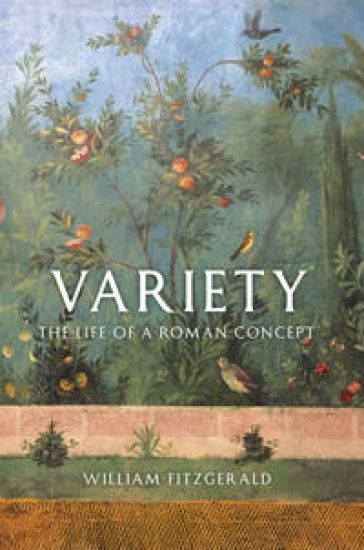
Variety – The Life of a Roman Concept

Variety – The Life of a Roman Concept

William Fitzgerald

University of Chicago Press
2016
sidottu
The idea of variety may seem too diffuse, obvious, or nebulous to be worth scrutinizing, but modern usage masks the rich history of the term. This book examines the meaning, value, and practice of variety from the vantage point of Latin literature and its reception and reveals the enduring importance of the concept up to the present day. William Fitzgerald looks at the definition and use of the Latin term varietas and how it has played out in different works and with different authors. He shows that, starting with the Romans, variety has played a key role in our thinking about nature, rhetoric, creativity, pleasure, aesthetics, and empire. From the lyric to elegy and satire, the concept of variety has helped to characterize and distinguish different genres. Arguing that the ancient Roman ideas and controversies about the value of variety have had a significant afterlife up to our own time, Fitzgerald reveals how modern understandings of diversity and choice derive from what is ultimately an ancient concept.
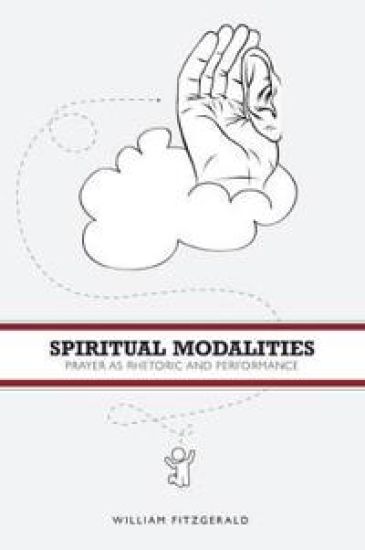
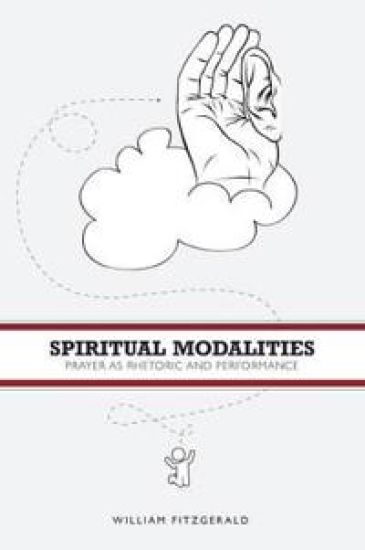
Spiritual Modalities

Spiritual Modalities

William FitzGerald

Pennsylvania State University Press
2016
pokkari
A bold recasting of prayer as a rhetorical art, Spiritual Modalities investigates situations, strategies, and performative modes of discourse directed to divine audiences. Examining how prayer “works,” Spiritual Modalities reads prayer’s situations and strategies, its characteristic acts and attitudes, to advance an understanding of prayer as a basic expression of our rhetorical capacities for communication and communion. This groundbreaking analysis demonstrates how prayer draws on fundamental capacities to engage other beings rhetorically to argue that we are never more human than when we address the nonhuman. Spiritual Modalities is notable in its aim to articulate a critical rhetoric of prayer in a secular idiom. It draws on contributions to rhetorical theory from Kenneth Burke along with a broad range of classical and contemporary perspectives on audience, address, speech acts, and modes of performance. The book also takes a multicultural and multimodal approach to prayer as rhetorical performance. The texts and practices of prayer represented range across religious traditions and historical eras and include both verbal and physical modes of divine address. The book will be of interest to scholars researching religious language, Burkean approaches to discourse, practices of memory, and media studies.
How to Read a Latin Poem

How to Read a Latin Poem

William Fitzgerald

Oxford University Press
2013
sidottu
Latin is very much alive in the poetry written by the great Latin poets, and this book is about their poetry, their language, and their culture. Fitzgerald shows the reader with little or no knowledge of the Latin language how it works as a unique vehicle for poetic expression and thought. Moving between close analysis of particular Latin poems and more general discussions of Latin poets, literature, and society, Fitzgerald gives the un-Latined reader an insider's view of how Latin poetry feels and what makes it worth reading, even today. His book explores what can be said and done in a poetry and a language that are both very different from English and yet have profoundly influenced it. He takes the reader through the whole range of Latin poetry from the trivial, obscene, and vicious, to the sublime, the passionate, and the uplifting. Individual chapters focus on particular authors (such as Vergil and Horace) or on themes (love, hate, civil war), and together they explain why we should care about what the poets of ancient Rome had to say. If you have ever wondered what all the fuss was about, see for yourselves!
Spiritual Modalities

Spiritual Modalities

William FitzGerald

Pennsylvania State University Press
2012
sidottu
A bold recasting of prayer as a rhetorical art, Spiritual Modalities investigates situations, strategies, and performative modes of discourse directed to divine audiences. Examining how prayer “works,” Spiritual Modalities reads prayer’s situations and strategies, its characteristic acts and attitudes, to advance an understanding of prayer as a basic expression of our rhetorical capacities for communication and communion. This groundbreaking analysis demonstrates how prayer draws on fundamental capacities to engage other beings rhetorically to argue that we are never more human than when we address the nonhuman. Spiritual Modalities is notable in its aim to articulate a critical rhetoric of prayer in a secular idiom. It draws on contributions to rhetorical theory from Kenneth Burke along with a broad range of classical and contemporary perspectives on audience, address, speech acts, and modes of performance. The book also takes a multicultural and multimodal approach to prayer as rhetorical performance. The texts and practices of prayer represented range across religious traditions and historical eras and include both verbal and physical modes of divine address. The book will be of interest to scholars researching religious language, Burkean approaches to discourse, practices of memory, and media studies.