Kirjojen hintavertailu. Mukana 12 390 323 kirjaa ja 12 kauppaa.

Kirjailija

William H. Bartsch

Kirjat ja teokset yhdessä paikassa: 5 kirjaa, julkaisuja vuosilta 1995-2026, suosituimpien joukossa Doomed at the Start. Vertaile teosten hintoja ja tarkista saatavuus suomalaisista kirjakaupoista.

5 kirjaa

Kirjojen julkaisuhaarukka 1995-2026.

Victory Fever on Guadalcanal

Victory Fever on Guadalcanal

William H. Bartsch

Texas A M University Press
2014
sidottu
Following their rampage through Southeast Asia and the Pacific in the five months after Pearl Harbor, Japanese forces moved into the Solomon Islands, intending to cut off the critical American supply line to Australia. But when they began to construct an airfield on Guadalcanal in July 1942, the Americans captured the almost completed airfield for their own strategic use.The Japanese Army countered by sending to Guadalcanal a reinforced battalion under the command of Col. Kiyonao Ichiki. The attack that followed would prove to be the first of four attempts by the Japanese over six months to retake the airfield, resulting in some of the most vicious fighting of the Pacific War.During one such battle on the night of August 20–21, 1942, Marines wiped out Ichiki’s men, who—imbued with “victory fever”—had expected a quick and easy victory.William H. Bartsch draws on correspondence, interviews, diaries, memoirs, and official war records, including those translated from Japanese sources, to offer an intensely human narrative of the failed attempt to recapture Guadalcanal’s vital airfield.
Doomed at the Start

Doomed at the Start

William H. Bartsch

Texas A M University Press
1995
nidottu
During the first three days of the Japanese assault on American Pacific bases in December of 1941, the 24th Pursuit Group, the only unit of interceptor aircraft in the Philippine Islands, was almost destroyed as an effective force. Yet the group’s pilots, doomed from the start by their limited training, an inadequate air warning system, and lack of familiarity with the few flyable pursuit aircraft they had left, fought on against immensely superior number of Japanese army and navy fighters.
Desperate Gambit

Desperate Gambit

William H. Bartsch

TEXAS A M UNIVERSITY PRESS
2026
sidottu
In the dark days of World War II, just after Pearl Harbor, Japanese forces were moving almost at will across Southeast Asia and the Pacific. With his troops besieged in the Philippines and his bomber and fighter squadrons nearly reduced to impotence, General MacArthur pressured the US War Department to provide urgent help, particularly for replacements for the B-17 bombers decimated in the December 8 attack on Clark Field. President Roosevelt committed to send a large force of heavy bombers and their crews to the Philippines, a reinforcement plan code named "Project X." During the following weeks, the air force combat command made frenzied efforts to access the sixty-five Boeing B-17Es and fifteen Consolidated LB-30 heavy bombers that were to comprise the Project X force. The novice crews that were cobbled together would be required to fly their bombers two-thirds of the way around the globe, from MacDill Field in Florida to their new destination on the island of Java, where they were immediately thrown into combat. Project X, as the first test of the doctrine of strategic bombing, was an assignment unprecedented in US military history, though it was ultimately doomed to failure. Continuing his masterful series of books on the air war in the Pacific Theater, military historian William H. Bartsch takes readers inside the headquarters planning rooms, the front-line command posts, and the cockpits of the aircraft to chronicle another chapter in the early days of the Allied effort to meet the Japanese challenge. Desperate Gambit: Project X and the American Aerial Defense of Java, 1941–1942 will be eagerly received by both general readers and professional historians interested in the evolution of aerial combat and strategic bombing of World War II in the Pacific.
December 8, 1941

December 8, 1941

William H. Bartsch

Texas A M University Press
2012
nidottu
Ten hours after the attack on Pearl Harbor, "another Pearl Harbor" of even more devastating consequence for American arms occurred in the Philippines, 4,500 miles to the west. On December 8, 1941, at 12.35 p.m., 196 Japanese Navy bombers and fighters crippled the largest force of B-17 four-engine bombers outside the United States and also decimatedtheir protective P-40 interceptors. The sudden blow allowed the Japanese to rule the skies over the Philippines, removing the only effective barrier that stood between them and their conquest of Southeast Asia. This event has been called "one of the blackest days in American military history." How could the army commander in the Philippines--the renowned Lt. Gen. Douglas MacArthur--have been caught with all his planes on the ground when he had been alerted in the small hours of that morning of the Pearl Harbor attack and warned of the likelihood of a Japanese strike on his forces? In this book, author William H. Bartsch attempts to answer this and other related questions. Bartsch draws upon twenty-five years of research into American and Japanese records and interviews with many of the participants themselves, particularly survivors of the actual attack on Clark and Iba air bases. The dramatic and detailed coverage of the attack is preceded by an account of the hurried American build-up of air power in the Philippines after July, 1941, and of Japanese planning and preparations for this opening assault of its Southern Operations. Bartsch juxtaposes the experiences of staff of the U.S. War Department in Washington and its Far East Air Force bomber, fighter, and radar personnel in the Philippines, who were affected by its decisions, with those of Japan's Imperial General Headquarters in Tokyo and the 11th Air Fleet staff and pilots on Formosa, who were assigned the responsibility for carrying out the attack on the Philippines five hundred miles to the south. In order to put the December 8th attack in broader context, Bartsch details micro-level personal experiences and presents the political and strategic aspects of American and Japanese planning for a war in the Pacific. Despite the significance of this subject matter, it has never before been given full book-length treatment. This book represents the culmination of decades-long efforts of the author to fill this historical gap.
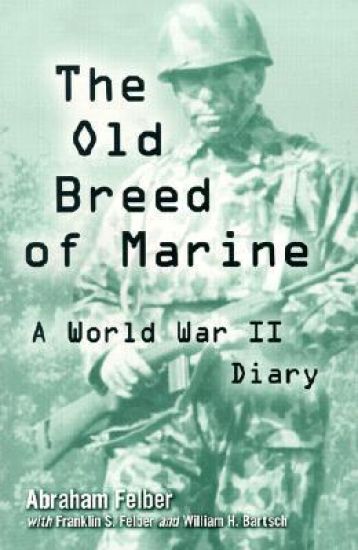
The Old Breed of Marine

The Old Breed of Marine

Abraham Felber; Franklin S. Felber; William H. Bartsch

McFarland Co Inc
2002
pokkari
On Friday, August 7, 1942, at 1300, after a furious cannonading by the Navy fighting vessels slamming salvo after salvo into the shores, 36-year-old Marine Sergeant Abraham Felber jumped from a Higgins boat onto Beach Red in the first-wave assault on the deadly jungle island of Guadalcanal. Felber was responsible for writing the Record of Events for his unit, and recorded in meticulous detail the fighting that wrested Guadalcanal from the enemy in the skies, off the shores, and in the muddy jungles. This work is part of the diary that Abraham Felber kept during his service in World War II. It begins with January 7, 1941, and ends with December 31, 1945. As the 1st Sergeant of Headquarters Battery, 11th Marines, Felber dealt with both officers and enlisted men, which exposed him to the perspectives and insights of both. Felber was also granted the unusual privilege of taking photographs during the Guadalcanal and Cape Gloucester campaigns, some of which are published here for the first time. Felber's accounts of his unit's role in the combat at Guadalcanal and Cape Gloucester; his time at Guantanamo Bay, Parris Island and Camp Lejune; daily life, and other experiences are presented here as he recorded them.