Kirjojen hintavertailu. Mukana 12 459 402 kirjaa ja 12 kauppaa.
Kirjailija
William H. Goetzmann
Kirjat ja teokset yhdessä paikassa: 6 kirjaa, julkaisuja vuosilta 1998-2010, suosituimpien joukossa Exploration and Empire: The Explorer and the Scientist in the Winning of the American West. Vertaile teosten hintoja ja tarkista saatavuus suomalaisista kirjakaupoista.
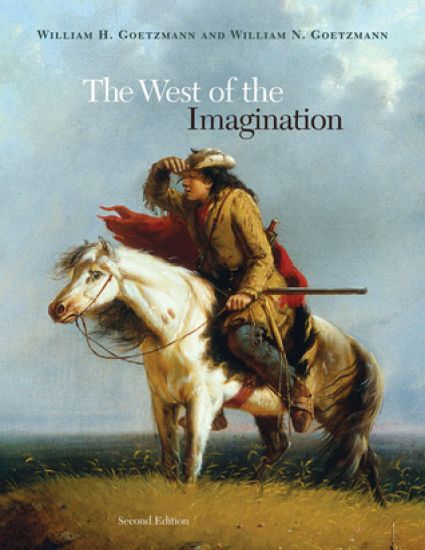
For many people, ""western art"" immediately conjures images by Frederic Remington or Georgia O'Keeffe - but there's so much more. From early explorers' first sketches of the Rockies to the modern earth sculptures of Michael Heizer, images of the American West are as multifaceted as its cultures. This remarkable book embraces them all.A landmark overview of western American art, the original edition of The West of the Imagination brought the region to wide public attention as a companion to a popular PBS series of the same name. This book, significantly expanded and updated, shows that the West is a vibrant mirror of American cultural diversity. Through 450 illustrations - more than 300 in color - the authors trace the visual evolution of the myth of the American West, from unknown frontier to repository of American values, covering popular and high arts alike.An unrivaled survey, The West of the Imagination is an immensely informative and pleasurable volume for anyone with an interest in the region's creative legacy.
From early mountain men searching for routes through the Rockies to West Point soldier-engineers conducting topographical expeditions, the exploration of the American West mirrored the development of a fledgling nation. In his Pulitzer Prize-winning Exploration and Empire, William H. Goetzmann analyzes the special role the explorer played in shaping the vast region once called "the Great American Desert." According to Goetzmann, the exploration of the West was not a haphazard series of discoveries, but a planned - even programmed - activity in which explorers, often armed with instructions from the federal government, gathered information that would support national goals for the new lands. As national needs and the frontier's image changed, the West itself was rediscovered by successive generations of explorers, a process that in turn helped shape its culture. Nineteenth-century western exploration, Goetzmann writes, can be divided into three stages. The first, beginning with the Lewis and Clark expedition in 1804, was marked by the need to collect practical information, such as the locations of the best transportation routes through the wilderness. Then came the era of settlement and investment - the drive to fulfill the Manifest Destiny of a nation beginning to realize what immense riches lay beyond the Mississippi. The final stage involved a search for knowledge of a different kind, as botanists and paleontologists, ethnographers and engineers hunted intensively for scientific information in the "frontier laboratory." This last phase also saw a rethinking of the West's place in the national scheme; it was a time of nascent conservation movements and public policy discussions aboutthe region's future. Drawing on a wealth of primary sources, Goetzmann offers a masterful overview of the opening of the West, as well as a fascinating study of the nature of exploration and its consequences for civilization.
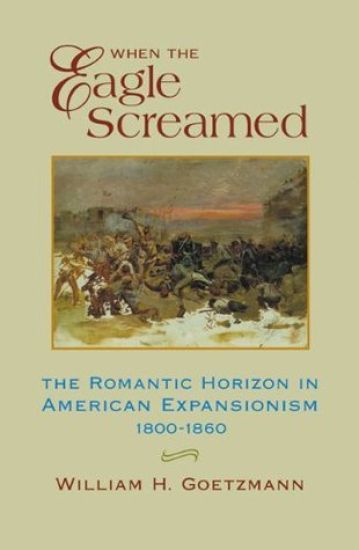
When the Eagle Screamed argues that America's expansionism between 1800 and 1860 positioned it against some of the world's most powerful and aggressive nations. As the United States moved onto the world scene in this age of Manifest Destiny, it clashed with Britain, France, Russia, Spain, and Mexico.
This extensively revised edition of Thurman Wilkins's masterful and engaging biography - well illustrated in color and black-and-white - draws on new information and recent scholarship to place Thomas Moran more securely in the milieu of the Gilded Age. It also portrays more fully the controversies that surrounded the art of Moran's time, as he became ""the Dean of American Painters.""The American West was the subject of Thomas Moran's greatest artistic triumphs - Yosemite, the Grand Canyon of the Colorado, Zion Canyon, the Virgin River, Colorado's Mountain of the Holy Cross, and the Grand Tetons - but his travels with Ferdinand V. Hayden's geological surveys of the Upper Yellowstone were matched by trips to his native Britain and to Venice, Florida, the Spanish Southwest, and Old Mexico. These scenes inspired memorable landscapes and seascapes, as did the sojourns of the Moran family in Pennsylvania, New Jersey, and East Hampton, Long Island, when they retreated from the demands of the New York art scene. In the 1880s Moran and his artist wife, Mary Nimmo Moran, also threw themselves into the etching craze of the period, creating some of the finest prints produced in the United States.Moran was an artist happy in his work. He wrote, ""I have always held that the grandest, most beautiful, or wonderful in nature, would, in capable hands, make the grandest, most beautiful, or wonderful pictures."" The New York Times said of the first edition of this unique account of his life, ""Moran's mastery comes through clearly and awesomely and often, pleasurably."" Readers will find the new edition equally enjoyable.