Kirjojen hintavertailu. Mukana 12 595 353 kirjaa ja 12 kauppaa.

Kirjailija

William H. Miller

Kirjat ja teokset yhdessä paikassa: 59 kirjaa, julkaisuja vuosilta 1954-2026, suosituimpien joukossa Studies in Schizophrenia. Vertaile teosten hintoja ja tarkista saatavuus suomalaisista kirjakaupoista.

Mukana myös kirjoitusasut: William H Miller

59 kirjaa

Kirjojen julkaisuhaarukka 1954-2026.

Studies in Schizophrenia

Studies in Schizophrenia

Robert G Heath; Hal C Becker; Leona Bersadsky; Robert M Corrigan; Arthur W Epstein; Warren L Founds; Francisco Garcia Bengochea; Charles D Hendley; Robert Hodes; Charles Hogan; H E King; Byron E Leach; Raeburn C Llewellyn; Walter A Mickle; William H Miller; Frederick F Millsaps; Russell R Monroe; Samuel M Peacock; T Duane Price; Ernest Sachs; Florence B Strohmeyer; John J Weber; Kathleen M Young

Harvard University Press
1954
sidottu
Picture Encyclopedia of Passenger Ships 1955

Picture Encyclopedia of Passenger Ships 1955

William H Miller

PEN SWORD BOOKS LTD
2026
sidottu
The year 1955 came at the height of a boom for passenger ships. World War II had ended a decade before, business was restored, global markets had reopened, and shipping for trade and transport was in high demand. Picture Encyclopedia of Passenger Ships 1955 is an international directory of worldwide passenger ships and their services in that peak year, when one could sail from Liverpool to Valparaiso, Genoa to Cape Town, or Hong Kong to San Francisco. Over 150 vessels are included, with photographs, itineraries and essential statistics, covering all the great shipping lines of the 1950s and their routes to every corner of the globe.
On All the Seven Seas

On All the Seven Seas

William H Miller

PEN SWORD BOOKS LTD
2026
sidottu
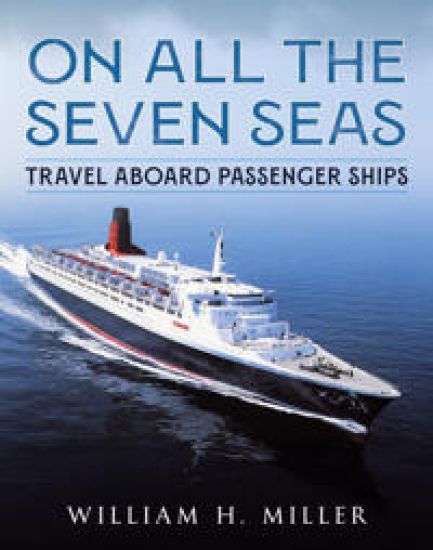
On All the Seven Seas: Travel Aboard Passenger Ships is a collection of stories of various sea and river voyages made by the author in the 1980s. Some ships featured are now gone, leaving precious memories that have become the substance of pure maritime nostalgia. Others are still plying the globe, taking on new passengers, generating new memories with every stretch of water crossed. The stories include experiences on vessels as illustrious as QE2 and as obscure as Poland's little Stefan Batory. Going far beyond the ordinary, the author recounts taking a twelve-passenger containership to the Far East, joining a mail steamer along the fabled Norwegian coast in the depths of winter, and getting swept up in a carnival cruise in the sunny Caribbean. On All the Seven Seas is a love letter to the world’s rivers, seas and oceans and the passenger-carrying vessels that ply them.
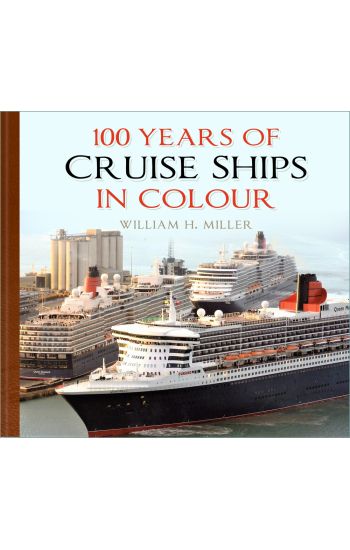
100 Years of Cruise Ships in Colour

100 Years of Cruise Ships in Colour

William H. Miller

THE HISTORY PRESS LTD
2026
nidottu
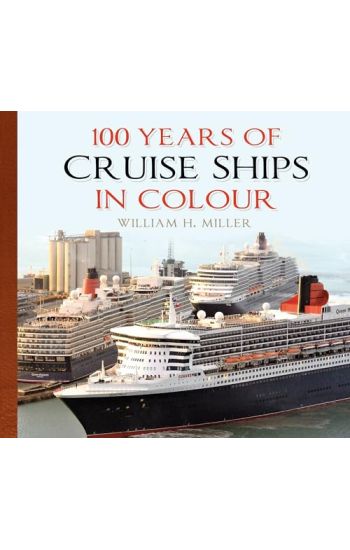
Acclaimed maritime historian William H. Miller presents a vivid collection of photographs charting a century of cruising the ocean waves from the 1920s to the start of the current cruising boom. 100 Years of Cruise Ships in Colour includes many early, often seasonal, liners, along with the more purposeful generation of ‘floating hotels’ that began in the 1960s. There are favourites, such as the pre-Second World War Franconia, Reliance, Nieuw Amsterdam and Normandie; then, in greater numbers, a ‘fleet’ starting from the 1950s and ’60s – ships such as the Caronia, Andes, Queen of Bermuda, Nassau, Italia, Bahama Star, Reina Del Mar, Oceanic, Skyward, Song of Norway, Hamburg, Royal Viking Star and Queen Elizabeth 2. Finally, steaming into the twenty-first century, we see the likes of the Royal Princess, Statendam, Crystal Symphony, Oriana, Queen Mary 2, Allure of the Seas and Viking Star. This is a magnificent ‘scrapbook’ of a great and grand generation of ships.
Serving on the Big Ships

Serving on the Big Ships

William H. Miller

Fonthill Media Ltd
2024
nidottu
"Serving on the Big Ships: Life on the Liners" looks at passenger ship history from the perspective of recollections, impressions, and anecdotes of those who sailed these fine, but largely bygone vessels. It covers the last golden age of ocean liner travel, beginning in the 1950s and continuing into the 1970s and '80s. It reflects a pre-airline age-when passengers sailed from A to B, from port to port. It was before liners turned to cruising and where ports were more entertainment than destination. Staff members - from captains to stewards-recall the likes of Cunard & Holland-America on the North Atlantic, the Italian Line to the Mediterranean, Royal Mail Lines to South America, Union-Castle to Africa and P&O-Orient to Australia & the Far East.
British Passenger Liners in Colour

British Passenger Liners in Colour

William H. Miller

THE HISTORY PRESS LTD
2023
sidottu
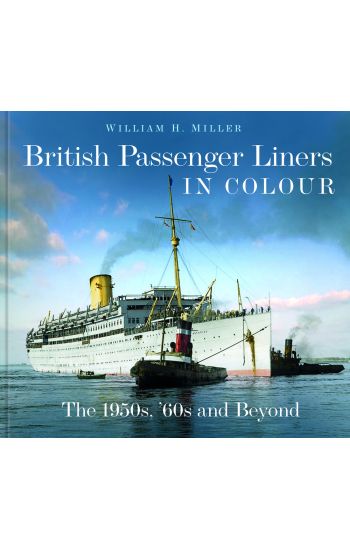
At a time when everything is constantly changing, it can be comforting to look back. British Passenger Liners in Colour is just that: a look back at a time when the British-flag passenger fleet spanned the world from Southampton to South America.Using glorious full-colour images, many previously unseen, acclaimed maritime historian William H. Miller embarks on a voyage through a golden era of ocean liners. From Anchor Line to the Union-Castle Line, RMS Aquitania *to MS *Vistafjord, they all return to the high seas in this beautiful book, one for all ocean-liner enthusiasts to enjoy. Shipping Co, Orient Line, P&O and Shaw Savill Line.
Ships of Splendour

Ships of Splendour

William H. Miller

THE HISTORY PRESS LTD
2023
nidottu
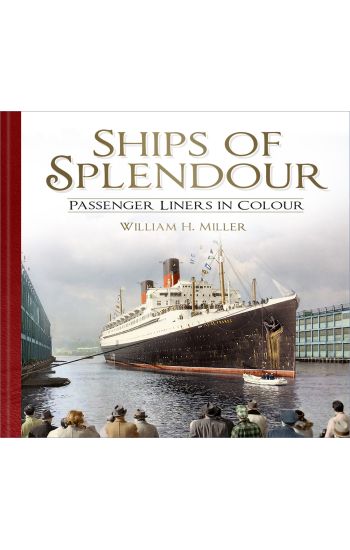
The great passenger liners of the twentieth century make for iconic images of maritime history and design. Ships of Splendour presents the development of passenger ships across the twentieth century, from the 1920s, through the 1940s, and the heyday of the 1950s and ’60s, until the onset of the jet age.The fleet includes famous passenger ships, such as the great Cunarders; titans of the North Atlantic, like the United States, France and Michelangelo and other icons, including the Southern Cross, Windsor Castle, Canberra and Oriana. Homage is also paid to the smaller liners, which were just as important in shaping the history of modern seafaring – ships such as the Aureol, Batory, Guglielmo Marconi, Hanseatic, Queen of Bermuda and Willem Ruys. Replete with notes, facts and anecdotes about these ships, the history of the passenger liner is broken down ship-by-ship and decade-by-decade. These ships return to the high seas once again in superb detail and vibrant colour.
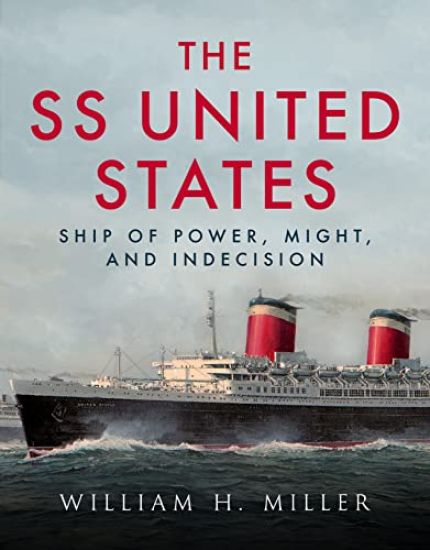
SS United States

SS United States

William H. Miller

Fonthill Media Ltd
2022
nidottu
The ‘SS United States’ was a great symbol of post-World War II American genius. She was the most advanced ocean liner of her time—modern, innovative and hugely powerful. Designed to be a commercial liner but easily convertible to wartime troopship, she entered service in July 1952, seventy years ago, to rousing triumph and success. She captured the prized Blue Riband for transatlantic speed, brought glory to America and her owners, and enjoyed great success for a full decade. But after trans-ocean jets arrived, her success slowly faded until fully decommissioned by 1969. Over fifty years of idleness, revival plans and schemes, and neglect and decay followed. To this day, the ‘United States’ waits silently at a Philadelphia pier. This is the story of a very great and beloved ship—her glory days, but also her days of struggle and indecision.
100 Years of Cruise Ships in Colour

100 Years of Cruise Ships in Colour

William H. Miller

The History Press Ltd
2021
sidottu
This latest book from William H. Miller presents 150 photographs, all in rich colour, across a span of almost 100 years: from the 1920s to the start of the current cruising boom. It includes many early, often seasonal, liners; then the more purposeful generation of ‘floating hotels’ that began in the 1960s. There are favourites, such as the pre-Second World War Franconia, Reliance, Nieuw Amsterdam and Normandie; then, in greater numbers, a ‘fleet’ starting from the 1950s and ‘60s – ships such as the Caronia, Andes, Queen of Bermuda, Nassau, Italia, Bahama Star, Reina Del Mar, Oceanic, Skyward, Song of Norway, Hamburg, Royal Viking Star and Queen Elizabeth 2. Finally, steaming into the twenty-first century, we see the likes of the Royal Princess, Statendam, Crystal Symphony, Oriana, Queen Mary 2, Allure of the Seas and Viking Star.
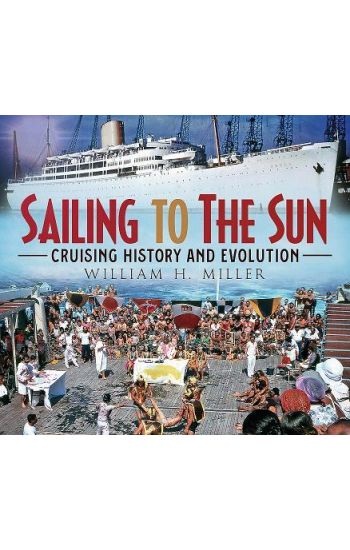
Sailing to the Sun

Sailing to the Sun

William H. Miller

Fonthill Media
2019
nidottu
The worldwide cruise industry is booming-alone, there are some 56 new cruise ships being built or planned (2018). Cruise ships visit ports around the world. And the ships themselves are amenity-filled, moving resorts. But when did it all begin? This book looks at the evolution of cruising, from the mid-nineteenth century. It chronicles the growth of long, luxury cruising in the Twenties and then, in the Depression-era Thirties, cruising reaches the general public as a form of escape. By the late Sixties, purposeful cruise ships were being built and these spawned today's fleet, including the largest passenger ships ever built.
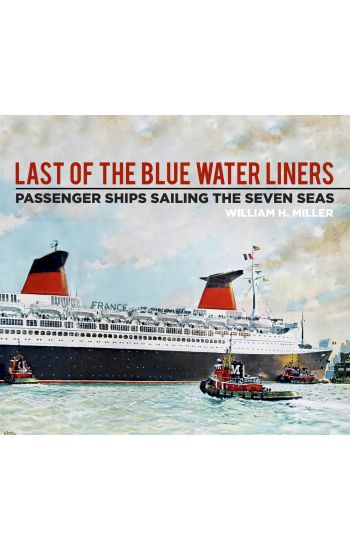
Last of the Blue Water Liners

Last of the Blue Water Liners

William H. Miller

The History Press Ltd
2018
nidottu
This is the story of the last class-divided passenger ships that carried travellers from point to point. In the final years of activity, spanning from the 1940s to the 1960s, they carried Hollywood stars and even royalty on the Atlantic, businessmen to South America and Africa, migrants to Australia and New Zealand, and visitors returning to European homelands. Last of the Blue Water Liners nods to the Atlantic liners but also revels in the many other passenger ships that plied trades around the world: vessels like the Antilles, Oslofjord, Kampala and Changsha. Complete with rare images and the insight of the prolific maritime historian William H. Miller, this book is a nostalgic parade of a bygone age, a generation of ships all but swept away in the 1960s and 1970s as jet travel changed the world.
Handling Cargo

Handling Cargo

William H. Miller

The History Press Ltd
2018
nidottu
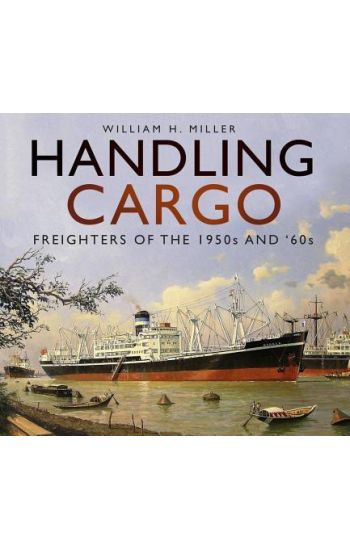
Freighters of the 1950s and ’60s – with masts, booms and hatches – were the last of their generation. It was the end of an era, just before the massive transition to faster, more efficient containerised shipping on larger and larger vessels. These were ‘working ships’, but many would be retired prematurely and finish up under flags of convenience, for virtually unknown owners, before going off to the scrappers in the 1970s and ’80s. For some ships, their life’s work was cut short and their decommissioning was quick. In Handling Cargo, William H. Miller remembers the likes of Cunard, Holland America and United States Lines on the North Atlantic, Moore McCormack Lines to South America, Farrell Lines to Africa and P&O out East.
Royal Mail Liners 1925-1971

Royal Mail Liners 1925-1971

William H. Miller

Amberley Publishing
2017
nidottu
The Royal Mail has, for over 500 years, provided a crucial service in keeping people connected by land, sea and air. As the British Empire grew, so too did the need for a fleet of liners to service it, and in 1839 Queen Victoria granted the initial Royal Charter incorporating the Royal Mail Steam Packet Co. After running into financial trouble, the company was reconstituted as Royal Mail Lines in 1930. With his superb collection of rare images, Bill Miller brings to life the ships that operated for the line in the twentieth century. Covering the turbulent period of the Second World War, as well as more peaceful and prosperous times, this collection of images illuminates the stories behind some of the great iconic liners. Some of the ships featured include RMS Asturias and RMS Alcantara, at the time the largest motor ships in the world, and the RMS Magdalena, which sank on its maiden voyage in 1949.
Holland America Liners 1950-2015

Holland America Liners 1950-2015

William H. Miller

Amberley Publishing
2016
nidottu
Founded in 1873, the Holland America Line provided services carrying passengers and freight between the Netherlands and North America. When the Second World War ended, only nine of Holland America Line’s twenty-five ships had survived and the company set about rebuilding. The pride of HAL’s post-war fleet was SS Rotterdam, completed in 1959, which was one of the first ships on the North Atlantic equipped to offer two-class transatlantic crossings and single-class luxury cruising. However, competition from the airlines meant that in the early 1970s Holland America ended their transatlantic passenger services; in 1973 the company sold its cargo-shipping division. Now owned by the American cruise line Carnival, Holland America offers round-the-world voyages and cruises in the Mediterranean, the Caribbean and Asia. In this book, renowned ocean liner historian and author William H. Miller takes a look at the Holland America Line and its post-war fleet up to 2015.
Great Passenger Ships 1950-1960

Great Passenger Ships 1950-1960

William H. Miller

The History Press Ltd
2016
nidottu
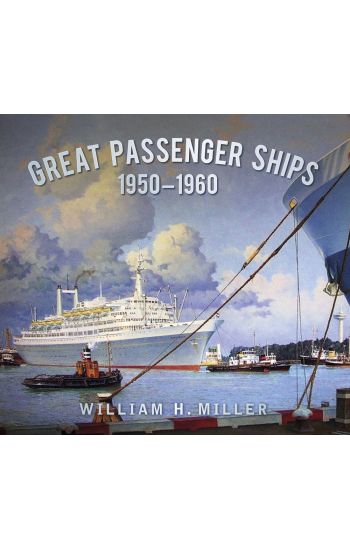
The 1950s was a fascinating decade for the great liners. After the global devastation of two decades of war and Depression, shipyards were creating one new liner after another, it seemed, to rebuild and renew passenger ship services all over the world. There were the likes of the Kungsholm and Oslofjord from Scandinavia, the French Flandre and a succession of new liners from P&O-Orient, the Italian Line, Messageries Maritimes and many more. The new hopeful era of the 1950s was highlighted by such brilliant, headline-making ships as the speedy United States, breaking records on an unprecedented scale, the engines-aft Southern Cross and the mastless Orsova. Showcased beautifully by the stunning images and nostalgic outlook of prolific maritime historian William H. Miller, this book shines a well-earned spotlight on some of the world’s most popular passenger liners.
Great Mediterranean Passenger Ships

Great Mediterranean Passenger Ships

William H. Miller

The History Press Ltd
2016
nidottu
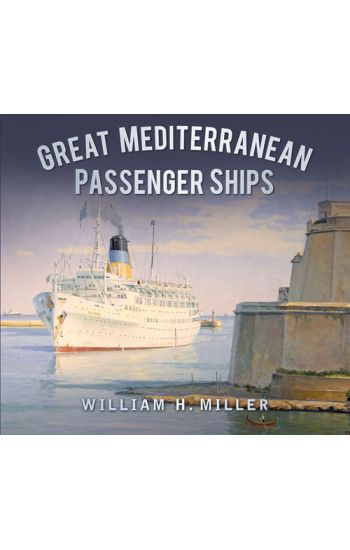
It is hard to think of the passenger liners from the golden era of Mediterranean cruising without also conjuring the nostalgic, dream-like vision of azure-blue waters, bright sunshine and swimming pools with clusters of umbrellas and sunbathing passengers. The great age of Mediterranean passenger liners began in the 1920s when the Italians built their first big ships, such as the Augustus, Saturnia and Conte Grande. In the 1930s, things got really interesting with the creation of the superliners Rex and Conte di Savoia. In the 1950s and ’60s, as Italy built a huge post-war fleet, Greece, Spain, Portugal, Turkey and Israel commissioned their biggest ships yet. William Miller has written ninety books on passenger ships and is an acknowledged world expert in his field. Full of colour and the first-hand memories of passengers and crew, this endearing reflection on the majestic world of Mediterranean travel cannot be missed. Quick, the whistles are sounding!
Sailing and Soaring

Sailing and Soaring

William H. Miller

Fonthill Media
2016
nidottu
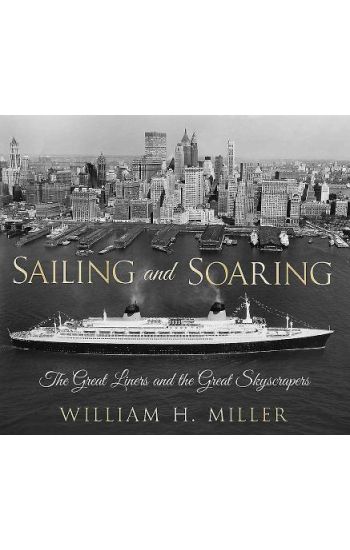
The story of the Great Liners begins on the Atlantic route between the Old World and the New, between Europe and the United States. It was the most prestigious, most progressive and certainly most competitive ocean liner run of all time. It was on the North Atlantic that the largest, fastest and indeed grandest passenger ships were created. In this book, William Miller concentrates for the most part on these Atlantic superliners. It has been a race, sometimes fierce, that has continued for well over a century. Smaller passenger ships, even ones of 30,000 and 40,000 tons, are for the most part left to other books. The story begins even earlier, in 1889, when Germany's Kaiser Wilhelm II visited his grandmother, Queen Victoria, and attended the British Naval Review at Spithead. The British were more than pleased to show off not only the mightiest naval vessels afloat, but the biggest passenger ships then afloat, namely the 10,000-ton 'Teutonic' of the White Star Line. These ships caught the Kaiser's royal eye. His enthusiasm, his determination and, assuredly, his jealousies were aroused. Her returned to his homeland determined that Germany should have bigger and better ships.The world must know, he theorized, that Imperial Germany had reached new and higher technological heights. To the Kaiser and other envious Germans, the British had, quite simply, had a monopoly on the biggest ships long enough. British engineers and even shipyard crews were recruited, teaching German shipbuilders the key components of a new generation of larger ships. Shipyards at Bremen, Hamburg and Stettin were soon ready. It would all take eight years, however, before the first big German liner would be completed. She would be large enough and fast enough to be dubbed the world's first "super liner". She would only be the biggest vessel built in Germany, but the biggest afloat. The nation's most prominent shipowners, the Hamburg America Line and the North German Lloyd, were both deeply interested. It was the Lloyd, however, which rose first to the occasion. Enthusiastically and optimistically, the first ship was the first of a successive quartet. The illustrious Vulkan Shipyard at Stettin was given the prized contract. Triumph seemed to be in the air! The Kaiser himself went to the launching, on 3 May 1897, of this new Imperial flagship.Designed with four funnels but grouped in pairs, the 655-ft long ship was named 'Kaiser Wilhelm der Grosse', honoring the Emperor's grandfather. With the rattle of chains, the release of the building blocks and then the tumultuous roar as the unfinished hull hit the water, this launching was the beginning of the Atlantic race for supremacy, which would last for some 70 years. Only after the first arrival of the trans-Atlantic jet in October 1958 would the race quiet down. The 'Kaiser Wilhelm der Grosse' was the great beginning, the start of a superb fleet of what has been dubbed "ocean greyhounds" and later aptly called the "floating palaces". Worried and cautious, the normally contented British referred to the brand new Kaiser as a "German monster".