Kirjojen hintavertailu. Mukana 12 595 353 kirjaa ja 12 kauppaa.

Kirjailija

William Henry Kellar

Kirjat ja teokset yhdessä paikassa: 3 kirjaa, julkaisuja vuosilta 1999-2017, suosituimpien joukossa Enduring Legacy. Vertaile teosten hintoja ja tarkista saatavuus suomalaisista kirjakaupoista.

3 kirjaa

Kirjojen julkaisuhaarukka 1999-2017.

Enduring Legacy

Enduring Legacy

William Henry Kellar; George H. W. Bush; James A. Baker

Texas A M University Press
2014
sidottu
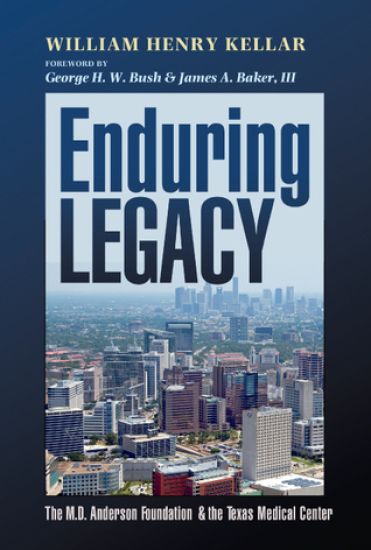
At the heart of Houston stands the Texas Medical Center. This dense complex of educational, clinical, and hospital facilities offers state-of-the-art patient care, basic science, and applied research in more than fifty medicine-related institutions. Three medical schools, four schools of nursing, and schools of dentistry, public health, and pharmacology occupy the thousand-acre campus. But none of this would exist if not for the generosity and vision of Monroe Dunaway Anderson, who, in 1936, established the foundation that bears his name. The M. D. Anderson Foundation ultimately became the driving force behind creating and shaping this leading-edge medical complex into what it is today. Enduring Legacy: The M. D. Anderson Foundation and the Texas Medical Center provides a unique perspective on the indispensable role the foundation played in the creation of the Texas Medical Center. It also offers a case study of how public and private institutions worked together to create this veritable city of health that has since become the largest medical complex in human history. Historian William Henry Kellar caps off a decade of research on institutions and characters associated with the Texas Medical Center. He draws on oral histories, extensive archival work, and a growing secondary literature to provide an absorbing account of this leading institution of modern medicine and the philanthropy that made it possible.
Richard E. Wainerdi and the Texas Medical Center

Richard E. Wainerdi and the Texas Medical Center

William Henry Kellar; Charles A. LeMaistre

Texas A M University Press
2017
sidottu
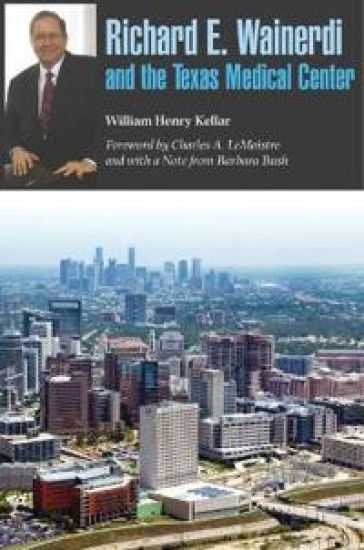
In 2012, Richard E. Wainerdi retired as president and chief executive officer of the Texas Medical Center after almost three decades at the helm. During his tenure, Wainerdi oversaw the expansion of the center into the world’s largest medical complex, hosting more than fifty separate institutions. “I wasn’t playing any of the instruments, but it’s been a privilege being the conductor,” he once said to a newspaper reporter.William Henry Kellar traces Wainerdi’s remarkable life story from a bookish childhood in the Bronx to a bold move west to study petroleum engineering at the University of Oklahoma. Wainerdi went on to earn a master’s degree and a PhD from Penn State University where he immersed himself in nuclear engineering. By the late 1950s, Texas A&M University recruited Wainerdi to found the Nuclear Science Center, where he also served as professor and later associate vice president for academic affairs.In the 1980s, Wainerdi took charge of the Texas Medical Center, embarking on a “second career” that ultimately expanded the center from thirty-one institutions to fifty-three and increased its size threefold. Wainerdi pushed for and ensured a culture of collaboration and cooperation. In doing this, he developed a new nonprofit administrative model that emphasized building consensus, providing vital support services, and connecting member institutions with resources that enabled them to focus on their unique areas of expertise. At a time when Houston was widely known as the “energy capital of the world,” the city also became home to the largest medical complex in the world. Wainerdi’s success was to enable each member of the Texas Medical Center to be an integral part of something bigger and something very special in the development of modern medicine.
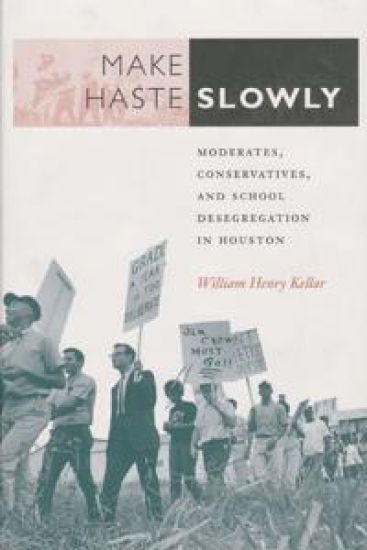
Make Haste Slowly

Make Haste Slowly

William Henry Kellar

Texas A M University Press
1999
sidottu
Provides an examination of Houston's racially segregated public school system, the long fight for desegregation, and the roles played by community groups in one of the stories of the civil rights era.