Kirjojen hintavertailu. Mukana 12 595 353 kirjaa ja 12 kauppaa.

Kirjailija

William J. Barber II

Kirjat ja teokset yhdessä paikassa: 4 kirjaa, julkaisuja vuosilta 2014-2021, suosituimpien joukossa Indecent Assembly. Vertaile teosten hintoja ja tarkista saatavuus suomalaisista kirjakaupoista.

Mukana myös kirjoitusasut: William J Barber II

4 kirjaa

Kirjojen julkaisuhaarukka 2014-2021.

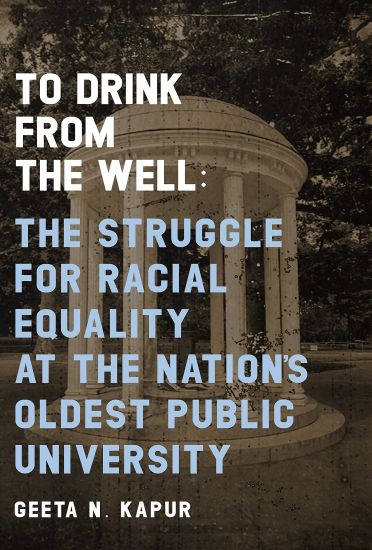
To Drink from the Well

To Drink from the Well

Geeta N. Kapur; William J. Barber II

John F Blair Publisher
2021
pokkari
Law professor and civil rights activist Geeta N. Kapur provides analysis and commentary on the story of systemic racism in leadership, scholarship, and organizational foundations at the University of North Carolina. The University of North Carolina is the oldest public university in the US, with the cornerstone for the first dormitory, Old East, laid in 1793. At that ceremony, the enslaved people who would literally build that structure were not acknowledged; they were not even present. In fact, 158 years passed before Black students were admitted to this university in Chapel Hill, and it was another 66 years after that before students forcibly removed the long-criticized Confederate “Silent Sam” monument. Indeed, this university, revered in the state and the nation, has been entwined with white supremacy and institutional racism throughout its history—and the struggle continues today. To Drink from the Well: The Struggle for Racial Equality at the Nation's Oldest Public University explores the history of UNC by exposing the plain and uncomfortable truth behind the storied brick walkways, “historic” statuary, and picturesque covered well, the icon of the campus. Law professor and civil rights activist Geeta N. Kapur chronicles the racism within the university and traces its insidious effects on students, faculty, and even the venerable Tarheel sports programs. Kapur tells this story not as a historian, but as a citizen speaking to her fellow citizens. She relies on the historical record to tell her story, and where that record is lacking, she elaborates on that record, augmenting and deconstructing the standard chronology. Kapur explores both the Chapel Hill campus and a parallel movement in nearby Durham, where a growing Black middle class helped to create North Carolina Central University, a historically Black public university.
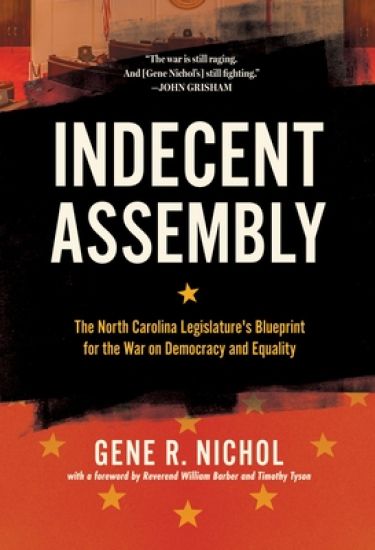
Indecent Assembly

Indecent Assembly

Gene R. Nichol; William J. Barber II; Timothy B. Tyson

John F Blair Publisher
2020
pokkari
"The war is still raging. And [Gene Nichol]’s still fighting." —John Grisham North Carolina has, since 2013, undergone a greater political sea change than any other state. For the first time, seven years ago, state government became completely captured by a radicalized and aggressive Republican leadership determined to produce the most ultra-conservative political regime in the nation. In a remarkably brief time span, Republican lawmakers have moved successfully toward that goal. The New York Times refers to the project as “North Carolina’s pioneering work in bigotry.” Other states have begun to follow what they expressly deemed the “North Carolina playbook.” Indecent Assembly lays out in detail, and with no small dose of passion, the agenda, purposes, impacts, and transgressions of the Republican North Carolina General Assembly since it came to dominate life in the Tar Heel State. Nichol outlines, without holding punches, the stoutest war waged against people of color and low-income citizens seen in America for a half-century. All-white Republican caucuses, dominating both houses of the General Assembly, have behaved essentially like a White People’s Party, without the nomenclature. Bold steps have also been taken to diminish the equal dignity of women and an internationally famed crusade against LGBTQ+ Tar Heels has capped off what has become a state-based battle against the Fourteenth Amendment. But the Republican General Assembly has not stopped with substantive legal changes. It has attacked the fundaments of American constitutional government. In 2019, the state of North Carolina, in short, is involved in a brutal battle for its own decency. If the contest is lost here, other states will likely abandon defining cornerstones of American liberty and equality as well. North Carolina today is not presented with the mere give and take of normal politics. It struggles over its meaning as a commonwealth and its future as a democracy. The book is introduced with a foreword by Rev. William Barber, leader of the Moral Monday Movement in North Carolina and the Poor People’s Campaign nationally, and Timothy Tyson, Duke University civil rights historian, activist, and author of The Blood of Emmett Till and Blood Done Sign My Name.
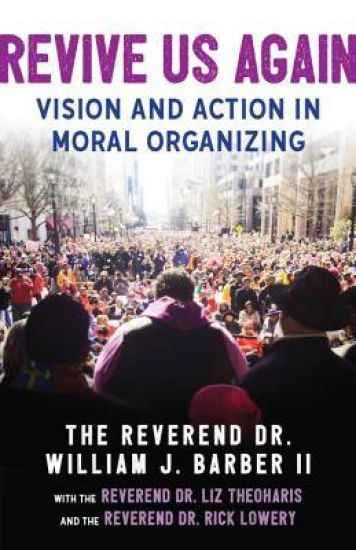
Revive Us Again

Revive Us Again

William J. Barber Ii; Rick Lowery

Beacon Press
2018
nidottu
In this collection of sermons and speeches, Rev. Barber lays out his groundbreaking vision for organizing across racial, economic, and religious lines, paired with essays from leading activists in his Moral Mondays movement who write about implementing his ideas in an age of division. The Rev. Dr. William J. Barber II has been called "the closest person we have to Martin Luther King Jr. in our midst" (Cornel West) and "one of the most gifted organizers and orators in the country today" (Ari Berman). Rev. William Barber is the architect and leader of the Moral Mondays movement, which arose in 2013 in opposition to Republican policies in North Carolina that have restricted voting rights and blocked health care expansion. The movement has since expanded to cities across the country, and with the election of Donald Trump, Rev. Barber's message is more necessary than ever. This volume features Rev. Barber's most stirring sermons and speeches, with response essays by prominent public intellectuals, activists, and faith leaders. Drawing from the history of social movements in the US, especially the Rev. Dr. Martin Luther King Jr.'s Poor People's Campaign, Rev. Barber and the contributors to this volume speak to the most pressing issues of our time, including Black Lives Matter, the fight for a $15 minimum wage, the struggle to protect voting rights, the march for women's rights, and the movement to overcome poverty and unite the dispossessed across all dividing lines. Grounded in the fundamental biblical theme of poor and oppressed people taking action together, the book suggests ways to effectively build a fusion movement to make America fair and just for everyone.
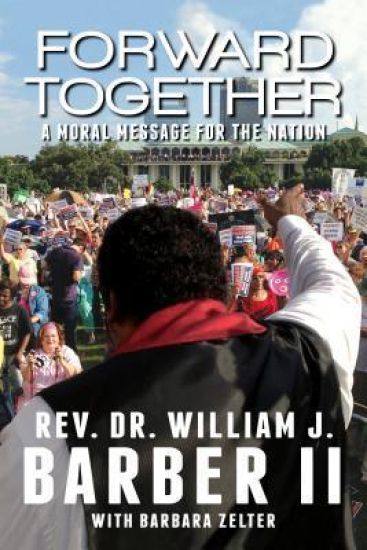
Forward Together

Forward Together

William J Barber II; Barbara Zelter

Chalice Press
2014
pokkari
In the spring of 2013, seventeen people gathered at the North Carolina state legislature to protest extreme legislation passed by the General Assembly attacking health insurance, unemployment insurance, labor, and voting rights. The ministers, labor, and human rights activists began praying, singing, and chanting, and were ultimately arrested. That group grew into crowds of thousands at successive "Moral Mondays" rallies, and by summer's end nearly 1,000 people had been arrested, making this sustained moral protest one of the largest acts of civil disobedience in U.S. history. The effort grew out of seven years of organizing with more than 160 groups. Rallies continued in 2014, with a "Moral March" of 80,000 people in February. Rev. Dr. William Barber II, a pastor and president of the North Carolina Conference of the NAACP, now the largest in the South, became one of the architects of the Forward Together Moral Movement. In a new book, Forward Together, Rev. Barber tells the story of a new fusion civil rights movement, a "big tent," in which black and white, gay and straight, rich and poor, old and young, Republicans and Democrats are all welcome. Rev. Barber's sermons/speeches at the protests, many of them collected in Forward Together, became the inspiration and rallying cry for a new civil rights movement. North Carolina today is at the epicenter of the political and spiritual crisis affecting 21st-century America. What happens here, says Barber, can shift the center of gravity in the American political discourse. Similar movements are now growing in states around the country. Forward Together captures the essence of what it means to preach in the public square.