Kirjojen hintavertailu. Mukana 12 657 676 kirjaa ja 12 kauppaa.
Kirjailija
William J. Bernstein
Kirjat ja teokset yhdessä paikassa: 16 kirjaa, julkaisuja vuosilta 2006-2027, suosituimpien joukossa Knowing Enough. Vertaile teosten hintoja ja tarkista saatavuus suomalaisista kirjakaupoista.
John C. Bogle and William Bernstein define “enough” and suggest another golden rule: never confuse your self-worth with your net worth. Knowing Enough combines the penetrating insights into investing and life of John C. Bogle, the founder of Vanguard and the pioneer of index investing, and the priceless practical advice of William J. Bernstein, bestselling author of The Four Pillars of Investing and market historian. Their conversations were the centerpiece of Boglehead meetings until Bogle’s passing on January 19, 2019. The book combines Bogle’s insights from his bestselling Enough and Bernstein’s practical how-to, If You Can. Their goal: to inspire you to lead a meaningful life that reaches well beyond your net worth to touch upon matters of self-worth, and to provide you with the means of doing so. You’ll also find: How to focus less on chasing financial success and more on living a meaningful lifeInsight into investing wisely and contributing to the common goodReflections on lessons learned from Bogle throughout his career Written in the same conversational tone found between Bogle and Bernstein at Boglehead events, Knowing Enough challenges readers to rethink their relationship with money, business, and society.
From the award-winning author of A Splendid Exchange, a fascinating new history of financial and religious mass manias over the past five centuries"We are the apes who tell stories," writes William Bernstein. "And no matter how misleading the narrative, if it is compelling enough it will nearly always trump the facts." As Bernstein shows in his eloquent and persuasive new book, The Delusions of Crowds, throughout human history compelling stories have catalyzed the spread of contagious narratives through susceptible groups--with enormous, often disastrous, consequences.Inspired by Charles Mackay's 19th-century classic Memoirs of Extraordinary Popular Delusions and the Madness of Crowds, Bernstein engages with mass delusion with the same curiosity and passion, but armed with the latest scientific research that explains the biological, evolutionary, and psychosocial roots of human irrationality. Bernstein tells the stories of dramatic religious and financial mania in western society over the last 500 years--from the Anabaptist Madness that afflicted the Low Countries in the 1530s to the dangerous End-Times beliefs that animate ISIS and pervade today's polarized America; and from the South Sea Bubble to the Enron scandal and dot com bubbles of recent years. Through Bernstein's supple prose, the participants are as colorful as their motivation, invariably "the desire to improve one's well-being in this life or the next."As revealing about human nature as they are historically significant, Bernstein's chronicles reveal the huge cost and alarming implications of mass mania: for example, belief in dispensationalist End-Times has over decades profoundly affected U.S. Middle East policy. Bernstein observes that if we can absorb the history and biology of mass delusion, we can recognize it more readily in our own time, and avoid its frequently dire impact.
"We are the apes who tell stories," writes William Bernstein. "And no matter how misleading the narrative, if it is compelling enough it will nearly always trump the facts." As Bernstein shows in his eloquent and persuasive new book, The Delusions of Crowds, throughout human history compelling stories have catalyzed the spread of contagious narratives through susceptible groups--with enormous, often disastrous, consequences.Inspired by Charles Mackay's 19th-century classic Memoirs of Extraordinary Popular Delusions and the Madness of Crowds, Bernstein engages with mass delusion with the same curiosity and passion, but armed with the latest scientific research that explains the biological, evolutionary, and psychosocial roots of human irrationality. Bernstein tells the stories of dramatic religious and financial mania in western society over the last 500 years--from the Anabaptist Madness that afflicted the Low Countries in the 1530s to the dangerous End-Times beliefs that animate ISIS and pervade today's polarized America; and from the South Sea Bubble to the Enron scandal and dot com bubbles of recent years. Through Bernstein's supple prose, the participants are as colorful as their motivation, invariably "the desire to improve one's well-being in this life or the next."As revealing about human nature as they are historically significant, Bernstein's chronicles reveal the huge cost and alarming implications of mass mania: for example, belief in dispensationalist End-Times has over decades profoundly affected U.S. Middle East policy. Bernstein observes that if we can absorb the history and biology of mass delusion, we can recognize it more readily in our own time, and avoid its frequently dire impact.
Rational Expectations is a clean sheet of paper in the wonky world of quantitatively based asset allocation aimed at small investors. Continuing the theme of the Investing for Adults series, this full-length finance title is not for beginners, but rather assumes a fair degree of quantitative ability and finance knowledge. If you think you can time the market or pick stocks and mutual fund managers, or even if you think that you can formulate an optimally efficient mean-variance asset allocation with a black box, then learn some basic finance and come back in a few years.On the other hand, if you know your way around risk premiums and standard deviations and know who Irving Fisher and Benjamin Graham were, and if you want to sharpen your asset class skills, you've come to the right place.
Written by a practicing emergency physician, The White Coat Investor is a high-yield manual that specifically deals with the financial issues facing medical students, residents, physicians, dentists, and similar high-income professionals. Doctors are highly-educated and extensively trained at making difficult diagnoses and performing life saving procedures. However, they receive little to no training in business, personal finance, investing, insurance, taxes, estate planning, and asset protection.This book fills in the gaps and will teach you to use your high income to escape from your student loans, provide for your family, build wealth, and stop getting ripped off by unscrupulous financial professionals. Straight talk and clear explanations allow the book to be easily digested by a novice to the subject matter yet the book also contains advanced concepts specific to physicians you won't find in other financial books.This book will teach you how to: Graduate from medical school with as little debt as possibleEscape from student loans within two to five years of residency graduationPurchase the right types and amounts of insuranceDecide when to buy a house and how much to spend on itLearn to invest in a sensible, low-cost and effective manner with or without the assistance of an advisorAvoid investments which are designed to be sold, not boughtSelect advisors who give great service and advice at a fair priceBecome a millionaire within five to ten years of residency graduationUse a "Backdoor Roth IRA" and "Stealth IRA" to boost your retirement funds and decrease your taxesProtect your hard-won assets from professional and personal lawsuitsAvoid estate taxes, avoid probate, and ensure your children and your money go where you want when you dieMinimize your tax burden, keeping more of your hard-earned moneyDecide between an employee job and an independent contractor jobChoose between sole proprietorship, Limited Liability Company, S Corporation, and C CorporationTake a look at the first pages of the book by clicking on the Look Inside featurePraise for The White Coat Investor"Much of my financial planning practice is helping doctors to correct mistakes that reading this book would have avoided in the first place." - Allan S. Roth, MBA, CPA, CFP(R), Author of How a Second Grader Beats Wall Street"Jim Dahle has done a lot of thinking about the peculiar financial problems facing physicians, and you, lucky reader, are about to reap the bounty of both his experience and his research." - William J. Bernstein, MD, Author of The Investor's Manifesto and seven other investing books"This book should be in every career counselor's office and delivered with every medical degree." - Rick Van Ness, Author of Common Sense Investing"The White Coat Investor provides an expert consult for your finances. I now feel confident I can be a millionaire at 40 without feeling like a jerk." - Joe Jones, DO"Jim Dahle has done for physician financial illiteracy what penicillin did for neurosyphilis." - Dennis Bethel, MD"An excellent practical personal finance guide for physicians in training and in practice from a non biased source we can actually trust." - Greg E. Wilde, MDScroll up, click the buy button, and get started today
A timeless approach to investing wisely over an investment lifetime With the current market maelstrom as a background, this timely guide describes just how to plan a lifetime of investing, in good times and bad, discussing stocks and bonds as well as the relationship between risk and return. Filled with in-depth insights and practical advice, The Investor's Manifesto will help you understand the nuts and bolts of executing a lifetime investment plan, including: how to survive dealing with the investment industry, the practical meaning of market efficiency, how much to save, how to maintain discipline in the face of panics and manias, and what vehicles to use to achieve financial security and freedom. Written by bestselling author William J. Bernstein, well known for his insights on how individual investors can manage their personal wealth and retirement funds wiselyExamines how the financial landscape has radically altered in the past two years, and what investors should do about itContains practical insights that the everyday investor can understandFocuses on the concept of Pascal's Wager-identifying and avoiding worst-case scenarios, and planning investment decisions on that basis With The Investor's Manifesto as your guide, you'll quickly discover the timeless investment approaches that can put you in a better position to prosper over time.
"A gem from one of the most brilliant minds in personal finance." ? Ben Stein, author, actor, TV personality, and New York Times columnist In a financial world gone mad, you still need to manage your money, put your kids through college, and save for retirement. To the rescue comes Jonathan Clements with 21 easy-to-follow rules to help you secure your financial future. Clements has spent a quarter century demystifying Wall Street for ordinary, real people on Main Street, including more than thirteen years as the Wall Street Journal's hugely popular personal-finance columnist. In The Little Book of Main Street Money, Clements brings us back to basics, with commonsense suggestions for intelligent money management. Chock-full of financial guidance that will stand up in any market, the book also reflects a financial philosophy that Clements has developed over a lifetime of watching Wall Street and writing about money?and that is even more important in the current volatile market. From the big picture (home, retirement, financial happiness) to the micro (taxes, inflation, investment costs), he offers clear-cut advice for taking control of your financial life, detailing the strategies needed to thrive in today's tough economic times. The 21 truths outlined throughout this book are a guiding light for everyone, young and old, whether starting out or soon retiring. Each chapter reads like a Clements column?clear, pithy, and feisty. From the obvious to the counterintuitive, the truths will bolster your returns, cut your costs, and give you financial peace of mind. Collectively, the 21 truths show you how to think about your entire financial life?not just stocks and bonds, but your home, your debts, your financial promises to your children, your income-earning ability, and so much more. They will help you not only survive today's treacherous financial terrain, but also prepare you for success tomorrow. Renowned for his spirited writing and shrewd investment guidance, Clements is the sane voice investors need to stay grounded in the midst of so much financial insanity.
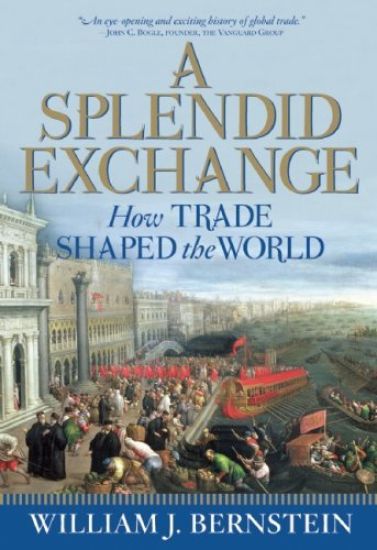
Acclaimed by readers and critics around the globe, A Splendid Exchange is a sweeping narrative history of world trade--from Mesopotamia in 3000 B.C. to the firestorm over globalization today--that brilliantly explores trade's colorful and contentious past and provides new insights into its future.
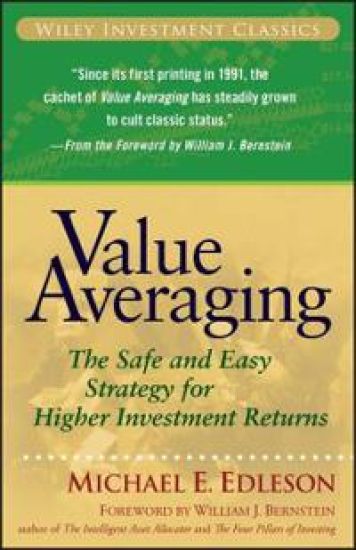
Michael Edleson first introduced his concept of value averaging to the world in an article written in 1988. He then wrote a book entitled Value Averaging in 1993, which has been nearly impossible to find—until now. With the reintroduction of Value Averaging, you now have access to a strategy that can help you accumulate wealth, increase your investment returns, and achieve your financial goals.