Kirjojen hintavertailu. Mukana 12 495 095 kirjaa ja 12 kauppaa.

Kirjailija

William J. Bond

Kirjat ja teokset yhdessä paikassa: 7 kirjaa, julkaisuja vuosilta 1995-2021, suosituimpien joukossa Fire in Mediterranean Ecosystems. Vertaile teosten hintoja ja tarkista saatavuus suomalaisista kirjakaupoista.

7 kirjaa

Kirjojen julkaisuhaarukka 1995-2021.

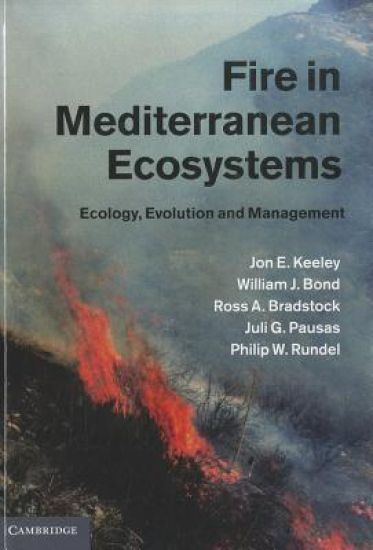
Fire in Mediterranean Ecosystems

Fire in Mediterranean Ecosystems

Jon E. Keeley; William J. Bond; Ross A. Bradstock; Juli G. Pausas; Philip W. Rundel

Cambridge University Press
2011
sidottu
Exploring the role of fire in each of the five Mediterranean-type climate ecosystems, this book offers a unique view of the evolution of fire-adapted traits and the role of fire in shaping Earth's ecosystems. Analyzing these geographically separate but ecologically convergent ecosystems provides key tools for understanding fire regime diversity and its role in the assembly and evolutionary convergence of ecosystems. Topics covered include regional patterns, the ecological role of wildfires, the evolution of species within those systems, and the ways in which societies have adapted to living in fire-prone environments. Outlining complex processes clearly and methodically, the discussion challenges the belief that climate and soils alone can explain the global distribution and assembly of plant communities. An ideal research tool for graduates and researchers, this study provides valuable insights into fire management and the requirements for regionally tailored approaches to fire management across the globe.
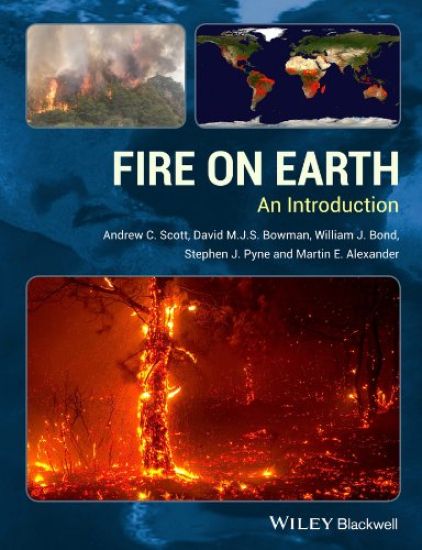
Fire on Earth

Fire on Earth

Andrew C. Scott; David M. J. S. Bowman; William J. Bond; Stephen J. Pyne; Martin E. Alexander

Wiley-Blackwell
2014
sidottu
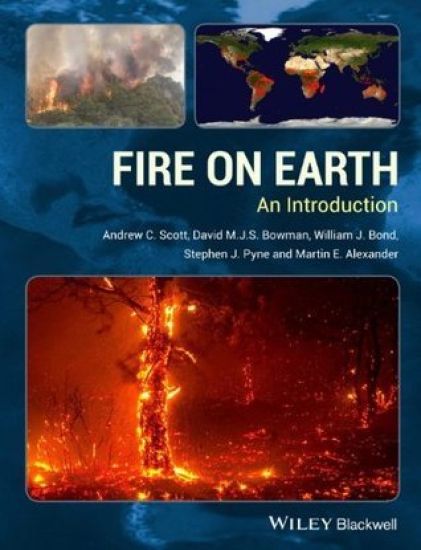
Earth is the only planet known to have fire. The reason is both simple and profound: fire exists because Earth is the only planet to possess life as we know it. Fire is an expression of life on Earth and an index of life’s history. Few processes are as integral, unique, or ancient. Fire on Earth puts fire in its rightful place as an integral part of the study of geology, biology, human history, physics, and global chemistry. Fire is ubiquitous in various forms throughout Earth, and belongs as part of formal inquiries about our world. In recent years fire literature has multiplied exponentially; dedicated journals exist and half a dozen international conferences are held annually. A host of formal sciences, or programs announcing interdisciplinary intentions, are willing to consider fire. Wildfire also appears routinely in media reporting. This full-colour text, containing over 250 illustrations of fire in all contexts, is designed to provide a synthesis of contemporary thinking; bringing together the most powerful concepts and disciplinary voices to examine, in an international setting, why planetary fire exists, how it works, and why it looks the way it does today. Students, lecturers, researchers and professionals interested in the physical, ecological and historical characteristics of fire will find this book, and accompanying web-based material, essential reading for undergraduate and postgraduate courses in all related disciplines, for general interest and for providing an interdisciplinary foundation for further study. A comprehensive approach to the history, behaviour and ecological effects of fire on earthTimely introduction to this important subject, with relevance for global climate change, biodiversity loss and the evolution of human culture.Provides a foundation for the interdisciplinary field of Fire ResearchAuthored by an international team of leading experts in the fieldAssociated website provides additional resources
Fire on Earth

Fire on Earth

Andrew C. Scott; David M. J. S. Bowman; William J. Bond; Stephen J. Pyne; Martin E. Alexander

Wiley-Blackwell
2014
nidottu
Earth is the only planet known to have fire. The reason is both simple and profound: fire exists because Earth is the only planet to possess life as we know it. Fire is an expression of life on Earth and an index of life’s history. Few processes are as integral, unique, or ancient. Fire on Earth puts fire in its rightful place as an integral part of the study of geology, biology, human history, physics, and global chemistry. Fire is ubiquitous in various forms throughout Earth, and belongs as part of formal inquiries about our world. In recent years fire literature has multiplied exponentially; dedicated journals exist and half a dozen international conferences are held annually. A host of formal sciences, or programs announcing interdisciplinary intentions, are willing to consider fire. Wildfire also appears routinely in media reporting. This full-colour text, containing over 250 illustrations of fire in all contexts, is designed to provide a synthesis of contemporary thinking; bringing together the most powerful concepts and disciplinary voices to examine, in an international setting, why planetary fire exists, how it works, and why it looks the way it does today. Students, lecturers, researchers and professionals interested in the physical, ecological and historical characteristics of fire will find this book, and accompanying web-based material, essential reading for undergraduate and postgraduate courses in all related disciplines, for general interest and for providing an interdisciplinary foundation for further study. A comprehensive approach to the history, behaviour and ecological effects of fire on earthTimely introduction to this important subject, with relevance for global climate change, biodiversity loss and the evolution of human culture.Provides a foundation for the interdisciplinary field of Fire ResearchAuthored by an international team of leading experts in the fieldAssociated website provides additional resources
Open Ecosystems

Open Ecosystems

William J. Bond

Oxford University Press
2021
nidottu
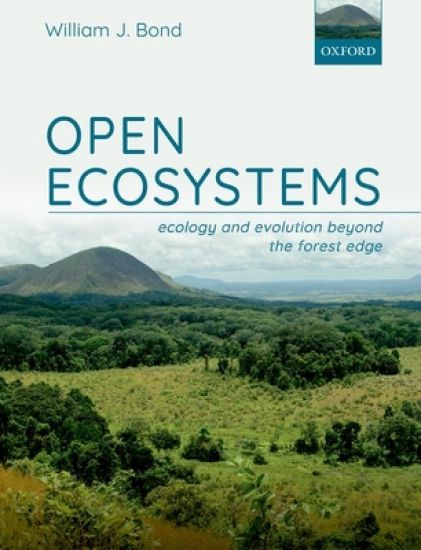
This book explores the geography, ecology, and antiquity of 'open ecosystems', which include grasslands, savannas, and shrublands. They occur in climates that can support closed forest ecosystems and often form mosaics with forest patches. With the aid of remote sensing, it is now clear that open ecosystems are a global phenomenon and occur over vast areas in climates that could also support forests. This book goes beyond regional narratives and seeks general explanations for their existence. It develops the theme of open ecosystems as being widespread and ancient, with a distinct biota from that of closed forests. It examines hypotheses for their maintenance in climate zones favouring the development of forests, including fire, vertebrate herbivory, and soils hostile for tree growth. Open Ecosystems: Ecology and Evolution Beyond the Forest Edge provides an accessible introduction for graduate students and researchers of open (non-forested) ecosystem ecology in departments of ecology, geography, and environmental science. It will also be of relevance and use to professional ecologists, biogeographers, and global change biologists requiring a concise, authoritative overview of the topic
Open Ecosystems

Open Ecosystems

William J. Bond

Oxford University Press
2019
sidottu
This book explores the geography, ecology, and antiquity of 'open ecosystems', which include grasslands, savannas, and shrublands. They occur in climates that can support closed forest ecosystems and often form mosaics with forest patches. With the aid of remote sensing, it is now clear that open ecosystems are a global phenomenon and occur over vast areas in climates that could also support forests. This book goes beyond regional narratives and seeks general explanations for their existence. It develops the theme of open ecosystems as being widespread and ancient, with a distinct biota from that of closed forests. It examines hypotheses for their maintenance in climate zones favouring the development of forests, including fire, vertebrate herbivory, and soils hostile for tree growth. Open Ecosystems: ecology and evolution beyond the forest edge provides an accessible introduction for graduate students and researchers of open (non-forested) ecosystem ecology in departments of ecology, geography, and environmental science. It will also be of relevance and use to professional ecologists, biogeographers, and global change biologists requiring a concise, authoritative overview of the topic.
Fire and Plants

Fire and Plants

William J. Bond; B.W. van Wilgen

Springer
2011
nidottu
Large regions of the world are regularly burnt either deliberately or naturally. However, despite the widespread occurrence of such fire-prone ecosystems, and considerable body of research on plant population biology in relation to fire, until now there have only been limited attempts at a coherent conceptual synthesis of the field for use by students or researchers.
Fire and Plants

Fire and Plants

William J. Bond; B.W. van Wilgen

Chapman and Hall
1995
sidottu
Large regions of the world are regularly burnt either deliberately or naturally. However, despite the widespread occurrence of such fire-prone ecosystems, and considerable body of research on plant population biology in relation to fire, until now there have only been limited attempts at a coherent conceptual synthesis of the field for use by students or researchers.