Kirjailija
William J. Burns
Kirjat ja teokset yhdessä paikassa: 13 kirjaa, julkaisuja vuosilta 2010-2025, suosituimpien joukossa The Back Channel. Vertaile teosten hintoja ja tarkista saatavuus suomalaisista kirjakaupoista.
Mukana myös kirjoitusasut: William J Burns
13 kirjaa
Kirjojen julkaisuhaarukka 2010-2025.
Three scenarios for future approaches to peace and conflict diplomacy, explored through the lens of regional perspectives and security threats Diplomacy in pursuit of peace and security faces severe challenges not seen in decades. The reemergence of strong states, discord in the UN Security Council, destabilizing transnational nonstate actors, closing space for civil society within states, and the weakening of the international liberal order all present new obstacles to diplomacy. In Diplomacy and the Future of World Order, an international group of experts confronts these challenges to peace and conflict diplomacy—defined as the effort to manage others’ conflicts, cope with great power competition, and deal with threats to the state system itself. In doing so, they consider three potential scenarios for world order where key states decide to go it alone, return to a liberal order, or collaborate on a case-by-case basis to address common threats and problems. These three scenarios are then evaluated through the prism of regional perspectives from around the world and for their potential ramifications for major security threats including peacekeeping, nuclear nonproliferation, cyber competition, and terrorism. Editors Chester A. Crocker, Fen Osler Hampson, and Pamela Aall conclude the volume by identifying emerging types of diplomacy that may form the foundation for global peacemaking and conflict management in an uncertain future.
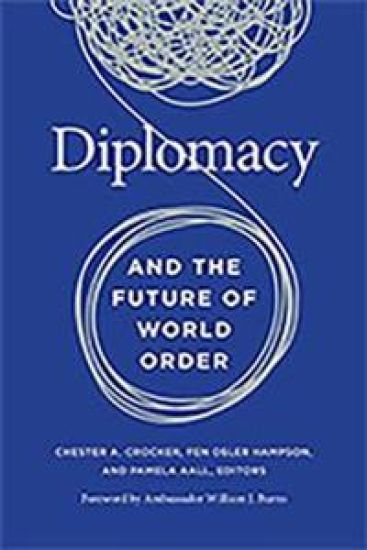
Three scenarios for future approaches to peace and conflict diplomacy, explored through the lens of regional perspectives and security threats Diplomacy in pursuit of peace and security faces severe challenges not seen in decades. The reemergence of strong states, discord in the UN Security Council, destabilizing transnational nonstate actors, closing space for civil society within states, and the weakening of the international liberal order all present new obstacles to diplomacy. In Diplomacy and the Future of World Order, an international group of experts confronts these challenges to peace and conflict diplomacy—defined as the effort to manage others’ conflicts, cope with great power competition, and deal with threats to the state system itself. In doing so, they consider three potential scenarios for world order where key states decide to go it alone, return to a liberal order, or collaborate on a case-by-case basis to address common threats and problems. These three scenarios are then evaluated through the prism of regional perspectives from around the world and for their potential ramifications for major security threats including peacekeeping, nuclear nonproliferation, cyber competition, and terrorism. Editors Chester A. Crocker, Fen Osler Hampson, and Pamela Aall conclude the volume by identifying emerging types of diplomacy that may form the foundation for global peacemaking and conflict management in an uncertain future.
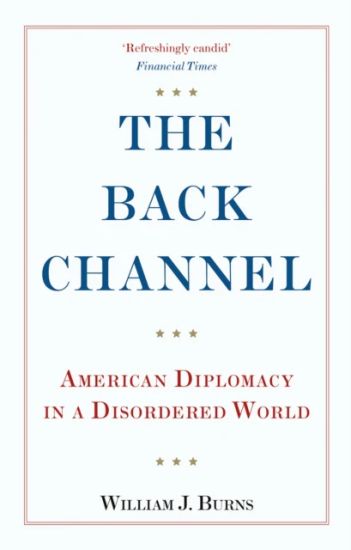
Over the course of more than three decades as an American diplomat, William J. Burns played a central role in the most consequential diplomatic episodes of his time—from the bloodless end of the Cold War to the collapse of relations with Putin’s Russia, from post–9/11 tumult in the Middle East to the secret nuclear talks with Iran. Burns draws on a treasure trove of newly declassified cables and memos to offer rare insight into US diplomacy in action. He illuminates the back channels of his profession, and its value in a world that resembles neither the zero-sum Cold War of his early career, nor the ‘unipolar moment’ of American primacy that followed. The Back Channel recounts with vivid detail and incisive analysis the seminal moments of a legendary career and makes an eloquent and impassioned argument for diplomacy in an increasingly volatile world.
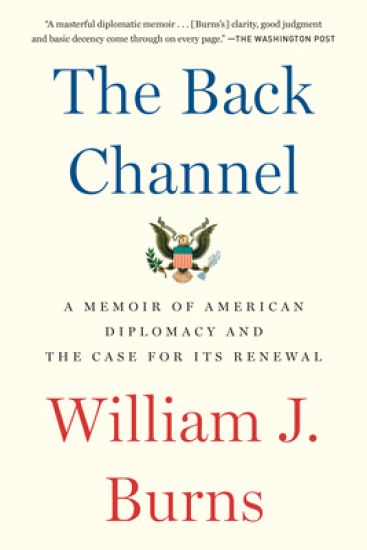
The Back Channel: A Memoir of American Diplomacy and the Case for Its Renewal
William J. Burns
Random House Trade
2020
nidottu
"A masterful diplomatic memoir" (The Washington Post) from CIA director and career ambassador William J. Burns, from his service under five presidents to his personal encounters with Vladimir Putin and other world leaders--an impassioned argument for the enduring value of diplomacy in an increasingly volatile world. Over the course of more than three decades as an American diplomat, William J. Burns played a central role in the most consequential diplomatic episodes of his time--from the bloodless end of the Cold War to the collapse of post-Cold War relations with Putin's Russia, from post-9/11 tumult in Afghanistan, Iraq, and the Middle East to the secret nuclear talks with Iran. In The Back Channel, Burns recounts, with novelistic detail and incisive analysis, some of the seminal moments of his career. Drawing on a trove of newly declassified cables and memos, he gives readers a rare inside look at American diplomacy in action. His dispatches from war-torn Chechnya and Qaddafi's bizarre camp in the Libyan desert and his warnings of the "Perfect Storm" that would be unleashed by the Iraq War will reshape our understanding of history--and inform the policy debates of the future. Burns sketches the contours of effective American leadership in a world that resembles neither the zero-sum Cold War contest of his early years as a diplomat nor the "unipolar moment" of American primacy that followed. Ultimately, The Back Channel is an eloquent, deeply informed, and timely story of a life spent in service of American interests abroad. It is also a powerful reminder, in a time of great turmoil, of the enduring importance of diplomacy.

The Crevice
Isabel Ostrander; William J. Burns
Createspace Independent Publishing Platform
2017
nidottu

The Crevice
Isabel Ostrander; William J. Burns
Leseklassiker in Europaischer Hochschulverlag GmbH Co. KG
2013
pokkari


Revelations Or Reality - A Prophecy Story
John W. Burns II; William J. Burns
Createspace Independent Publishing Platform
2011
nidottu