Kirjojen hintavertailu. Mukana 12 390 323 kirjaa ja 12 kauppaa.

Kirjailija

William J. Helmer

Kirjat ja teokset yhdessä paikassa: 7 kirjaa, julkaisuja vuosilta 2002-2012, suosituimpien joukossa Baby Face Nelson. Vertaile teosten hintoja ja tarkista saatavuus suomalaisista kirjakaupoista.

Mukana myös kirjoitusasut: William J Helmer

7 kirjaa

Kirjojen julkaisuhaarukka 2002-2012.

Baby Face Nelson

Baby Face Nelson

Steven Nickel; William J Helmer

Cumberland House Publishing
2012
pokkari
Lester Joseph Gillis -- better known to the public and press of the 1930s as Baby Face Nelson -- was one of a succession of public enemies beginning with John Dillinger and progressing to Bonnie and Clyde, Ma Barker, Machine Gun Kelly, and Pretty Boy Floyd. For decades their stories were largely myths, containing a combination of popular folklore and carefuly crafted FBI fables.In recent years historians have generated a more factual look at the life and times of the various Depression-era desperados. Until now Baby Face Nelson has remained as enigmatic and one-dimensional as he was then, portrayed by J. Edgar Hoover and newsmen as a trigger-happy punk who looked like a choirboy and killed without a conscience. Finally the full story of his short life can be told.Using new information that comes from the formerly classified files of the FBI, the Nelson who emerges from the pages of Baby Face Nelson: Portrait of a Public Enemy is a more paradoxical and interesting figure than one might expect. Obviously addicted to crime in his youth and evidently intoxicated with violence near the end of his life, he came from an ordinary, honest middle-class family. In a surprising departure from the gangster norm, Nelson and his wife remained fiercely devoted to one another, and between holdups they often lived a quiet domestic life with their two children and, at times, Nelson's mother.The main focus of this biography is on Nelson's remarkable criminal career, from sensational bank robberies and blazing gun battles up to his death at the age of twenty-five. Many misconceptions are corrected and some of the abuses of the FBI are exposed.
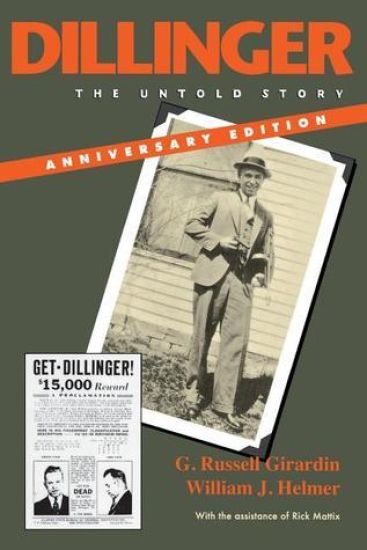
Dillinger, Anniversary Edition

Dillinger, Anniversary Edition

G. Russell Girardin; William J. Helmer

Indiana University Press
2009
pokkari
While researching a book on Depression-era outlaws, Playboy editor William J. Helmer stumbled upon a 600-page manuscript on John Dillinger. Written in the 1930s by G. Russell Girardin but never published, Dillinger: The Untold Story is a captivating and revealing account of Dillinger's life and crimes, based in part on information given to Girardin by the outlaw's lawyer, Louis Piquett, shortly after Dillinger's death. Though a series of articles written by Girardin and Piquett appeared in various newspapers at the time, the manuscript continued to yellow on the shelf for half a century until Helmer met Girardin and agreed to help get it published. This anniversary edition is filled with more illustrations and new information from FBI files and other sources, making it a rich and authentic slice of American history and a feast for true crime buffs.
The Complete Public Enemy Almanac

The Complete Public Enemy Almanac

William J. Helmer; Rick Mattix

Cumberland House Publishing,US
2007
pokkari
Meticulously documented, lavishly detailed, exhaustively researched, and written with an eye for the truths that have remained largely hidden, The Complete Public Enemy Almanac"" provides a reliable source of information about the violent and lawless era of the twenties and thirties.""
The Complete Public Enemy Almanac

The Complete Public Enemy Almanac

William J. Helmer; Rick Mattix

Cumberland House Publishing,US
2007
sidottu
Meticulously documented, lavishly detailed, exhaustively researched, and written with an eye for the truths that have remained largely hidden, The Complete Public Enemy Almanac"" provides a reliable source of information about the violent and lawless era of the twenties and thirties.""
The St. Valentine's Day Massacre

The St. Valentine's Day Massacre

William J. Helmer; Arthur J Bilek

Cumberland House Publishing
2006
sidottu
The machine-gun murders of seven men on the morning of February 14, 1929, by killers dressed as cops became the gangland "crime of the century." Or so the story went. Since then it has been featured in countless histories, biographies, movies, and television specials. 'The St. Valentine's Day Massacre,' however, is the first book-length treatment of the subject, and it challenges the commonly held assumption that Al Capone ordered the slayings to gain supremacy in the Chicago underworld.
The St. Valentine's Day Massacre

The St. Valentine's Day Massacre

William J. Helmer; Arthur J. Bilek

Cumberland House Publishing,US
2006
pokkari
A Case of Bad Timing and Poor JudgmentThe machine-gun murders of seven men on the morning of February 14, 1929, by killers dressed as cops became the gangland “crime of the century.” Or so the story went. Since then it has been featured in countless histories, biographies, movies, and television specials. The St. Valentine’s Day Massacre, however, is the first book-length treatment of the subject. Challenging the commonly held assumption that Al Capone ordered the wholesale slayings to gain supremacy in the Chicago underworld, authors William J. Helmer and Arthur J. Bilek assert the crime was a case of bad timing and poor judgment by a secret crew from St. Louis known to Capone’s mostly Italian mob as the “American boys.”The target of the murder squad was indeed Bugs Moran, but the American boys, who were dressed as policemen and arrived in two bogus police cars, entered the garage where the massacre took place before Moran arrived. Not knowing who Moran was or what he looked like, the counterfeit cops stupidly killed everyone to make sure they got their man.Based on a careful review of reliable evidence, a critical reading of news accounts of the time, a 1935 manuscript written by the widow of one of the gunmen, and a lookout’s long-suppressed confession, The St. Valentine’s Day Massacre is a fresh new look at the crime that captured the nation’s imagination. In the end, the machine-gun bullets heard ’round the world marked the beginning of the end for Al Capone.