Kirjojen hintavertailu. Mukana 12 595 353 kirjaa ja 12 kauppaa.
Kirjailija
William J. Jenkins
Kirjat ja teokset yhdessä paikassa: 7 kirjaa, julkaisuja vuosilta 2011-2025, suosituimpien joukossa Modeling Methods for Marine Science. Vertaile teosten hintoja ja tarkista saatavuus suomalaisista kirjakaupoista.
This advanced textbook on modeling, data analysis and numerical techniques for marine science has been developed from a course taught by the authors for many years at the Woods Hole Oceanographic Institute. The first part covers statistics: singular value decomposition, error propagation, least squares regression, principal component analysis, time series analysis and objective interpolation. The second part deals with modeling techniques: finite differences, stability analysis and optimization. The third part describes case studies of actual ocean models of ever increasing dimensionality and complexity, starting with zero-dimensional models and finishing with three-dimensional general circulation models. Throughout the book hands-on computational examples are introduced using the MATLAB programming language and the principles of scientific visualization are emphasised. Ideal as a textbook for advanced students of oceanography on courses in data analysis and numerical modeling, the book is also an invaluable resource for a broad range of scientists undertaking modeling in chemical, biological, geological and physical oceanography.

Includes all errata as of January 2025. Psychology 2e (2025) is designed to meet scope and sequence requirements for the single-semester introduction to psychology course. The book offers a comprehensive treatment of core concepts, grounded in both classic studies and current and emerging research. The text also includes coverage of the DSM-5 in examinations of psychological disorders. Psychology incorporates discussions that reflect the diversity within the discipline, as well as the diversity of cultures and communities across the globe. The second edition contains detailed updates to address comments and suggestions from users. Significant improvements and additions were made in the areas of research currency, diversity and representation, and the relevance and recency of the examples. Many concepts were expanded or clarified, particularly through the judicious addition of detail and further explanation where necessary. Finally, the authors addressed the replication issues in the psychology discipline, both in the research chapter and where appropriate throughout the book.
The images in this version are in color. For a less-expensive grayscale version, search for ISBN 9781680923278.Psychology 2e is designed to meet scope and sequence requirements for the single-semester introduction to psychology course. The book offers a comprehensive treatment of core concepts, grounded in both classic studies and current and emerging research. The text also includes coverage of the DSM-5 in examinations of psychological disorders. Psychology 2e incorporates discussions that reflect the diversity within the discipline, as well as the diversity of cultures and communities across the globe.
There is arguably no more famous book about the arts of interpretation and analysis than Sigmund Freud’s 1899 Interpretation of Dreams. Though the original edition of just 600 copies took eight years to sell out, it eventually became a classic text that helped cement Freud’s reputation as one of the most significant intellectual figures of the 19th and 20th centuries. In critical thinking, just as in Freud’s psychoanalytical theories, interpretation is all about understanding the meaning of evidence, and tracing the significance of things. Analysis can then be brought in to tease out the implicit reasons and assumptions that lie underneath the interpreted evidence. Interpretation of Dreams is a masterclass in building telling analyses from ingenious interpretation of evidence. Freud worked from the assumption that all dreams were significant attempts by the unconscious to resolve conflicts. As a result, he argued, they contain in altered and disguised forms clues to our deepest unconscious urges and desires. Each must be taken on its own terms to tease out what they really mean. Though Freud’s theories have often been criticized, he remains the undisputed master of interpretation – with his critics suggesting that he was, if anything, too ingenious for his own good.
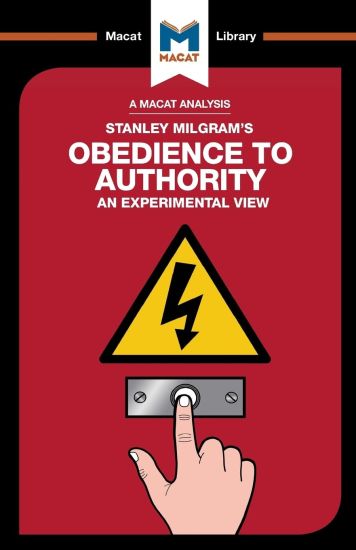
Stanley Milgram is one of the most influential and widely-cited social psychologists of the twentieth century. Recognized as perhaps the most creative figure in his field, he is famous for crafting social-psychological experiments with an almost artistic sense of creative imagination – casting new light on social phenomena in the process. His 1974 study Obedience to Authority exemplifies creative thinking at its most potent, and controversial. Interested in the degree to which an “authority figure” could encourage people to commit acts against their sense of right and wrong, Milgram tricked volunteers for a “learning experiment” into believing that they were inflicting painful electric shocks on a person in another room. Able to hear convincing sounds of pain and pleas to stop, the volunteers were told by an authority figure – the “scientist” – that they should continue regardless. Contrary to his own predictions, Milgram discovered that, depending on the exact set up, as many as 65% of people would continue right up to the point of “killing” the victim. The experiment showed, he believed, that ordinary people can, and will, do terrible things under the right circumstances, simply through obedience. As infamous and controversial as it was creatively inspired, the “Milgram experiment” shows just how radically creative thinking can shake our most fundamental assumptions.