Kirjailija
William J. Locke
Kirjat ja teokset yhdessä paikassa: 118 kirjaa, julkaisuja vuosilta 2004-2026, suosituimpien joukossa The Joyous Adventures of Aristide Pujol. Vertaile teosten hintoja ja tarkista saatavuus suomalaisista kirjakaupoista.
Mukana myös kirjoitusasut: William J Locke
118 kirjaa
Kirjojen julkaisuhaarukka 2004-2026.
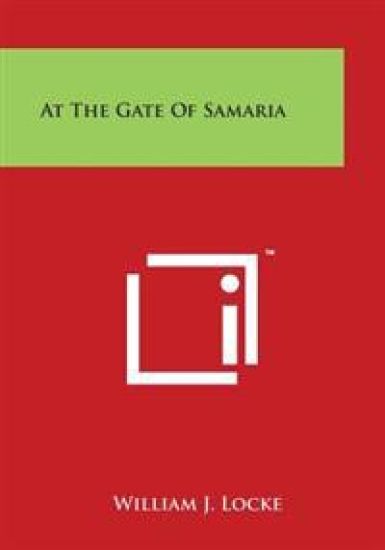
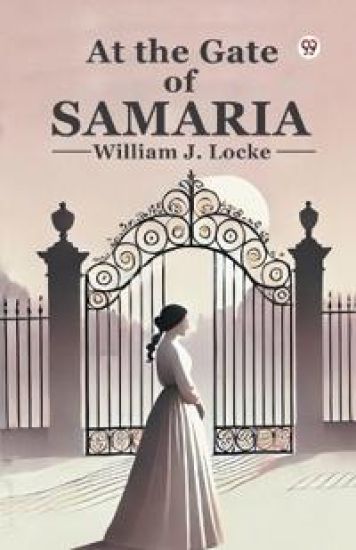
At the Gate of Samaria by William John Locke follows the struggles of a young artist who strives to express her individuality while facing the constraints of a rigid, puritanical upbringing. Her pursuit of personal freedom and artistic ambition creates conflict with her family, particularly with a father who cannot understand her desire to live a life filled with passion and creativity. The narrative explores the tension between tradition and personal growth, highlighting the oppressive environment that stifles emotional expression and individuality. As the protagonist confronts these familial and societal expectations, she is forced to navigate the difficult journey of self-discovery. The story emphasizes the challenges faced by those who seek to follow their dreams in the face of societal pressure to conform. The internal conflict within the protagonist grows as she chooses a path of artistic fulfillment, showing the cost of individuality in a world that values conformity. The novel portrays the personal sacrifices and emotional struggles that come with pursuing one s true calling, particularly when family ties and societal norms stand in the way of artistic freedom.

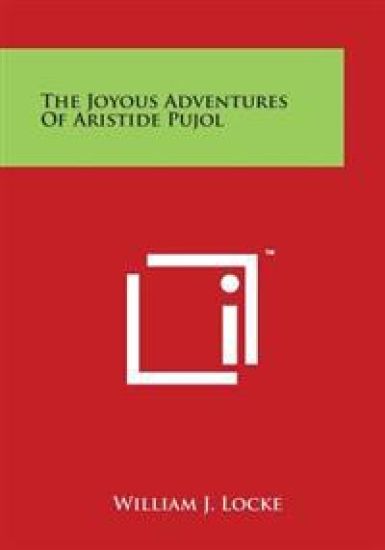
This Book "The Joyous Adventures of Aristide Pujol" has been considered important throughout the human history, and so that this work is never forgotten we have made efforts in its preservation by republishing this book in a modern format for present and future generations. This whole book has been reformatted, retyped and designed. These books are not made of scanned copies of their original work and hence the text is clear and readable.
Reproduction of the original: At the Gate of Samaria by William J. Locke
Thank you for checking out this book by Theophania Publishing. We appreciate your business and look forward to serving you soon. We have thousands of titles available, and we invite you to search for us by name, contact us via our website, or download our most recent catalogues. It was a severe room, scrupulously neat. Along one side ran a bookcase, with beaded glass doors, containing, as one might see by peering through the spaces, the collected, unread literature of two stern generations. A few old prints, placed in bad lights, hung on the walls. In the centre of the room was a leather-covered library table, with writing materials arranged in painful precision. A couch was lined along one wall, in the draught of the door. On either side of the fireplace were ranged two stiff leather armchairs. In one of these chairs sat an old man, in the other a faded woman just verging upon middle age. The old man was looking at a picture which he supported on his knees-a narrow, oblong strip of canvas nailed on to a rough wooden frame. The woman eyed him with some interest, as if awaiting a decision. They were father and daughter, and bore a strange family resemblance to each other. Both faces were pale, their foreheads high and narrow, marked by faint horizontal lines, their eyes gray and cold, their upper lips long and thin, setting tightly, without mobility, upon the lower. The only essential point of difference was that the father's chin was weakly pointed, the daughter's squarer and harder. Both faces gave one the impression of negativeness, joylessness, seeming to lack the power of strong emotive expression. One can see such, minus the refinement of gentle birth and social amenities, in the pews of obscure dissenting chapels, testifying that they have been led thither not by strong convictions, but by the force of mild circumstance.