Kirjojen hintavertailu. Mukana 12 511 337 kirjaa ja 12 kauppaa.

Kirjailija

William J. Neal

Kirjat ja teokset yhdessä paikassa: 29 kirjaa, julkaisuja vuosilta 1984-2023, suosituimpien joukossa Vanishing Sands. Vertaile teosten hintoja ja tarkista saatavuus suomalaisista kirjakaupoista.

29 kirjaa

Kirjojen julkaisuhaarukka 1984-2023.

Vanishing Sands

Vanishing Sands

Orrin H. Pilkey; Norma J. Longo; William J. Neal; Nelson G. Rangel-Buitrago; Keith C. Pilkey; Hannah L. Hayes

DUKE UNIVERSITY PRESS
2023
sidottu
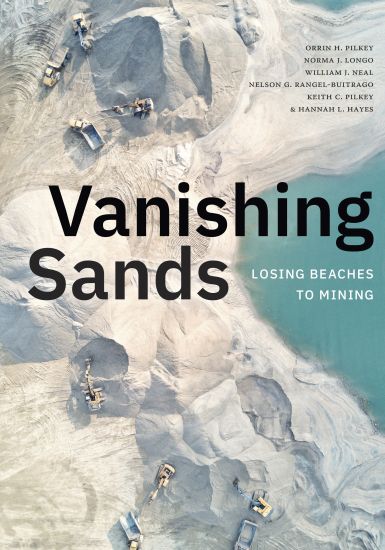
In a time of accelerating sea level rise and increasingly intensifying storms, the world’s sandy beaches and dunes have never been more crucial to protecting coastal environments. Yet, in order to meet the demands of large-scale construction projects, sand mining is stripping beaches and dunes, destroying environments, and exploiting labor in the process. The authors of Vanishing Sands track the devastating impact of legal and illegal sand mining over the past twenty years, ranging from Africa, Asia, and the Caribbean to South America and the eastern United States. They show how sand mining has reached crisis levels: beach, dune, and river ecosystems are in danger of being lost forever, while organized crime groups use deadly force to protect their illegal mining operations. Calling for immediate and widespread resistance to sand mining, the authors demonstrate that its cessation is paramount for saving not only beaches, dunes, and associated environments but also lives and tourism economies everywhere.

Living with the East Florida Shore

Living with the East Florida Shore

Dinesh C. Sharma; Harold R. Wanless; Larry J. Doyle; Orrin H. Pilkey; William J. Neal; Barbara L. Gruver

Duke University Press
1985
sidottu
More than one transplanted Floridian has paid $150,000 for a beautiful condominium with a sea view only to learn that, to keep the building from becoming part of the view, considerable additional money must be spent to build and repair seawalls or to pump up new beaches by dredging sand from offshore.Most of Florida's beachfront property lies on narrow strips of sand called barrier islands, which are low in elevation and subject to flooding during storms and hurricanes. Some of the construction is poor, adding to the problems facing homeowners, most whom came from other parts of the country with little awareness of the hazards of beaches. In Living with the East Florida Shore, Orrin H. Pilkey, Jr., of Duke University, along with his co-authors, has described the varied problems that confront the east shore of Florida today.
Living with the East Florida Shore

Living with the East Florida Shore

Dinesh C. Sharma; Harold R. Wanless; Larry J. Doyle; Orrin H. Pilkey; William J. Neal; Barbara L. Gruver

Duke University Press
1985
pokkari
More than one transplanted Floridian has paid $150,000 for a beautiful condominium with a sea view only to learn that, to keep the building from becoming part of the view, considerable additional money must be spent to build and repair seawalls or to pump up new beaches by dredging sand from offshore.Most of Florida's beachfront property lies on narrow strips of sand called barrier islands, which are low in elevation and subject to flooding during storms and hurricanes. Some of the construction is poor, adding to the problems facing homeowners, most whom came from other parts of the country with little awareness of the hazards of beaches. In Living with the East Florida Shore, Orrin H. Pilkey, Jr., of Duke University, along with his co-authors, has described the varied problems that confront the east shore of Florida today.
Vanishing Sands

Vanishing Sands

Orrin H. Pilkey; Norma J. Longo; William J. Neal; Nelson G. Rangel-Buitrago; Keith C. Pilkey; Hannah L. Hayes

DUKE UNIVERSITY PRESS
2023
pokkari
In a time of accelerating sea level rise and increasingly intensifying storms, the world’s sandy beaches and dunes have never been more crucial to protecting coastal environments. Yet, in order to meet the demands of large-scale construction projects, sand mining is stripping beaches and dunes, destroying environments, and exploiting labor in the process. The authors of Vanishing Sands track the devastating impact of legal and illegal sand mining over the past twenty years, ranging from Africa, Asia, and the Caribbean to South America and the eastern United States. They show how sand mining has reached crisis levels: beach, dune, and river ecosystems are in danger of being lost forever, while organized crime groups use deadly force to protect their illegal mining operations. Calling for immediate and widespread resistance to sand mining, the authors demonstrate that its cessation is paramount for saving not only beaches, dunes, and associated environments but also lives and tourism economies everywhere.
The World's Beaches

The World's Beaches

Orrin H. Pilkey; William J. Neal; James Andrew Graham Cooper; Joseph T. Kelley

University of California Press
2011
pokkari
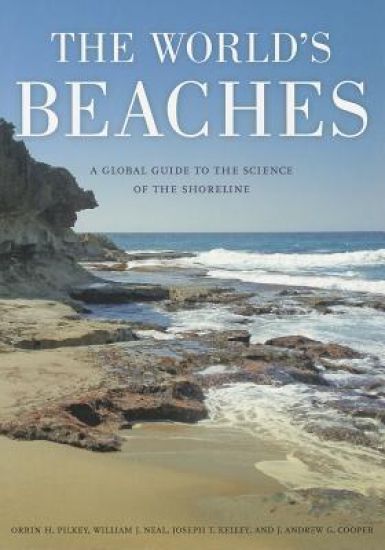
Take this book to the beach; it will open up a whole new world. Illustrated throughout with color photographs, maps, and graphics, it explores one of the planet's most dynamic environments - from tourist beaches to Arctic beaches strewn with ice chunks to steaming hot tropical shores. "The World's Beaches" tells how beaches work, explains why they vary so much, and shows how dramatic changes can occur on them in a matter of hours. It discusses tides, waves, and wind; the patterns of dunes, washover fans, and wrack lines; and the shape of berms, bars, shell lags, cusps, ripples, and blisters. What is the world's longest beach? Why do some beaches sing when you walk on them? Why do some have dark rings on their surface and tiny holes scattered far and wide? This fascinating, comprehensive guide also considers the future of beaches, and explains how extensively people have affected them - from coastal engineering to pollution, oil spills, and rising sea levels.
Living with Florida's Atlantic Beaches

Living with Florida's Atlantic Beaches

David M. Bush; William J. Neal; Norma J. Longo; Kenyon C. Lindeman; Deborah F. Pilkey; Luciana S. Esteves; John D. Congleton; Orrin H. Pilkey

Duke University Press
2004
sidottu
From Amelia Island just south of Georgia to Key West's southern tip, beaches are one of Florida's greatest assets. Yet these beaches are in danger: rapid structural development on a highly erodible coast make them vulnerable to some of nature's greatest storms. The same development that has been driven by the attraction of beautiful beaches and coastal amenities now threatens those very resources. In turn, coastal structures are at risk from sea-level rise, shoreline retreat, winter storms, and hurricanes. Most of the methods for reducing losses associated with storms protect property only in the short term-at a growing cost in dollars and loss of natural habitat in the long term.Living with Florida's Atlantic Beaches is a guide to mitigating or reducing losses of property, human life, and natural resources by living with, rather than just at, the shore. This illustrated volume provides an introduction to coastal processes and geology as well as a brief history of coastal hazards and short-sighted human responses. This is the first volume in the Living with the Shore series to discuss the significant long-term impact of dredge-and-fill beach construction on living marine resources. Guidance is provided for long-term risk reduction in the form of tips on storm-resistant construction and site evaluation; maps for evaluating relative vulnerability to hazards are also included. A brief review of coastal regulations will help property owners understand and navigate the various permit requirements for developing coastal property. Living with Florida's Atlantic Beaches is an invaluable source of information for everyone from the curious beach visitor to the community planner, from the prudent property investor to the decision-making public official.
Living with Florida's Atlantic Beaches

Living with Florida's Atlantic Beaches

David M. Bush; William J. Neal; Norma J. Longo; Kenyon C. Lindeman; Deborah F. Pilkey; Luciana S. Esteves; John D. Congleton; Orrin H. Pilkey

Duke University Press
2004
pokkari
From Amelia Island just south of Georgia to Key West's southern tip, beaches are one of Florida's greatest assets. Yet these beaches are in danger: rapid structural development on a highly erodible coast make them vulnerable to some of nature's greatest storms. The same development that has been driven by the attraction of beautiful beaches and coastal amenities now threatens those very resources. In turn, coastal structures are at risk from sea-level rise, shoreline retreat, winter storms, and hurricanes. Most of the methods for reducing losses associated with storms protect property only in the short term-at a growing cost in dollars and loss of natural habitat in the long term.Living with Florida's Atlantic Beaches is a guide to mitigating or reducing losses of property, human life, and natural resources by living with, rather than just at, the shore. This illustrated volume provides an introduction to coastal processes and geology as well as a brief history of coastal hazards and short-sighted human responses. This is the first volume in the Living with the Shore series to discuss the significant long-term impact of dredge-and-fill beach construction on living marine resources. Guidance is provided for long-term risk reduction in the form of tips on storm-resistant construction and site evaluation; maps for evaluating relative vulnerability to hazards are also included. A brief review of coastal regulations will help property owners understand and navigate the various permit requirements for developing coastal property. Living with Florida's Atlantic Beaches is an invaluable source of information for everyone from the curious beach visitor to the community planner, from the prudent property investor to the decision-making public official.
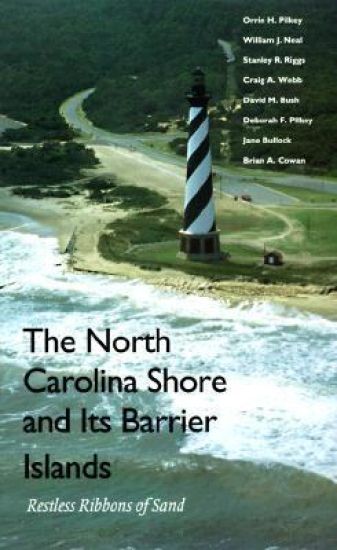
The North Carolina Shore and Its Barrier Islands

The North Carolina Shore and Its Barrier Islands

Orrin H. Pilkey; William J. Neal; Stanley R. Riggs; Craig A. Webb; David M. Bush; Deborah F. Pilkey; Jane Bullock; Brian A. Cowan

Duke University Press
1998
pokkari
The North Carolina Shore and Its Barrier Islands is the latest volume in the series, Living with the Shore. Replacing an earlier volume, this thoroughly new book provides a diverse guide to one of America’s most popular shorelines. As is true for all books in the series, it is based on the premise that understanding the changing nature of beaches and barrier islands is essential if we are to preserve them for future generations.Evidence that the North Carolina shore is changing is never hard to find, but recently the devastation wrought by Hurricane Fran and the perilous situation of the historic lighthouse at Cape Hatteras have reminded all concerned of the fragility of this coast. Arguing for a policy of intelligent development, one in which residential and commercial structures meet rather than confront the changing nature of the shore, the authors have included practical information on hazards of many kinds-storms, tides, floods, erosion, island migration, and earthquakes. Diagrams and photographs clearly illustrate coastal processes and aid in understanding the impact of hurricanes and northeasters, wave and current dynamics, as well as pollution and other environmental destruction due to overdevelopment. A chapter on estuaries provides related information on the shores of back barrier areas that are growing in popularity for recreational residences. Risk maps focus on the natural hazards of each island and together with construction guidelines provide a basis for informed island management. Lastly, the dynamics of coastal politics and management are reviewed through an analysis of the controversies over the decision to move the Cape Hatteras lighthouse and a proposed effort to stabilize Oregon Inlet. From the natural and historic perspective of the opening chapters to the regional discussions of individual barrier islands, this book is both a primer on coastal processes for the first time visitor as well as a guide to hazard identification for property owners.
The North Carolina Shore and Its Barrier Islands

The North Carolina Shore and Its Barrier Islands

Orrin H. Pilkey; William J. Neal; Stanley R. Riggs; Craig A. Webb; David M. Bush; Deborah F. Pilkey; Jane Bullock; Brian A. Cowan

Duke University Press
1998
sidottu
Devastation wrought by Hurricane Fran is a reminder of the fragility of the North Carolina coast. Arguing for a policy of intelligent development this text includes practical information on hazards of many kinds - storms, tides, floods, erosion, island migration and earthquakes.
Living with the South Carolina Coast

Living with the South Carolina Coast

Gered Lennon; William J. Neal; David M. Bush; Orrin H. Pilkey; Matthew Stutz; Jane Bullock

Duke University Press
1996
pokkari
Living with the South Carolina Coast is the latest volume in the Living with the Shore series that comprehensively investigates the status of a specific state's coastal region. Completely revising a previously published work in the series that dealt with South Carolina, this book not only brings up-to-date a wealth of information on migrating shorelines, selection of building sites, and pertinent regulations, but also reflects an expanded concept of the coast to include a broad range of coastal hazards. Powerful storms have always played a major role in coastal processes in South Carolina, and the effects of Hurricane Hugo, the storm that ravaged the area in 1989, are thoroughly discussed. A series of Coastal Risk Maps are also included. These maps, graphically depicting areas of predictable erosion and storm damage potential, have been provided for every developed beach or barrier island in the state. Beyond the threat of hurricanes and coastal erosion, South Carolina, home of the Charleston Seismic Region, is also at risk for earthquakes. An entire chapter is devoted to earthquake-resistant construction, and the great Charleston earthquake of 1886 is examined in detail. Fires and floods are discussed. The Beachfront Management Act of 1990-the first state legislation of its kind that provides a system for dealing with migrating shorelines while preserving beaches for future generations-is also explained. Covering everything from a history of the development of South Carolina's coast to recommendations on how to select an island homesite, this book will be a resource to professional coastal planners and managers, residents, prospective homeowners, and naturalists.
Living with the South Carolina Coast

Living with the South Carolina Coast

Gered Lennon; William J. Neal; David M. Bush; Orrin H. Pilkey; Matthew Stutz; Jane Bullock

Duke University Press
1996
sidottu
Living with the South Carolina Coast is the latest volume in the Living with the Shore series that comprehensively investigates the status of a specific state's coastal region. Completely revising a previously published work in the series that dealt with South Carolina, this book not only brings up-to-date a wealth of information on migrating shorelines, selection of building sites, and pertinent regulations, but also reflects an expanded concept of the coast to include a broad range of coastal hazards. Powerful storms have always played a major role in coastal processes in South Carolina, and the effects of Hurricane Hugo, the storm that ravaged the area in 1989, are thoroughly discussed. A series of Coastal Risk Maps are also included. These maps, graphically depicting areas of predictable erosion and storm damage potential, have been provided for every developed beach or barrier island in the state. Beyond the threat of hurricanes and coastal erosion, South Carolina, home of the Charleston Seismic Region, is also at risk for earthquakes. An entire chapter is devoted to earthquake-resistant construction, and the great Charleston earthquake of 1886 is examined in detail. Fires and floods are discussed. The Beachfront Management Act of 1990-the first state legislation of its kind that provides a system for dealing with migrating shorelines while preserving beaches for future generations-is also explained. Covering everything from a history of the development of South Carolina's coast to recommendations on how to select an island homesite, this book will be a resource to professional coastal planners and managers, residents, prospective homeowners, and naturalists.
Living with the Puerto Rico Shore

Living with the Puerto Rico Shore

David M. Bush; Richard M. T. Webb; José González Liboy; Lisbeth Hyman; William J. Neal

Duke University Press
1995
pokkari
In this, the eighteenth title in Duke University Press's Living With the Shore series, the authors present a "user's guide" to the coastal zone of Puerto Rico. Presenting a geological appraisal of the history, dynamics, and hazards of the island's coastline, Living With the Puerto Rico Shore is the first in the series to examine a tropical region and the first to examine an area outside the continental United States. The book provides detailed descriptions of the entire shoreline, noting the specific coastal hazards of each coastal reach. These hazards include coastal erosion, storm surge flooding, and potential damage from earthquakes. Where high-density development or significant roads and utilities are particularly at risk, these are also noted. The effects that sand mining, seawalls, jetties, and other attempts at coastal engineering have had on the island are examined. Finally, the authors discuss historical and legal aspects of coastal planning in Puerto Rico, presenting guidelines for selecting building sites. Of interest to all concerned with protecting our shores and beaches and useful to the coastal planner and manager, Living With the Puerto Rico Shore contains an extensive bibliography and a list of agencies involved in coastal issues.
Living with the Puerto Rico Shore

Living with the Puerto Rico Shore

David M. Bush; Richard M. T. Webb; José González Liboy; Lisbeth Hyman; William J. Neal

Duke University Press
1995
sidottu
In this, the eighteenth title in Duke University Press's Living With the Shore series, the authors present a "user's guide" to the coastal zone of Puerto Rico. Presenting a geological appraisal of the history, dynamics, and hazards of the island's coastline, Living With the Puerto Rico Shore is the first in the series to examine a tropical region and the first to examine an area outside the continental United States. The book provides detailed descriptions of the entire shoreline, noting the specific coastal hazards of each coastal reach. These hazards include coastal erosion, storm surge flooding, and potential damage from earthquakes. Where high-density development or significant roads and utilities are particularly at risk, these are also noted. The effects that sand mining, seawalls, jetties, and other attempts at coastal engineering have had on the island are examined. Finally, the authors discuss historical and legal aspects of coastal planning in Puerto Rico, presenting guidelines for selecting building sites. Of interest to all concerned with protecting our shores and beaches and useful to the coastal planner and manager, Living With the Puerto Rico Shore contains an extensive bibliography and a list of agencies involved in coastal issues.
Living on the Shores of Hawai'i

Living on the Shores of Hawai'i

Charles Fletcher; Robynne Boyd; William J. Neal; Virginia Tice

University of Hawai'i Press
2011
nidottu
Rarely a day goes by in Hawai‘i without the media reporting on environmental issues stemming from public debate. Will the proposed housing development block my access to the beach? Is the rising sea level going to cause flooding where I live? How does overfishing damage the reef? Is the water clean where I surf? Living on the Shores of Hawai‘i discusses the paradox of environmental loss under a management system considered by many to be one of the most stringent in the nation. It reviews a wide range of environmental concerns in Hawai‘i with an eye toward resolution by focusing on “place-based” management, a theme consistent with—and borrowing from—the Hawaiian ahupua‘a system.
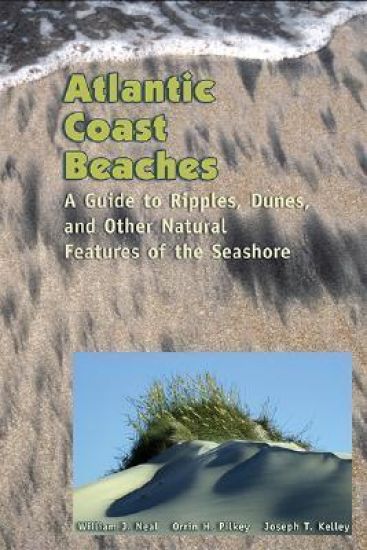
Atlantic Coast Beaches: A Guide to Ripples, Dunes, and Other Natural Features of the Seashore

Atlantic Coast Beaches: A Guide to Ripples, Dunes, and Other Natural Features of the Seashore

William J. Neal; Orrin H. Pilkey; Joseph T. Kelley

Mountain Press Publishing Company
2007
nidottu
At first glance, the beach may appear to be an endless, flat, monotone landscape meant only for swimming, snoozing, or working on your tan. Upon closer inspection, though, the beach reveals that it has myriad treasures for the curious to locate, such as ephemeral beach ripples decorating the sand, traces of miniature organisms inscribed on dunes, and armored mudballs. Atlantic Coast Beaches, from Maine to Florida, are full of amazing features formed by the interactions between tides, currents, bedrock, weather, beach critters, and much more. Written for a general audience, Atlantic Coast Beaches: A Guide to Ripples, Dunes, and Other Natural Features of the Seashore covers everything, from microscopic nematodes to the potentially cataclysmic changes occurring along the coastline due to rising sea level. Its clear writing, illustrative photographs, and instructive diagrams answer some curious questions, such as why do some sands bark and sing, how do miniature sand volcanoes form, and how do barrier islands migrate?
Living on the Edge of the Gulf

Living on the Edge of the Gulf

David M. Bush; Norma J. Longo; William J. Neal; Luciana S. Esteves; Orrin H. Pilkey; Deborah F. Pilkey; Craig A. Webb

Duke University Press
2001
sidottu
The Gulf coast of Florida and Alabama is a fragile combination of barrier islands, low-lying marshes, and highly erodable mainland shores. In addition to sea-level rise, winter storms, and altered sediment supplies, hurricanes frequently damage or destroy the human developments and infrastructures that line this coast. Indeed, a single storm can cause billions of dollars in losses. Memories of such hurricanes as Camille, Frederic, Opal, and Andrew cause great concern for residents and property owners alike; events of equal magnitude are always just beyond the horizon and the uninformed have much to lose.The authors of Living on the Edge of the Gulf seek to counteract potential loss by providing an illustrated introduction to coastal processes, a history of hazards for the region, and risk-reduction guidance in the form of site evaluations, community mitigation techniques, and storm-resistant construction practices. Risk maps that focus on individual coastal beaches are designed to assist property owners, community planners, and officials in prudent decision making, while a review of coastal regulations helps owners to understand and navigate various permit requirements.This latest book in the Living with the Shore series replaces the earlier guide Living with the West Florida Shore and supplements the Alabama portion of Living with the Alabama/Mississippi Shore.
Living on the Edge of the Gulf

Living on the Edge of the Gulf

David M. Bush; Norma J. Longo; William J. Neal; Luciana S. Esteves; Orrin H. Pilkey; Deborah F. Pilkey; Craig A. Webb

Duke University Press
2001
pokkari
The Gulf coast of Florida and Alabama is a fragile combination of barrier islands, low-lying marshes, and highly erodable mainland shores. In addition to sea-level rise, winter storms, and altered sediment supplies, hurricanes frequently damage or destroy the human developments and infrastructures that line this coast. Indeed, a single storm can cause billions of dollars in losses. Memories of such hurricanes as Camille, Frederic, Opal, and Andrew cause great concern for residents and property owners alike; events of equal magnitude are always just beyond the horizon and the uninformed have much to lose.The authors of Living on the Edge of the Gulf seek to counteract potential loss by providing an illustrated introduction to coastal processes, a history of hazards for the region, and risk-reduction guidance in the form of site evaluations, community mitigation techniques, and storm-resistant construction practices. Risk maps that focus on individual coastal beaches are designed to assist property owners, community planners, and officials in prudent decision making, while a review of coastal regulations helps owners to understand and navigate various permit requirements.This latest book in the Living with the Shore series replaces the earlier guide Living with the West Florida Shore and supplements the Alabama portion of Living with the Alabama/Mississippi Shore.
Living with the Coast of Alaska

Living with the Coast of Alaska

Owen Mason; William J. Neal; Orrin H. Pilkey

Duke University Press
1998
sidottu
Facing two oceans and three seas, Alaska's coastline stretches through bays, fjords, and around islands for 45,000 miles. Living with the Coast of Alaska, a new volume in the Living with the Shore series, is a user's guide for both present and future inhabitants of Alaska. Providing individual property owners in all regions of the state with the fundamentals of hazard recognition and mitigation strategy, the authors discuss the geological history of Alaska and its relation to the area's cultural history and present customized hazard risk assessments for coastal communities.Describing the dynamic nature of natural seismic events and coastal processes in Alaska, the authors emphasize the multiplicity of potential effects that result from a unique combination of geology, climate, and the sea. Earthquakes, volcanic eruptions, tsunami waves, avalanches, glacial advances, storm surges, flash flooding, wind channeling, and shoreline erosion combined with human-induced hazards such as oil spills, fire, and beach and offshore mining accidents make living with danger a way of life in Alaska. The authors provide information on federal and state laws and programs regarding natural disasters and coastal zone management as well as practical suggestions for the design and construction of buildings. For private, commercial, and public developments, this book offers a manual to help Alaskans make informed decisions to minimize, if not avoid, damage and danger.
Living with the Coast of Alaska

Living with the Coast of Alaska

Owen Mason; William J. Neal; Orrin H. Pilkey

Duke University Press
1998
pokkari
Facing two oceans and three seas, Alaska's coastline stretches through bays, fjords, and around islands for 45,000 miles. Living with the Coast of Alaska, a new volume in the Living with the Shore series, is a user's guide for both present and future inhabitants of Alaska. Providing individual property owners in all regions of the state with the fundamentals of hazard recognition and mitigation strategy, the authors discuss the geological history of Alaska and its relation to the area's cultural history and present customized hazard risk assessments for coastal communities.Describing the dynamic nature of natural seismic events and coastal processes in Alaska, the authors emphasize the multiplicity of potential effects that result from a unique combination of geology, climate, and the sea. Earthquakes, volcanic eruptions, tsunami waves, avalanches, glacial advances, storm surges, flash flooding, wind channeling, and shoreline erosion combined with human-induced hazards such as oil spills, fire, and beach and offshore mining accidents make living with danger a way of life in Alaska. The authors provide information on federal and state laws and programs regarding natural disasters and coastal zone management as well as practical suggestions for the design and construction of buildings. For private, commercial, and public developments, this book offers a manual to help Alaskans make informed decisions to minimize, if not avoid, damage and danger.
Living by the Rules of the Sea

Living by the Rules of the Sea

David M. Bush; Orrin H. Pilkey; William J. Neal

Duke University Press
1996
sidottu
Living by the Rules of the Sea is a primer for people living along the nation's coastlines, those considering moving to the coast, or those who want a greater understanding of the risks and dangers posed by living at the seacoast. Published as part of Duke University Press's Living with the Shore series, but without a direct focus on the coastline of one particular state, this book is intended as an overall guide to coastal physical processes, risk assessment of potential property damage from coastal natural hazards, and property damage mitigation.Over the past twenty years, the authors have mapped and studied most of the barrier islands in the United States and have experienced coastal processes such as storms and shoreline retreat at close range. They represent a coastal geology/oceanographic perspective that is decidedly in favor of preserving the natural protective capabilities of the native coastal environment. While strongly anti-engineering in outlook, Living by the Rules of the Sea does provide a review of coastal engineering techniques. It also examines methods of repairing damage to the natural environment that lessen the prospect of further property damage. Finally, it employs a more inclusive "coastal zone" approach rather than simply concentrating on a more narrowly defined shoreline. Barrier islands are viewed as part of a larger system in which changes in one part of the system-for example, the mining of sand dunes or dredging offshore for beach replenishment sand-can have profound effects on another part of the system, predictable effects even though they may not be visible for years or decades.A comprehensive handbook with references to recent storms including hurricanes Andrew, Gilbert, Hugo, Emily, and Opal, Living by the Rules of the Sea is designed to help people make better and more informed choices about where or if to live at the coast.