Kirjojen hintavertailu. Mukana 12 595 353 kirjaa ja 12 kauppaa.
Kirjailija
William J. Reid
Kirjat ja teokset yhdessä paikassa: 16 kirjaa, julkaisuja vuosilta 1981-2021, suosituimpien joukossa Qualitative Research in Social Work. Vertaile teosten hintoja ja tarkista saatavuus suomalaisista kirjakaupoista.
Through Unexplored Asia is an unchanged, high-quality reprint of the original edition of 1899. Hansebooks is editor of the literature on different topic areas such as research and science, travel and expeditions, cooking and nutrition, medicine, and other genres. As a publisher we focus on the preservation of historical literature. Many works of historical writers and scientists are available today as antiques only. Hansebooks newly publishes these books and contributes to the preservation of literature which has become rare and historical knowledge for the future.
In this volume, progressive experts survey recent trends in qualitative study, which relies on small sample groups and interview data to better represent the context and complexity of social work practice. Chapters address different approaches to qualitative inquiry, applications to essential areas of research and practice, integration of qualitative and quantitative methods, and epistemological issues. This second edition brings even greater depth and relevance to social work qualitative research, including new material that tackles traditional research concerns, such as data quality, ethics, and epistemological stances, and updated techniques in data collection and analysis. To increase the usefulness for students and researchers, the editors have reorganized the text to present basic principles first and then their applications, and they have increased their focus on ethics, values, and theory. New and revised illustrative studies highlight more than ever the connection between effective research and improved social functioning among individuals and groups. The collection continues to feature scholars and practitioners who have shaped the social work research practice canon for more than twenty years, while also adding the innovative work of up-and-coming talent.
In this volume, progressive experts survey recent trends in qualitative study, which relies on small sample groups and interview data to better represent the context and complexity of social work practice. Chapters address different approaches to qualitative inquiry, applications to essential areas of research and practice, integration of qualitative and quantitative methods, and epistemological issues. This second edition brings even greater depth and relevance to social work qualitative research, including new material that tackles traditional research concerns, such as data quality, ethics, and epistemological stances, and updated techniques in data collection and analysis. To increase the usefulness for students and researchers, the editors have reorganized the text to present basic principles first and then their applications, and they have increased their focus on ethics, values, and theory. New and revised illustrative studies highlight more than ever the connection between effective research and improved social functioning among individuals and groups. The collection continues to feature scholars and practitioners who have shaped the social work research practice canon for more than twenty years, while also adding the innovative work of up-and-coming talent.
This eminently practical book applies the task-centered model to gerontological practice across various settings (community based, hospital based, home healthcare, etc.). After an introductory chapter presenting demographic background information and outlining the common problems and needs of an elderly population, the book describes the continuum of care and the principal providers of services. Gerontological Social Work features in-depth coverage of specific client problems, such as physical or mental health, caregiving, home and personal safety, senior living, and long-term care arrangements. A series of task planners offer a menu of possible actions that can resolve or alleviate a designated problem. Rating scales, schedules, and other forms assist the practitioner and client in the intervention process. An appendix classified by topic lists hundreds of Web sites related to work with the elderly.
This essential text presents a "task-centered" methodology-a structured, short-term problem-solving approach-applicable across systems at five levels of practice: the individual, the family, the group, organizations, and communities. The second edition offers more information on systems theories and includes case studies and practice questions with each chapter, as well as checklists for each level of practice and exercises to help students monitor their understanding and skill development.
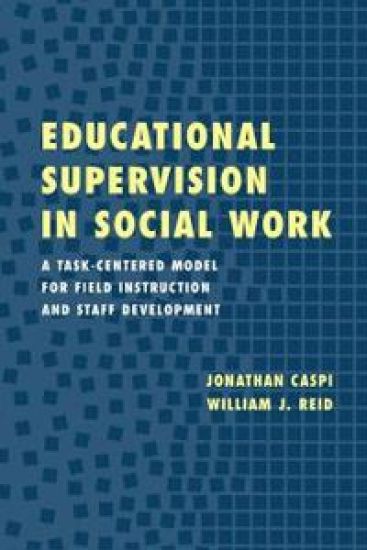
This book provides a comprehensive examination of instructional supervision and introduces the Task-Centered Model for Educational Supervision (TCS). It begins by reviewing the history of educational supervision in social work and principles of effective teaching practices in the field. While theories about the principles and purposes of educational supervision abound, it has proven difficult to translate these ideas into a coherent model of supervisory practice. Educational Supervision in Social Work answers that need, presenting in detail TCS, an ordered series of discrete activities that supervisors and supervisees follow during and between supervision meetings. Designed to promote the continuous attainment of learning and practice objectives, TCS accommodates new models of field instruction, addresses common accountability concerns in social work supervision, and teaches practitioners how to be self-initiating and evaluative. Focusing on the practical implementation of TCS, Caspi and Reed have included detailed case vignettes throughout the book that provide concrete examples of putting theory into practice. Both supervisors of interns and staff as well as supervisees will find TCS a helpful tool in the supervisory process.
This book provides a comprehensive examination of instructional supervision and introduces the Task-Centered Model for Educational Supervision (TCS). It begins by reviewing the history of educational supervision in social work and principles of effective teaching practices in the field. While theories about the principles and purposes of educational supervision abound, it has proven difficult to translate these ideas into a coherent model of supervisory practice. Educational Supervision in Social Work answers that need, presenting in detail TCS, an ordered series of discrete activities that supervisors and supervisees follow during and between supervision meetings. Designed to promote the continuous attainment of learning and practice objectives, TCS accommodates new models of field instruction, addresses common accountability concerns in social work supervision, and teaches practitioners how to be self-initiating and evaluative. Focusing on the practical implementation of TCS, Caspi and Reed have included detailed case vignettes throughout the book that provide concrete examples of putting theory into practice. Both supervisors of interns and staff as well as supervisees will find TCS a helpful tool in the supervisory process.
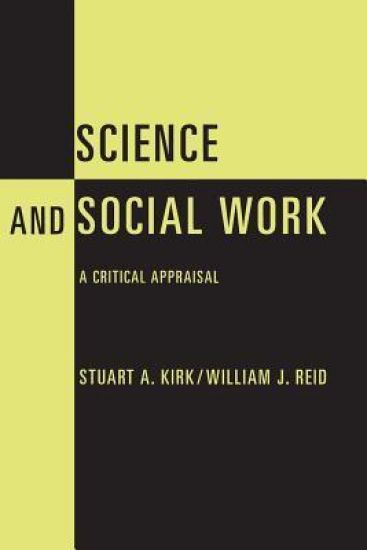
Science and Social Work is a critical appraisal of the strategies and methods that have been used to develop knowledge for social work practice. It identifies the major ways in which social workers have drawn upon scientific knowledge and techniques, placing each one in historical perspective by explaining the nature of the problems it was designed to solve and the philosophical, political, and practical questions it raised. Kirk and Reid offer a balanced appraisal of the promises, accomplishments, and limits of such approaches, demonstrating how the fruits of scientific research can aid clinical practice with individuals, families and groups.
A comprehensive, A-to-Z set of task planners for more than one hundred psychosocial problems from alcoholism and anxiety to domestic violence and sexual abuse. Each entry includes a menu of actions the client can undertake to affect resolution, a guide to the practitioner's role in facilitating these actions, and a reference list. An accompanying disk allows social workers to update the task planners they are working with and enables keyword searches for specific topics.
A comprehensive, A-to-Z set of task planners for more than one hundred psychosocial problems from alcoholism and anxiety to domestic violence and sexual abuse. Each entry includes a menu of actions the client can undertake to affect resolution, a guide to the practitioner's role in facilitating these actions, and a reference list. An accompanying disk allows social workers to update the task planners they are working with and enables keyword searches for specific topics.
This introductory textbook on research methods in social work places emphasis on research as a natural corollary to practice. The text takes readers step-by-step through the process of developing a practical agenda for such projects. It explains how to formulate questions and hypotheses, conduct group and single-system naturalistic and experimental designs, analyze and compile data, and write research reports. Along the way, it presents discussions of the critical theoretical considerations, such as how to gauge reliability and validity, sort out qualitative and quantitative data analysis and more. Throughout there is specific methodological advice for integrating research agendas into everyday practice. Included are a glossary of terms, diagrams and examples from real-life studies focusing on cultural diversity and oppression, and increased emphasis on themes relevant to practice.