Kirjojen hintavertailu. Mukana 12 390 323 kirjaa ja 12 kauppaa.

Kirjailija

William J. Rothwell

Kirjat ja teokset yhdessä paikassa: 38 kirjaa, julkaisuja vuosilta 1997-2026, suosituimpien joukossa Human Performance Improvement. Vertaile teosten hintoja ja tarkista saatavuus suomalaisista kirjakaupoista.

Mukana myös kirjoitusasut: William J Rothwell

38 kirjaa

Kirjojen julkaisuhaarukka 1997-2026.

Human Performance Improvement

Human Performance Improvement

William J. Rothwell; Carolyn K. Hohne; Stephen B. King

Routledge
2018
nidottu
Organizations are under pressure to build and sustain competitive advantage with and through people. For that reason, managers continue to demand results from workers and look for as many ways as possible to increase productivity and decrease the costs of doing business. Human performance improvement (HPI) is a systematic approach to securing better performance from people. This book provides a thorough overview of the theory and practice of HPI, looking at the long-term action plan and specific interventions that can improve productivity and address performance problems. This new edition provides up-to-date references and sources, examines the manager’s role in HPI in more detail than previous editions, and explores how to build on human performance improvement strengths and opportunities. Written by a group of highly respected authors in the field, this book will show you how to discover and analyze performance gaps, plan for future improvements in human performance, and design and develop cost-effective interventions to close performance gaps.HPI is not a tool reserved exclusively for training and development practitioners, human resource specialists, or external consultants. Almost anyone can use it, including managers, supervisors, and even employees, making this book vital reading for anyone looking to improve human performance.
Marketing Organization Development

Marketing Organization Development

William J Rothwell; Jong Gyu Park; Jae Young Lee

CRC Press
2017
sidottu
Organizational Development (OD) consultants often face dilemmas when they market their services because there is a gap between clients’ expectation and the actual role of OD consultants. This book is about how to overcome that dilemma by finding effective marketing strategies for a different approach to consulting. Marketing Organization Development: A How-To Guide for OD Consultants focuses on the challenges faced by internal and external consultants in marketing and selling their services. By distinguishing between performance consulting and Organization Development (OD) consulting, this book demonstrates why marketing and selling OD consulting services are unique. This book meets not only unique OD consultants’ needs by reflecting the philosophical background of OD and unique marketing challenges but the needs of Human Resource Development (HRD) managers’ need who are interested in promoting or selling their change interventions within their organizations.This comprehensive book: Reviews important terms and popular tools used in the marketing process and outlines the many roles a consultant must fill to obtain and keep the business (i.e., marketer, salesperson, brand manager, account management) .Describes the criteria for self-evaluation as an OD consultant. It examines how to identify your strengths and the competencies you need to develop based on OD competencies. Provides an introduction to actionable steps and resources for organization development, change management, and performance management consultants to evaluate unmet needs and opportunities through a niche market for consulting services. Covers how to communicate value to your target customers and how to brand your service. Describes various channels of OD marketing such as viral, word of mouth, and social media marketing. . Reviews selling tactics for l your consulting service and discusses the importance of having a defined sales process to which you adhere.
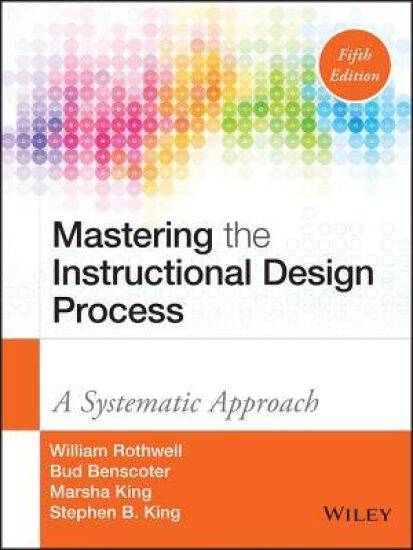
Mastering the Instructional Design Process

Mastering the Instructional Design Process

William J. Rothwell; Bud Benscoter; Marsha King; Stephen B. King

John Wiley Sons Inc
2016
sidottu
A comprehensive framework for effective real-world instructional design Mastering the Instructional Design Process provides step-by-step guidance on the design and development of an engaging, effective training program. The focus on core competencies of instructional system design helps you develop your skills in a way that's immediately applicable to real-world settings, and this newly updated fifth edition has been revised to reflect the new IBSTPI Competencies and Standards for Instructional Design. With a solid foundation of researched and validated standards, this invaluable guide provides useful insight and a flexible framework for approaching instructional design from a practical perspective. Coverage includes the full range of design considerations concerning the learners, objectives, setting, and more, and ancillaries include design templates, PowerPoint slides, lecture notes, and a test bank help you bring these competencies to the classroom. Instructional design is always evolving, and new trends are emerging to meet the ever-changing needs of learners and exploit the newest tools at our disposal. This book brings together the latest developments and the most effective best practices to give you a foolproof framework for successfully managing instructional design projects. Detect and solve human performance problemsAnalyze needs, learners, work settings, and workEstablish performance objectives and measurementsDeliver effective instruction in a variety of scenarios Effective training programs don't just happen. Instructional design is a complex field, and practitioners must be skilled in very specific areas to deliver a training program that engages learners and makes the learning 'stick.' Mastering the Instructional Design Process is a comprehensive handbook for developing the skillset that facilitates positive training outcomes.
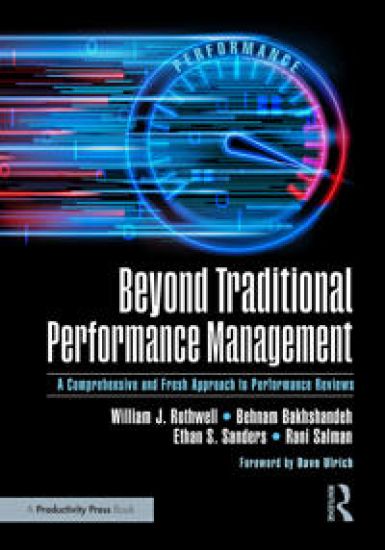
Beyond Traditional Performance Management

Beyond Traditional Performance Management

William J. Rothwell; Behnam Bakhshandeh; Ethan Sanders; Rani Salman

TAYLOR FRANCIS LTD
2026
sidottu
Beyond Traditional Performance Management: A Comprehensive and Fresh Approach to the Traditional Performance Review provides a compelling new picture of what an effective performance management system could look like. By giving examples of how each element can be improved and implemented, a comprehensive picture of how the entire system could look begins to emerge. This book achieves this by examining the key questions that performance management system designers should ask, exploring realistic answers to these questions, and then describing the specific actions that must be taken to implement these ideas. The new archetype of performance management represents a paradigm shift that recognizes employees as the cornerstone of organizational success. This model elevates individual performance and nurtures a vibrant organizational culture by prioritizing continuous feedback, skill development, employee well-being, and purpose-driven leadership. Embracing this transformative approach is not just a choice but a necessity for organizations aspiring to thrive in the 21st-century business landscape, where adaptability, innovation, and employee empowerment are key to sustainable growth. This book offers a unique and fresh look at performance management. It offers an honest and authentic perspective on the challenges faced by organizations that employ a traditional approach. The book will provide a “playbook” of remedies addressing each challenge. Another pivotal aspect of this new performance management archetype is the emphasis on employee well-being and work-life balance. Burnout and stress can significantly hinder productivity and innovation. Forward-thinking organizations prioritize mental and physical health, offering wellness programs, flexible work schedules, and avenues for stress relief. By fostering a supportive work environment, organizations enhance employee morale and elevate overall productivity and creativity. The lineup of authors enhances this book with an extensive global reach and a sharp focus on North America, Asia, and the Middle East. The authors are renowned authors and consultants who have access to thousands of clients and end-users interested in performance management, enabling them to reach an unprecedented audience demographic.
Beyond Traditional Performance Management

Beyond Traditional Performance Management

William J. Rothwell; Behnam Bakhshandeh; Ethan Sanders; Rani Salman

TAYLOR FRANCIS LTD
2026
nidottu
Beyond Traditional Performance Management: A Comprehensive and Fresh Approach to the Traditional Performance Review provides a compelling new picture of what an effective performance management system could look like. By giving examples of how each element can be improved and implemented, a comprehensive picture of how the entire system could look begins to emerge. This book achieves this by examining the key questions that performance management system designers should ask, exploring realistic answers to these questions, and then describing the specific actions that must be taken to implement these ideas. The new archetype of performance management represents a paradigm shift that recognizes employees as the cornerstone of organizational success. This model elevates individual performance and nurtures a vibrant organizational culture by prioritizing continuous feedback, skill development, employee well-being, and purpose-driven leadership. Embracing this transformative approach is not just a choice but a necessity for organizations aspiring to thrive in the 21st-century business landscape, where adaptability, innovation, and employee empowerment are key to sustainable growth. This book offers a unique and fresh look at performance management. It offers an honest and authentic perspective on the challenges faced by organizations that employ a traditional approach. The book will provide a “playbook” of remedies addressing each challenge. Another pivotal aspect of this new performance management archetype is the emphasis on employee well-being and work-life balance. Burnout and stress can significantly hinder productivity and innovation. Forward-thinking organizations prioritize mental and physical health, offering wellness programs, flexible work schedules, and avenues for stress relief. By fostering a supportive work environment, organizations enhance employee morale and elevate overall productivity and creativity. The lineup of authors enhances this book with an extensive global reach and a sharp focus on North America, Asia, and the Middle East. The authors are renowned authors and consultants who have access to thousands of clients and end-users interested in performance management, enabling them to reach an unprecedented audience demographic.
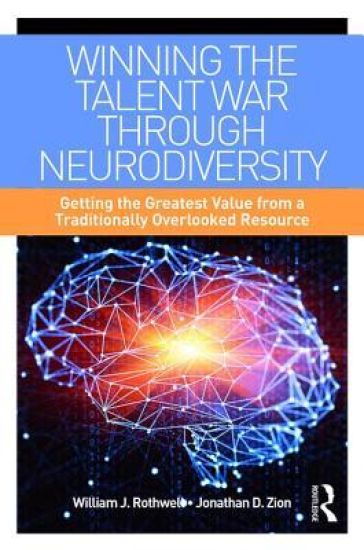
Winning the Talent War through Neurodivergence

Winning the Talent War through Neurodivergence

William J. Rothwell; Jonathan D. Zion

CRC Press Inc
2025
sidottu
Recruiting talent from among the disabled population poses unique challenges, which often are not adequately addressed by potential employers. Although job seekers presently enjoy an advantage due to global talent shortages, that situation may not continue. Right now, employers are hard pressed to find anyone to fill positions. At this writing, there are two job openings available for every one job applicant to fill it. In that environment, it makes sense for employers to explore alternative ways to get work done and alternative labor groups to do that work. In Winning the Talent War through Neurodivergence: A Guide for the Neurotypical, William J. Rothwell and Jonathan D. Zion show how employers can overcome talent shortages by tapping into the often-overlooked pool of talent comprising people with disabilities (PWDs).Few books examine the human resources processes relating to people with disabilities, and this one provides a range of new insights.This is a book for anyone involved in developing HR strategies or with responsibility for how human resources are utilized in general, who are interested in improving the methods used to recruit and retain people with disabilities.
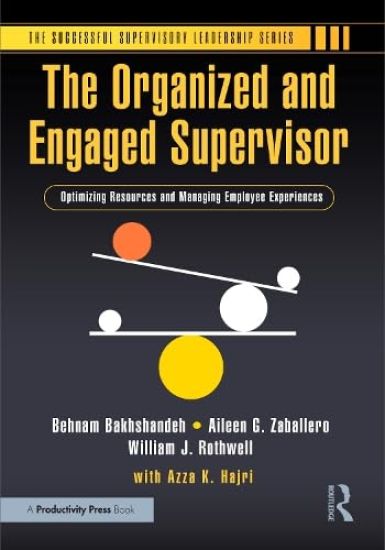
The Organized and Engaged Supervisor

The Organized and Engaged Supervisor

Behnam Bakhshandeh; Aileen G. Zaballero; William J. Rothwell

TAYLOR FRANCIS LTD
2025
nidottu
Balancing organization and engagement is the cornerstone of a workplace where supervisors and their teams can genuinely thrive. Effective organization goes beyond checking boxes and meeting quotas—it’s about creating an environment where clear direction and supportive leadership enable everyone to do their best work. Supervisors play a pivotal role in this dynamic, navigating their own tasks while guiding their teams and meeting the expectations of clients and higher management. The challenge is maintaining this balance, managing projects, and leading with limited time and resources. Success demands more than good intentions; it requires strong organizational skills to foster harmony, streamline efforts, and reduce stress.However, even the most meticulously organized supervisor can’t optimize their teams without veritable engagement. Lasting success comes from integrating structure with human connection. A great supervisor allocates resources effectively and builds an atmosphere where employees feel valued, motivated, and genuinely connected to their work. This book is your comprehensive guide to mastering this delicate balance. Packed with practical insights and proven strategies, this book will help elevate your leadership skills and team dynamics, creating a culture where productivity and commitment are seamlessly intertwined.
The Organized and Engaged Supervisor

The Organized and Engaged Supervisor

Behnam Bakhshandeh; Aileen G. Zaballero; William J. Rothwell

TAYLOR FRANCIS LTD
2025
sidottu
Balancing organization and engagement is the cornerstone of a workplace where supervisors and their teams can genuinely thrive. Effective organization goes beyond checking boxes and meeting quotas—it’s about creating an environment where clear direction and supportive leadership enable everyone to do their best work. Supervisors play a pivotal role in this dynamic, navigating their own tasks while guiding their teams and meeting the expectations of clients and higher management. The challenge is maintaining this balance, managing projects, and leading with limited time and resources. Success demands more than good intentions; it requires strong organizational skills to foster harmony, streamline efforts, and reduce stress.However, even the most meticulously organized supervisor can’t optimize their teams without veritable engagement. Lasting success comes from integrating structure with human connection. A great supervisor allocates resources effectively and builds an atmosphere where employees feel valued, motivated, and genuinely connected to their work. This book is your comprehensive guide to mastering this delicate balance. Packed with practical insights and proven strategies, this book will help elevate your leadership skills and team dynamics, creating a culture where productivity and commitment are seamlessly intertwined.
Experiencing Organization Development

Experiencing Organization Development

William J. Rothwell; Sandra L. Williams; Aileen G. Zaballero

Cognella, Inc
2025
nidottu
Featuring a foreword by celebrated author, speaker, leader, and educator David W. Jamieson, Ph.D., Experiencing Organization Development: Practice through Case Studies and Role-Plays offers a unique approach to mastering complex concepts in Organization Development (OD) and Change Management (CM) through experiential learning. By utilizing low-tech simulations, including case studies and role-plays, participants focus on cultivating real-world OD skills. The book emphasizes two key models: the Action Research Model (ARM) and the Appreciative Inquiry Model (AIM), highlighting the importance of facilitating change. The book is structured into four sections. Part I lays the groundwork by explaining the how and what participants will learn. It introduces the essential principles of experiential learning, contrasts directive strategies with collaborative approaches to change, and sets the stage for where they will learn by introducing the ""sandbox""—a dynamic organizational ecosystem for practice. Part II features nine scenarios designed to hone participants' problem-solving abilities as OD practitioners. Part III, comprised of five scenarios, focuses on identifying and leveraging an organization's strengths, successes, and opportunities. Parts II and III engage participants through case stories, interactive discussions, skill-building role-plays, and reflective exercises, enhancing both their learning and skill development. Part IV provides appendices with additional resources to further support learning. QR codes include throughout the text provide readers with access to additional web-based content to further engage readers and enrich the learning material. This book is ideal for courses in OD, change management, and related topics. It serves as a practical guide for OD professionals, equipping them with the competencies needed to manage bottom-up change processes effectively within organizations.
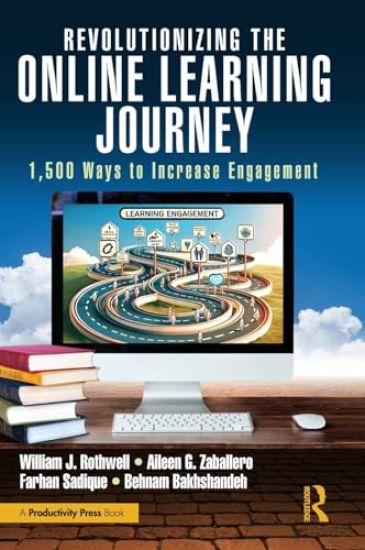
Revolutionizing the Online Learning Journey

Revolutionizing the Online Learning Journey

William J. Rothwell; Aileen Zaballero; Farhan Sadique; Behnam Bakhshandeh

TAYLOR FRANCIS LTD
2024
nidottu
The fast evolution of education and the expansion of internet resources necessitate increasingly advanced tools and methodologies. Enabling virtual conversations for knowledge dissemination, community development, and connection might promote an explorative strategy. Teachers, trainers, and facilitators must create compelling virtual learning. Critical questions: How can companies engage online learners? How can educators improve virtual learning?A system can undergo substantial alterations when technology is employed as a tool or function. E-learning and m-learning offer new interaction options for learners, trainers, and stakeholders. Innovative technologies can encourage new educational alternatives against conservatism.You've been waiting for Revolutionizing the Online Learning Journey: 1500 Ways to Increase Engagement. This practical guide is for instructors, instructional designers, professional trainers, consultants, and others directly involved in teaching, producing, and leading online learning. The authors' data will reveal a wealth of methods that may make virtual meetings interesting, inclusive, and inventive for all participants. This book offers several ideas and tools that may be simply integrated to keep learners engaged and make learning sessions more engaging. You'll also learn about new learning tools like virtual reality and artificial intelligence to expand your possibilities.
Revolutionizing the Online Learning Journey

Revolutionizing the Online Learning Journey

William J. Rothwell; Aileen Zaballero; Farhan Sadique; Behnam Bakhshandeh

TAYLOR FRANCIS LTD
2024
sidottu
The fast evolution of education and the expansion of internet resources necessitate increasingly advanced tools and methodologies. Enabling virtual conversations for knowledge dissemination, community development, and connection might promote an explorative strategy. Teachers, trainers, and facilitators must create compelling virtual learning. Critical questions: How can companies engage online learners? How can educators improve virtual learning?A system can undergo substantial alterations when technology is employed as a tool or function. E-learning and m-learning offer new interaction options for learners, trainers, and stakeholders. Innovative technologies can encourage new educational alternatives against conservatism.You've been waiting for Revolutionizing the Online Learning Journey: 1500 Ways to Increase Engagement. This practical guide is for instructors, instructional designers, professional trainers, consultants, and others directly involved in teaching, producing, and leading online learning. The authors' data will reveal a wealth of methods that may make virtual meetings interesting, inclusive, and inventive for all participants. This book offers several ideas and tools that may be simply integrated to keep learners engaged and make learning sessions more engaging. You'll also learn about new learning tools like virtual reality and artificial intelligence to expand your possibilities.
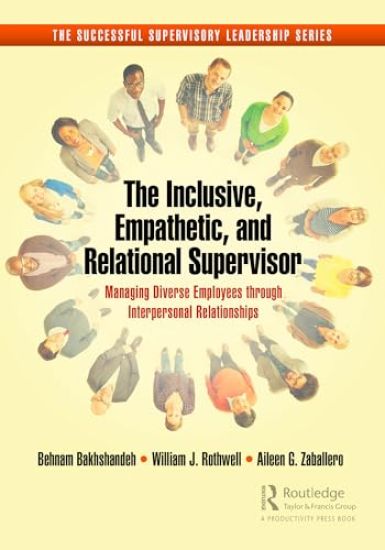
The Inclusive, Empathetic, and Relational Supervisor

The Inclusive, Empathetic, and Relational Supervisor

Behnam Bakhshandeh; William J. Rothwell; Aileen G. Zaballero

TAYLOR FRANCIS LTD
2024
sidottu
Supervisors are the bridge between line employees and middle/upper management. Therefore, they must effectively communicate across the organization to be responsive and thoughtful leaders. With work being more global, organizations are taking advantage of remote work, and the workforce is now more diverse and decentralized, making the workplace more dynamic and complex. However, diversity can be one of the most controversial and least understood business topics because of the issues regarding quality, leadership, and ethics (Anand & Winters, 2008).An inclusive supervisor will ensure that their direct reports are treated fairly and respectfully but never made to feel less than anyone else. They will be a critical success factor in supporting the business case for diversity, equity, inclusion, and belonging (DEI&B) as a critical strategy in a globally competitive market.This book builds on the belief that people are the most valuable resource and that everyone should be treated with dignity and respect. The authors will provide tools to self-assess intrapersonal/interpersonal communication, develop a positive work environment, and evaluate listening skills.A list of competencies to be an effective communicator will be provided. Key concepts such as cross-cultural competence, generational cohort, critical race theory, emotional intelligence, emotional contagion, social exchange theory, and interpersonal competency will be explored.This book provides strategies for building solid relationships with team members; uses positivity as a foundational practice to lead and encourage other employees; provides guidelines on how to hold employees accountable and set high expectations; presents strategies to engage, coach, and develop employees by creating a positive environment to influence attitudes and behaviors; and offers various approaches for managing time and increasing productivity.
The Inclusive, Empathetic, and Relational Supervisor

The Inclusive, Empathetic, and Relational Supervisor

Behnam Bakhshandeh; William J. Rothwell; Aileen G. Zaballero

TAYLOR FRANCIS LTD
2024
nidottu
Supervisors are the bridge between line employees and middle/upper management. Therefore, they must effectively communicate across the organization to be responsive and thoughtful leaders. With work being more global, organizations are taking advantage of remote work, and the workforce is now more diverse and decentralized, making the workplace more dynamic and complex. However, diversity can be one of the most controversial and least understood business topics because of the issues regarding quality, leadership, and ethics (Anand & Winters, 2008).An inclusive supervisor will ensure that their direct reports are treated fairly and respectfully but never made to feel less than anyone else. They will be a critical success factor in supporting the business case for diversity, equity, inclusion, and belonging (DEI&B) as a critical strategy in a globally competitive market.This book builds on the belief that people are the most valuable resource and that everyone should be treated with dignity and respect. The authors will provide tools to self-assess intrapersonal/interpersonal communication, develop a positive work environment, and evaluate listening skills.A list of competencies to be an effective communicator will be provided. Key concepts such as cross-cultural competence, generational cohort, critical race theory, emotional intelligence, emotional contagion, social exchange theory, and interpersonal competency will be explored.This book provides strategies for building solid relationships with team members; uses positivity as a foundational practice to lead and encourage other employees; provides guidelines on how to hold employees accountable and set high expectations; presents strategies to engage, coach, and develop employees by creating a positive environment to influence attitudes and behaviors; and offers various approaches for managing time and increasing productivity.
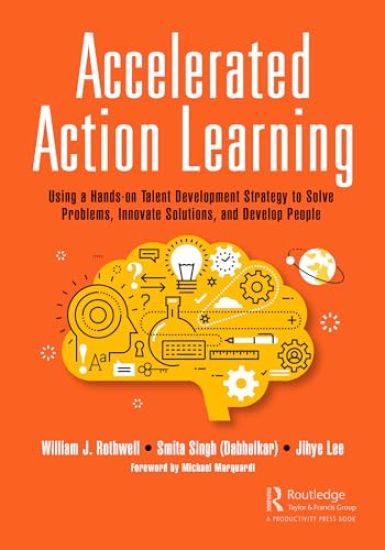
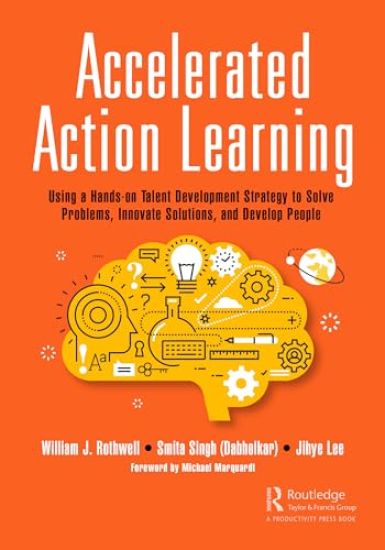
Accelerated Action Learning

Accelerated Action Learning

William J. Rothwell; Smita Singh (Dabholkar); Jihye Lee

TAYLOR FRANCIS LTD
2024
nidottu
In a knowledge-based society, people should not simply collect knowledge but should utilize and apply it to solve a problem. Action learning makes organizational members learn while solving real problems in the workplace. However, traditional action learning might not be effective for rapidly changing environments, because it is typically a process that requires substantial time. Therefore, this book provides a guideline on how to apply action learning quickly in workplaces—especially in virtual settings. Action learning allows the organization to develop people while, at the same time, getting work done. It is an alternative to classroom-based and online learning programs. In addition, it can also be an alternative to the instructional systems design (ISD) model or the successive approximation model (SAM) as a means of developing planned instruction if used for that purpose. Action learning can be an effective tool for Web 2.0 learning. Many organizations are now using self-directed teams and other team formats for work. It makes sense to revisit planned on-the-job training and learning with an emphasis on teams. Action learning is a process involving a small group with facilitators and action-learning process managers, so it is one of the best options for team-based problem-solving. This book provides real action learning cases. There are needs that have emerged in these post-pandemic times. There is a need to explain how action learning can be applied to various settings, issues, and challenges. Since COVID-19 occurred, many people must work in virtual or hybrid settings. This book gives trainers—who could be HR managers, operating managers, or learning and development professionals—guidelines that can be used in virtual settings to meet the new needs. Essentially, this book is written for team facilitators, supervisors, managers, or team members who wish to plan action-oriented, problem-based, and work-related learning experiences in real time. Because many action-learning books are written for an academic audience, it is not easy to put action learning into practice. Therefore, the goal of this book is to provide guidelines on how action learning starts, what basic principles should be considered, and what tools and techniques are needed for rapid action learning. The book is intended to be a primer on how to facilitate a planned learning project in a team or workgroup.
Accelerated Action Learning

Accelerated Action Learning

William J. Rothwell; Smita Singh (Dabholkar); Jihye Lee

TAYLOR FRANCIS LTD
2024
sidottu
In a knowledge-based society, people should not simply collect knowledge but should utilize and apply it to solve a problem. Action learning makes organizational members learn while solving real problems in the workplace. However, traditional action learning might not be effective for rapidly changing environments, because it is typically a process that requires substantial time. Therefore, this book provides a guideline on how to apply action learning quickly in workplaces—especially in virtual settings. Action learning allows the organization to develop people while, at the same time, getting work done. It is an alternative to classroom-based and online learning programs. In addition, it can also be an alternative to the instructional systems design (ISD) model or the successive approximation model (SAM) as a means of developing planned instruction if used for that purpose. Action learning can be an effective tool for Web 2.0 learning. Many organizations are now using self-directed teams and other team formats for work. It makes sense to revisit planned on-the-job training and learning with an emphasis on teams. Action learning is a process involving a small group with facilitators and action-learning process managers, so it is one of the best options for team-based problem-solving. This book provides real action learning cases. There are needs that have emerged in these post-pandemic times. There is a need to explain how action learning can be applied to various settings, issues, and challenges. Since COVID-19 occurred, many people must work in virtual or hybrid settings. This book gives trainers—who could be HR managers, operating managers, or learning and development professionals—guidelines that can be used in virtual settings to meet the new needs. Essentially, this book is written for team facilitators, supervisors, managers, or team members who wish to plan action-oriented, problem-based, and work-related learning experiences in real time. Because many action-learning books are written for an academic audience, it is not easy to put action learning into practice. Therefore, the goal of this book is to provide guidelines on how action learning starts, what basic principles should be considered, and what tools and techniques are needed for rapid action learning. The book is intended to be a primer on how to facilitate a planned learning project in a team or workgroup.
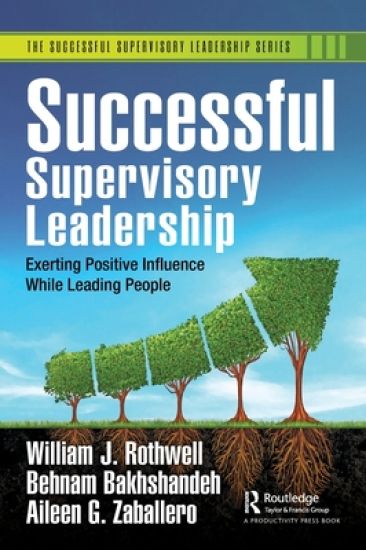
Successful Supervisory Leadership

Successful Supervisory Leadership

William J. Rothwell; Behnam Bakhshandeh; Aileen G. Zaballero

TAYLOR FRANCIS LTD
2023
sidottu
Why Study Supervision?This book presents two compelling reasons to study supervision and supervisory leadership: Influential Position: Supervisors exert considerable influence on organizational settings. Supervisors have been schooled, developed, and trained for their responsibilities. They can function more effectively than if they learn through informal, sometimes haphazard means. It thus pays to learn about supervision because supervisors can influence how efficiently and effectively their organization functions. Career Path: Many career paths lead to supervision. Supervisors are everywhere. Supervisors are teachers, doctors, accountants, lawyers, plumbers, and electricians. If you aspire to advance within your occupation, you may find that one career path leads to supervision. Preparing for supervisory responsibilities can prepare you for advancement. You may thus have a personal stake – your own future – in learning about what supervisors do and how they do it.In addition, this book: Provides strategies for building solid relationships with team members. Uses positivity as a foundational practice to lead and encourage other employees. Provides guidelines on how to hold employees accountable and set high expectations. Presents strategies to engage, coach, and develop employees by creating a positive environment to influence attitudes and behaviors. Offers various approaches for managing time and increasing productivity.
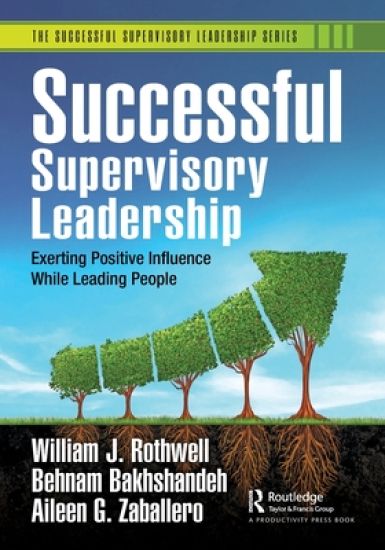
Successful Supervisory Leadership

Successful Supervisory Leadership

William J. Rothwell; Behnam Bakhshandeh; Aileen G. Zaballero

TAYLOR FRANCIS LTD
2023
nidottu
Why Study Supervision?This book presents two compelling reasons to study supervision and supervisory leadership: Influential Position: Supervisors exert considerable influence on organizational settings. Supervisors have been schooled, developed, and trained for their responsibilities. They can function more effectively than if they learn through informal, sometimes haphazard means. It thus pays to learn about supervision because supervisors can influence how efficiently and effectively their organization functions. Career Path: Many career paths lead to supervision. Supervisors are everywhere. Supervisors are teachers, doctors, accountants, lawyers, plumbers, and electricians. If you aspire to advance within your occupation, you may find that one career path leads to supervision. Preparing for supervisory responsibilities can prepare you for advancement. You may thus have a personal stake – your own future – in learning about what supervisors do and how they do it.In addition, this book: Provides strategies for building solid relationships with team members. Uses positivity as a foundational practice to lead and encourage other employees. Provides guidelines on how to hold employees accountable and set high expectations. Presents strategies to engage, coach, and develop employees by creating a positive environment to influence attitudes and behaviors. Offers various approaches for managing time and increasing productivity.
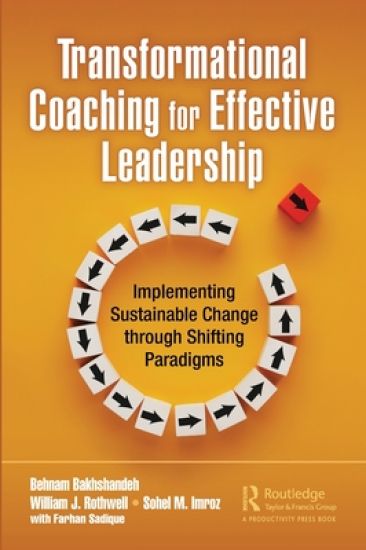
Transformational Coaching for Effective Leadership

Transformational Coaching for Effective Leadership

Behnam Bakhshandeh; William J. Rothwell; Sohel M. Imroz

TAYLOR FRANCIS LTD
2023
sidottu
The purpose of this book is to introduce the concept of transformational coaching and to educate professional business coaches or mangers-as-coaches in their organizations on the influential and relevant elements of Transformational Coaching for Effective Leadership designed for coaching individuals, teams, and businesses or applying such elements in any level of organization development intervention, either toward individuals, teams, groups, departments, or the organization itself. Given the power and long-lasting influence of transformational coaching, it also could be beneficial to professionals in the fields of human resource development (HRD), workplace learning and performance (WLP), human performance enhancement (HPE), and, overall, in the domain of workforce education and development (WFED). This book will start by reviewing the background and presence of transformational coaching in businesses and organizations, along with the general concepts, perceptions, and understanding of coaching. _ is book will examine the uses of transformational coaching in management and leadership development, human resource development for talent development and retention, and for developing managerial coaching skills and competencies. Additionally, this book will review the presence and use of transformational coaching concepts, theories, and practices, including transformational learning for human resources (HR) and HRD professionals to influence a workforce’s attitude, behavior, and productivity.Features Builds individuals’ self-awareness, self-realization, and self-confidence Offers personal and professional development Teaches the concept of transformational learning and its use in transformational coaching Teaches rituals, skills, and strategies for individuals and teams to increase their productivity Offers an approach to building healthy and strong relationships with oneself and others Includes change management strategies for redirecting poor job performance Helps readers implement effective transformational coaching practices by offering many tools, such as forms, checklists, and worksheets
Transformational Coaching for Effective Leadership

Transformational Coaching for Effective Leadership

Behnam Bakhshandeh; William J. Rothwell; Sohel M. Imroz

TAYLOR FRANCIS LTD
2023
nidottu
The purpose of this book is to introduce the concept of transformational coaching and to educate professional business coaches or mangers-as-coaches in their organizations on the influential and relevant elements of Transformational Coaching for Effective Leadership designed for coaching individuals, teams, and businesses or applying such elements in any level of organization development intervention, either toward individuals, teams, groups, departments, or the organization itself. Given the power and long-lasting influence of transformational coaching, it also could be beneficial to professionals in the fields of human resource development (HRD), workplace learning and performance (WLP), human performance enhancement (HPE), and, overall, in the domain of workforce education and development (WFED). This book will start by reviewing the background and presence of transformational coaching in businesses and organizations, along with the general concepts, perceptions, and understanding of coaching. _ is book will examine the uses of transformational coaching in management and leadership development, human resource development for talent development and retention, and for developing managerial coaching skills and competencies. Additionally, this book will review the presence and use of transformational coaching concepts, theories, and practices, including transformational learning for human resources (HR) and HRD professionals to influence a workforce’s attitude, behavior, and productivity.Features Builds individuals’ self-awareness, self-realization, and self-confidence Offers personal and professional development Teaches the concept of transformational learning and its use in transformational coaching Teaches rituals, skills, and strategies for individuals and teams to increase their productivity Offers an approach to building healthy and strong relationships with oneself and others Includes change management strategies for redirecting poor job performance Helps readers implement effective transformational coaching practices by offering many tools, such as forms, checklists, and worksheets