Kirjojen hintavertailu. Mukana 12 595 353 kirjaa ja 12 kauppaa.

Kirjailija

William J. Sutherland

Kirjat ja teokset yhdessä paikassa: 15 kirjaa, julkaisuja vuosilta 2000-2022, suosituimpien joukossa Farmland Conservation. Vertaile teosten hintoja ja tarkista saatavuus suomalaisista kirjakaupoista.

Mukana myös kirjoitusasut: William J Sutherland

15 kirjaa

Kirjojen julkaisuhaarukka 2000-2022.

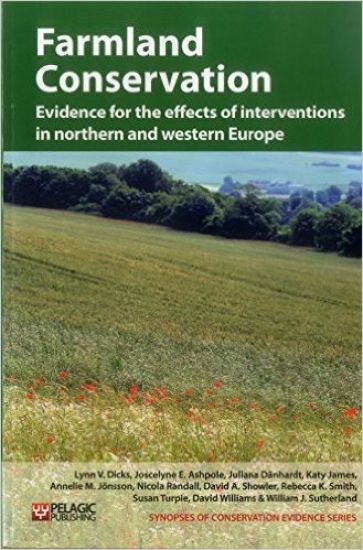
Farmland Conservation

Farmland Conservation

Lynn V. Dicks; Joscelyne E. Ashpole; Juliana Dänhardt; Katy James; Annelie M. Jönsson; Nicola Randall; David A. Showler; Rebecca K. Smith; Susan Turpie; David R. Williams; William J. Sutherland

Pelagic Publishing
2014
nidottu
This synopsis covers evidence for the effects of conservation interventions for native farmland wildlife. It is restricted to evidence captured on the website www.conservationevidence.com. It includes papers published in the journal Conservation Evidence, evidence summarized on our database and systematic reviews collated by the Collaboration for Environmental Evidence. It is the thrid volume in the series Synopses of Conservation Evidence. Evidence was collected from all European countries west of Russia, but not those south of France, Switzerland, Austria, Hungary and Romania. A list of interventions to conserve wildlife on farmland was developed collaboratively by a team of thirteen experts. A number of interventions that are not currently agri-environment options were added during this process, such as ‘Provide nest boxes for bees (solitary or bumblebees)’ and ‘Implement food labelling schemes relating to biodiversity-friendly farming’. Interventions relating to the creation or management of habitats not considered commercial farmland (such as lowland heath, salt marsh and farm woodland) were removed. The list of interventions was organized into categories based on the International Union for the Conservation of Nature (IUCN) classifications of direct threats and conservation actions. Interventions that fall under the threat category ‘Agriculture’ are grouped by farming system, with separate sections for interventions that apply to arable or livestock farms, or across all farming types.
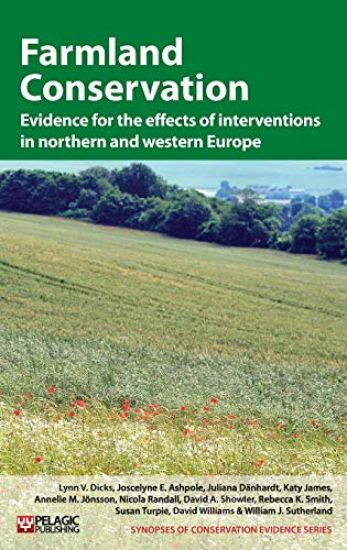
Farmland Conservation

Farmland Conservation

Lynn V. Dicks; Joscelyne E. Ashpole; Juliana Dänhardt; Katy James; Annelie M. Jönsson; Nicola Randall; David A. Showler; Rebecca K. Smith; Susan Turpie; David R. Williams; William J. Sutherland

Pelagic Publishing
2014
sidottu
This synopsis covers evidence for the effects of conservation interventions for native farmland wildlife. It is restricted to evidence captured on the website www.conservationevidence.com. It includes papers published in the journal Conservation Evidence, evidence summarized on our database and systematic reviews collated by the Collaboration for Environmental Evidence. It is the thrid volume in the series Synopses of Conservation Evidence. Evidence was collected from all European countries west of Russia, but not those south of France, Switzerland, Austria, Hungary and Romania. A list of interventions to conserve wildlife on farmland was developed collaboratively by a team of thirteen experts. A number of interventions that are not currently agri-environment options were added during this process, such as ‘Provide nest boxes for bees (solitary or bumblebees)’ and ‘Implement food labelling schemes relating to biodiversity-friendly farming’. Interventions relating to the creation or management of habitats not considered commercial farmland (such as lowland heath, salt marsh and farm woodland) were removed. The list of interventions was organized into categories based on the International Union for the Conservation of Nature (IUCN) classifications of direct threats and conservation actions. Interventions that fall under the threat category ‘Agriculture’ are grouped by farming system, with separate sections for interventions that apply to arable or livestock farms, or across all farming types.
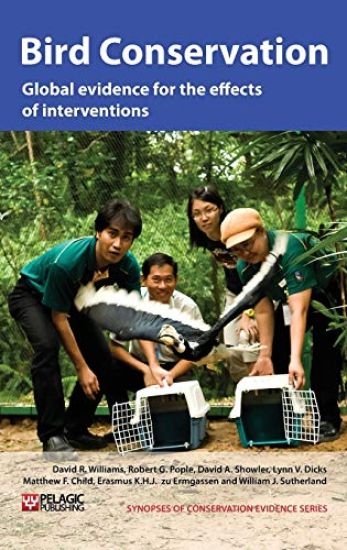
Bird Conservation

Bird Conservation

David R. Williams; Robert G. Pople; David A. Showler; Lynn V. Dicks; Matthew F. Child; Erasmus K.H.J. zu Ermgassen; William J. Sutherland

Pelagic Publishing
2013
sidottu
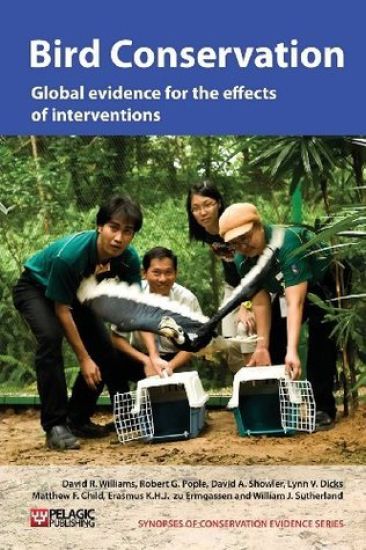
This book brings together scientific evidence and experience relevant to the practical conservation of wild birds. The authors worked with an international group of bird experts and conservationists to develop a global list of interventions that could benefit wild birds. For each intervention, the book summarises studies captured by the Conservation Evidence project, where that intervention has been tested and its effects on birds quantified. The result is a thorough guide to what is known, or not known, about the effectiveness of bird conservation actions throughout the world. The preparation of this synopsis was funded by the Natural Environment Research Council and Arcadia.
Bird Conservation

Bird Conservation

David R. Williams; Robert G. Pople; David A. Showler; Lynn V. Dicks; Matthew F. Child; Erasmus K.H.J. zu Ermgassen; William J. Sutherland

Pelagic Publishing
2013
nidottu
This book brings together scientific evidence and experience relevant to the practical conservation of wild birds. The authors worked with an international group of bird experts and conservationists to develop a global list of interventions that could benefit wild birds. For each intervention, the book summarises studies captured by the Conservation Evidence project, where that intervention has been tested and its effects on birds quantified. The result is a thorough guide to what is known, or not known, about the effectiveness of bird conservation actions throughout the world. The preparation of this synopsis was funded by the Natural Environment Research Council and Arcadia.
Transforming Conservation

Transforming Conservation

William J Sutherland

Open Book Publishers
2022
pokkari
There are severe problems with the decision-making processes currently widely used, leading to ineffective use of evidence, faulty decisions, wasting of resources and the erosion of public and political support. In this book an international team of experts provide solutions. The transformation suggested includes rethinking how evidence is assessed, combined, communicated and used in decision-making; using effective methods when asking experts to make judgements (i.e. avoiding just asking an expert or a group of experts ); using a structured process for making decisions that incorporate the evidence and having effective processes for learning from actions. In each case, the specific problem with decision making is described with a range of practical solutions. Adopting this approach to decision-making requires societal change so detailed suggestions are made for transforming organisations, governments, businesses, funders and philanthropists. The practical suggestions include twelve downloadable checklists. The vision of the authors is to transform conservation so it is more effective, more cost-efficient, learns from practice and is more attractive to funders. However, the lessons of this important book go well beyond conservation to decision-makers in any field.
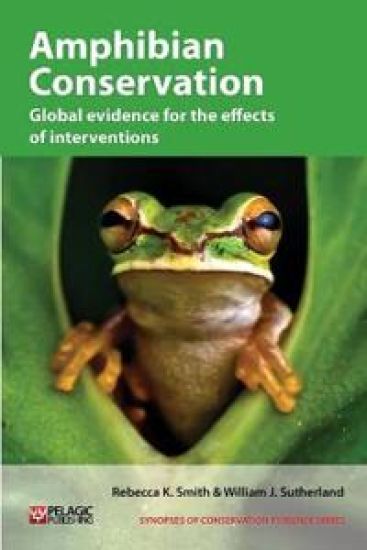
Amphibian Conservation

Amphibian Conservation

Rebecca K. Smith; William J. Sutherland

Pelagic Publishing
2014
nidottu
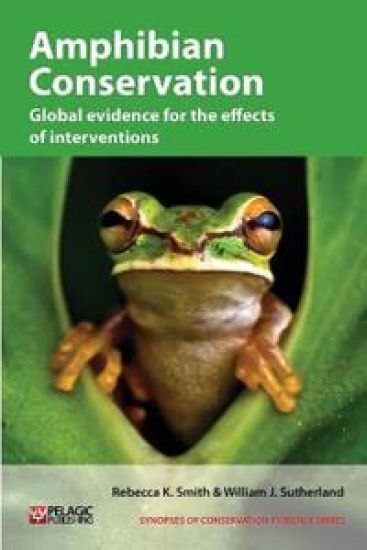
Amphibian Conservation is the fourth in the series of Synopses of Conservation Evidence, linked to the online resource www.ConservationEvidence.com. This synopsis is part of the Conservation Evidence project and provides a useful resource for conservationists. It forms part of a series designed to promote a more evidence-based approach to biodiversity conservation. Others in the series include bee, bird, farmland and bat conservation and many others are in preparation. Approximately 32% of the 7,164+ amphibian species are currently threatened with extinction and at least 43% of species are declining. Despite this, until recently amphibians and their conservation had received little attention. Although work is now being carried out to conserve many species, often it is not adequately documented. This book brings together and summarises the available scientific evidence and experience relevant to the practical conservation of amphibians. The authors consulted an international group of amphibian experts and conservationists to produce a thorough summary of what is known, or not known, about the effectiveness of amphibian conservation actions across the world. "The book is packed with literature summaries and citations; a veritable information goldmine for graduate students and researchers. It also admirably provides decision makers with a well-researched resource of proven interventions that can be employed to stem/reverse the decline of amphibian populations." -John G Palis, Bulletin of the Chicago Herpetological Society
Amphibian Conservation

Amphibian Conservation

Rebecca K. Smith; William J. Sutherland

Pelagic Publishing
2014
sidottu
Amphibian Conservation is the fourth in the series of Synopses of Conservation Evidence, linked to the online resource www.ConservationEvidence.com. This synopsis is part of the Conservation Evidence project and provides a useful resource for conservationists. It forms part of a series designed to promote a more evidence-based approach to biodiversity conservation. Others in the series include bee, bird, farmland and bat conservation and many others are in preparation. Approximately 32% of the 7,164+ amphibian species are currently threatened with extinction and at least 43% of species are declining. Despite this, until recently amphibians and their conservation had received little attention. Although work is now being carried out to conserve many species, often it is not adequately documented. This book brings together and summarises the available scientific evidence and experience relevant to the practical conservation of amphibians. The authors consulted an international group of amphibian experts and conservationists to produce a thorough summary of what is known, or not known, about the effectiveness of amphibian conservation actions across the world. "The book is packed with literature summaries and citations; a veritable information goldmine for graduate students and researchers. It also admirably provides decision makers with a well-researched resource of proven interventions that can be employed to stem/reverse the decline of amphibian populations." -John G Palis, Bulletin of the Chicago Herpetological Society
Bee Conservation

Bee Conservation

Lynn V. Dicks; David A. Showler; William J. Sutherland

Pelagic Publishing
2010
sidottu
This book brings together scientific evidence and experience relevant to the practical conservation of wild bees. The authors worked with an international group of bee experts and conservationists to develop a global list of interventions that could benefit wild bees. They range from protecting natural habitat to controlling disease in commercial bumblebee colonies. For each intervention, the book summarises studies captured by the Conservation Evidence project, where that intervention has been tested and its effects on bees quantified. The result is a thorough guide to what is known, or not known, about the effectiveness of bee conservation actions throughout the world. Bee Conservation is the first in a series of synopses that will cover different species groups and habitats, gradually building into a comprehensive summary of evidence on the effects of conservation interventions for all biodiversity throughout the world. By making evidence accessible in this way, we hope to enable a change in the practice of conservation, so it can become more evidence-based. We also aim to highlight where there are gaps in knowledge. Evidence from all around the world is included. If there appears to be a bias towards evidence from northern European or North American temperate environments, this reflects a current bias in the published research that is available to us. Conservation interventions are grouped primarily according to the relevant direct threats, as defined in the International Union for the Conservation of Nature (IUCN)’s Unified Classification of Direct Threats.
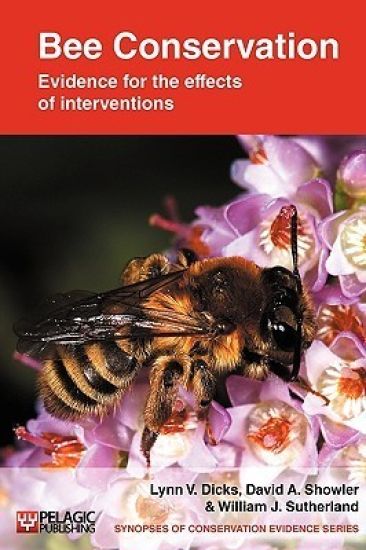
Bee Conservation

Bee Conservation

Lynn V. Dicks; David A. Showler; William J. Sutherland

Pelagic Publishing
2010
nidottu
This book brings together scientific evidence and experience relevant to the practical conservation of wild bees. The authors worked with an international group of bee experts and conservationists to develop a global list of interventions that could benefit wild bees. They range from protecting natural habitat to controlling disease in commercial bumblebee colonies. For each intervention, the book summarises studies captured by the Conservation Evidence project, where that intervention has been tested and its effects on bees quantified. The result is a thorough guide to what is known, or not known, about the effectiveness of bee conservation actions throughout the world. Bee Conservation is the first in a series of synopses that will cover different species groups and habitats, gradually building into a comprehensive summary of evidence on the effects of conservation interventions for all biodiversity throughout the world. By making evidence accessible in this way, we hope to enable a change in the practice of conservation, so it can become more evidence-based. We also aim to highlight where there are gaps in knowledge. Evidence from all around the world is included. If there appears to be a bias towards evidence from northern European or North American temperate environments, this reflects a current bias in the published research that is available to us. Conservation interventions are grouped primarily according to the relevant direct threats, as defined in the International Union for the Conservation of Nature (IUCN)’s Unified Classification of Direct Threats.
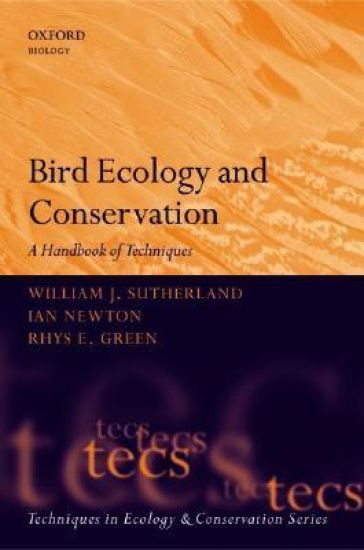
Bird Ecology and Conservation

Bird Ecology and Conservation

William J. Sutherland; Ian Newton; Rhys Green

Oxford University Press
2004
nidottu
The aim of this book is to outline the main methods and techniques available to ornithologists. A general shortage of information about available techniques is greatly hindering progress in avian ecology and conservation. Currently this sort of information is disparate and difficult to locate with much of it widely dispersed in books, journals and grey literature. Sutherland and his editorial team bring together in a single authoritative source all the ornithological techniques the avian community will ever need. For use by graduate students, researchers and practising conservationists worldwide. Bird Ecology and Conservation is the first title in a new series of practical handbooks which include titles focusing on specific taxonomic groups as well as those describing broader themes and subjects. The series editor is William J Sutherland.
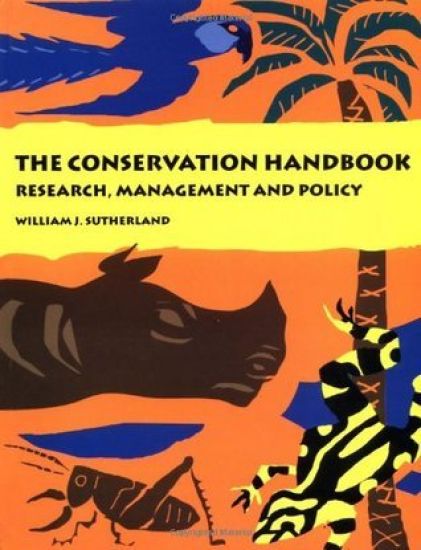
The Conservation Handbook

The Conservation Handbook

William J. Sutherland

Blackwell Science Ltd
2000
nidottu
Textbooks on the principles of conservation biology abound. Yet, how does one put this theoretical knowledge into practice? The aim of The Conservation Handbook is to provide clear guidance on the implementation of conservation techniques. The wide range of methods described include those for ecological research, monitoring, planning, education, habitat management and combining conservation with development. Nineteen case studies illustrate how the methods have been applied. The book will be of interest to conservation biology students and practicing conservationists worldwide. For each copy of the book sold, another copy will be sent free to a practicing conservationist outside Western Europe, North America, Australia, New Zealand and Japan. Foreword by E. O. Wilson. Concise, practical guide packed full of ideas, methods and advice. Provides solutions for the main conservation problems most commonly encountered. 18 global case studies illustrate the application of techniques. The Conservation Handbook Donations Project this book is being sent free to those practising conservationists outside Western Europe, North America, Australia, New Zealand and Japan who are otherwise unlikely to obtain a copy. These copies are provided at cost price by Blackwell Science, the publisher, and paid for with the author''s royalties. Each book sold means another one will be donated.