Kirjojen hintavertailu. Mukana 12 657 676 kirjaa ja 12 kauppaa.
Kirjailija
William Jackson
Kirjat ja teokset yhdessä paikassa: 87 kirjaa, julkaisuja vuosilta 1972-2025, suosituimpien joukossa The Autobiography of a Seaman. Vertaile teosten hintoja ja tarkista saatavuus suomalaisista kirjakaupoista.
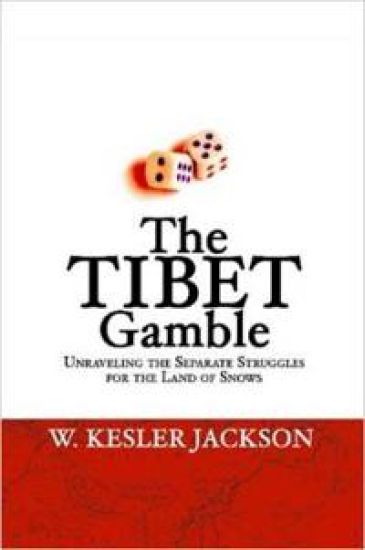
THE TIBET GAMBLE examines the risky bets being played on all sides of the Tibet issue--from Western businesses and the Chinese Communist regime in Beijing to non-violent Tibet activists and militant young Tibetan dissidents. Mr. Jackson answers many critical questions consistently avoided by most "Tibet experts" of today: What will happen when the Dalai Lama dies? Is there a militant side to the Tibetan freedom struggle? How much time do the Tibetan culture and language have left? Does the Western image of a peace-loving, violence-abhoring Tibetan truly mirror the reality for Tibetans today? And, most importantly, how can the Tibet problem be solved?
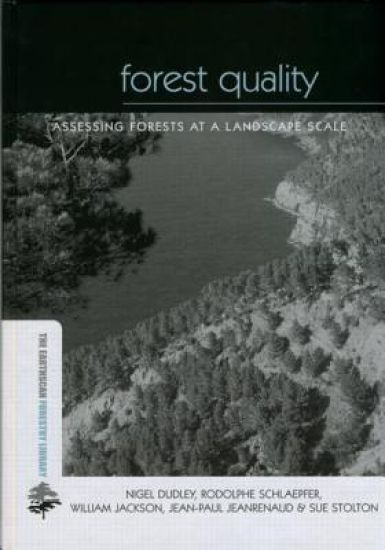
Deforestation is frequently a topic of discussion in the environmental arena, but it is not just the number of trees that matters; the quality of the forest is also important. Even where the forest area is stable or increasing, there are often rapid changes in its character. Natural forests are being replaced by plantations or by intensively managed forests. Around the world, forests are becoming younger and less diverse, in both species and structure; this has important impacts for biodiversity and also affects many human values. In this groundbreaking text, forest quality is discussed as a useful new concept in forest conservation and management. Three main assessment criteria are used: authenticity; environmental benefits; and social and economic benefits. The book describes a methodology and protocol for collecting and analysing data, and outlines in detail the approach required with each indicator. The authors advocate a landscape approach to assessment and demonstrate how assessment works through a series of case studies that show how this approach can be used in many ways to help forest conservation management. This hands-on manual is for professionals involved in forestry, conservation and resource management worldwide, and contains case study material from Europe, Asia, Africa and Latin America that demonstrates practical uses of the new 'landscape' approach to forest conservation. Published with IUCN and WWF
The New Zealand upper house, the Legislative Council (which bore a marked resemblance to its Canadian counterpart the Federal Senate) was abolished in 1950 in an action which represents one of the most clear-cut examples of pragmatic politics in New Zealand history. It was abolished by the essentially conservative National party (fundamentally committed to the bicameral principle), while the Labour party (formally committed to abolition) at first obstructed and then merely stood on the sidelines. New Zealand thus became the only democratic country in the world without either an upper house or a formal written constitution of any consequence. The author attempts both to explain this unusual development and to assess its consequences. The generally accepted view that the Legislative Council failed in 1892 is challenged, and the causes of the decline and failure are traced back to circumstances surrounding its original establishment in 1854. Subsequently, developments since 1950 are examined in the light of abolition. The author concludes that abolition represented the right policy undertaken for the wrong reasons and that ultimately it has made a greater contribution to constitutional change in the twenty years since 1950 than the chamber itself made in the last fifty years of its existence. The New Zealand Legislative Council, an analytical historical study of an institution, throws valuable light on the strengths and weaknesses of the bicameral principle and the consequences of abolishing a second chamber of Parliament. The book should prove useful to Political Science and History courses dealing with Commonwealth Parliamentary government, comparative institutions and constitutional law. It should also appeal to all those interested in the question of bicameral representation.