Kirjojen hintavertailu. Mukana 12 595 353 kirjaa ja 12 kauppaa.

Kirjailija

William Jones

Kirjat ja teokset yhdessä paikassa: 194 kirjaa, julkaisuja vuosilta 1991-2026, suosituimpien joukossa Jones's British Theatre V6. Vertaile teosten hintoja ja tarkista saatavuus suomalaisista kirjakaupoista.

194 kirjaa

Kirjojen julkaisuhaarukka 1991-2026.

Transforming Technologies to Manage Our Information

Transforming Technologies to Manage Our Information

William Jones

Springer International Publishing AG
2013
nidottu
With its theme, "Our Information, Always and Forever," Part I of this book covers the basics of personal information management (PIM) including six essential activities of PIM and six (different) ways in which information can be personal to us. Part I then goes on to explore key issues that arise in the "great migration" of our information onto the Web and into a myriad of mobile devices. Part 2 provides a more focused look at technologies for managing information that promise to profoundly alter our practices of PIM and, through these practices, the way we lead our lives. Part 2 is in five chapters: - Chapter 5. Technologies of Input and Output. Technologies in support of gesture, touch, voice, and even eye movements combine to support a more natural user interface (NUI). Technologies of output include glasses and "watch" watches. Output will also increasingly be animated with options to "zoom". - Chapter 6. Technologies to Save Our Information. We can opt for "life logs" to record our experiences with increasing fidelity. What will we use these logs for? And what isn’t recorded that should be? - Chapter 7. Technologies to Search Our Information. The potential for personalized search is enormous and mostly yet to be realized. Persistent searches, situated in our information landscape, will allow us to maintain a diversity of projects and areas of interest without a need to continually switch from one to another to handle incoming information. - Chapter 8. Technologies to Structure Our Information. Structure is key if we are to keep, find, and make effective use of our information. But how best to structure? And how best to share structured information between the applications we use, with other people, and also with ourselves over time? What lessons can we draw from the failures and successes in web-based efforts to share structure? - Chapter 9. PIM Transformed and Transforming: Stories from the Past, Present and Future. Part 2 concludes with a comparison between Licklider’s world of information in 1957 and our own world of information today. And then we consider what the world of information is likely to look like in 2057. Licklider estimated that he spent 85% of his "thinking time" in activities that were clerical and mechanical and might (someday) be delegated to the computer. What percentage of our own time is spent with the clerical and mechanical? What about in 2057?

The Works of Sir William Jones

The Works of Sir William Jones

William Jones

Cambridge University Press
2013
pokkari
A renowned Enlightenment polymath, Sir William Jones (1746–94) was a lawyer, translator and poet who wrote authoritatively on politics, comparative linguistics and oriental literature. Known initially for his Persian translations and political radicalism, Jones became further celebrated for his study and translation of ancient Sanskrit texts following his appointment to the supreme court in Calcutta in 1783. He spent the next eleven years introducing Europe to the mysticism and rationality of Hinduism through works such as his nine 'Hymns' to Hindu deities and his translation of the Sanskrit classic Sacontalá, influencing Romantic writers from William Blake to August Wilhelm Schlegel. Volume 11 of his thirteen-volume works, published in 1807, contains most of Jones' Histoire de Nader Chah (1770), a memoir of the famed Iranian ruler, translated into French from the Persian. Commissioned by the king of Denmark, this was Jones' first publication. Widely praised, it established him as a pre-eminent orientalist.
The Works of Sir William Jones

The Works of Sir William Jones

William Jones

Cambridge University Press
2013
pokkari
A renowned Enlightenment polymath, Sir William Jones (1746–94) was a lawyer, translator and poet who wrote authoritatively on politics, comparative linguistics and oriental literature. Known initially for his Persian translations and political radicalism, Jones became further celebrated for his study and translation of ancient Sanskrit texts following his appointment to the supreme court in Calcutta in 1783. He spent the next eleven years introducing Europe to the mysticism and rationality of Hinduism through works such as his nine 'Hymns' to Hindu deities and his translation of the Sanskrit classic Sacontalá, influencing Romantic writers from William Blake to August Wilhelm Schlegel. Volume 10 of his thirteen-volume works, published in 1807, contains Jones' important pre-India poetry and essays. These include his essays 'On the Arts, Commonly Called Imitative' and 'On the Poetry of the Eastern Nations' (1772), which anticipate Romantic themes of the sublime, as well as his Alcaic 'Odes', which establish Jones' radical political identity.
The Works of Sir William Jones

The Works of Sir William Jones

William Jones

Cambridge University Press
2013
pokkari
A renowned Enlightenment polymath, Sir William Jones (1746–94) was a lawyer, translator and poet who wrote authoritatively on politics, comparative linguistics and oriental literature. Known initially for his Persian translations and political radicalism, Jones became further celebrated for his study and translation of ancient Sanskrit texts following his appointment to the supreme court in Calcutta in 1783. He spent the next eleven years introducing Europe to the mysticism and rationality of Hinduism through works such as his nine 'Hymns' to Hindu deities and his translation of the Sanskrit classic Sacontalá. Volume 9 of his thirteen-volume works, published in 1807, contains Jones' translation of the Speeches of Isaeus (1779) and perhaps his most influential translation, Sacontalá (1789), a Hindu love fable that explores the depths of Hindu mythology and philosophy. Lauded throughout Europe, Sacontalá would inspire Goethe to write that once it is mentioned, 'everything is said'.
The Works of Sir William Jones

The Works of Sir William Jones

William Jones

Cambridge University Press
2013
pokkari
A renowned Enlightenment polymath, Sir William Jones (1746–94) was a lawyer, translator and poet who wrote authoritatively on politics, comparative linguistics and oriental literature. Known initially for his Persian translations and political radicalism, Jones became further celebrated for his study and translation of ancient Sanskrit texts following his appointment to the supreme court in Calcutta in 1783. He spent the next eleven years introducing Europe to the mysticism and rationality of Hinduism through works such as his nine 'Hymns' to Hindu deities and his translation of the Sanskrit classic Sacontalá. Volume 8 of his thirteen-volume works, published in 1807, contains more of Jones' legal work, including his pre-India tracts on Islamic laws of succession and inheritance - culturally comparative works debunking prejudiced claims that Islamic cultures denied private property. Also included is his formative 'Essay on the Law of Bailments' (1781), a work still cited in some legal cases today.
The Works of Sir William Jones

The Works of Sir William Jones

William Jones

Cambridge University Press
2013
pokkari
A renowned Enlightenment polymath, Sir William Jones (1746–94) was a lawyer, translator and poet who wrote authoritatively on politics, comparative linguistics and oriental literature. Known initially for his Persian translations and political radicalism, Jones became further celebrated for his study and translation of ancient Sanskrit texts following his appointment to the supreme court in Calcutta in 1783. He spent the next eleven years introducing Europe to the mysticism and rationality of Hinduism through works such as his nine 'Hymns' to Hindu deities and his translation of the Sanskrit classic Sacontalá. Volume 7 of his thirteen-volume works, published in 1807, addresses Jones' significant jurisprudential work, containing his 'Charges' as a supreme court judge. It also contains Jones's most controversial work, his Institutes of Hindu Law (1794), a translation from Sanskrit which Jones considered his masterpiece, although postcolonial scholars argue that it cemented Britain's imperial control over India.
The Works of Sir William Jones

The Works of Sir William Jones

William Jones

Cambridge University Press
2013
pokkari
A renowned Enlightenment polymath, Sir William Jones (1746–94) was a lawyer, translator and poet who wrote authoritatively on politics, comparative linguistics and oriental literature. Known initially for his Persian translations and political radicalism, Jones became further celebrated for his study and translation of ancient Sanskrit texts following his appointment to the supreme court in Calcutta in 1783. He spent the next eleven years introducing Europe to the mysticism and rationality of Hinduism through works such as his nine 'Hymns' to Hindu deities and his translation of the Sanskrit classic Sacontalá. Volume 6 of his thirteen-volume works, published in 1807, contains Jones' Poeseos Asiaticae Commentariorum (1774). A work of comparative literature after mentor Robert Lowth's De Sacra Poesi Hebraeorum (1753) - in which Lowth established the Old Testament as a masterpiece of oriental literature - Poeseos provides detailed Latin commentary on the language and techniques of Arabic, Hebrew, Persian and Turkish poetry.
The Works of Sir William Jones

The Works of Sir William Jones

William Jones

Cambridge University Press
2013
pokkari
A renowned Enlightenment polymath, Sir William Jones (1746–94) was a lawyer, translator and poet who wrote authoritatively on politics, comparative linguistics and oriental literature. Known initially for his Persian translations and political radicalism, Jones became further celebrated for his study and translation of ancient Sanskrit texts following his appointment to the supreme court in Calcutta in 1783. He spent the next eleven years introducing Europe to the mysticism and rationality of Hinduism through works such as his nine 'Hymns' to Hindu deities and his translation of the Sanskrit classic Sacontalá, influencing Romantic writers from William Blake to August Wilhelm Schlegel. Volume 5 of his thirteen-volume works, published in 1807, contains Jones' researches into Indian botany - including the comparative 'Botanical Observations on Select Indian Plants' - coupled with his groundbreaking Grammar of the Persian Language (1771), the work which established Jones as one of the eighteenth century's greatest orientalists.
The Works of Sir William Jones

The Works of Sir William Jones

William Jones

Cambridge University Press
2013
pokkari
A renowned Enlightenment polymath, Sir William Jones (1746–94) was a lawyer, translator and poet who wrote authoritatively on politics, comparative linguistics and oriental literature. Known initially for his Persian translations and political radicalism, Jones became further celebrated for his study and translation of ancient Sanskrit texts following his appointment to the supreme court in Calcutta in 1783. He spent the next eleven years introducing Europe to the mysticism and rationality of Hinduism, becoming a pioneer in comparative religion. Through works such as his nine 'Hymns' to Hindu deities and his translation of the Sanskrit classic Sacontalá, Jones inspired and influenced Romantic writers from William Blake to August Wilhelm Schlegel. These thirteen volumes of his works, published in 1807, begin with a memoir by his friend and editor Lord Teignmouth (1751–1834). Volume 1 explores Jones' heritage and birth through to his departure for India.
The Works of Sir William Jones

The Works of Sir William Jones

William Jones

Cambridge University Press
2013
pokkari
A renowned Enlightenment polymath, Sir William Jones (1746–94) was a lawyer, translator and poet who wrote authoritatively on politics, comparative linguistics and oriental literature. Known initially for his Persian translations and political radicalism, Jones became further celebrated for his study and translation of ancient Sanskrit texts following his appointment to the supreme court in Calcutta in 1783. He spent the next eleven years introducing Europe to the mysticism and rationality of Hinduism through works such as his translation of the Sanskrit classic Sacontalá. Volume 13 of his thirteen-volume works, published in 1807, contains Jones' most critical engagements with Hinduism, including his translations of the Sanskrit Hitópadésa (Aesop-like fables of Hindu mythology) and sacred religious texts such as the Isa Upanishad. The volume also contains Jones' nine original 'Hymns' to Hindu deities, poems based on Hindu philosophy that influenced Romantics such as William Blake, Robert Southey and Percy Bysshe Shelley.
The Works of Sir William Jones

The Works of Sir William Jones

William Jones

Cambridge University Press
2013
pokkari
A renowned Enlightenment polymath, Sir William Jones (1746–94) was a lawyer, translator and poet who wrote authoritatively on politics, comparative linguistics and oriental literature. Known initially for his Persian translations and political radicalism, Jones became further celebrated for his study and translation of ancient Sanskrit texts following his appointment to the supreme court in Calcutta in 1783. He spent the next eleven years introducing Europe to the mysticism and rationality of Hinduism through works such as his nine 'Hymns' to Hindu deities and his translation of the Sanskrit classic Sacontalá, influencing Romantic writers from William Blake to August Wilhelm Schlegel. Volume 12 of his thirteen-volume works, published in 1807, contains the final book of Jones's Histoire de Nader Chah (1770), a memoir of the famed Iranian ruler, translated into French from the Persian. This volume also includes Jones' Traité sur la poësie orientale (1770), an essay exploring Arabic and Persian poetry.
The Works of Sir William Jones

The Works of Sir William Jones

William Jones

Cambridge University Press
2013
pokkari
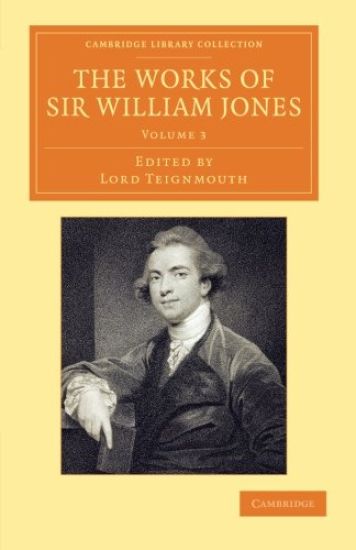
A renowned Enlightenment polymath, Sir William Jones (1746–94) was a lawyer, translator and poet who wrote authoritatively on politics, comparative linguistics and oriental literature. Known initially for his Persian translations and political radicalism, Jones became further celebrated for his study and translation of ancient Sanskrit texts following his appointment to the supreme court in Calcutta in 1783. He spent the next eleven years introducing Europe to the mysticism and rationality of Hinduism through works such as his nine 'Hymns' to Hindu deities and his translation of the Sanskrit classic Sacontalá, influencing Romantic writers from William Blake to August Wilhelm Schlegel. Volume 3 of his thirteen-volume works, published in 1807, contains Jones' 'Anniversary Discourses' (1784–94) addressed to the Asiatick Society as its president - including 'On the Hindus' (1786), a seminal work of comparative linguistics. It also contains his landmark essay of cultural comparison, 'On the Gods of Greece, Italy, and India' (1784).
The Works of Sir William Jones

The Works of Sir William Jones

William Jones

Cambridge University Press
2013
pokkari
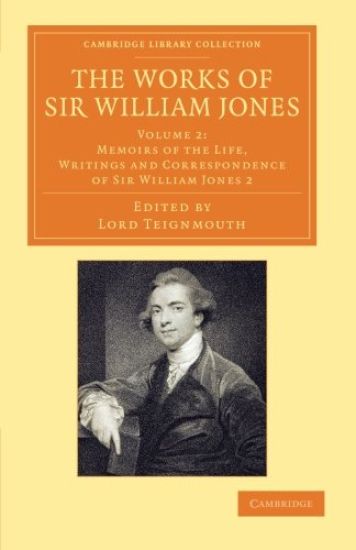
A renowned Enlightenment polymath, Sir William Jones (1746–94) was a lawyer, translator and poet who wrote authoritatively on politics, comparative linguistics and oriental literature. Known initially for his Persian translations and political radicalism, Jones became further celebrated for his study and translation of ancient Sanskrit texts following his appointment to the supreme court in Calcutta in 1783. He spent the next eleven years introducing Europe to the mysticism and rationality of Hinduism, becoming a pioneer in comparative religion. Through works such as his nine 'Hymns' to Hindu deities and his translation of the Sanskrit classic Sacontalá, Jones inspired and influenced Romantic writers from William Blake to August Wilhelm Schlegel. These thirteen volumes of his works, published in 1807, begin with a memoir by his friend and editor Lord Teignmouth (1751–1834). Volume 2 covers Jones' life and death in India, and includes important correspondence and unpublished work.
The Works of Sir William Jones

The Works of Sir William Jones

William Jones

Cambridge University Press
2013
pokkari
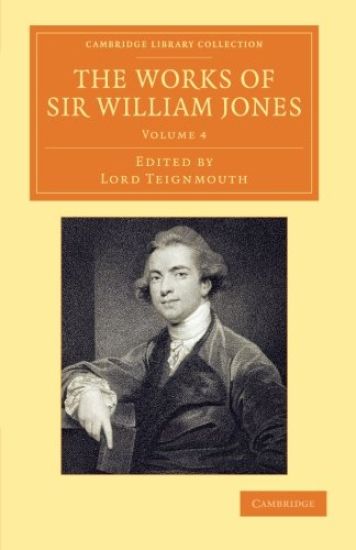
A renowned Enlightenment polymath, Sir William Jones (1746–94) was a lawyer, translator and poet who wrote authoritatively on politics, comparative linguistics and oriental literature. Known initially for his Persian translations and political radicalism, Jones became further celebrated for his study and translation of ancient Sanskrit texts following his appointment to the supreme court in Calcutta in 1783. He spent the next eleven years introducing Europe to the mysticism and rationality of Hinduism through works such as his nine 'Hymns' to Hindu deities and his translation of the Sanskrit classic Sacontalá, influencing Romantic writers from William Blake to August Wilhelm Schlegel. Volume 4 of his thirteen-volume works, published in 1807, contains Jones' extensive Indic scholarship and translations published in British periodicals such as Asiatick Researches and The Asiatick Miscellany, and includes the unprecedented 'On the Musical Modes of the Hindus' (1792) and 'On the Mystical Poetry of the Persians and Hindus' (1791).
An Introduction to the Linear Theories and Methods of Electrostatic Waves in Plasmas
Modern plasma physics, encompassing wave-particle interactions and collec­ tive phenomena characteristic of the collision-free nature of hot plasmas, was founded in 1946 when 1. D. Landau published his analysis of linear (small­ amplitude) waves in such plasmas. It was not until some ten to twenty years later, however, with impetus from the then rapidly developing controlled­ fusion field, that sufficient attention was devoted, in both theoretical and experimental research, to elucidate the importance and ramifications of Landau's original work. Since then, with advances in laboratory, fusion, space, and astrophysical plasma research, we have witnessed important devel­ opments toward the understanding of a variety of linear as well as nonlinear plasma phenomena, including plasma turbulence. Today, plasma physics stands as a well-developed discipline containing a unified body of powerful theoretical and experimental techniques and including a wide range of appli­ cations. As such, it is now frequently introduced in university physics and engineering curricula at the senior and first-year-graduate levels. A necessary prerequisite for all of modern plasma studies is the under­ standing oflinear waves in a temporally and spatially dispersive medium such as a plasma, including the kinetic (Landau) theory description of such waves. Teaching experience has usually shown that students (seniors and first-year graduates), when first exposed to the kinetic theory of plasma waves, have difficulties in dealing with the required sophistication in multidimensional complex variable (singular) integrals and transforms.
The Future of Personal Information Management, Part I

The Future of Personal Information Management, Part I

William Jones

Springer International Publishing AG
2012
nidottu
We are well into a second age of digital information. Our information is moving from the desktop to the laptop to the "palmtop" and up into an amorphous cloud on the Web. How can one manage both the challenges and opportunities of this new world of digital information? What does the future hold? This book provides an important update on the rapidly expanding field of personal information management (PIM). Part I (Always and Forever) introduces the essentials of PIM. Information is personal for many reasons. It's the information on our hard drives we couldn't bear to lose. It's the information about us that we don't want to share. It's the distracting information demanding our attention even as we try to do something else. It's the information we don't know about but need to. Through PIM, we control personal information. We integrate information into our lives in useful ways. We make it "ours." With basics established, Part I proceeds to explore a critical interplay between personal information "always" at hand through mobile devices and "forever" on the Web. How does information stay "ours" in such a world? Part II (Building Places of Our Own for Digital Information) will be available in the Summer of 2012, and will consist of the following chapters: Chapter 5. Technologies to eliminate PIM?: We have seen astonishing advances in the technologies of information management -- in particular, to aid in the storing, structuring and searching of information. These technologies will certainly change the way we do PIM; will they eliminate the need for PIM altogether? Chapter 6. GIM and the social fabric of PIM: We don't (and shouldn't) manage our information in isolation. Group information management (GIM) -- especially the kind practiced more informally in households and smaller project teams -- goes hand in glove with good PIM. Chapter 7. PIM by design: Methodologies, principles, questions and considerations as we seek to understand PIM better and to build PIM into our tools, techniques and training. Chapter 8. To each of us, our own.: Just as we must each be a student of our own practice of PIM, we must also be a designer of this practice. This concluding chapter looks at tips, traps and tradeoffs as we work to build a practice of PIM and "places" of our own for personal information. Table of Contents: A New Age of Information / The Basics of PIM / Our Information, Always at Hand / Our Information, Forever on the Web
Mary Bittleston. [A Novel.]

Mary Bittleston. [A Novel.]

William Jones

British Library, Historical Print Editions
2011
pokkari
Title: Mary Bittleston. A novel.]Publisher: British Library, Historical Print EditionsThe British Library is the national library of the United Kingdom. It is one of the world's largest research libraries holding over 150 million items in all known languages and formats: books, journals, newspapers, sound recordings, patents, maps, stamps, prints and much more. Its collections include around 14 million books, along with substantial additional collections of manuscripts and historical items dating back as far as 300 BC.The FICTION & PROSE LITERATURE collection includes books from the British Library digitised by Microsoft. The collection provides readers with a perspective of the world from some of the 18th and 19th century's most talented writers. Written for a range of audiences, these works are a treasure for any curious reader looking to see the world through the eyes of ages past. Beyond the main body of works the collection also includes song-books, comedy, and works of satire. ++++The below data was compiled from various identification fields in the bibliographic record of this title. This data is provided as an additional tool in helping to insure edition identification: ++++ British Library Jones, William; 1895.]. 295 p.; 8 . 012628.f.20.