Kirjailija
William L. Coulbourne
Kirjat ja teokset yhdessä paikassa: 5 kirjaa, julkaisuja vuosilta 2010-2020, suosituimpien joukossa Wind Loads. Vertaile teosten hintoja ja tarkista saatavuus suomalaisista kirjakaupoista.
5 kirjaa
Kirjojen julkaisuhaarukka 2010-2020.
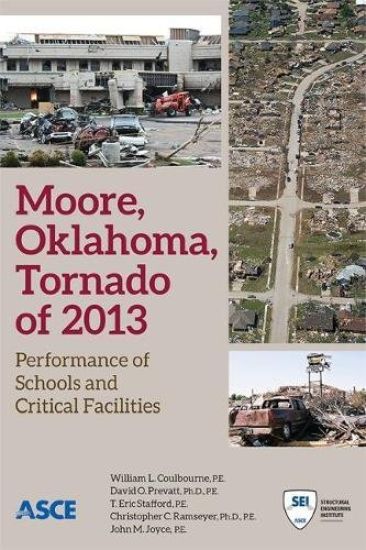
Moore, Oklahoma, Tornado of 2013
William L. Coulbourne; David O. Prevatt; T. Eric Stafford; Christopher C. Ramseyer; John M. Joyce
American Society of Civil Engineers
2015
nidottu
On May 20, 2013, the third violent tornado in 14 years tore through Moore, Oklahoma, creating a path of destruction through dense residential areas and damaging several critical facilities. Nearly 1,100 single-family homes were leveled, and 24 people died. Moore, Oklahoma, Tornado of 2013: Performance of Schools and Critical Facilities presents the observations, findings, and recommendations of a team of structural engineers and construction specialists who assessed the structural damage to nonresidential buildings. The team—all of whom had extensive experience in the design and construction of buildings to resist high-wind events and in the assessment of tornado damage—investigated the tornado's effect on schools, a medical center, and buildings supported by long-span structural systems. They found that the most common structural failures related to masonry and steel framing.Topics include: a history of significant tornado events in Moore, Oklahoma; results of damage assessments and a summary of observations for a medical center, five schools, a bowling alley, and a strip mall; a survey of building codes and relevant standards used in Moore; and conclusions with recommendations.An appendix discusses the Enhanced Fujita scale and presents estimates for several locations in Moore.The damage assessments and, more importantly, the recommendations for strengthening new and existing critical facilities will be of interest to structural engineers, architects, building owners, local officials, and code developers working to reduce the damage caused by high-wind events.
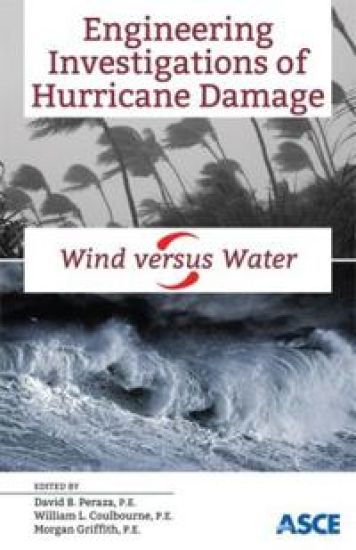
Engineering Investigations of Hurricane Damage
William L. Coulbourne; Morgan Griffith
American Society of Civil Engineers
2014
nidottu
After a hurricane or tropical storm strikes, civil engineers are often called upon to investigate the resulting damage to structures. One of the common assignments is to distinguish between wind damage and water damage. This task can be complex, requiring expertise in structural engineering, historic building codes, construction practices, wind forces, and water/wave forces, as well as familiarity with meteorology. The engineer may be asked to provide a rational estimate of the extent of wind damage to a structure that was subsequently destroyed by water. This publication provides civil engineers with the background and guidance necessary to conduct engineering damage investigations of structures following hurricanes, focusinf particularly on distinguishing between wind damage and water damage. The first part introduces the scientific background and engineering princliples of topics essential to an investigation: hurricane characteristics, wind speeds, storm surges, building codes, and the response of buildings. The second part applies these principles and covers the practical side of carrying out a post-hurricane damage assessment, including planning and managing an investigation, tips for conducting a field investigation, researching sepcific events, and writing reports. A final chapter offers case studies illustrating ways to synthesize and apply all the collected information.
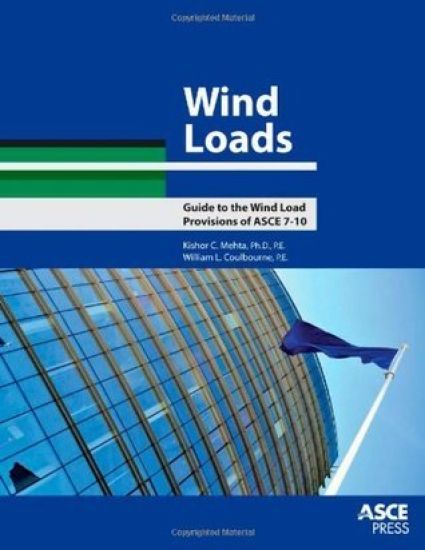
Revision of: Wind loads: guide to the wind load provisions of ASCE 7-05 / Kishor C. Mehta, William L. Coulbourne, in 2010.