Kirjojen hintavertailu. Mukana 12 309 066 kirjaa ja 12 kauppaa.

Kirjailija

William L. Fox

Kirjat ja teokset yhdessä paikassa: 12 kirjaa, julkaisuja vuosilta 2002-2026, suosituimpien joukossa Late Harvest. Vertaile teosten hintoja ja tarkista saatavuus suomalaisista kirjakaupoista.

12 kirjaa

Kirjojen julkaisuhaarukka 2002-2026.

Late Harvest

Late Harvest

Claude D'Anthenaise; William L. Fox; Adam Duncan Harris; Joanne Northrup; Snaebjornsdottir Wilson; Bruce Sterling; David B Walker

Hirmer Verlag
2015
sidottu
Late Harvest juxtaposes contemporary art made with taxidermy with historically significant wildlife paintin gs, resulting in intriguing parallels and startling aesthetic aesthetic contrasts. The publication seeks to simultaneously confirm — through historically - significant wildlife paintings — and subvert — through contemporary art and photography — viewers’ preconcepti ons of the place of animals in culture. The richly illustrated catalogue will feature artists as: Richard Ansdell, David Brooks, George Browne, Berlinde De Bruyckere, Petah Coyne, Raymond Ching, Kate Clark, Wim Delvoye, Mark Dion, Elmgreen & Dragset, Carle e Fernandez, Richard Friese, François Furet, Nicholas Galanin, George Bouverie Goddard, Damien Hirst, William Hollywood, Idiots (Afke Golsteijn and Floris Bakker), Alfred Kowalski, Robert Kuhn , Wilhelm Kuhnert, Bruno Liljefors, Polly Morgan, John Newsom, T im Noble and Sue Webster, Walter Robinson, George Rotig, Carl Rungius, Yinka Shonibare MBE, David Shrigley, Snæbjörnsdóttir/Wilson, Amy Stein, Archibald Thorburn, Mary Tsiongas, Joseph Wolf, Brigitte Zieger, Andrew Zuckerman The exhibition Late Harvest is organized by the Nevada Museum of Art in consultation with the National Museum of Wildlife Art. It is curated by JoAnne Northrup, Director of Contemporary Art Initiatives, together with consulting curator Adam Duncan Harris, Ph.D., Petersen Curator of Art & Research, National Museum of Wildlife Art.
Envoy to the Archives

Envoy to the Archives

William L. Fox

UNIVERSITY OF MASSACHUSETTS PRESS
2026
sidottu
How a pioneering manuscript librarian and intellectual uncovered buried records that reshaped America’s past As the London-based agent of the US Library of Congress, Ruth Anna Fisher (1886–1975) profoundly shaped the field of US history. Working at the British Museum and Public Record Office between the world wars, she was responsible for a vast program of identifying and copying up to a million documents related to American history, with prescient attention to the transatlantic slave trade. This monumental achievement has provided countless scholars access to source materials that might have remained hidden in repositories throughout Britian without Fisher’s brilliant discernment and tireless labor. In Envoy to the Archives, William L. Fox offers the first full-length biography of this remarkable American intellectual. Born to a prominent African American family in northern Ohio, Fisher was keenly aware of racial issues throughout her life. She was associated with key thinkers in the Harlem Renaissance and the twentieth century transatlantic world, including W. E. B. Du Bois, Harold Laski, and J. Franklin Jameson. A trailblazer in historical research, Fisher was among a small group of Black women who first joined the ranks of professional library work, and her efforts in London coincided with the creation and consolidation of the US National Archives in the 1930s. She also mastered technologies that were new at the time, including photostat reproduction and microfilm—precursors to the many historical digitization projects of our own era. This engrossing biography adds to the growing body of work centered on Black women archivists, librarians, and curators. Fox draws on a wide range of archival sources, including the personal papers of prominent Black thinkers (Fisher’s were destroyed in the bombing of London in 1940), and various institutional records at the Library of Congress and the Carnegie Institution of Washington. Fox also knew Fisher personally, adding warmth and insight into this captivating portrait.
Envoy to the Archives

Envoy to the Archives

William L. Fox

UNIVERSITY OF MASSACHUSETTS PRESS
2026
nidottu
How a pioneering manuscript librarian and intellectual uncovered buried records that reshaped America’s past As the London-based agent of the US Library of Congress, Ruth Anna Fisher (1886–1975) profoundly shaped the field of US history. Working at the British Museum and Public Record Office between the world wars, she was responsible for a vast program of identifying and copying up to a million documents related to American history, with prescient attention to the transatlantic slave trade. This monumental achievement has provided countless scholars access to source materials that might have remained hidden in repositories throughout Britian without Fisher’s brilliant discernment and tireless labor. In Envoy to the Archives, William L. Fox offers the first full-length biography of this remarkable American intellectual. Born to a prominent African American family in northern Ohio, Fisher was keenly aware of racial issues throughout her life. She was associated with key thinkers in the Harlem Renaissance and the twentieth century transatlantic world, including W. E. B. Du Bois, Harold Laski, and J. Franklin Jameson. A trailblazer in historical research, Fisher was among a small group of Black women who first joined the ranks of professional library work, and her efforts in London coincided with the creation and consolidation of the US National Archives in the 1930s. She also mastered technologies that were new at the time, including photostat reproduction and microfilm—precursors to the many historical digitization projects of our own era. This engrossing biography adds to the growing body of work centered on Black women archivists, librarians, and curators. Fox draws on a wide range of archival sources, including the personal papers of prominent Black thinkers (Fisher’s were destroyed in the bombing of London in 1940), and various institutional records at the Library of Congress and the Carnegie Institution of Washington. Fox also knew Fisher personally, adding warmth and insight into this captivating portrait.
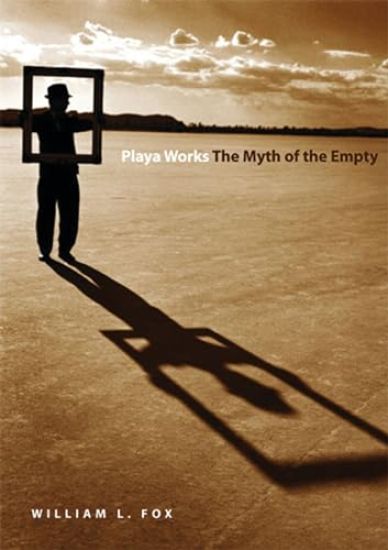
Playa Works

Playa Works

William L. Fox

UNIVERSITY OF NEVADA PRESS
2024
nidottu
In eight brilliant essays, Fox explores many of the major playas of the American West , examining locations as diverse as Nellis Air Force Base and Frenchman Flat, where the federal government has tested experimental aircraft and atomic weaponry; the Great Salt Lake Desert, where land-speed records have been broken; and the Black Rock Desert of Northern Nevada, site of the colorful Burning Man arts festival. He analyzes the geological and climatological conditions that created the playas and the historical role that playas played in the exploration and settlement of the West. And he offers lucid and keenly perceptive discussions of the ways that artists have responded to the playas, from the ancient makers of geoglyphs to the work of contemporary artists who have found inspiration in these enigmatic spaces, including earthworks builder Michael Heizer, photographer Richard Misrach, and painter Michael Moore. The ensemble is a compelling combination of natural history, philosophy, and art criticism, a thoughtful meditation on humankind's aversion to and fascination with the void.
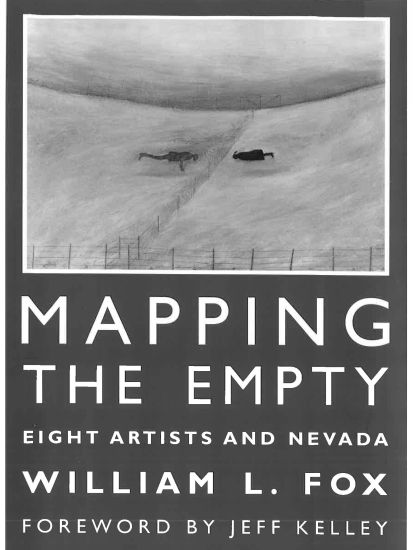
Mapping The Empty

Mapping The Empty

William L. Fox; Jeff Kelley

UNIVERSITY OF NEVADA PRESS
2022
nidottu
Foreword by Jeff Kelley. Nevada's open spaces have long inspired complex responses from a population largely shaped by European sensibilities toward land and its uses. In Mapping the Empty Fox considers how eight of the state's most distinguished and innovative contemporary artists have responded to the harsh, enigmatic landscapes of the Great Basin and how, through their work, they have expressed and helped to define our attitudes toward the space we call the West. The artists are Jim McCormick, Rita Deanin Abbey, Dennis Parks, Walter McNamara, Robert Beckmann, Michael Heizer, Bill Barker, and Mary Ann Bonjorni.
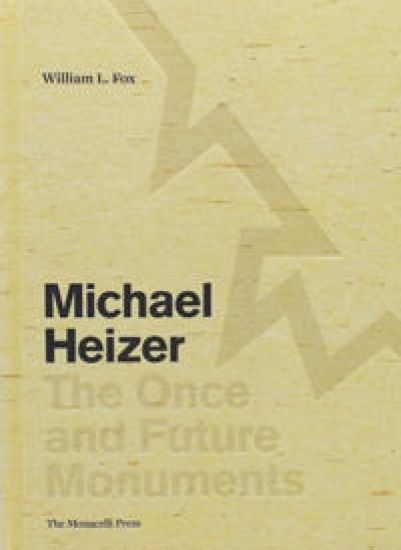
Michael Heizer

Michael Heizer

William L. Fox

Monacelli Press
2019
sidottu
The most comprehensive account available of Michael Heizer's art by a writer and curator who has critical experience with the artist and his work.Michael Heizer is among the greatest, and often least accessible, American artists. As one of the last living figures who launched the Land Art movement, his legacy of works that are literally and metaphorically monumental has an incalculable influence on the world of sculpture and environmental art. But his seclusion in the remote Nevada desert, as well as his notorious obduracy, have resulted in significant gaps in our critical understanding. Michael Heizer: The Once and Future Monuments spans the breadth of Heizer's career, uniquely combining fieldwork, personal narrative, and biographical research to create the first major assessment in years of this titan of American art.Author William L. Fox, founding director of the Center for Art + Environment at the Nevada Museum of Art, has alternately been a sponsor, advocate, and critic of Heizer's work for decades. Fox's understanding of the artist's history and connection to landscape, his time spent with Heizer at the remote ranch where Heizer is finishing his magnum opus--the mile-long sculpture City--and his access to some of Heizer's key associates give him a unique position from which to discuss the artist's work. Fox has also made numerous site visits to Heizer's work--including early pieces in the Nevada desert now largely lost to the elements--to correct the often inconsistent accounts of their locations. Last, Fox imparts a crucial new understanding of Heizer's work by elaborating on the artist's bond with his father, the famed archaeologist and cultural ecologist Robert Heizer, who enlisted his son on important digs in Mexico and Peru, providing the young man with an appreciation of site, landscape, and geology that would thoroughly inform his work. Michael Heizer: The Once and Future Monuments is a long overdue addition to the critical and biographical literature of this major figure in American art.
Photography and Flight

Photography and Flight

William L. Fox; Denis Cosgrove

Reaktion Books
2010
nidottu
Photography and Flight charts the rich and varied history of aerial photography, which has been used for everything from geographic exploration to secret spy missions. Beginning with early images taken from hot-air balloons and fixed platforms, Denis Cosgrove and William Fox then explain how military reconnaissance was instrumental in catalysing innovations in the field. They examine pivotal historical moments when aerial photography began to establish itself as an essential tool, such as in Second World War military strategies, high-altitude photography taken from postwar rockets and aircraft, and the extensive implementation of aerial photography during the Cold War and the Cuban Missile Crisis. The book also explores the advancement of geographic scholarship through aerial photography, ranging from military excursions into remote areas like Antarctica to the images of the curvature of the earth taken during the Apollo space missions. While digital technology and remote sensing have changed the landscape of photography, Photography and Flight argues that they have not diminished the significance of aerial photography in providing images of the earth. Rather, new technologies and resulting innovations such as Google Earth have enabled the mass-democratization of access to such information.
Aereality

Aereality

William L. Fox

Counterpoint
2009
sidottu
William Fox's writing for the last several years has been focused on how we construct aerial views, either physically (by flying) or in our imaginations.In Aereality, he flies over earthworks in Nevada and Utah, soars through the world's largest open pit mine, and surveys Los Angeles, circumnavigating large swaths of true American urban sprawl. On the East Coast, he examines the elevated art of the Hudson River Valley and New York City. And finally, in Australia, Fox examines the history and current practice of both Euro-Australian and Aboriginal aerial views, and searches for the cognitive roots of our aerial imagination.Accompanying Fox throughout his travels is a rolling cast of enlightened fliers: geographers, museum curators, landscape photographers, anthropologists, and artists. He traverses the sky in prop planes, helicopters, and hot air balloons, all with the ultimate goal of knowing and experiencing the earth from the air.
Making Time

Making Time

William L. Fox

Counterpoint
2006
nidottu
William L. Fox is a longtime explorer of cognition and landscape  the notion of what makes a space into a place. In this book he turns his gaze on Los Angeles, a city dominated by the movie industry, which specializes in bringing places from far away in time into what we experience as here and now  making time, in essence. Time, Fox tells us, is the most invisible nature of all,  its effects are always and everywhere around us."The five essays of this collection take us to the Le Brea Tar Pits and local oilfields, the telescopes and telecommunication towers of Mt. Wilson, massive landfills, the Forest Lawn Memorial and Griffith parks, a Hollywood special effects firm, and the Jet Propulsion Laboratory. All of these facilities are devoted to manipulating time on our behalf, be it how we represent prehistory, attempt to maintain an identity after death, or make movies on Mars.A master of combining science, history, and his own experiences into a riveting read, Fox will make you look at L.A.  and any urban landscape  in an entirely new way.
The Void, the Grid & the Sign

The Void, the Grid & the Sign

William L. Fox

University of Nevada Press
2005
nidottu
This is a story that few know, but those who do are its disciples. The story, of the highest and driest of all American deserts, the Great Basin, has no finer voice than that of William Fox. Fox’s book is divided into the three sections of the title. In \u201cThe Void,\u201d he leads us through the Great Basin landscape, investigating our visual response to it—a pattern of mountains and valleys on a scale of such magnitude and emptiness and undifferentiated by shape, form, and color that the visual and cognitive expectations of the human mind are confounded and impaired. \u201cThe Grid\u201d leads us on a journey through the evolution of cartography in the nineteenth century and the explorations of John Charles Fr\u00e9mont to the net of maps, section markers, railroads, telegraph lines, and highways that humans have thrown across the void throughout history. \u201cThe Sign\u201d wends us through the metaphors and language we continue to place around and over the void, revealing the Great Basin as a palimpsest where, for example, the neon boulevards of Las Vegas interplay with ancient petroglyphs. In this one-of-a-kind travel book that allows us to travel within our own neurophysiological processes as well as out into the arresting void of the Great Basin, Fox has created a dazzling new standard at the frontier of writing about the American West. His stunning and broad insight draws from the fields of natural history, cognitive psychology, art history, western history, archaeology, and anthropology, and will be of value to scholars and readers in all these subjects.
The Black Rock Desert

The Black Rock Desert

William L. Fox; Mark Klett

University of Arizona Press
2002
nidottu
It is the only absolute desert in North America, a four-hundred-square-mile dry lake bed so desolate that nothing ever grows there. Vast and featureless, Nevada's Black Rock Desert defies visual measurement much to the consternation of off-roaders who venture out onto this playa only to run out of gas before reaching the other side. It is the largest flat area on the continent, where the sound barrier was broken in a car. And it is a place of total silence not even birds or insects live here except when thousands of humans congregate for the Burning Man Festival on Labor Day weekend. Writer and poet William Fox has demonstrated his familiarity with the Great Basin in such respected books as Mapping the Empty, just as Mark Klett has been documenting the landscape of the American West in his acclaimed photographic studies. Now these accomplished artists turn their combined talents to an appreciation of this desolate corner of North America, where the only change in scenery comes with the shifting pattern of cracks in the earth after seasonal rains. The Black Rock Desert is a philosophical and visual meditation on an extraordinary place virtually devoid of the usual physical features one relies on for orientation and comfort. It invites readers to consider how the mind responds to a place so empty that it's both physically overpowering and psychically disorienting. Klett's photographs are austere yet innovative, admitting the vastness of the desert yet never letting us forget that traces of human passage and perception are ubiquitous. Fox's contemplative essays bring us news of both the natural desert and its cultural occupation, from the explorations of John C. Fremont to the exaltations of Burning Man. Together, Fox and Klett have forged an introspective guide to a place so daunting that few dare to venture there alone. For anyone seeking to understand how and why we perceive deserts the way we do, their book charts the rugged intersection of the American landscape and the human spirit.