
Kirjailija
William L Richter
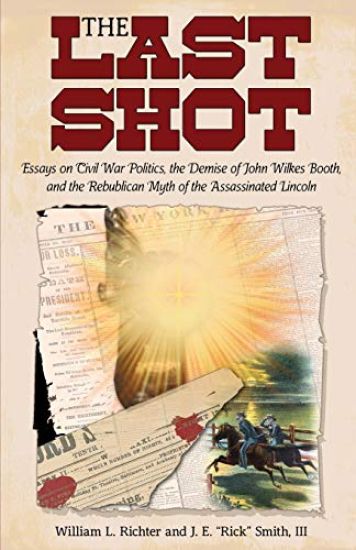
Kirjat ja teokset yhdessä paikassa: 7 kirjaa, julkaisuja vuosilta 2009-2016, suosituimpien joukossa The Last Shot. Vertaile teosten hintoja ja tarkista saatavuus suomalaisista kirjakaupoista.
Mukana myös kirjoitusasut: William L. Richter
7 kirjaa
Kirjojen julkaisuhaarukka 2009-2016.

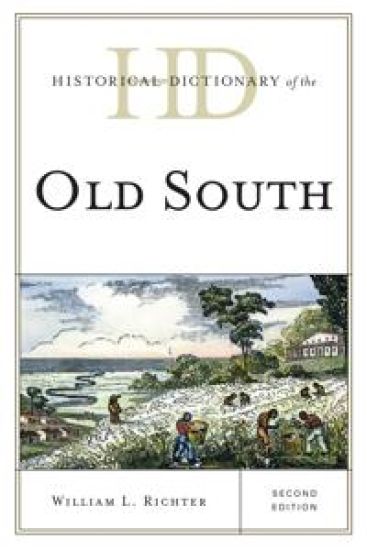
The South played a prominent role in early American history, and its position was certainly strong and proud except for the “peculiar institution” of slavery. Thus, it drew away from the rest of an expanding nation, and in 1861 declared secession and developed a Confederacy… that ultimately lost the war. Indeed, for some time it was occupied. Thus, the South has a very mixed legacy, with good and bad aspects, and sometimes the two of them mixed. Which only enhances the need for a careful and balanced approach. This can be found in the Historical Dictionary of the Old South, which first traces its history from colonial times to the end of the Civil War in a substantial chronology. Particularly interesting is the introduction, which analyzes the rise and the fall, the good and the bad, as well as the middling and indifferent, over nigh on two centuries. The details are filled in very amply in over 600 dictionary entries on the politics, economy, society and culture of the Old South. An ample bibliography directs students and researchers toward other sources of information.
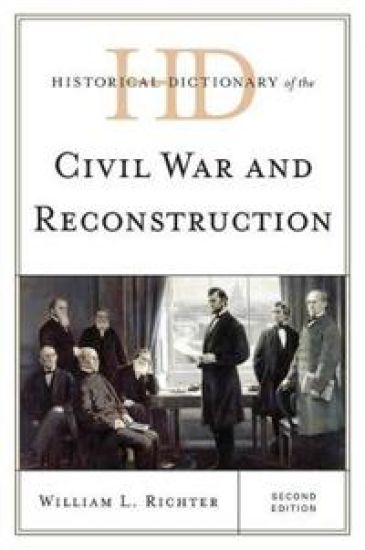
Historical Dictionary of the Civil War and Reconstruction
William L. Richter
Scarecrow Press
2011
sidottu
The importance of the Civil War and Reconstruction in the history of the United States cannot be overstated. Many historians regard the Civil War as the defining event in American history. At stake was not only freedom for 3.5 million slaves but also survival of the relatively new American experiment in self-government. A very real possibility existed that the union could have been severed, but a collection of determined leaders and soldiers proved their willingness to fight for the survival of what Abraham Lincoln called "the last best hope on earth." The second edition of this highly readable, one-volume Historical Dictionary of the Civil War and Reconstruction looks to place the war in its historical context. The more than 800 entries, encompassing the years 1844-1877, cover the significant events, persons, politics, and economic and social themes of the Civil War and Reconstruction. An extensive chronology, introductory essay, and comprehensive bibliography supplement the cross-referenced dictionary entries to guide the reader through the military and non-military actions of one of the most pivotal events in American history. The dictionary concludes with a selection of primary documents. This book is an excellent access point for students, researchers, and anyone wanting to know more about the Civil War and Reconstruction.
Being considerably different from other regions of the country, most notably regarding its fervent practice of slavery, the land south of the Mason-Dixon line, because of slavery, enjoyed an exceptional prominence in politics, and after the invention of the cotton gin, a high degree of prosperity. However, also because of slavery, it was alienated from the rest of the nation, attempted to secede from the union, and was forced back in only after it lost the Civil War. Numerous cross-referenced entries on prominent individuals, including Thomas Jefferson, Andrew Jackson, Henry Clay, John C. Calhoun, Robert E. Lee, and Abraham Lincoln, as well as others on policies of the time that have since slipped into oblivion are all covered in this book. Economic, social and religious backgrounds trace the seemingly inevitable path to secession, war, and defeat. This reference also includes an introductory essay, a chronology, and a bibliography of the epoch.