Kirjojen hintavertailu. Mukana 12 595 353 kirjaa ja 12 kauppaa.

Kirjailija

William L. Sachs

Kirjat ja teokset yhdessä paikassa: 13 kirjaa, julkaisuja vuosilta 1993-2024, suosituimpien joukossa In the Face of Difference. Vertaile teosten hintoja ja tarkista saatavuus suomalaisista kirjakaupoista.

Mukana myös kirjoitusasut: William L Sachs

13 kirjaa

Kirjojen julkaisuhaarukka 1993-2024.

Sacred Snaps

Sacred Snaps

Roman R. Williams; Catherine Holtmann; William L. Sachs

TAYLOR FRANCIS LTD
2024
nidottu
Sacred Snaps tells the story of a new approach to interfaith engagement. It is an invitation to see and engage religion, diversity, and inclusion through the lens of the mobile phone camera. These days, just about everyone owns a camera equipped cell phone. What if we recruited these cameras for the common good? When religion shows up in everyday life—at work, school, the mall, or the beach—often it is not welcome. At a time when so much of the public discourse is around equity, diversity, and inclusion, religion seems peripheral to the conversation. Many embrace the wisdom that our workplaces, schools, and communities are enhanced when people can bring their whole selves into every aspect of their daily lives. But religion and spirituality are not gaining the same ground as other aspects of diversity such as race, ethnicity, gender, sexuality, and ability. To be more fully included in the cultural conversation about human flourishing, religion needs to be seen and heard in new ways. The old paradigm of interreligious dialogue is no longer adequate. A new paradigm focused on building relationships at the grass roots of daily life is emerging. This cutting-edge volume brings together Christians and Muslims in the United States and Canada to explore what their beliefs, practices, and values look like in everyday life.

Sacred Snaps

Sacred Snaps

Roman R. Williams; Catherine Holtmann; William L. Sachs

TAYLOR FRANCIS LTD
2024
sidottu
Sacred Snaps tells the story of a new approach to interfaith engagement. It is an invitation to see and engage religion, diversity, and inclusion through the lens of the mobile phone camera. These days, just about everyone owns a camera equipped cell phone. What if we recruited these cameras for the common good? When religion shows up in everyday life—at work, school, the mall, or the beach—often it is not welcome. At a time when so much of the public discourse is around equity, diversity, and inclusion, religion seems peripheral to the conversation. Many embrace the wisdom that our workplaces, schools, and communities are enhanced when people can bring their whole selves into every aspect of their daily lives. But religion and spirituality are not gaining the same ground as other aspects of diversity such as race, ethnicity, gender, sexuality, and ability. To be more fully included in the cultural conversation about human flourishing, religion needs to be seen and heard in new ways. The old paradigm of interreligious dialogue is no longer adequate. A new paradigm focused on building relationships at the grass roots of daily life is emerging. This cutting-edge volume brings together Christians and Muslims in the United States and Canada to explore what their beliefs, practices, and values look like in everyday life.
Becoming Cosmopolitan

Becoming Cosmopolitan

William L Sachs; Wanjiru M Gitau; Daniel Aleshire

Wipf Stock Publishers
2023
sidottu
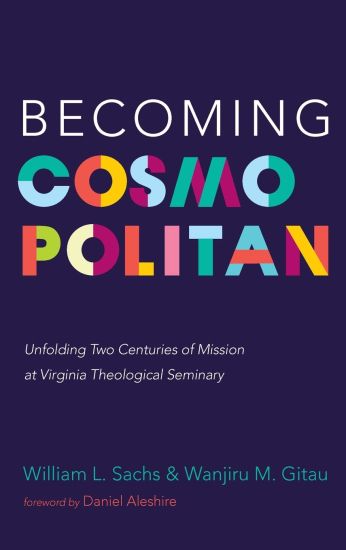
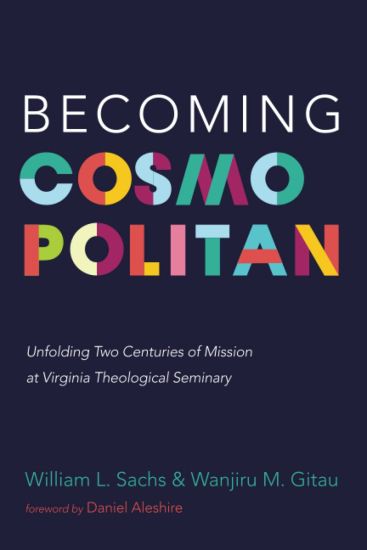
The legacy of Christian mission seems beyond dispute. Western churches carried imperialist and racist assumptions as they evangelized and encouraged the formation of indigenous churches. Amid those realities a different sensibility took root. As the history of Virginia Theological Seminary illustrates, missionaries who were alumni adapted to contextual circumstances in ways that challenged Western presumptions. Mission encouraged cosmopolitan ties featuring mutuality and reciprocity. The path to such relations was not straight nor always readily taken. Yet, over the seminary's two-hundred-year history, the cosmopolitan direction has become evident on several continents. As missionaries came home, and leaders and students from abroad visited the seminary, the ideal of cosmopolitan relations spread. It became evident as mission churches took indigenous form and control. It was reinforced as Western churches explored the dimensions of social justice. American theological education affirmed the reality of diversity and recast its pedagogies in appreciative ways. This book traces an epic shift in mission and theological education measured by the rise of cosmopolitanism in the life of Virginia Theological Seminary.
The Promise of Anglicanism

The Promise of Anglicanism

Robert S. Heaney; William L. Sachs

SCM Press
2019
nidottu
Anglicanism is one of the largest and most widely dispersed of all religious traditions. How it reached this status is replete with irony and with conflict. The origins of Anglicanism lie in the Church of England, still its largest branch and arguably its defining center. But the majority of Anglicans now reside in sub-Saharan Africa and do not speak English as their primary language. Given Anglicanism’s roots, and its integration into British colonialism, the expansion of this branch of Christianity seems puzzling. Moreover, intramural Anglican conflict, from the end of colonialism onward, seemingly has torn the fabric of Anglican life. It seems problematic that this tradition, and the church bodies that represent it, will remain intact. By looking at the Church through the lens of the biblical theme of promise, this book seeks to offer neither lament for a tattered tradition nor facile hope for an expanding one. It considers the key phases of Anglican history, each defined by clear intentions, from securing English national life, to mission, to finding contextual roots in various locales. Whilst not denying that the ongoing contestation about the proper shape of Anglican faith and practice has become central, the book highlights the emergence of fresh consensus among Anglicans, centered on grassroots initiative and innovation, creating informal patterns of collaboration that can transcend context and overlook divergence.
Fragmented Lives

Fragmented Lives

William L. Sachs; Michael S. Bos

Church Publishing
2016
pokkari
How one can trust amidst uncertainty, fear, and anger.Fragmented Lives describes the meaning of faith for people the Church has shown little facility for attracting but whom it would like to reach, people who have entered church doors occasionally but who have little depth of commitment. It is a book for persons exploring the basis of faith, as well as for church leaders looking to understand how their programs and message can align with faith journeys today. While examining the growing emphasis on spirituality for those wanting "spirituality without structures," it argues that spirituality has become so elastic in its meaning that it is lacking the definition and direction people seek in finding answers to their questions.The authors use personal stories to animate the discussion of how faith must be construed as something other than "belief" or "assent." They provide a road map for discovering the journey of living into a faith tradition together. Through this journey, the meaning of faith is illumined and the Church is revealed to be the community of faith that fulfills the needs and intentions of those seeking to live a more authentic life beyond the fragmentation they experience in this age of uncertainty.
In the Face of Difference

In the Face of Difference

William L. Sachs

Alban Institute, Inc
2014
nidottu
Encounters with difference are the measure of faith, as how a person of one faith approaches persons of other faiths reveals the heart of religious conviction. Christian congregations are often ill-equipped to respond to differing religious perspectives. Most are hesitant, many are prejudiced. In The Face of Difference offers a basis for constructive response, demonstrating how one can honor people of another faith by living fully into one s own faith. William Sachs examines how Christians can maximize their spiritual growth through a genuine exchange of ideas and inspiration with those of others faiths, focusing on encounters between Christians and Muslims. By providing a clear and concrete blueprint for congregational leadership in new social circumstance, Sachs charts a course for overcoming major religious prejudice. He demonstrates how bridges can be built by applying the ideals of love of God and love of neighbor, and how faithful people can translate religious ideals into reconciling realities."
In the Face of Difference

In the Face of Difference

William L. Sachs

Alban Institute, Inc
2014
sidottu
Encounters with difference are the measure of faith, as how a person of one faith approaches persons of other faiths reveals the heart of religious conviction. Christian congregations are often ill-equipped to respond to differing religious perspectives. Most are hesitant, many are prejudiced. In The Face of Difference offers a basis for constructive response, demonstrating how one can honor people of another faith by living fully into one s own faith. William Sachs examines how Christians can maximize their spiritual growth through a genuine exchange of ideas and inspiration with those of others faiths, focusing on encounters between Christians and Muslims. By providing a clear and concrete blueprint for congregational leadership in new social circumstance, Sachs charts a course for overcoming major religious prejudice. He demonstrates how bridges can be built by applying the ideals of love of God and love of neighbor, and how faithful people can translate religious ideals into reconciling realities."
A Church Beyond Belief

A Church Beyond Belief

William L. Sachs; Michael S. Bos

Church Publishing
2014
pokkari
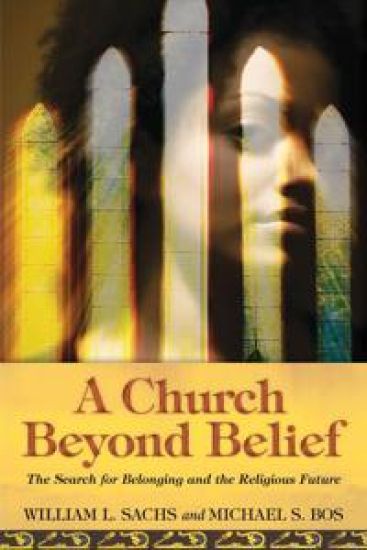
Addresses “belonging before believing” and other new patterns for remaking congregationsAs we move beyond the “emergent” or “missional” church paradigm, pastors and other church leaders are discovering a new reality: people (especially younger generations) are coming to church not as believers, but to find a place to belong—with or without faith. This book describes the dilemma and the distractions that currently prevent congregations from being the place where that sense of belonging can unfold and guide newcomers in the discovery of faith. The authors argue that despite elaborate talk of change, spirituality, transformation, and conflict resolution, congregations are still mired in old patterns of belonging. Using broad-based career experiences, surveys of religious life, historical precedent, and insights from social psychology about what it means to belong today, the book suggests new and effective approaches to help churches make vital connections.
Homosexuality and the Crisis of Anglicanism

Homosexuality and the Crisis of Anglicanism

William L. Sachs

Cambridge University Press
2014
pokkari
The Anglican conflict over homosexuality has drawn worldwide interest and divided the church. However, conflict within Christianity is not new. This book traces the steps by which the crisis emerged, and reveals the deeper debates within the church which underlie both the current controversy and much earlier splits. William L. Sachs contends that the present debate did not begin with opposition to homosexuality or in advocacy of it. He argues that, like past tensions, it originates in the diverging local contexts in which the faith is practised, and their differing interpretations of authority and communion. In the aftermath of colonialism, activists and reformers have taken on prominent roles for and against the status quo. The crisis reveals a Church in search of a new, global consensus about the appropriate forms of belief and mission.
Homosexuality and the Crisis of Anglicanism

Homosexuality and the Crisis of Anglicanism

William L. Sachs

Cambridge University Press
2009
sidottu
The Anglican conflict over homosexuality has drawn worldwide interest and divided the church. However, conflict within Christianity is not new. This book traces the steps by which the crisis emerged, and reveals the deeper debates within the church which underlie both the current controversy and much earlier splits. William L. Sachs contends that the present debate did not begin with opposition to homosexuality or in advocacy of it. He argues that, like past tensions, it originates in the diverging local contexts in which the faith is practised, and their differing interpretations of authority and communion. In the aftermath of colonialism, activists and reformers have taken on prominent roles for and against the status quo. The crisis reveals a Church in search of a new, global consensus about the appropriate forms of belief and mission.
The Transformation of Anglicanism

The Transformation of Anglicanism

William L. Sachs

Cambridge University Press
2002
pokkari
This book examines the various contexts - historical, social, cultural, and ideological - which have shaped the modern efforts of the Anglican tradition at self-understanding. The author’s thesis is that modernity and world mission have changed Anglicanism in ways that are deep and pervasive, just as other Christian traditions have also been profoundly affected by worldwide extension. In the case of the Anglican tradition, however, a distinctive way of relating Christianity to local culture and a distinctive kind of indigenous leader produced a church identity different from other forms of Christendom. Dr Sachs’ aim is to contrast Anglicanism both with the style of Roman Catholicism and with the characteristically Protestant emphasis upon individual conversion apart from concern for the Church and its tradition.
The Transformation of Anglicanism

The Transformation of Anglicanism

William L. Sachs

Cambridge University Press
1993
sidottu
This book examines the various contexts - historical, social, cultural, and ideological - which have shaped the modern efforts of the Anglican tradition at self-understanding. The author’s thesis is that modernity and world mission have changed Anglicanism in ways that are deep and pervasive, just as other Christian traditions have also been profoundly affected by worldwide extension. In the case of the Anglican tradition, however, a distinctive way of relating Christianity to local culture and a distinctive kind of indigenous leader produced a church identity different from other forms of Christendom. Dr Sachs’ aim is to contrast Anglicanism both with the style of Roman Catholicism and with the characteristically Protestant emphasis upon individual conversion apart from concern for the Church and its tradition.