Kirjojen hintavertailu. Mukana 12 108 992 kirjaa ja 12 kauppaa.

Kirjailija

William L. Silber

Kirjat ja teokset yhdessä paikassa: 8 kirjaa, julkaisuja vuosilta 2008-2021, suosituimpien joukossa The Story of Silver: How the White Metal Shaped America and the Modern World. Vertaile teosten hintoja ja tarkista saatavuus suomalaisista kirjakaupoista.

8 kirjaa

Kirjojen julkaisuhaarukka 2008-2021.

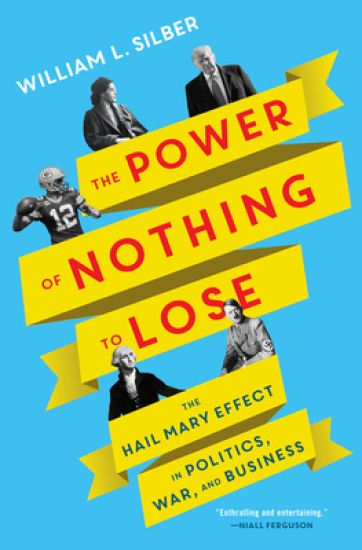
The Power of Nothing to Lose

The Power of Nothing to Lose

William L. Silber

William Morrow
2021
sidottu
Following books by Malcolm Gladwell and Dan Ariely, noted economics professor William L. Silber explores the Hail Mary effect, from its origins in sports to its applications to history, nature, politics, and business.A quarterback like Green Bay’s Aaron Rodgers gambles with a Hail Mary pass at the end of a football game when he has nothing to lose -- the risky throw might turn defeat into victory, or end in a meaningless interception. Rodgers may not realize it, but he has much in common with figures such as George Washington, Rosa Parks, Woodrow Wilson, and Adolph Hitler, all of whom changed the modern world with their risk-loving decisions.In The Power of Nothing to Lose, award-winning economist William Silber explores the phenomenon in politics, war, and business, where situations with a big upside and limited downside trigger gambling behavior like with a Hail Mary. Silber describes in colorful detail how the American Revolution turned on such a gamble. The famous scene of Washington crossing the Delaware on Christmas night to attack the enemy may not look like a Hail Mary, but it was. Washington said days before his risky decision, “If this fails I think the game will be pretty well up.” Rosa Parks remained seated in the white section of an Alabama bus, defying local segregation laws, an act that sparked the modern civil rights movement in America. It was a life-threatening decision for her, but she said, “I was not frightened. I just made up my mind that as long as we accepted that kind of treatment it would continue, so I had nothing to lose.” The risky exploits of George Washington and Rosa Parks made the world a better place, but demagogues have inflicted great damage with Hail Marys. Towards the end of World War II, Adolph Hitler ordered a desperate counterattack, the Battle of the Bulge, to stem the Allied advance into Germany. He said, “The outcome of the battle would spell either life or death for the German nation.” Hitler failed to change the war’s outcome, but his desperate gamble inflicted great collateral damage, including the worst wartime atrocity on American troops in Europe.Silber shares these illuminating insights on these figures and more, from Woodrow Wilson to Donald Trump, asylum seekers to terrorists and rogue traders. Collectively they illustrate that downside protection fosters risky undertakings, that it changes the world in ways we least expect.

The Power of Nothing to Lose: The Hail Mary Effect in Politics, War, and Business
Following books by Malcolm Gladwell and Dan Ariely, noted economics professor William L. Silber explores the Hail Mary effect, from its origins in sports to its applications to history, nature, politics, and business. A quarterback like Green Bay's Aaron Rodgers gambles with a Hail Mary pass at the end of a football game when he has nothing to lose -- the risky throw might turn defeat into victory, or end in a meaningless interception. Rodgers may not realize it, but he has much in common with figures such as George Washington, Rosa Parks, Woodrow Wilson, and Adolph Hitler, all of whom changed the modern world with their risk-loving decisions. In The Power of Nothing to Lose, award-winning economist William Silber explores the phenomenon in politics, war, and business, where situations with a big upside and limited downside trigger gambling behavior like with a Hail Mary. Silber describes in colorful detail how the American Revolution turned on such a gamble. The famous scene of Washington crossing the Delaware on Christmas night to attack the enemy may not look like a Hail Mary, but it was. Washington said days before his risky decision, If this fails I think the game will be pretty well up. Rosa Parks remained seated in the white section of an Alabama bus, defying local segregation laws, an act that sparked the modern civil rights movement in America. It was a life-threatening decision for her, but she said, I was not frightened. I just made up my mind that as long as we accepted that kind of treatment it would continue, so I had nothing to lose. The risky exploits of George Washington and Rosa Parks made the world a better place, but demagogues have inflicted great damage with Hail Marys. Towards the end of World War II, Adolph Hitler ordered a desperate counterattack, the Battle of the Bulge, to stem the Allied advance into Germany. He said, The outcome of the battle would spell either life or death for the German nation. Hitler failed to change the war's outcome, but his desperate gamble inflicted great collateral damage, including the worst wartime atrocity on American troops in Europe. Silber shares these illuminating insights on these figures and more, from Woodrow Wilson to Donald Trump, asylum seekers to terrorists and rogue traders. Collectively they illustrate that downside protection fosters risky undertakings, that it changes the world in ways we least expect.
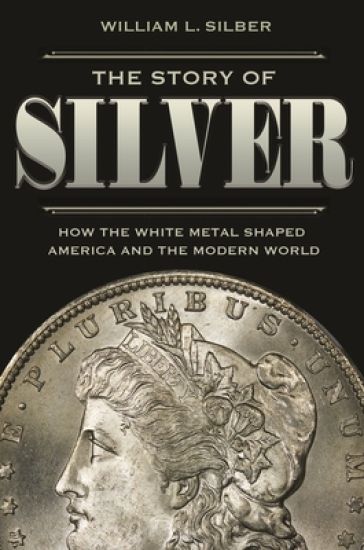
The Story of Silver

The Story of Silver

William L. Silber

Princeton University Press
2021
pokkari
How silver influenced two hundred years of world history, and why it matters todayThis is the story of silver’s transformation from soft money during the nineteenth century to hard asset today, and how manipulations of the white metal by American president Franklin D. Roosevelt during the 1930s and by the richest man in the world, Texas oil baron Nelson Bunker Hunt, during the 1970s altered the course of American and world history. Silver has been the preferred shelter against government defaults, political instability, and inflation for most people in the world because it is cheaper than gold. The white metal has been the place to hide when conventional investments sour, but it has also seduced sophisticated investors throughout the ages like a siren. This book explains how powerful figures, up to and including Warren Buffett, have come under silver’s thrall, and how its history guides economic and political decisions in the twenty-first century.
The Story of Silver

The Story of Silver

William L. Silber

Princeton University Press
2019
sidottu
How silver influenced two hundred years of world history, and why it matters todayThis is the story of silver’s transformation from soft money during the nineteenth century to hard asset today, and how manipulations of the white metal by American president Franklin D. Roosevelt during the 1930s and by the richest man in the world, Texas oil baron Nelson Bunker Hunt, during the 1970s altered the course of American and world history. FDR pumped up the price of silver to help jump start the U.S. economy during the Great Depression, but this move weakened China, which was then on the silver standard, and facilitated Japan’s rise to power before World War II. Bunker Hunt went on a silver-buying spree during the 1970s to protect himself against inflation and triggered a financial crisis that left him bankrupt.Silver has been the preferred shelter against government defaults, political instability, and inflation for most people in the world because it is cheaper than gold. The white metal has been the place to hide when conventional investments sour, but it has also seduced sophisticated investors throughout the ages like a siren. This book explains how powerful figures, up to and including Warren Buffett, have come under silver’s thrall, and how its history guides economic and political decisions in the twenty-first century.
The Story of Silver: How the White Metal Shaped America and the Modern World
How silver influenced two hundred years of world history, and why it matters todayThis is the story of silver's transformation from soft money during the nineteenth century to hard asset today, and how manipulations of the white metal by American president Franklin D. Roosevelt during the 1930s and by the richest man in the world, Texas oil baron Nelson Bunker Hunt, during the 1970s altered the course of American and world history. FDR pumped up the price of silver to help jump start the US economy during the Great Depression, but this move weakened China, which was then on the silver standard, and facilitated Japan's rise to power before World War II. Bunker Hunt went on a silver-buying spree during the 1970s to protect himself against inflation and triggered a financial crisis that left him bankrupt.Silver has been the preferred shelter against government defaults, political instability, and inflation for most people in the world because it is cheaper than gold. The white metal has been the place to hide when conventional investments sour, but it has also seduced sophisticated investors throughout the ages like a siren. This book explains how powerful figures, up to and including Warren Buffett, have come under silver's thrall, and how its history guides economic and political decisions in the twenty-first century.
Volcker

Volcker

William L. Silber

Bloomsbury Press
2013
pokkari
Over the course of nearly half a century, five American presidents-three Democrats and two Republicans-have relied on the financial acumen, and the integrity, of Paul A. Volcker. During his tenure as chairman of the Federal Reserve Board, when he battled the Great Inflation of the 1970s, Volcker did nothing less than restore the reputation of an American financial system on the verge of collapse. After the 2008 financial meltdown, the nation turned again to Volcker to restore trust in a shaky financial system: President Obama would name his centerpiece Wall Street regulation the Volcker Rule. Volcker's career demonstrated that a determined central banker can prevail over economic turmoil-so long as he can resist relentless political pressure. His resolve and independent thinking-sorely tested by Richard Nixon, Jimmy Carter, and Ronald Reagan-laid the foundation for a generation of economic stability. Indeed, William L. Silber argues, it was only Volcker's toughness on monetary policy that "forced Reagan to be Reagan" and to rein in America's deficit.Noted scholar and finance expert Silber draws on hours of candid personal interviews and complete access to Volcker's personal papers to render dramatic behind-the-scenes accounts from Volcker's career at the Treasury Department and the Federal Reserve: secret negotiations with European ministers; confrontations with the White House; crisis conferences with Wall Street titans, and even tense boardroom rebellions within the Fed itself. Filled with frank commentary from Volcker himself-including why he was personally irked with the "Volcker Rule" label-this will be the definitive account of Volcker's indispensable role in American economic history.
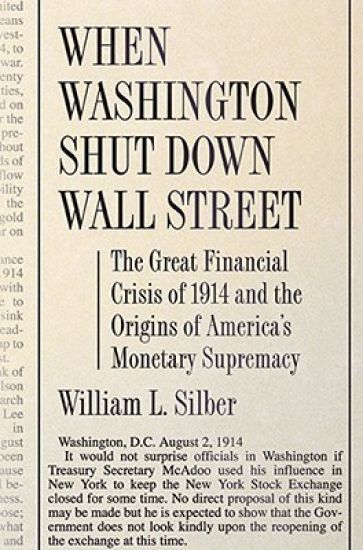
When Washington Shut Down Wall Street

When Washington Shut Down Wall Street

William L. Silber

Princeton University Press
2008
pokkari
When Washington Shut Down Wall Street unfolds like a mystery story. It traces Treasury Secretary William Gibbs McAdoo's triumph over a monetary crisis at the outbreak of World War I that threatened the United States with financial disaster. The biggest gold outflow in a generation imperiled America's ability to repay its debts abroad. Fear that the United States would abandon the gold standard sent the dollar plummeting on world markets. Without a central bank in the summer of 1914, the United States resembled a headless financial giant. William McAdoo stepped in with courageous action, we read in Silber's gripping account. He shut the New York Stock Exchange for more than four months to prevent Europeans from selling their American securities and demanding gold in return. He smothered the country with emergency currency to prevent a replay of the bank runs that swept America in 1907. And he launched the United States as a world monetary power by honoring America's commitment to the gold standard. His actions provide a blueprint for crisis control that merits attention today. McAdoo's recipe emphasizes an exit strategy that allows policymakers to throttle a crisis while minimizing collateral damage. When Washington Shut Down Wall Street recreates the drama of America's battle for financial credibility. McAdoo's accomplishments place him alongside Paul Volcker and Alan Greenspan as great American financial leaders. McAdoo, in fact, nursed the Federal Reserve into existence as the 1914 crisis waned and served as the first chairman of the Federal Reserve Board.