Kirjojen hintavertailu. Mukana 12 390 323 kirjaa ja 12 kauppaa.

Kirjailija

William L. Van Deburg

Kirjat ja teokset yhdessä paikassa: 7 kirjaa, julkaisuja vuosilta 1979-2013, suosituimpien joukossa The Slave Drivers. Vertaile teosten hintoja ja tarkista saatavuus suomalaisista kirjakaupoista.

Mukana myös kirjoitusasut: William L.Van Deburg

7 kirjaa

Kirjojen julkaisuhaarukka 1979-2013.

Hoodlums

Hoodlums

William L. Van Deburg

University of Chicago Press
2013
nidottu
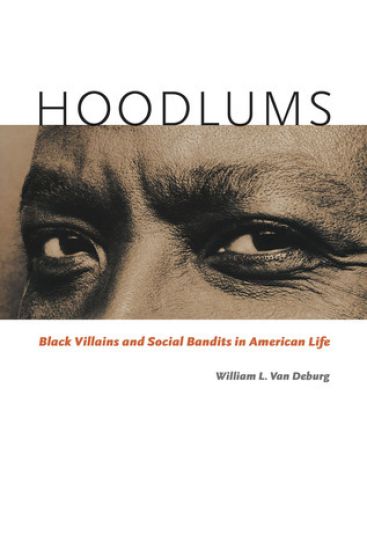
Martin Luther King Jr. Malcolm X. Muhammad Ali. When you think of African American history, you think of its heroes - individuals endowed with courage and strength who are celebrated for their bold exploits and nobility of purpose. But what of black villains? Villains, just as much as heroes, have helped define the black experience. Ranging from black slaveholders and frontier outlaws to serial killers and gangsta rappers, Hoodlums examines the pivotal role of black villains in American society and popular culture. Here, William L. Van Deburg offers the most extensive treatment to date of the black badman and the challenges that this figure has posed for race relations in America. He first explores the evolution of this problematic racial stereotype in the literature of the early Republic and then probes antebellum slave laws, minstrel shows, and the works of proslavery polemicists to consider how whites conceptualized blacks as members of an inferior and dangerous race. Turning to key works by blacks themselves, from the writings of Frederick Douglass and W. E. B. Du Bois to classic blaxploitation films like Black Caesar and The Mack, Van Deburg demonstrates how African Americans have combated such negative stereotypes and reconceptualized the idea of the badman through stories of social bandits-controversial individuals vilified by whites for their proclivity toward evil, but revered in the black community as necessarily insurgent and revolutionary.
Hoodlums

Hoodlums

William L. Van Deburg

University of Chicago Press
2004
sidottu
Martin Luther King Jr. Malcolm X. Muhammad Ali. When you think of African American history, you think of its heroes—individuals endowed with courage and strength who are celebrated for their bold exploits and nobility of purpose. But what of black villains? Villains, just as much as heroes, have helped define the black experience.Ranging from black slaveholders and frontier outlaws to serial killers and gangsta rappers, Hoodlums examines the pivotal role of black villains in American society and popular culture. Here, William L. Van Deburg offers the most extensive treatment to date of the black badman and the challenges that this figure has posed for race relations in America. He first explores the evolution of this problematic racial stereotype in the literature of the early Republic—documents in which the enslavement of African Americans was justified through exegetical claims. Van Deburg then probes antebellum slave laws, minstrel shows, and the works of proslavery polemicists to consider how whites conceptualized blacks as members of an inferior and dangerous race. Turning to key works by blacks themselves, from the writings of Frederick Douglass and W. E. B. Du Bois to classic blaxploitation films like Black Caesar and The Mack, Van Deburg demonstrates how African Americans have combated such negative stereotypes and reconceptualized the idea of the badman through stories of social bandits—controversial individuals vilified by whites for their proclivity toward evil, but revered in the black community as necessarily insurgent and revolutionary.Ultimately, Van Deburg brings his story up-to-date with discussions of prison and hip-hop culture, urban rioting, gang warfare, and black-on-black crime. What results is a work of remarkable virtuosity—a nuanced history that calls for both whites and blacks to rethink received wisdom on the nature and prevalence of black villainy.
Black Camelot

Black Camelot

William L. Van Deburg

University of Chicago Press
1999
nidottu
In the wake of the Kennedy era, a new kind of ethnic hero emerged within African-American popular culture. Uniquely suited to the times, burgeoning pop icons projected the values and beliefs of the Civil Rights and Black Power movements, and reflected both the possibility and the actuality of a rapidly changing American landscape. In this work, William Van Deburg examines the dynamic rise of these new black champions, the social and historical contexts in which they flourished, and their powerful impact on the African-American community.
Black Camelot

Black Camelot

William L. Van Deburg

University of Chicago Press
1997
sidottu
Following the Kennedy era, a new kind of ethnic hero emerged in African-American popular culture. Pop icons such as Mohammad Ali, James Brown and Pam Grier projected the values and beliefs of the Civil Rights and Black Power movements, and reflected the possibility and the actuality of a rapidly-changing American landscape. In this book, the author examines the dynamic rise of these new black champions, the social and historical contexts in which they flourished, and their powerful impact on the American scene at large. Coming from all walks of African-American cultural life, these pop heroes, in their very diversity, symbolized both the breadth and the centrality of the Black Power message: sports figures embodied drive, ability, self-assurance and the determination to succeed; creative musicians - blues, jazz and soul artists - challenged convention and celebrated diversity; and, bursting from the pages of pulp fiction or off the big screen, trickster hustlers, black revolutionaries and superstar detectives displayed "street smart" attitudes, worldly wisdom, confidence, competence and commitment. This African-American commitment epitomized a new vision: a multi-racial society in which an individual's intrinsic human worth could be universally recognized and respected together with his unique ethnic identity. The book argues, that, ultimately, the pop medium and its new heroes played for black freedom a vital cultural role, spreading its spirit and substance to a broad audience both within and beyond the African-American community, and offering the principles of liberation, solidarity and pride to those who might otherwise have remained estranged.
New Day in Babylon

New Day in Babylon

William L. Van Deburg

University of Chicago Press
1993
nidottu
The most comprehensive account available of the rise and fall of the Black Power Movement and of its dramatic transformation of both African-American and larger American culture. With a gift for storytelling and an ear for street talk, William Van Deburg chronicles a decade of deep change, from the armed struggles of the Black Panther party to the cultural nationalism of artists and writers creating a new aesthetic. Van Deburg contends that although its tactical gains were sometimes short-lived, the Black Power movement did succeed in making a revolution—one in culture and consciousness—that has changed the context of race in America."New Day in Babylon is an extremely intelligent synthesis, a densely textured evocation of one of American history's most revolutionary transformations in ethnic group consciousness."—Bob Blauner, New York TimesWinner of the Gustavus Myers Center Outstanding Book Award, 1993
Slavery and Race in American Popular Culture

Slavery and Race in American Popular Culture

William L.Van Deburg

University of Wisconsin Press
1984
nidottu
In this ambitious work, William L. Van Deburg offers the first inter-disciplinary survey of American popular culture and its historical attitudes toward slavery and race. Spanning more than three centuries, from the colonial era to the present, Van Deburg's overview analyzes the works of American historians, dramatists, novelists, poets, lyricists, and filmmakers, and exposes, through those artists' often disquieting perceptions, the cultural underpinnings of our current racial attitudes and divisions. Anyone interested in American history, Afro-American studies, slavery, mass culture, or literature will find this work to be essential reading, both as far-ranging cultural history and as an important study of how we came to be a nation still enslaved by popular stereotypes,