Kirjojen hintavertailu. Mukana 12 595 353 kirjaa ja 12 kauppaa.

Kirjailija

William Leap

Kirjat ja teokset yhdessä paikassa: 3 kirjaa, julkaisuja vuosilta 1996-2009, suosituimpien joukossa Introducing Sociolinguistics. Vertaile teosten hintoja ja tarkista saatavuus suomalaisista kirjakaupoista.

3 kirjaa

Kirjojen julkaisuhaarukka 1996-2009.

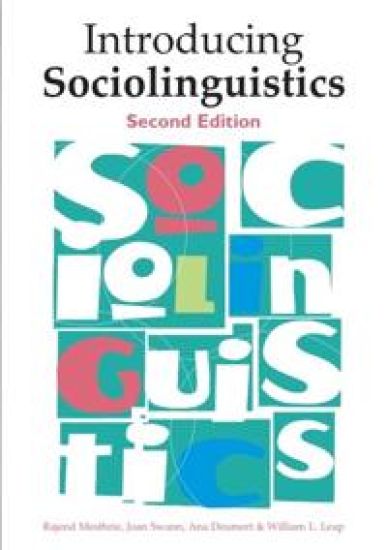
Introducing Sociolinguistics

Introducing Sociolinguistics

Rajend Mesthrie; Joan Swann; Ana Deumert; William Leap

Edinburgh University Press
2009
nidottu
Sociolinguistics is one of the central branches of modern linguistics and deals with the place of language in human societies. This second edition of Introducing Sociolinguistics expertly synthesises the main approaches to the subject. The book covers areas such as multilingualism, code-choice, language variation, dialectology, interactional studies, gender, language contact, language and inequality, and language and power. At the same time it provides an integrated perspective on these themes by examining sociological theories of human interaction. In this regard power and inequality are particularly significant. The book also contains two chapters on the applications of sociolinguistics (in education and in language policy and planning) and a concluding chapter on the sociolinguistics of sign language. New topics covered include speaking style and stylisation, while current debates in areas like creolisation, globalisation and language death, language planning, and gender are reflected. Written collaboratively by teachers and scholars with first hand experience of sociolinguistic developments on four continents, this book provides the broadest introduction currently available to the central topics in sociolinguistics. Features: * Provides a solid foundation in all aspects of sociolinguistics and explores important themes such as power and inequality, sign language, gender and the internet * Well illustrated with maps, diagrams, inset boxes, drawings and cartoons * Accessibly written with the beginner in mind * Uses numerous examples from multilingual settings * Explains basic concepts, supported by a glossary * Further Reading lists, a full bibliography, and a section on 'next steps' provide valuable guidance.
Introducing Sociolinguistics

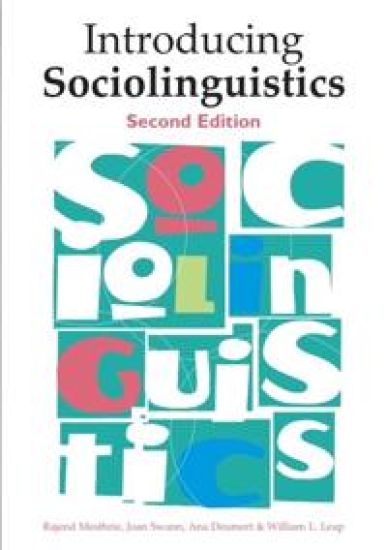
Introducing Sociolinguistics

Rajend Mesthrie; Joan Swann; Ana Deumert; William Leap

Edinburgh University Press
2009
sidottu
Sociolinguistics is one of the central branches of modern linguistics and deals with the place of language in human societies. This second edition of Introducing Sociolinguistics expertly synthesises the main approaches to the subject. The book covers areas such as multilingualism, code-choice, language variation, dialectology, interactional studies, gender, language contact, language and inequality, and language and power. At the same time it provides an integrated perspective on these themes by examining sociological theories of human interaction. In this regard power and inequality are particularly significant. The book also contains two chapters on the applications of sociolinguistics (in education and in language policy and planning) and a concluding chapter on the sociolinguistics of sign language. New topics covered include speaking style and stylisation, while current debates in areas like creolisation, globalisation and language death, language planning, and gender are reflected. Written collaboratively by teachers and scholars with first hand experience of sociolinguistic developments on four continents, this book provides the broadest introduction currently available to the central topics in sociolinguistics. Features: * Provides a solid foundation in all aspects of sociolinguistics and explores important themes such as power and inequality, sign language, gender and the internet * Well illustrated with maps, diagrams, inset boxes, drawings and cartoons * Accessibly written with the beginner in mind * Uses numerous examples from multilingual settings * Explains basic concepts, supported by a glossary * Further Reading lists, a full bibliography, and a section on 'next steps' provide valuable guidance.
Word's Out

Word's Out

William Leap

University of Minnesota Press
1996
nidottu
The first book-length analysis of the language used by gay men.Do gay men communicate with each other differently than they do with straight people? If they do, how is “gay men’s English” different from “straight English”? In Word’s Out, William Leap addresses these questions in an entertaining account that looks at gay men’s English as a cultural and a linguistic phenomenon. Whereas previous studies of “gay language” have centered almost entirely on vocabulary, word history, and folklore, Word's Out focuses on the linguistic practices-cooperation, negotiation, and risk taking-that underlie gay men’s conversations, storytelling, verbal dueling, self-description, and construction of outrageous references. Leap “reads” conversations for covert and overt signs of gay men's English, using anecdotes drawn from gay dinner parties, late-night airplane flights, restaurants, department stores, and gourmet shops, and from other all-gay and gay/straight settings. He incorporates material from life-story narratives and other interviews and discussions with gay men, from gay magazines, newspapers, and books, and from events in his own life. The topics addressed include establishing the gay identities of “suspect gays,” recollections of gay childhood, erotic negotiation in health club locker rooms, and gay men’s language of AIDS. Leap shows how gay English speakers use language to create gay-centered spaces within public places, to protect themselves when speaking with strangers, and to establish common interests when speaking with “suspect gays,” and explores why learning gay English is a critical component in gay men’s socialization and entry into gay culture. Provocative and potentially controversial, Word's Out provides fascinating insight into the politics of gay experience by exploring the connections between language and daily experience in gay men's lives.