Kirjojen hintavertailu. Mukana 12 490 240 kirjaa ja 12 kauppaa.

Kirjailija

William Logan

Kirjat ja teokset yhdessä paikassa: 35 kirjaa, julkaisuja vuosilta 1998-2025, suosituimpien joukossa The Early Heroes of the Temperance Reformation. Vertaile teosten hintoja ja tarkista saatavuus suomalaisista kirjakaupoista.

35 kirjaa

Kirjojen julkaisuhaarukka 1998-2025.

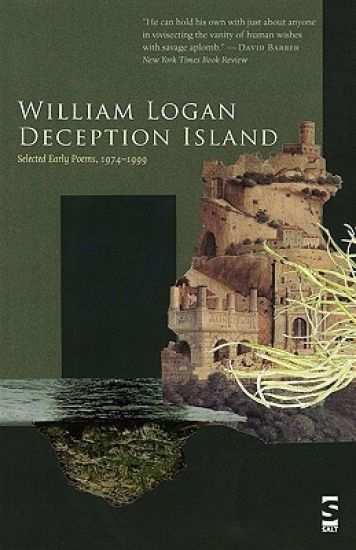
Deception Island

Deception Island

William Logan

Salt Publishing
2011
nidottu
William Logan’s poetry has been called elegant, difficult, cranky, formidable, dazzling, intoxicating, and ominous. For almost forty years, he has published poems that do not fit comfortably with the work of most of his contemporaries, and perhaps do not want to fit at all. The poems in Deception Island, a selection from his first five books, find their souls in the soullessness of modern life – if he looks upon the present with a withering eye, he sees the roots of later darkness in the early sins of culture. He might be called a moral poet, if he were not so suspicious of the certainties of morality. Nonetheless, he takes a resistant pleasure in the Byzantine contrivance of Venice, in the empty vision of the American west, and in the romantic longing of British landscape. He is equally at home in the privileges of free verse and in the older metrical line, sometimes roughened into sensibility, and rarely heard now with such command or control. Logan has an impeccable ear, a darkening view, and a belief that the poet’s job is to work in language, to do things with words, without attempting to persuade or forgive. In his poems, the echoes of Lowell, Auden, and other modern masters can sometimes be heard; but he has fused his influences into a poetic line that is personal in the private wrestling with language that the poet must accept as his task.
Vientiane

Vientiane

Marc Askew; Colin Long; William Logan

Routledge
2010
nidottu
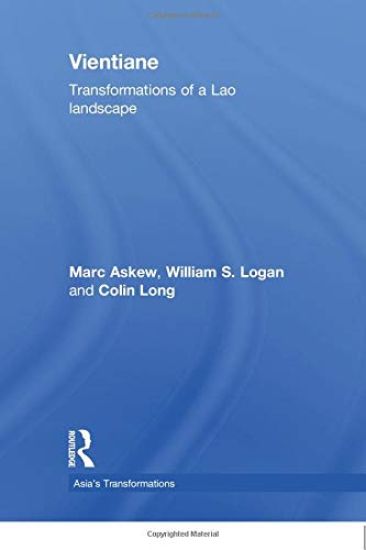
Providing insights into this neglected Southeast Asian city, this interesting book interprets Vientiane’s landscape - physical as well as imagined - as a reflection of key aspects of Lao geo-political history, the nature of Lao urbanism, and its critical relation to constructions of Lao identity in the contemporary period. It is argued that the patterns of change seen through Vientiane’s past embody the key political and economic processes and transformations impacting on the people of Laos. The Lao urban past has rarely been an object of attention by scholars. Laos, in fact, is continually portrayed as a rural backwater, marginal to the dynamic trends affecting most of the Southeast Asian mainland. In contrast to these persistent and static portrayals of Laos as a tiny landlocked backwater, with no significant urban present or past, the authors aim to document, explain and evaluate the significance of the Lao urban landscape. Focusing on the theme of Vientiane’s ‘marginality’ in its various forms, the book interprets this apparent marginality as an historically-produced phenomenon resulting from geo-politics dating from the pre-colonial period and extending into the post-colonial period. Drawing on a wide range of research materials, Vientiane is the first work of its kind on this ignored city.
Our Savage Art

Our Savage Art

William Logan

Columbia University Press
2009
sidottu
The most notorious poet-critic of his generation, William Logan has defined our view of poets good and bad, interesting and banal, for more than three decades. Featured in the New York Times Book Review, the Times Literary Supplement, and the New Criterion, among other journals, Logan's eloquent, passionate prose never fails to provoke readers and poets, reminding us of the value and vitality of the critic's savage art. Like The Undiscovered Country: Poetry in the Age of Tin, which won the National Book Critics Circle Award in Criticism, Our Savage Art features the corrosive wit and darkly discriminating critiques that have become the trademarks of Logan's style. Opening with a defense of the critical eye, this collection features essays on Robert Lowell's correspondence, Elizabeth Bishop's unfinished poems, the inflated reputation of Hart Crane, the loss of the New Critics, and a damning-and already highly controversial-indictment of an edition of Robert Frost's notebooks. Logan also includes essays on Derek Walcott and Geoffrey Hill, two crucial figures in the divided world of contemporary poetry, and an attempt to rescue the reputation of the nineteenth-century poet John Townsend Trowbridge. Short reviews consider John Ashbery, Anne Carson, Billy Collins, Rita Dove, Louise Gluck, Jorie Graham, Robert Hass, Seamus Heaney, and dozens of others. Though he might be called a cobra with manners, Logan is a fervent advocate for poetry, and Our Savage Art continues to raise the standard of what the critic can do.
The Undiscovered Country

The Undiscovered Country

William Logan

Columbia University Press
2008
pokkari
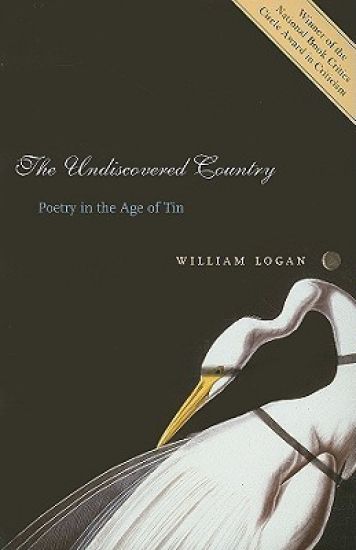
William Logan has been called both the "preeminent poet-critic of his generation" and the "most hated man in American poetry." For more than a quarter century, in the keen-witted and bare-knuckled reviews that have graced the New York Times Book Review, the Times Literary Supplement (London), and other journals, William Logan has delivered razor-sharp assessments of poets present and past. Logan, whom James Wolcott of Vanity Fair has praised as being "the best poetry critic in America," vividly assays the most memorable and most damning features of a poet's work. While his occasionally harsh judgments have raised some eyebrows and caused their share of controversy (a number of poets have offered to do him bodily harm), his readings offer the fresh and provocative perspectives of a passionate and uncompromising critic, unafraid to separate the tin from the gold. The longer essays in The Undiscovered Country explore a variety of poets who have shaped and shadowed contemporary verse, measuring the critical and textual traditions of Shakespeare's sonnets, Whitman's use of the American vernacular, the mystery of Marianne Moore, and Milton's invention of personality, as well as offering a thorough reconsideration of Robert Lowell and a groundbreaking analysis of Sylvia Plath's relationship to her father. Logan's unsparing "verse chronicles" present a survey of the successes and failures of contemporary verse. Neither a poet's tepid use of language nor lackadaisical ideas nor indulgence in grotesque sentimentality escapes this critic's eye. While railing against the blandness of much of today's poetry (and the critics who trumpet mediocre work), Logan also celebrates Paul Muldoon's high comedy, Anne Carson's quirky originality, Seamus Heaney's backward glances, Czeslaw Milosz's indictment of Polish poetry, and much more. Praise for Logan's previous works: Desperate Measures (2002)"When it comes to separating the serious from the fraudulent, the ambitious from the complacent, Logan has consistently shown us what is wheat and what is chaff...The criticism we remember is neither savage nor mandarin. ..There is no one in his generation more likely to write it than William Logan."-Adam Kirsch, Oxford American Reputations of the Tongue (1999)"Is there today a more stringent, caring reader of American poetry than William Logan? Reputations of the Tongue may, at moments, read harshly. But this edge is one of deeply considered and concerned authority. A poet-critic engages closely with his masters, with his peers, with those whom he regards as falling short. This collection is an adventure of sensibility."-George Steiner "William Logan's critical bedevilments-as well as his celebrations-are indispensable."-Bill Marx, Boston Globe All the Rage (1998)"William Logan's reviews are malpractice suits."-Dennis O'Driscoll, Verse "William Logan is the best practical critic around."-Christian Wiman, Poetry
Vientiane

Vientiane

Marc Askew; Colin Long; William Logan

Routledge
2006
sidottu
Providing insights into this neglected Southeast Asian city, this interesting book interprets Vientiane’s landscape - physical as well as imagined - as a reflection of key aspects of Lao geo-political history, the nature of Lao urbanism, and its critical relation to constructions of Lao identity in the contemporary period. It is argued that the patterns of change seen through Vientiane’s past embody the key political and economic processes and transformations impacting on the people of Laos. The Lao urban past has rarely been an object of attention by scholars. Laos, in fact, is continually portrayed as a rural backwater, marginal to the dynamic trends affecting most of the Southeast Asian mainland. In contrast to these persistent and static portrayals of Laos as a tiny landlocked backwater, with no significant urban present or past, the authors aim to document, explain and evaluate the significance of the Lao urban landscape. Focusing on the theme of Vientiane’s ‘marginality’ in its various forms, the book interprets this apparent marginality as an historically-produced phenomenon resulting from geo-politics dating from the pre-colonial period and extending into the post-colonial period. Drawing on a wide range of research materials, Vientiane is the first work of its kind on this ignored city.
The Undiscovered Country

The Undiscovered Country

William Logan

Columbia University Press
2005
sidottu
William Logan has been called both the "preeminent poet-critic of his generation" and the "most hated man in American poetry." For more than a quarter century, in the keen-witted and bare-knuckled reviews that have graced the New York Times Book Review, the Times Literary Supplement (London), and other journals, William Logan has delivered razor-sharp assessments of poets present and past. Logan, whom James Wolcott of Vanity Fair has praised as being "the best poetry critic in America," vividly assays the most memorable and most damning features of a poet's work. While his occasionally harsh judgments have raised some eyebrows and caused their share of controversy (a number of poets have offered to do him bodily harm), his readings offer the fresh and provocative perspectives of a passionate and uncompromising critic, unafraid to separate the tin from the gold. The longer essays in The Undiscovered Country explore a variety of poets who have shaped and shadowed contemporary verse, measuring the critical and textual traditions of Shakespeare's sonnets, Whitman's use of the American vernacular, the mystery of Marianne Moore, and Milton's invention of personality, as well as offering a thorough reconsideration of Robert Lowell and a groundbreaking analysis of Sylvia Plath's relationship to her father. Logan's unsparing "verse chronicles" present a survey of the successes and failures of contemporary verse. Neither a poet's tepid use of language nor lackadaisical ideas nor indulgence in grotesque sentimentality escapes this critic's eye. While railing against the blandness of much of today's poetry (and the critics who trumpet mediocre work), Logan also celebrates Paul Muldoon's high comedy, Anne Carson's quirky originality, Seamus Heaney's backward glances, Czeslaw Milosz's indictment of Polish poetry, and much more. Praise for Logan's previous works: Desperate Measures (2002)"When it comes to separating the serious from the fraudulent, the ambitious from the complacent, Logan has consistently shown us what is wheat and what is chaff...The criticism we remember is neither savage nor mandarin. ..There is no one in his generation more likely to write it than William Logan."-Adam Kirsch, Oxford American Reputations of the Tongue (1999)"Is there today a more stringent, caring reader of American poetry than William Logan? Reputations of the Tongue may, at moments, read harshly. But this edge is one of deeply considered and concerned authority. A poet-critic engages closely with his masters, with his peers, with those whom he regards as falling short. This collection is an adventure of sensibility."-George Steiner "William Logan's critical bedevilments-as well as his celebrations-are indispensable."-Bill Marx, Boston Globe All the Rage (1998)"William Logan's reviews are malpractice suits."-Dennis O'Driscoll, Verse "William Logan is the best practical critic around."-Christian Wiman, Poetry
Desperate Measures

Desperate Measures

William Logan

University Press of Florida
2002
sidottu
William Logan has been called ""the most hated man in American poetry"" and the most dangerous poetry critic since Randall Jarrell. Desperate Measures continues the critical fevers of Reputations of the Tongue (see below), a finalist for the National Book Critics Circle award in criticism. Beginning with an exploration of some of Robert Frost's least-known poems, these essays consider Ezra Pound's letters, T. S. Eliot's metaphysical lectures, the lightness of Elizabeth Bishop, and the civil tongue of Richard Wilbur, finding in poetry a language that lasts beyond the petty conventions of the age. Added to these thoughtful essays are provocative reviews of contemporary poetry, full of Logan's caustic wit and sharp-eyed scrutiny. He praises the moral rigor of Anthony Hecht and Geoffrey Hill, the raucous antics of Paul Muldoon, the natural warmth of Seamus Heaney, the violence of Christopher Logue, the cheerful abandon of Amy Clampitt. Intolerant of mediocre verse, Logan ranges widely through the poetry of America, Britain, and Ireland, finding much to criticize, though some of his judgments are surprising and he is rarely predictable. Logan's own poetry has been called dazzling, original, brilliant, and difficult. Like the distinguished poet-critics of the past, his criticism is an extension of a personal wrestling with language. While criticism of contemporary poetry is often pallid, diplomatic, and full of evasive judgments, Logan is willing to raise hackles, to be cheerfully controversial. The often eloquent criticism in Desperat, Measures, which views poetry from one end of the last century to the other, is a passionate defense of poetry in an unpo etic time.
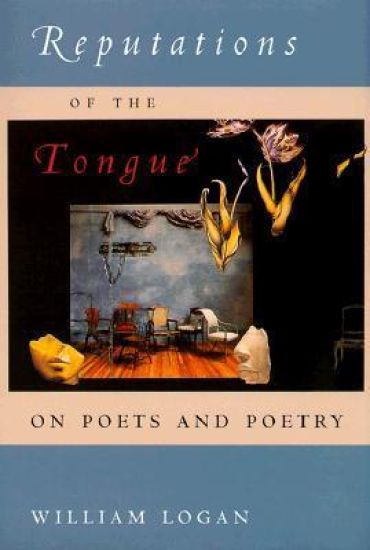
Reputations of the Tongue

Reputations of the Tongue

William Logan

University Press of Florida
1999
sidottu
A survey of American, British and Irish poetry in the 1980s and '90s. It opens with an essay arguing with Eliot over tradition and individual talent. At the heart of the book are essays on W.H. Auden, W.D. Snodgrass, Donald Justice and Geoffrey Hill, with reviews of other contemporary poets.
All the Rage

All the Rage

William Logan

The University of Michigan Press
1998
sidottu
William Logan has been called the most dangerous poetry critic since Randall Jarrell. All the Rage collects his early critical works, including reviews and verse chronicles, a long essay on Auden's imagery, an unpublished essay on "The Prejudice of Aesthetics," as well as a recent interview. A critic of uncompromising passions, his readings of modern poetry are irritating, intimate, severe, and luminous. Banned by some publications, his criticism has violently opposed the etiquette of praise that has silenced strong opinion among poetry circles.Logan was among the first critics to review a generation of poets now in creative maturity, and his comments on the early works of Jorie Graham, Gjertrud Schnackenberg, and the late Amy Clampitt show the enthusiasm of fresh discovery. But he is no respecter of old reputation, as his reviews of John Ashbery and Robert Penn Warren demonstrate. In total, his criticism considers virtues with their defects and always speaks its author's mind. Some contemporary poetry has had few better friends, and some few greater enemies, than William Logan.William Logan is the author of Sad-Faced Men, Difficulty, Sullen Weedy Lakes, and Vain Empires. He is Alumni/ae Professor of English, University of Florida.
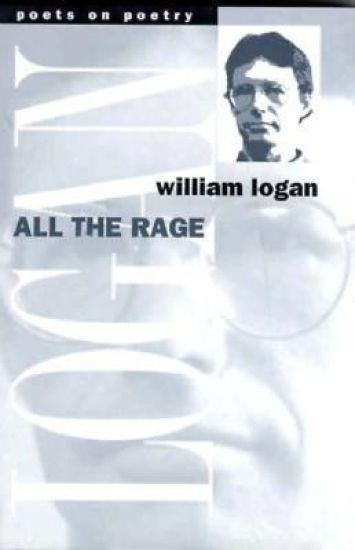
All the Rage

All the Rage

William Logan

The University of Michigan Press
1998
nidottu
William Logan has been called the most dangerous poetry critic since Randall Jarrell. All the Rage collects his early critical works, including reviews and verse chronicles, a long essay on Auden's imagery, an unpublished essay on "The Prejudice of Aesthetics," as well as a recent interview. A critic of uncompromising passions, his readings of modern poetry are irritating, intimate, severe, and luminous. Banned by some publications, his criticism has violently opposed the etiquette of praise that has silenced strong opinion among poetry circles.Logan was among the first critics to review a generation of poets now in creative maturity, and his comments on the early works of Jorie Graham, Gjertrud Schnackenberg, and the late Amy Clampitt show the enthusiasm of fresh discovery. But he is no respecter of old reputation, as his reviews of John Ashbery and Robert Penn Warren demonstrate. In total, his criticism considers virtues with their defects and always speaks its author's mind. Some contemporary poetry has had few better friends, and some few greater enemies, than William Logan.William Logan is the author of Sad-Faced Men, Difficulty, Sullen Weedy Lakes, and Vain Empires. He is Alumni/ae Professor of English, University of Florida.