Kirjojen hintavertailu. Mukana 12 152 606 kirjaa ja 12 kauppaa.

Kirjailija

William Maley

Kirjat ja teokset yhdessä paikassa: 19 kirjaa, julkaisuja vuosilta 2006-2025, suosituimpien joukossa What is a Refugee?. Vertaile teosten hintoja ja tarkista saatavuus suomalaisista kirjakaupoista.

19 kirjaa

Kirjojen julkaisuhaarukka 2006-2025.

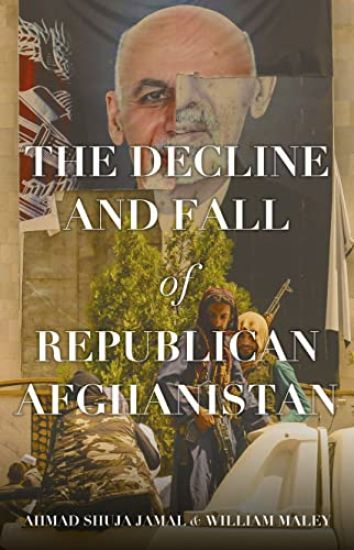
The Decline and Fall of Republican Afghanistan

The Decline and Fall of Republican Afghanistan

Ahmad Shuja Jamal; William Maley

C HURST CO PUBLISHERS LTD
2025
nidottu
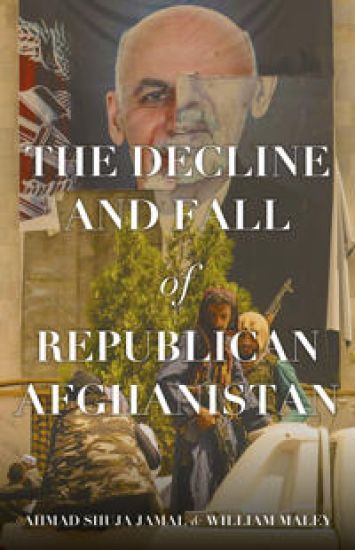
A searing indictment of how Afghan elites and the Western powers pulled the rug on the Afghan people, abandoning them to their fate. The Taliban’s takeover of Afghanistan in 2021 was the result of declining active support for the government, and of waste and inefficiency in aid delivery. Yet, while corrosive, these problems were not in themselves sufficient to have brought about a collapse. To a significant degree, they were the result of early failings in institutional design, reflecting an American inclination to pursue short-term policy approaches that created perverse incentives—thus interfering with the long-term objective of stability. This book exposes the true factors underpinning Kabul’s fall. The Afghan Republic came under relentless attack from Taliban insurgents who depended critically on Pakistani support. It also suffered a creeping invasion that put the government on the back foot as the US tried and failed to deal with Pakistan’s perfidy. The fatal blow came when bored US leaders naively cut an exit deal with the enemy, fatally compromising the operation of the Afghan army and air force and triggering the final collapse, with top leaders at odds over whether to make a final stand in Kabul. The Afghan Republic did not simply decline and fall. It was betrayed.
Australia: The Politics of Degraded Democracy

Australia: The Politics of Degraded Democracy

William Maley

AUSTRALIAN SCHOLARLY PUBLISHING
2024
nidottu
Why is there a sense of unease about Australian politics? William Maley argues that a key reason is that while Australia is not facing a crisis of democracy, the functioning of its political system has degraded markedly in recent decades. The Commonwealth Parliament is not a credible deliberative body and nor is it effective in holding the executive to account. MPs and Senators have been increasingly recruited from a barren gene-pool of political staffers, and the major political parties have morphed into patronage networks, not least as a result of the confluence of compulsory voting and public funding. Party leadership has been notably unstable, generating declining trust from the mass population, and the Public Service has been hollowed out, de-professionalised by the advent of ‘managerialism’, and debilitated by ambitious leaders. Put these and other problems together, and the harm that they can do is greater than the sum of the parts. This book paints an unsettling picture of where politics may be heading if things do not change.
The Decline and Fall of Republican Afghanistan

The Decline and Fall of Republican Afghanistan

Ahmad Shuja Jamal; William Maley

Oxford University Press
2023
sidottu
The Taliban's takeover of Afghanistan in 2021 was the result of declining active support for the government, and of waste and inefficiency in aid delivery. Yet, while corrosive, these problems were not in themselves sufficient to have brought about a collapse. To a significant degree, they were the result of early failings in institutional design, reflecting an American inclination to pursue short-term policy approaches that created perverse incentives-thus interfering with the long-term objective of stability. This book exposes the true factors underpinning Kabul's fall. The Afghan Republic came under relentless attack from Taliban insurgents who depended critically on Pakistani support. It also suffered a creeping invasion that put the government on the back foot as the US tried and failed to deal with Pakistan's perfidy. The fatal blow came when bored US leaders naively cut an exit deal with the enemy, fatally compromising the operation of the Afghan army and air force and triggering the final collapse, with top leaders at odds over whether to make a final stand in Kabul. The Afghan Republic did not simply decline and fall. It was betrayed.
The Decline and Fall of Republican Afghanistan

The Decline and Fall of Republican Afghanistan

Ahmad Shuja Jamal; William Maley

C HURST CO PUBLISHERS LTD
2023
sidottu
A searing indictment of how Afghan elites and the Western powers pulled the rug on the Afghan people, abandoning them to their fate. The Taliban’s takeover of Afghanistan in 2021 was the result of declining active support for the government, and of waste and inefficiency in aid delivery. Yet, while corrosive, these problems were not in themselves sufficient to have brought about a collapse. To a significant degree, they were the result of early failings in institutional design, reflecting an American inclination to pursue short-term policy approaches that created perverse incentives—thus interfering with the long-term objective of stability. This book exposes the true factors underpinning Kabul’s fall. The Afghan Republic came under relentless attack from Taliban insurgents who depended critically on Pakistani support. It also suffered a creeping invasion that put the government on the back foot as the US tried and failed to deal with Pakistan’s perfidy. The fatal blow came when bored US leaders naively cut an exit deal with the enemy, fatally compromising the operation of the Afghan army and air force and triggering the final collapse, with top leaders at odds over whether to make a final stand in Kabul. The Afghan Republic did not simply decline and fall. It was betrayed.
Diplomacy, Communication, and Peace

Diplomacy, Communication, and Peace

William Maley

TAYLOR FRANCIS LTD
2022
nidottu
This book is composed of interconnected essays which reflect on challenging new issues related to diplomacy, communication, and peace.This book begins by drawing out some of the challenges for diplomacy that arise from modern theories of semantics and of strategic communication, as well as those posed by the need for secrecy, and by the activities of agents of influence. It then proceeds to examine important issues in contemporary diplomacy, including refugee diplomacy, humanitarian diplomacy, sovereignty, norms, and consular activities. It concludes with an exploration of dilemmas that confront attempts to promote peace through multilateral means, such as the limitations of peacemaking diplomacy, the difficulty of promoting democratic governance, and the problems associated with dealing with morally repugnant actors. The book is grounded in the conception of diplomacy as a social practice with multiple players, and recognises that ‘the state’ has many different elements, and that ‘state actors’ live in worlds shaped not just by their relations with other states, but also by their own complex domestic politics. This book will be of much interest to students of diplomacy, foreign policy, and International Relations.
Transition in Afghanistan

Transition in Afghanistan

William Maley

TAYLOR FRANCIS LTD
2021
nidottu
This book, by one of the most experienced authorities on the subject, presents a deep analysis of the very difficult current situation in Afghanistan. Covering a wide range of important subjects including state-building, democracy, war, the rule of law, and international relations, the book draws out two overarching key factors: the way in which the prevailing neopatrimonial political order has become entrenched, making it very difficult for any other political order to take root; and the hostile region in which Afghanistan is located, especially the way in which an ongoing ‘creeping invasion’ from Pakistani territory has compromised the aspirations of both the Afghan government and its international backers to move the country to a more stable position.
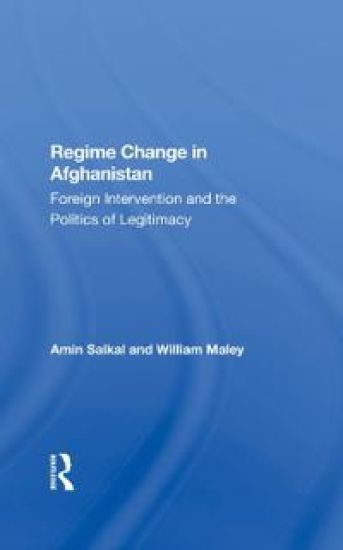
Regime Change In Afghanistan

Regime Change In Afghanistan

Amin Saikal; William Maley

Routledge
2020
nidottu
This book is a study of regime change in an underdeveloped country with a weak state and strong autonomous social organizations. Regime change is in many countries a traumatic and disruptive experience, but few countries have paid as high a cost to retain traditionally accepted relationships of authority as has Afghanistan since the communist coup
Diplomacy, Communication, and Peace
This book is composed of interconnected essays which reflect on challenging new issues related to diplomacy, communication, and peace.This book begins by drawing out some of the challenges for diplomacy that arise from modern theories of semantics and of strategic communication, as well as those posed by the need for secrecy, and by the activities of agents of influence. It then proceeds to examine important issues in contemporary diplomacy, including refugee diplomacy, humanitarian diplomacy, sovereignty, norms, and consular activities. It concludes with an exploration of dilemmas that confront attempts to promote peace through multilateral means, such as the limitations of peacemaking diplomacy, the difficulty of promoting democratic governance, and the problems associated with dealing with morally repugnant actors. The book is grounded in the conception of diplomacy as a social practice with multiple players, and recognises that ‘the state’ has many different elements, and that ‘state actors’ live in worlds shaped not just by their relations with other states, but also by their own complex domestic politics. This book will be of much interest to students of diplomacy, foreign policy, and International Relations.
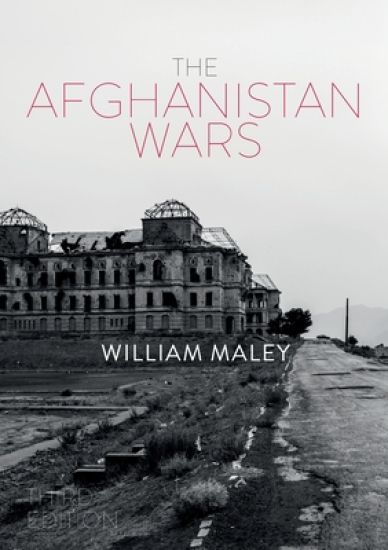
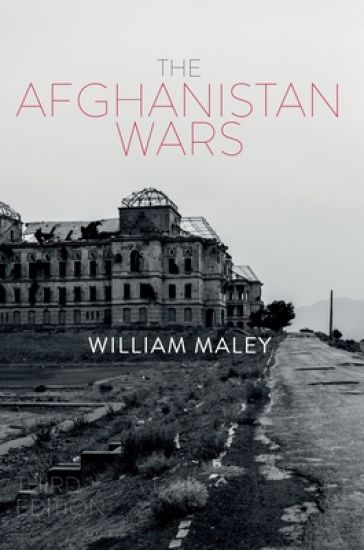
The Afghanistan Wars

The Afghanistan Wars

William Maley

Red Globe Press
2020
nidottu
A whole generation has grown up in Afghanistan knowing little but the ravages of war. The dramatic overthrow of the Taliban regime in 2001 was simply one event in a series of interrelated struggles which have blighted ordinary people’s lives over the last three decades, and which continue to interfere with reconciliation and reconstruction. This new edition of The Afghanistan Wars provides a meticulously-documented history of these successive waves of conflict. From the roots of Afghanistan’s slide into disorder in the late 1970s to the challenges faced by Afghan leaders following the substantial withdrawal of international forces in 2014, it explores military and diplomatic history while also offering valuable insight on humanitarian action, gender, medical and cultural themes.Thoroughly revised in the light of the latest research, the third edition also features a new final chapter which examines recent developments in Afghanistan, bringing the story up to the present day and mounting a strong case for continuing support for this troubled country.New to this Edition:- A final chapter on the recent developments in Afghanistan up to the present day- Revised to take into account the considerable amount of new material published on this topic since 2009- Refreshed and updated throughout
The Afghanistan Wars

The Afghanistan Wars

William Maley

Red Globe Press
2020
sidottu
A whole generation has grown up in Afghanistan knowing little but the ravages of war. The dramatic overthrow of the Taliban regime in 2001 was simply one event in a series of interrelated struggles which have blighted ordinary people’s lives over the last three decades, and which continue to interfere with reconciliation and reconstruction. This new edition of The Afghanistan Wars provides a meticulously-documented history of these successive waves of conflict. From the roots of Afghanistan’s slide into disorder in the late 1970s to the challenges faced by Afghan leaders following the substantial withdrawal of international forces in 2014, it explores military and diplomatic history while also offering valuable insight on humanitarian action, gender, medical and cultural themes.Thoroughly revised in the light of the latest research, the third edition also features a new final chapter which examines recent developments in Afghanistan, bringing the story up to the present day and mounting a strong case for continuing support for this troubled country.New to this Edition:- A final chapter on the recent developments in Afghanistan up to the present day- Revised to take into account the considerable amount of new material published on this topic since 2009- Refreshed and updated throughout
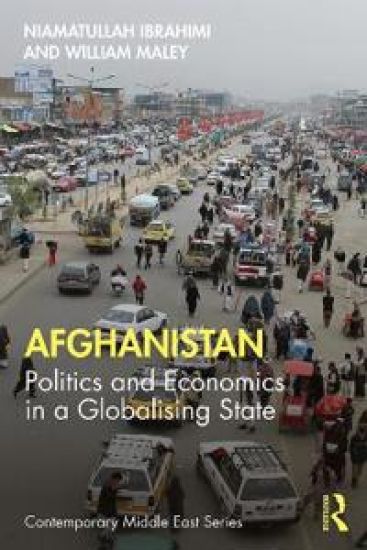
Afghanistan

Afghanistan

Niamatullah Ibrahimi; William Maley

Routledge
2019
nidottu
This book offers an overview of the formation of the Afghan state and of the politics, economic challenges and international relations of contemporary Afghanistan. It opens with an account of some of the key features that make Afghanistan unique and proceeds to discuss how the Afghan state acquired a distinctive character as a rentier state. In addition, the authors outline a complex range of domestic and external factors that led to the breakdown of the state, and how that breakdown gave rise to a set of challenges with which Afghan political and social actors have been struggling to deal since the 2001 international intervention that overthrew the anti-modernist Taliban regime. It then presents the different types of politics that Afghanistan has witnessed over the last two decades; examines some of the most important features of the Afghan economy; and demonstrates how Afghanistan’s geopolitical location and international relations more broadly have complicated the task of promoting stability in the post-2001 period. It concludes with some reflections on the factors that are likely to shape Afghanistan’s future trajectory and notes that if there are hopes for a better future, they largely rest on the shoulders of a globalised generation of younger Afghans.This book will be of interest to students and scholars in the fields of Middle East and Central Asian studies, international relations, politics, development studies and history.
Afghanistan

Afghanistan

Niamatullah Ibrahimi; William Maley

Routledge
2019
sidottu
This book offers an overview of the formation of the Afghan state and of the politics, economic challenges and international relations of contemporary Afghanistan. It opens with an account of some of the key features that make Afghanistan unique and proceeds to discuss how the Afghan state acquired a distinctive character as a rentier state. In addition, the authors outline a complex range of domestic and external factors that led to the breakdown of the state, and how that breakdown gave rise to a set of challenges with which Afghan political and social actors have been struggling to deal since the 2001 international intervention that overthrew the anti-modernist Taliban regime. It then presents the different types of politics that Afghanistan has witnessed over the last two decades; examines some of the most important features of the Afghan economy; and demonstrates how Afghanistan’s geopolitical location and international relations more broadly have complicated the task of promoting stability in the post-2001 period. It concludes with some reflections on the factors that are likely to shape Afghanistan’s future trajectory and notes that if there are hopes for a better future, they largely rest on the shoulders of a globalised generation of younger Afghans.This book will be of interest to students and scholars in the fields of Middle East and Central Asian studies, international relations, politics, development studies and history.
Regime Change In Afghanistan

Regime Change In Afghanistan

Amin Saikal; William Maley

Routledge
2019
sidottu
This book is a study of regime change in an underdeveloped country with a weak state and strong autonomous social organizations. Regime change is in many countries a traumatic and disruptive experience, but few countries have paid as high a cost to retain traditionally accepted relationships of authority as has Afghanistan since the communist coup
Transition in Afghanistan

Transition in Afghanistan

William Maley

Routledge
2018
sidottu
This book, by one of the most experienced authorities on the subject, presents a deep analysis of the very difficult current situation in Afghanistan. Covering a wide range of important subjects including state-building, democracy, war, the rule of law, and international relations, the book draws out two overarching key factors: the way in which the prevailing neopatrimonial political order has become entrenched, making it very difficult for any other political order to take root; and the hostile region in which Afghanistan is located, especially the way in which an ongoing ‘creeping invasion’ from Pakistani territory has compromised the aspirations of both the Afghan government and its international backers to move the country to a more stable position.
What Is a Refugee?

What Is a Refugee?

William Maley

Oxford University Press
2016
nidottu
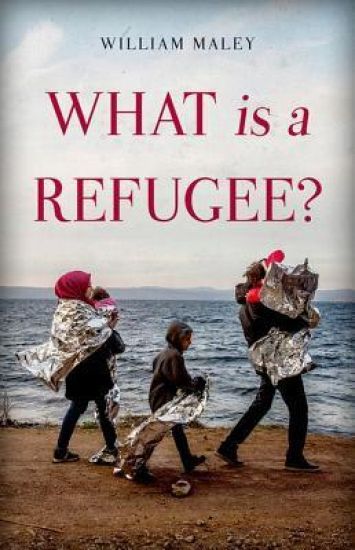
With the arrival in Europe of over a million refugees and asylum seekers in 2015, a sense of panic began to spread within the continent and beyond. What is a Refugee? puts these developments into historical context, injecting much-needed objectivity and nuance into contemporary debates over what is to be done. Refugees have been with us for a long time -- although only after the Great War did refugee movements commence on a large scale -- and are ultimately symptoms of the failure of the system of states to protect all who live within it. Providing a terse user's guide to the complex legal status of refugees, Maley argues that states are now reaping the consequences of years of attempts to block access to asylum through safe and 'legal' means. He shows why many mooted 'solutions' to the 'problem' of refugees -- from military intervention to the warehousing of refugees in camps -- are counterproductive, creating environments ripe for the growth of extremism among people who have been denied all hope. In a globalised world, he concludes, wealthy states have the resources to protect refugees. And, as his historical account shows, courageous individuals have treated refugees in the past with striking humanity. States today could do worse than emulate them.
What is a Refugee?

What is a Refugee?

William Maley

C Hurst Co Publishers Ltd
2016
nidottu
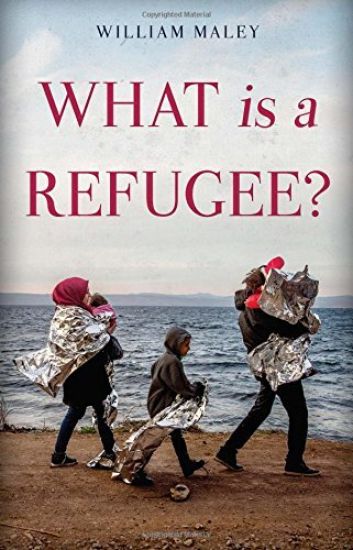
With the arrival in Europe of over a million refugees and asylum seekers in 2015, a sense of panic began to spread within the continent and beyond. What is a Refugee? puts these developments into historical context, injecting much-needed objectivity and nuance into contemporary debates over what is to be done. Refugees have been with us for a long time -- although only after the Great War did refugee movements commence on a large scale -- and are ultimately symptoms of the failure of the system of states to protect all who live within it. Providing a terse user's guide to the complex legal status of refugees, Maley argues that states are now reaping the consequences of years of attempts to block access to asylum through safe and 'legal' means. He shows why many mooted 'solutions' to the 'problem' of refugees -- from military intervention to the warehousing of refugees in camps -- are counterproductive, creating environments ripe for the growth of extremism among people who have been denied all hope. In a globalised world, he concludes, wealthy states have the resources to protect refugees.And, as his historical account shows, courageous individuals have treated refugees in the past with striking humanity. States today could do worse than emulate them.
Global Governance and Diplomacy

Global Governance and Diplomacy

William Maley

Palgrave Macmillan
2008
sidottu
While diplomacy is a well-established topic for study, global governance is a relatively new arrival to the conceptual landscape of international relations. At first glance the two exist in separate worlds. This book examines the relationship between these two concepts for the first time in a comprehensive manner.
Global Governance and Diplomacy

Global Governance and Diplomacy

William Maley

Palgrave Macmillan
2008
nidottu
While diplomacy is a well-established topic for study, global governance is a relatively new arrival to the conceptual landscape of international relations. At first glance the two exist in separate worlds. This book examines the relationship between these two concepts for the first time in a comprehensive manner.
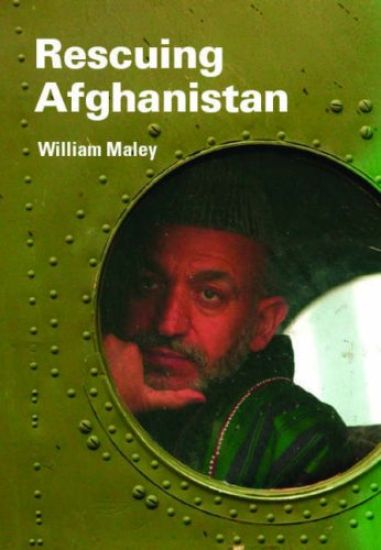
Rescuing Afghanistan

Rescuing Afghanistan

William Maley

C Hurst Co Publishers Ltd
2006
sidottu
Compared to post-invasion Iraq, Afghanistan seems a success story; but first impressions can be misleading. The country remains on a knife-edge, and the loss of momentum in its transition from the Taliban regime puts Afghanistan at grave risk of relapsing into dangerous insecurity. Although many Afghans have contributed courageously to rescuing their country, and some key benchmarks have been achieved, Afghanistan continues to face severe difficulties. Elite political competition is fierce, and able ministers have been removed when deemed to be occupying too much of the limelight. President Hamid Karzai, while articulate and incorruptible, remains wedded to a politics of bargaining and networking that has seen unappetising figures promoted to positions they have then abused. This has created space for the resurgence of the Taliban in the south, with Pakistani backing. The new Afghan National Army is proving too expensive to be locally sustainable, and the police force offers only a pale shadow of what is needed. The predominance of opium in the economy poses the risk that Afghanistan could become a narco-state, and on a range of human development indicators it remains one of the world's poorest countries, with popular frustration rising. While foreign governments have contributed large sums to reconstruction, too much money has gone to Western contractors, at the expense of local capacity. It is not too late to turn things around, but time is running short. Only if the Afghan government re-focuses on the delivery of competent, clean and inclusive governance, and the wider world ensures that its commitments match its rhetoric, is it at all likely that disaster can be avoided.