

Kirjailija
William Maxwell
Kirjat ja teokset yhdessä paikassa: 37 kirjaa, julkaisuja vuosilta 1964-2026, suosituimpien joukossa They Came Like Swallows. Vertaile teosten hintoja ja tarkista saatavuus suomalaisista kirjakaupoista.
37 kirjaa
Kirjojen julkaisuhaarukka 1964-2026.
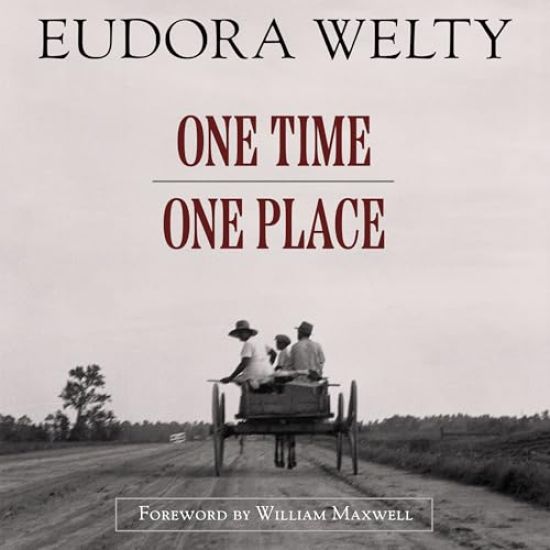
Eudora Welty is among the very few authors acclaimed for their work in both literature and photography. In 1971 she surprised her readers with this important book, for in One Time, One Place many of them learned for the first time that this revered writer was also a gifted photographer. One Time, One Place is the only book of Welty’s where she selected all images. Throughout her writing career, Welty's camera was a close companion. The one hundred pictures included here are for the first time digitally scanned to maximize the contrast and beauty of her vision. These are her selections from many she took during the Great Depression as she traveled in her home state of Mississippi. These pictures are poignant images of human endurance. For her, looking back, they showed a record of a time and a place, an impoverished world that against great odds sustained a sense of community. Both Black and white, the men, women, and children she photographed, unaware that they are coping with dire conditions, press onward with their lives. "The Depression, in fact," Welty says in her introduction, "was not a noticeable phenomenon in the poorest state in the Union." The foreword by William Maxwell, Eudora Welty's dear friend and esteemed colleague in literature, offers an appreciation of this photographer's special genius and a loving glimpse into her artistic world. This new version of One Time, One Place keeps the original photos and foreword intact, while providing higher quality versions of the classic images.

“Midnights is both a comedy of errors and an affectionate portrait of small-town police, those beleaguered souls charged with the task of keeping their neighbors in line....A reminder that those assigned to protect are often vulnerable and quietly heroic.”—Time Funny, touching, revealing, here is the view from a rookie cop’s patrol car, during midnight shifts, in a (mostly) peaceful town. With a rich cast of characters, this is a classic memoir of the fear, surprises, excitement, embarrassment that comes with a protecting and serving a small community. “When I was twenty-three years old, five months out of college, with a degree in music, and without any idea of what to do with myself, I took a job as a policeman in Wellfleet, Massachusetts,” so writes Alec Wilkinson. “Music, huh?” the police chief said during the job interview. “That'll be a big help.” Wilkinson’s main qualification was familiarity with the town of 2,000 people from summers there growing up. Committing himself to a year wearing a uniform and carrying a gun, and with no training, Wilkinson was sent out to keep the peace, hoping nothing would happen. There are high-speed chases and stopping drunk drivers, one of whom tries to set Wilkinson's hair on fire. There are domestic squabbles. “The first six months were murder for me,” Wilkinson’s partner confides on his first night. “After that, when I found out the people I thought were my friends weren't really my friends, I felt better off.” There is an attempted bank robbery. The teller convinces the robber that his haul ($300) is too much to carry around in cash. The robber is still listening to investment options when the police arrive. Throughout there are conversations with his eight fellow officers who Wilkinson comes to respect and admire. “Nobody ever calls you when they're behaving themselves,” one admits. “As a rule, you always get called when people are at their worst. It's sad. It depresses me.” The job is often thankless. “Right now I work on the police force,” another officer says, “my wife stamps cans in the supermarket, and she makes more money than I do.” This is experiential journalism at its most poignant and entertaining—and it launched the career of Alec Wilkinson: writer, interviewer, essayist, and author. This is for any reader looking for insight into the real lives of police officers, outside of large cities, across America. It is also for anyone looking for a marvelously engaging read.Midnights is part of Godine’s Nonpareil series: celebrating the joy of discovery with books bound to be classics.
Memorial, and Abstract of the Proof, for Sir William Maxwell of Calderwood, Baronet, Pursuer; Against Robert Baird, and Others, his Vassals, Defenders
William Maxwell
Gale Ecco, Print Editions
2018
sidottu
The 18th century was a wealth of knowledge, exploration and rapidly growing technology and expanding record-keeping made possible by advances in the printing press. In its determination to preserve the century of revolution, Gale initiated a revolution of its own: digitization of epic proportions to preserve these invaluable works in the largest archive of its kind. Now for the first time these high-quality digital copies of original 18th century manuscripts are available in print, making them highly accessible to libraries, undergraduate students, and independent scholars.This collection reveals the history of English common law and Empire law in a vastly changing world of British expansion. Dominating the legal field is the Commentaries of the Law of England by Sir William Blackstone, which first appeared in 1765. Reference works such as almanacs and catalogues continue to educate us by revealing the day-to-day workings of society.++++The below data was compiled from various identification fields in the bibliographic record of this title. This data is provided as an additional tool in helping to insure edition identification: ++++Bodleian Library (Oxford)T215404Dated at head of the drop-head title: January 22. 1765. Edinburgh, 1765]. 24p.; 4
Answers for Sir William Maxwell of Calderwood, Baronet, to the Petition of Robert and William Strangs, and Others, his Vassals in the Lands of Jacktown, Newlands, and Allarton
William Maxwell
Gale Ecco, Print Editions
2018
sidottu
The 18th century was a wealth of knowledge, exploration and rapidly growing technology and expanding record-keeping made possible by advances in the printing press. In its determination to preserve the century of revolution, Gale initiated a revolution of its own: digitization of epic proportions to preserve these invaluable works in the largest archive of its kind. Now for the first time these high-quality digital copies of original 18th century manuscripts are available in print, making them highly accessible to libraries, undergraduate students, and independent scholars.This collection reveals the history of English common law and Empire law in a vastly changing world of British expansion. Dominating the legal field is the Commentaries of the Law of England by Sir William Blackstone, which first appeared in 1765. Reference works such as almanacs and catalogues continue to educate us by revealing the day-to-day workings of society.++++The below data was compiled from various identification fields in the bibliographic record of this title. This data is provided as an additional tool in helping to insure edition identification: ++++Bodleian Library (Oxford)T215282Dated at head of the drop-head title: October 5. 1765. Edinburgh, 1765]. 16p.; 4
Unto the Right Honourable the Lords of Council and Session, the Petition of Sir William Maxwell of Calderwood, Baronet,
William Maxwell
Gale Ecco, Print Editions
2018
sidottu
The 18th century was a wealth of knowledge, exploration and rapidly growing technology and expanding record-keeping made possible by advances in the printing press. In its determination to preserve the century of revolution, Gale initiated a revolution of its own: digitization of epic proportions to preserve these invaluable works in the largest archive of its kind. Now for the first time these high-quality digital copies of original 18th century manuscripts are available in print, making them highly accessible to libraries, undergraduate students, and independent scholars.This collection reveals the history of English common law and Empire law in a vastly changing world of British expansion. Dominating the legal field is the Commentaries of the Law of England by Sir William Blackstone, which first appeared in 1765. Reference works such as almanacs and catalogues continue to educate us by revealing the day-to-day workings of society.++++The below data was compiled from various identification fields in the bibliographic record of this title. This data is provided as an additional tool in helping to insure edition identification: ++++Harvard University Houghton LibraryN014553Signed at end: Jo. Maclaurin. Asking the court to order his tenants to have their grain ground at his mill. Dated at head of drop-head title: December 5. 1765. Edinburgh, 1765]. 18p.; 4
Dissertatio inauguralis, experimentorum quorundam, cum diversis aërum speciebus in animalibus institutorum, phaenomena exhibens. Quam, ... pro gradu doctoris, ... eruditorum examini subjicit Gulielmus Maxwell, ...
William Maxwell
Gale Ecco, Print Editions
2018
sidottu
The 18th century was a wealth of knowledge, exploration and rapidly growing technology and expanding record-keeping made possible by advances in the printing press. In its determination to preserve the century of revolution, Gale initiated a revolution of its own: digitization of epic proportions to preserve these invaluable works in the largest archive of its kind. Now for the first time these high-quality digital copies of original 18th century manuscripts are available in print, making them highly accessible to libraries, undergraduate students, and independent scholars.Medical theory and practice of the 1700s developed rapidly, as is evidenced by the extensive collection, which includes descriptions of diseases, their conditions, and treatments. Books on science and technology, agriculture, military technology, natural philosophy, even cookbooks, are all contained here.++++The below data was compiled from various identification fields in the bibliographic record of this title. This data is provided as an additional tool in helping to insure edition identification: ++++British LibraryT088720With a half-title.Edinburgi: apud Balfour et Smellie, 1787. 6],35, 1]p.; 8

The First Hero is history fiction for children ages 10 to 18 and details how humankind's first inventions came about. The story element is the universal story of heroes seeking to live in a healthier environment, less despotism, more respect. Perils abound in each enviornment, but these children conquer each. This heroic family begins their journey from a steamy rain forest in what is now Nigeria, moves to a savannah with very different animals and dangers; moves on to a safer mountain where the reader meets three generations of the pioneers of all human cultures and civilizations. For centuries, opinion leaders, including popular movies and news stories, have presented nearly all of Africa in an unfavorable light. The effects of such myths are profound, justifying colonialism, slavery, economic exploitation, and even stimulating racist theories. This book looks at Africans of 190,000 years ago with huge admiration and invites the readers to re-think the stereotypes they absorbed from biased sources. Heroism is a trait that lies in all humans as a potential. That nobel quality blossoms frequently and sometimes insistently, but not always. The early history of the first truly human family is told by the bravest daughter/sister, Venus. The reader meets her and her grandchildren and grandnieces and grandnephews at humankind's first fireside. Venus tells how the family escape the control of an Alpha Male, the childrens great grandfather, by fleeing to the savannah. In the savannah the family meets new kinds of threats, including the most powerful master of the savannah, the soon-to-be-made extinct Giant Brown Bear. One memberr of that fearsome species eats the children's mother, rendering all six orphans. Grief is so profound that Venus invents humankind's first articulate word, am'mah (mother). The challenge of living in a cooler climate generates new inventions, beginning with the kaftan. The first music, the first raft, the first organized war party, the first celebratory dance are but a few of the amazing inventions that this heroic family creates to start humankind on the long and difficult path from primate culture to truly human culture. The oldest son, soon named "Torchbearer," connects the pre-puberty family to the transcendental and begins to enforce necessary rules for the healthy survival of his family. The reader is drawn into the story by realistic depictions of what dangers and challenges our brave ancestors conquered.

SuperParenting: Child Rearing for the New Millennium
Mary Elizabeth Maxwell; William Maxwell
Createspace Independent Publishing Platform
2018
nidottu
This book summarizes over 250 research studies of child development and distills those studies plus the authors' experiences in over 60 cultures to recommend 50 practices that create genius babies and adults.


The Old Man At The Railroad Crossing And Other Tales
William Maxwell; Aimee Bender
Counterpoint
2016
nidottu
In these tales, with one foot firmly planted in the present, Maxwell brings a certain sophisticated urbanity to the oral traditions of the fable and fairy tale. The total effect is of something midway between the Brothers Grimm and Kafka, with perhaps a touch of Zen. (NYRB April 1966) While modern enough in locale and context, they are as old as humanity itself in what concerns them. And always that voice, the age old voice of the storyteller, the eternal magic of the speaking human voice. Such simplicity takes true artistry and Maxwell has that in spades."

With the "Ophir" Round the Empire; an Account of the Tour of the Prince and Princess of Wales, 1901
William Maxwell
Palala Press
2015
sidottu
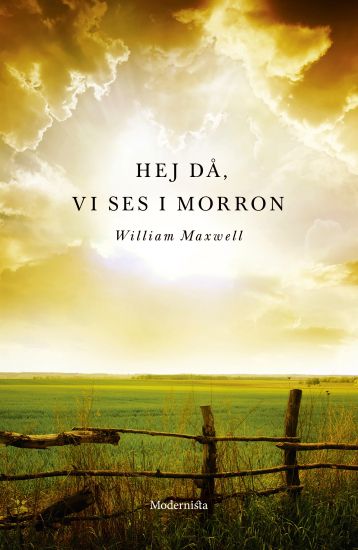
»Efter att ha läst Hej då, vi ses i morron tänkte jag: Det är alltså så här det ska göras. Jag tänkte: Om jag bara kunde gå tillbaka och skriva om varenda sak jag skrivit.« ALICE MUNROI staden där William Maxwell växte upp inträffade en tragedi på tjugotalet: ett mord begicks i en familj i samband med en skilsmässa. Författaren minns sig själv som liten och frågar sig varför han inte kunde ge en hjälpande hand till den stackars skolkamrat som var mördarens son.Hej då, vi ses i morgon är en metafiktiv självbiografi, en konfrontation med förlust, ensamhet, rädsla och vänskapens tillkortakommanden, som kort efter att den kom ut 1980 belönades med The National Book Award.En modern amerikansk klassiker i översättning och med ett nyskrivet efterord av Staffan Holmgren.WILLIAM MAXWELL [1908 2000] var en amerikansk författare, essäist och skönlitterär redaktör på The New Yorker (en roll i vilken Maxwell blev legendarisk för sitt arbete med J. D. Salinger, Eudora Welty, Vladimir Nabokov, Isaac Bashevis Singer och många fler). Hej då, vi ses i morron [So Long, See You Tomorrow, 1980] var Maxwells hyllade återkomst till romanformen efter arton år.

Genius Baby: Richard grows up fast and helps Save the World's Economy
William Maxwell
Createspace Independent Publishing Platform
2013
nidottu

In settings that range from small town Illinois to the Upper East Side of Manhattan, these stories are distinguished by Maxwell's inimitable wisdom and kindness, his sense of the small details that make up a life, the nuances of joy and sadness that change its direction.
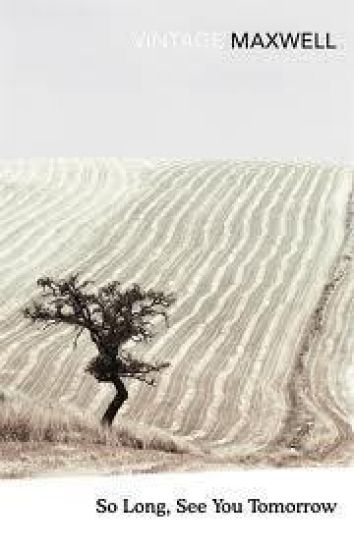
Discover this extraordinary and beautiful novel from one of America's greatest novelists. In rural Illinois two tenant farmers share much, finally too much, until jealously leads to murder and suicide.
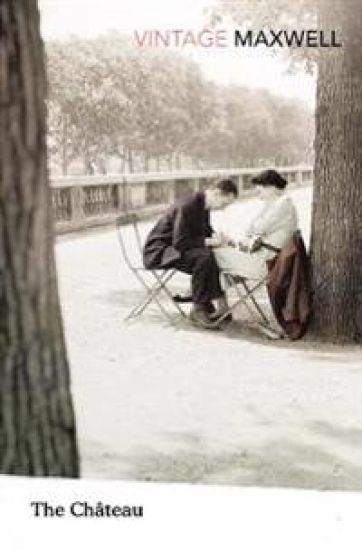
It is 1948 and a young American couple arrive in France for a holiday, full of anticipation and enthusiasm. But the countryside and people are war-battered, and their reception at the Chateau Beaumesnil is not all the open-hearted Americans could wish for.