Kirjojen hintavertailu. Mukana 12 595 353 kirjaa ja 12 kauppaa.

Kirjailija

William Merrin

Kirjat ja teokset yhdessä paikassa: 8 kirjaa, julkaisuja vuosilta 2005-2026, suosituimpien joukossa Media Studies 2.0. Vertaile teosten hintoja ja tarkista saatavuus suomalaisista kirjakaupoista.

8 kirjaa

Kirjojen julkaisuhaarukka 2005-2026.

Facebook and the Online Self

Facebook and the Online Self

William Merrin

Routledge
2026
sidottu
Facebook is one of the most important technology and media companies of the 21st century. Over the last decade, it has risen to become a significant force in the everyday life of a huge number of people and it has had a transformative social, cultural, and political impact across the world. Covering topics such as Facebook’s acquisitions (Whatsapp, Instagram, Oculus Rift), Facebook games and challenges like Farmville, and privacy and ownership of Facebook profiles and posts, this short student-friendly book will explore the history, business model, cultural impact, and future of the titular social network. Discussion questions and further resources help students to engage critically with the way Facebook impacts everyday life.

SHARDED MEDIA

SHARDED MEDIA

William Merrin; Andrew Hoskins

Springer International Publishing AG
2025
sidottu
Sharded Media is the story of how the unleashing of individual public opinion and rage became the most valuable of political currency. The digital’s sharding of experience through personal networks, platforms, recommendations and peer-linked sources, has splintered political awareness, experience and activity. Rage, resentment, hypocrisy, and a hyporeal, self-curated reality, have fractured the political landscape. This book takes the rise of Donald J. Trump as both a symptom and a catalyst of this phenomenon, embodying the public's disenchantment with liberal democracy and its embrace of a more visceral, emotionally-driven politics. We consider how economic devastation wrought by global neoliberalism and zombie capitalism fuelled public rage against the mainstream, ending in a supreme yet odd coalition for Trump, with an elite which leveraged technology with anti-democratic sentiments to further its goals. We show how the liberal mainstream news media (MSM) made facts and truth their USP, their core pitch for trust, in precisely the period when they became most elusive. It was the MSM that seduced a middle ground of America to believe that they were reality, pushing the deplorables to its margins, until the margins became the reality.
Digital War

Digital War

William Merrin

Routledge
2018
sidottu
Digital War offers a comprehensive overview of the impact of digital technologies upon the military, the media, the global public and the concept of ‘warfare’ itself.This introductory textbook explores the range of uses of digital technology in contemporary warfare and conflict. The book begins with the 1991 Gulf War, which showcased post-Vietnam technological developments and established a new model of close military and media management. It explores how this model was reapplied in Kosovo (1999), Afghanistan (2001) and Iraq (2003), and how, with the Web 2.0 revolution, this informational control broke down. New digital technologies allowed anyone to be an informational producer leading to the emergence of a new mode of ‘participative war’, as seen in Gaza, Iraq and Syria. The book examines major political events of recent times, such as 9/11 and the War on Terror and its aftermath. It also considers how technological developments such as unmanned drones and cyberwar have impacted upon global conflict and explores emerging technologies such as soldier-systems, exo-skeletons, robotics and artificial intelligence and their possible future impact. This book will be of much interest to students of war and media, security studies, political communication, new media, diplomacy and IR in general.
Digital War

Digital War

William Merrin

Routledge
2018
nidottu
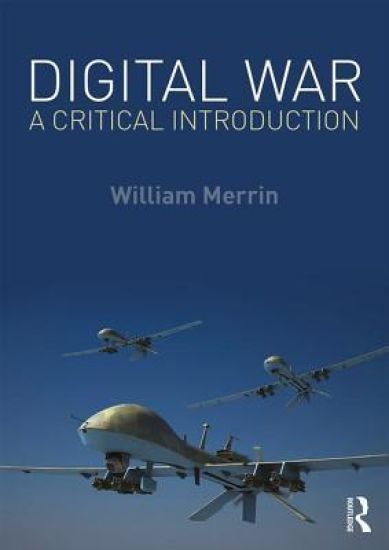
Digital War offers a comprehensive overview of the impact of digital technologies upon the military, the media, the global public and the concept of ‘warfare’ itself.This introductory textbook explores the range of uses of digital technology in contemporary warfare and conflict. The book begins with the 1991 Gulf War, which showcased post-Vietnam technological developments and established a new model of close military and media management. It explores how this model was reapplied in Kosovo (1999), Afghanistan (2001) and Iraq (2003), and how, with the Web 2.0 revolution, this informational control broke down. New digital technologies allowed anyone to be an informational producer leading to the emergence of a new mode of ‘participative war’, as seen in Gaza, Iraq and Syria. The book examines major political events of recent times, such as 9/11 and the War on Terror and its aftermath. It also considers how technological developments such as unmanned drones and cyberwar have impacted upon global conflict and explores emerging technologies such as soldier-systems, exo-skeletons, robotics and artificial intelligence and their possible future impact. This book will be of much interest to students of war and media, security studies, political communication, new media, diplomacy and IR in general.
Media Studies 2.0

Media Studies 2.0

William Merrin

Routledge
2014
sidottu
Media Studies 2.0 offers an exploration of the digital revolution and its consequences for media and communication studies, arguing that the new era requires an upgraded discipline: a media studies 2.0.The book traces the history of mass-media and computing, exploring their merger at the end of the twenty-century and the material, ecological, cultural and personal elements of this digital transformation. It considers the history of media and communication studies, arguing that the academic discipline was a product of the analogue, broadcast-era, emerging in the early twentieth century as a response to the success of newspapers, radio and cinema and reflecting that era back in its organisation, themes and concepts.Digitalisation, however, takes us beyond this analogue era (media studies 1.0) into a new, post-broadcast era. Merrin argues that the digital-era demands an upgraded academic discipline: one reflecting the real media life of its students and teaching the key skills needed by the twenty-first century user. Media 2.0 demand a media studies 2.0 This original and critical overview of contemporary developments within media studies is ideal for general students of media and communication, as well as those specifically studying new and digital media.
Media Studies 2.0

Media Studies 2.0

William Merrin

Routledge
2014
nidottu
Media Studies 2.0 offers an exploration of the digital revolution and its consequences for media and communication studies, arguing that the new era requires an upgraded discipline: a media studies 2.0.The book traces the history of mass-media and computing, exploring their merger at the end of the twenty-century and the material, ecological, cultural and personal elements of this digital transformation. It considers the history of media and communication studies, arguing that the academic discipline was a product of the analogue, broadcast-era, emerging in the early twentieth century as a response to the success of newspapers, radio and cinema and reflecting that era back in its organisation, themes and concepts.Digitalisation, however, takes us beyond this analogue era (media studies 1.0) into a new, post-broadcast era. Merrin argues that the digital-era demands an upgraded academic discipline: one reflecting the real media life of its students and teaching the key skills needed by the twenty-first century user. Media 2.0 demand a media studies 2.0 This original and critical overview of contemporary developments within media studies is ideal for general students of media and communication, as well as those specifically studying new and digital media.
Baudrillard and the Media

Baudrillard and the Media

William Merrin

Polity Press
2005
nidottu
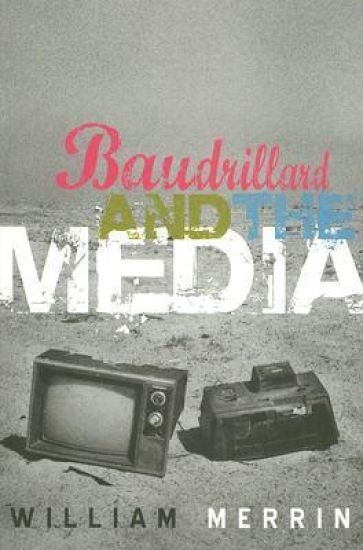
'Baudrillard and the Media' is the first in-depth critical study of Jean Baudrillard's media theory. Rejecting the common positioning of Baudrillard within the discipline as a postmodernist it argues instead for the necessity of a fuller reading of his ideas and critical project. Merrin offers an overview and evaluation of his key arguments and themes, focusing especially upon the organising principle of his work: his theory of symbolic exchange and critique of the semiotic and of simulation. Upon this basis the book also resituates Baudrillard within media theory, developing an original, critical re-reading of his relationship with McLuhanism and arguing for the significance instead of hitherto neglected influences such as Boorstin. Emphasizing his critical value and contemporary relevance, 'Baudrillard and the Media' also provides the most detailed exploration yet of Baudrillard's theory of the non-event, considering its applicability through case studies of his controversial analyses of the Gulf War, of 9/11 and the Afghan and Iraq Wars and of his own appearance in the film The Matrix. Considering also Baudrillard's discussion of cinema, his theory and personal practice of photography and his critique of new media, the book concludes with an evaluation of his place within media and communication studies and an argument for his importance for this field. Students and scholars of the media, and media theory in particular, will welcome this clear and comprehensive study.
Baudrillard and the Media

Baudrillard and the Media

William Merrin

Polity Press
2005
sidottu
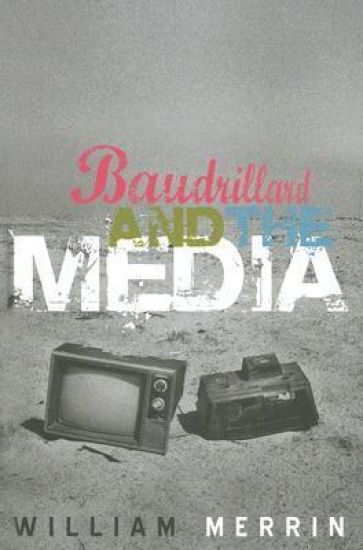
'Baudrillard and the Media' is the first in-depth critical study of Jean Baudrillard's media theory. Rejecting the common positioning of Baudrillard within the discipline as a postmodernist it argues instead for the necessity of a fuller reading of his ideas and critical project. Merrin offers an overview and evaluation of his key arguments and themes, focusing especially upon the organising principle of his work: his theory of symbolic exchange and critique of the semiotic and of simulation. Upon this basis the book also resituates Baudrillard within media theory, developing an original, critical re-reading of his relationship with McLuhanism and arguing for the significance instead of hitherto neglected influences such as Boorstin. Emphasizing his critical value and contemporary relevance, 'Baudrillard and the Media' also provides the most detailed exploration yet of Baudrillard's theory of the non-event, considering its applicability through case studies of his controversial analyses of the Gulf War, of 9/11 and the Afghan and Iraq Wars and of his own appearance in the film The Matrix. Considering also Baudrillard's discussion of cinema, his theory and personal practice of photography and his critique of new media, the book concludes with an evaluation of his place within media and communication studies and an argument for his importance for this field. Students and scholars of the media, and media theory in particular, will welcome this clear and comprehensive study.