Kirjojen hintavertailu. Mukana 12 152 606 kirjaa ja 12 kauppaa.

Kirjailija

William N. Goetzmann

Kirjat ja teokset yhdessä paikassa: 7 kirjaa, julkaisuja vuosilta 2006-2020, suosituimpien joukossa The West of the Imagination. Vertaile teosten hintoja ja tarkista saatavuus suomalaisista kirjakaupoista.

7 kirjaa

Kirjojen julkaisuhaarukka 2006-2020.

The West of the Imagination

The West of the Imagination

William H. Goetzmann; William N. Goetzmann

University of Oklahoma Press
2009
sidottu
For many people, ""western art"" immediately conjures images by Frederic Remington or Georgia O'Keeffe - but there's so much more. From early explorers' first sketches of the Rockies to the modern earth sculptures of Michael Heizer, images of the American West are as multifaceted as its cultures. This remarkable book embraces them all.A landmark overview of western American art, the original edition of The West of the Imagination brought the region to wide public attention as a companion to a popular PBS series of the same name. This book, significantly expanded and updated, shows that the West is a vibrant mirror of American cultural diversity. Through 450 illustrations - more than 300 in color - the authors trace the visual evolution of the myth of the American West, from unknown frontier to repository of American values, covering popular and high arts alike.An unrivaled survey, The West of the Imagination is an immensely informative and pleasurable volume for anyone with an interest in the region's creative legacy.

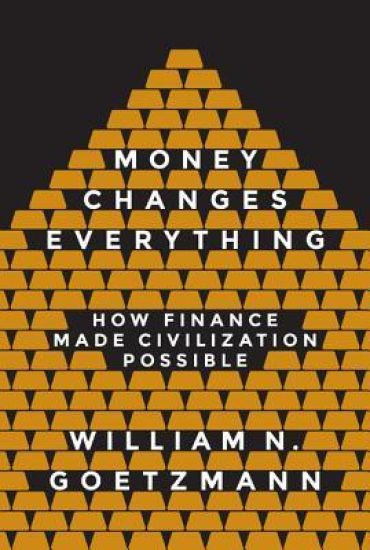
Money Changes Everything

Money Changes Everything

William N. Goetzmann

Princeton University Press
2017
pokkari
"[A] magnificent history of money and finance."--New York Times Book Review "Convincingly makes the case that finance is a change-maker of change-makers."--Financial Times In the aftermath of recent financial crises, it's easy to see finance as a wrecking ball: something that destroys fortunes and jobs, and undermines governments and banks. In Money Changes Everything, leading financial historian William Goetzmann argues the exact opposite--that the development of finance has made the growth of civilizations possible. Goetzmann explains that finance is a time machine, a technology that allows us to move value forward and backward through time; and that this innovation has changed the very way we think about and plan for the future. He shows how finance was present at key moments in history: driving the invention of writing in ancient Mesopotamia, spurring the classical civilizations of Greece and Rome to become great empires, determining the rise and fall of dynasties in imperial China, and underwriting the trade expeditions that led Europeans to the New World. He also demonstrates how the apparatus we associate with a modern economy--stock markets, lines of credit, complex financial products, and international trade--were repeatedly developed, forgotten, and reinvented over the course of human history. Exploring the critical role of finance over the millennia, and around the world, Goetzmann details how wondrous financial technologies and institutions--money, bonds, banks, corporations, and more--have helped urban centers to expand and cultures to flourish. And it's not done reshaping our lives, as Goetzmann considers the challenges we face in the future, such as how to use the power of finance to care for an aging and expanding population. Money Changes Everything presents a fascinating look into the way that finance has steered the course of history.
Modern Portfolio Theory and Investment Analysis

Modern Portfolio Theory and Investment Analysis

Edwin J. Elton; Martin J. Gruber; Stephen J. Brown; William N. Goetzmann

John Wiley Sons Inc
2017
nidottu
Modern Portfolio Theory and Investment Analysis, 9e examines the characteristics and analysis of individual securities, as well as the theory and practice of optimally combining securities into portfolios. It stresses the economic intuition behind the subject matter while presenting advanced concepts of investment analysis and portfolio management.The authors present material that captures the state of modern portfolio analysis, general equilibrium theory, and investment analysis in an accessible and intuitive manner.
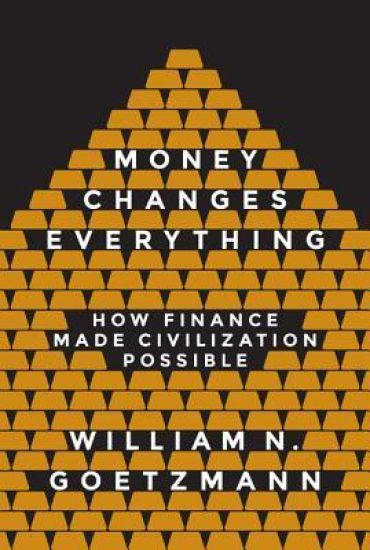
Money Changes Everything

Money Changes Everything

William N. Goetzmann

PRINCETON UNIVERSITY PRESS
2016
sidottu
"[A] magnificent history of money and finance."--New York Times Book Review "Convincingly makes the case that finance is a change-maker of change-makers."--Financial Times In the aftermath of recent financial crises, it's easy to see finance as a wrecking ball: something that destroys fortunes and jobs, and undermines governments and banks. In Money Changes Everything, leading financial historian William Goetzmann argues the exact opposite--that the development of finance has made the growth of civilizations possible. Goetzmann explains that finance is a time machine, a technology that allows us to move value forward and backward through time; and that this innovation has changed the very way we think about and plan for the future. He shows how finance was present at key moments in history: driving the invention of writing in ancient Mesopotamia, spurring the classical civilizations of Greece and Rome to become great empires, determining the rise and fall of dynasties in imperial China, and underwriting the trade expeditions that led Europeans to the New World. He also demonstrates how the apparatus we associate with a modern economy--stock markets, lines of credit, complex financial products, and international trade--were repeatedly developed, forgotten, and reinvented over the course of human history. Exploring the critical role of finance over the millennia, and around the world, Goetzmann details how wondrous financial technologies and institutions--money, bonds, banks, corporations, and more--have helped urban centers to expand and cultures to flourish. And it's not done reshaping our lives, as Goetzmann considers the challenges we face in the future, such as how to use the power of finance to care for an aging and expanding population. Money Changes Everything presents a fascinating look into the way that finance has steered the course of history.
The Efficient Market Theory and Evidence

The Efficient Market Theory and Evidence

Andrew Ang; William N. Goetzmann; Stephen M. Schaefer

now publishers Inc
2011
nidottu
The efficient market theory asserts that the price of a security reflects all available information about its fundamental value. A consequence of the theory is that it is impossible to consistently beat the market and speculation must be a loser's game. Hence, an indexing strategy is bound to eventually beat a strategy that uses active management; where active management is characterized as trading that seeks to exploit mispriced assets.The Efficient Market Theory and Evidence reviews the extensive theoretical and empirical literature on the efficient markets hypothesis (EMH). The authors base their review on the implications of the EMH for the practice of active investment management. Beginning with a brief discussion of current efficient market theory, the authors present the theoretical foundation and discuss the recent empirical evidence on efficiency as it pertains to a range of different markets - not simply the large, liquid public securities markets but also the private capital markets.The book suggests that while tests of the theory on prices have produced violations suggestive of the potential for active management to add value to a multi-asset portfolio, but finding consistent out-performing active managers is difficult. Since the most recent versions of the EMH emphasize the comparative advantages of specialized arbitrageurs due to better information, skill, lower trading costs, and better access to financing, the balance between indexation and active management is a choice that depends on beliefs about the existence and potential of manager skill, the pricing opportunities afforded within a given market, the time preferences and risk aversion of the investor.
The Equity Risk Premium

The Equity Risk Premium

William N. Goetzmann; Roger G. Ibbotson

Oxford University Press Inc
2006
sidottu
This book aims to create a strong understanding of the empirical basis for the equity risk premium. Through the research and anaylsis of two scholars who are experts in this field, this volume presents the key issues that are paramount to investors, including whether or not to use historical data as a method of equity investing, and can the equity premium reflect changes in fundamental values and cash flows of the market.