Kirjojen hintavertailu. Mukana 12 595 353 kirjaa ja 12 kauppaa.

Kirjailija

William P. Cross

Kirjat ja teokset yhdessä paikassa: 13 kirjaa, julkaisuja vuosilta 2000-2025, suosituimpien joukossa Fighting for Votes. Vertaile teosten hintoja ja tarkista saatavuus suomalaisista kirjakaupoista.

13 kirjaa

Kirjojen julkaisuhaarukka 2000-2025.

Fighting for Votes

Fighting for Votes

William P. Cross; Jonathan Malloy; Tamara A. Small; Laura B. Stephenson

University of British Columbia Press
2015
pokkari
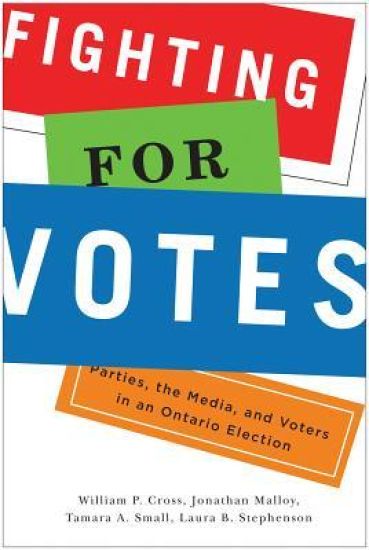
Elections are not just about who casts ballots – they reflect the citizens, parties, media, and history of an electorate. Fighting for Votes examines how these factors interacted during a recent Ontario election.The authors begin by examining the province's political culture and history. They then delve deeply into the campaign by exploring three lines of enquiry that help define representative democracy: How do parties position themselves to appeal to voters? How is information from and about parties transmitted to voters? And how do voters respond to the information around them?Looking at information from a wealth of sources – from political party websites and debate transcripts to Twitter feeds – they provide a sophisticated analysis of the interplay between voters and political parties in an era of new media. The most complete account of a provincial election available, Fighting for Votes illuminates the evolving electoral landscape.
Fighting for Votes

Fighting for Votes

William P. Cross; Jonathan Malloy; Tamara A. Small; Laura B. Stephenson

University of British Columbia Press
2015
sidottu
Elections are not just about who casts ballots – they reflect the citizens, parties, media, and history of an electorate. Fighting for Votes examines how these factors interacted during a recent Ontario election.The authors begin by examining the province's political culture and history. They then delve deeply into the campaign by exploring three lines of enquiry that help define representative democracy: How do parties position themselves to appeal to voters? How is information from and about parties transmitted to voters? And how do voters respond to the information around them?Looking at information from a wealth of sources – from political party websites and debate transcripts to Twitter feeds – they provide a sophisticated analysis of the interplay between voters and political parties in an era of new media. The most complete account of a provincial election available, Fighting for Votes illuminates the evolving electoral landscape.
The Political Party in Canada

The Political Party in Canada

William P. Cross; Scott Pruysers; Rob Currie-Wood

University of British Columbia Press
2025
pokkari
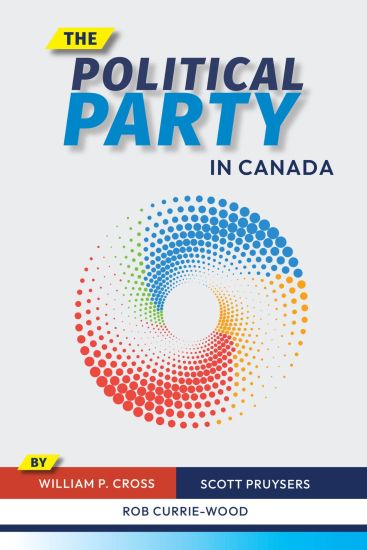
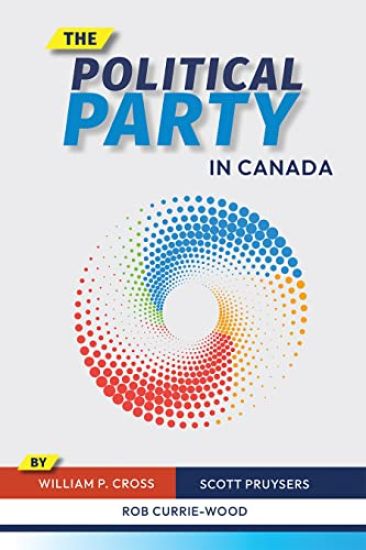
Political parties exist at the centre of democratic politics, but where does power lie within them, and how is it exercised? The Political Party in Canada explores the inner workings of these complex organizations through an examination of the composition and roles of key party actors (members and activists, candidates, local associations, donors, central officials, and members of Parliament), as well as the interactions between them. Contemporary parties play a key role in recruiting and selecting candidates and leaders, waging election campaigns, and organizing legislatures. Drawing on a rich trove of data from the 2015 and 2019 federal elections, this book offers a comprehensive examination of the composition, functions, activities, and power-sharing relationships that characterize Canadian parties. The authors focus not only on which groups are included in decision-making but also on what power and authority rest with each level of the parties' respective structures. Basing its astute investigation on the themes of complexity, representation, and personalization, The Political Party in Canada provides important insights into a fundamental institution that makes modern democracy possible.
The Political Party in Canada

The Political Party in Canada

William P. Cross; Scott Pruysers; Rob Currie-Wood

University of British Columbia Press
2022
sidottu
Political parties exist at the centre of democratic politics, but where does power lie within them, and how is it exercised? The Political Party in Canada explores the inner workings of these complex organizations through an examination of the composition and roles of key party actors (members and activists, candidates, local associations, donors, central officials, and members of Parliament), as well as the interactions between them. Contemporary parties play a key role in recruiting and selecting candidates and leaders, waging election campaigns, and organizing legislatures. Drawing on a rich trove of data from the 2015 and 2019 federal elections, this book offers a comprehensive examination of the composition, functions, activities, and power-sharing relationships that characterize Canadian parties. The authors focus not only on which groups are included in decision-making but also on what power and authority rest with each level of the parties' respective structures. Basing its astute investigation on the themes of complexity, representation, and personalization, The Political Party in Canada provides important insights into a fundamental institution that makes modern democracy possible.
Provincial Battles, National Prize?

Provincial Battles, National Prize?

Laura B. Stephenson; Andrea Lawlor; William P. Cross; André Blais

McGill-Queen's University Press
2019
sidottu
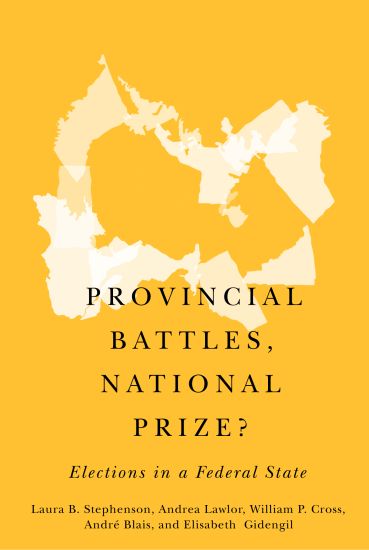
In parliamentary systems like Canada, voters directly contribute to the election outcome only in their own riding. However, the focus of election campaigns is often national, emphasizing the leader rather than the local candidate, and national rather than regional polls. This suggests that elections are national contests, but election outcomes clearly demonstrate that support for parties varies strongly by province. Focusing on the 2015 Canadian election campaigns in British Columbia, Ontario, and Quebec, three large provinces with different subnational party systems, Provincial Battles, National Prize? evaluates whether we should understand elections in Canada as national wars or individual provincial clashes. The authors draw upon voter and candidate surveys, party campaign behaviour, and media coverage of the election to document how political parties vary their messages and strategies across provinces, how the media communicate and frame those messages, and how voters ultimately respond. The study shows that provincial variations in party support reflect differences in voters' political preferences rather than differences in party messages or media coverage. A novel and comprehensive study, Provincial Battles, National Prize? is the first and only thorough treatment of the party, media, and voter aspects of a federal election campaign through a subnational lens.
Provincial Battles, National Prize?

Provincial Battles, National Prize?

Laura B. Stephenson; Andrea Lawlor; William P. Cross; André Blais

McGill-Queen's University Press
2019
nidottu
In parliamentary systems like Canada, voters directly contribute to the election outcome only in their own riding. However, the focus of election campaigns is often national, emphasizing the leader rather than the local candidate, and national rather than regional polls. This suggests that elections are national contests, but election outcomes clearly demonstrate that support for parties varies strongly by province. Focusing on the 2015 Canadian election campaigns in British Columbia, Ontario, and Quebec, three large provinces with different subnational party systems, Provincial Battles, National Prize? evaluates whether we should understand elections in Canada as national wars or individual provincial clashes. The authors draw upon voter and candidate surveys, party campaign behaviour, and media coverage of the election to document how political parties vary their messages and strategies across provinces, how the media communicate and frame those messages, and how voters ultimately respond. The study shows that provincial variations in party support reflect differences in voters' political preferences rather than differences in party messages or media coverage. A novel and comprehensive study, Provincial Battles, National Prize? is the first and only thorough treatment of the party, media, and voter aspects of a federal election campaign through a subnational lens.
The Promise and Challenge of Party Primary Elections

The Promise and Challenge of Party Primary Elections

William P. Cross; Ofer Kenig; Scott Pruysers; Gideon Rahat

McGill-Queen's University Press
2016
nidottu
While primary elections are most often associated with presidential candidates in the United States, similar methods for selecting party leaders and candidates are becoming increasingly common in parliamentary democracies around the world. The Promise and Challenge of Party Primary Elections introduces the first comprehensive examination of both the concept and the practice of primary elections outside of the United States. By offering a clear definition of primary elections and examples of their types, the authors deliver the tools needed for comparative analysis within and across diverse party systems. Focusing their attention on Canada and Israel - two early adopters of primary elections - the authors unveil the most pressing challenges of conducting internal elections, including questions of financing, monitoring and oversight, and the recruitment of new party members. At the same time, the book highlights the democratic benefits of primaries through direct and widespread participation in internal party decision making. Drawing upon the experience of parties with a long history of primary elections, The Promise and Challenge of Party Primary Elections offers valuable lessons and insights for parties around the world in search of more open and inclusive democratic practices.
The Promise and Challenge of Party Primary Elections

The Promise and Challenge of Party Primary Elections

William P. Cross; Ofer Kenig; Scott Pruysers; Gideon Rahat

McGill-Queen's University Press
2016
sidottu
While primary elections are most often associated with presidential candidates in the United States, similar methods for selecting party leaders and candidates are becoming increasingly common in parliamentary democracies around the world. The Promise and Challenge of Party Primary Elections introduces the first comprehensive examination of both the concept and the practice of primary elections outside of the United States. By offering a clear definition of primary elections and examples of their types, the authors deliver the tools needed for comparative analysis within and across diverse party systems. Focusing their attention on Canada and Israel - two early adopters of primary elections - the authors unveil the most pressing challenges of conducting internal elections, including questions of financing, monitoring and oversight, and the recruitment of new party members. At the same time, the book highlights the democratic benefits of primaries through direct and widespread participation in internal party decision making. Drawing upon the experience of parties with a long history of primary elections, The Promise and Challenge of Party Primary Elections offers valuable lessons and insights for parties around the world in search of more open and inclusive democratic practices.
Politics at the Centre

Politics at the Centre

William P. Cross; André Blais

Oxford University Press
2012
sidottu
Politics at the Centre is a comparative study of the rules, norms and behaviour surrounding political party leadership. The primary analysis includes 25 parties in Australia, Canada, Ireland, New Zealand, and the United Kingdom from 1965 onwards. The topics covered include methods of leadership selection and removal and the nature of leadership politics. The themes of the book include intra party democracy, with an emphasis on the relative roles of the parliamentary and extra parliamentary groups, and the causes of organizational reform within parties. Particular attention is paid to change over time and to differences among parties with explanations offered for both. Considerable attention is paid to the trend of expanding the leadership selectorate including consideration of why many parties are adopting this reform while others resist it. Data, collected from more than 200 leadership elections, are analyzed to consider issues such as the competitiveness of leadership contests, the types of individuals who win the contests and the longevity of leaders. The influence of different methods of selection and removal on these issues is also examined. Much of the analysis is based on in-country interviews conducted with active politicians, former and current party leaders, political journalists and officials of the extra parliamentary parties. Extensive use is also made of a comprehensive review of party documents related to leadership selection. Many real-life examples from all five countries are used to illustrate the central concepts and themes. A separate chapter considers the applicability of the findings from the Westminster systems to parties in other parliamentary and presidential systems. The concluding chapter makes a normative argument for a particular version of leadership selection and removal. Comparative Politics is a series for students, teachers, and researchers of political science that deals with contemporary government and politics. Global in scope, books in the series are characterised by a stress on comparative analysis and strong methodological rigour. The series is published in association with the European Consortium for Political Research. For more information visit: www.essex.ac.uk/ecpr. The Comparative Politics Series is edited by Professor David M. Farrell, School of Politics and International Relations, University College Dublin, Kenneth Carty, Professor of Political Science, University of British Columbia, and Professor Dirk Berg-Schlosser, Institute of Political Science, Philipps University, Marburg.
Political Parties

Political Parties

William P. Cross

University of British Columbia Press
2005
pokkari
Political parties are at the centre of Canadian democracy. Theychoose our prime ministers, premiers, and candidates for public office;they decide which policy issues are considered in the provincial andfederal legislatures; they dominate our election campaigns. As aresult, a democracy that is participatory, responsive, and inclusivecan only be achieved if Canadian political parties share these valuesand operate in a manner respecting them. In a concise and accessiblemanner, this book delves into the history, structure, mechanisms, androles of Canada's political parties, and assesses the degree towhich Canadians today can rely on political parties as vehicles forgrassroots participation. With an emphasis on Canada's federal parties, Cross examinesparty membership, candidate recruitment, leadership selection, policydevelopment, election campaigning, and party financing. Throughout, hemaintains a clear focus on how well Canadian parties are serving theCanadian people, and, in keeping with the aims of the DemocraticAudit, interrogates their performance in terms of participation,inclusiveness, and responsiveness. In addition, the book also draws onthe experiences of provincial parties to provide a comprehensiveportrait of party life in Canada. Where appropriate, comparisons aredrawn with parties in other Western democracies. A crucial and timely overview of political parties, this book willappeal to all those who seek a fuller understanding of the Canadianparty system. Those interested in how regular citizens participate inparty decision making will be particularly concerned with Cross'disturbing conclusion that our parties are falling short in terms ofbenchmarks set forth by the Canadian Democratic Audit.
Political Parties

Political Parties

William P. Cross

University of British Columbia Press
2004
sidottu
Political parties are at the centre of Canadian democracy. Theychoose our prime ministers, premiers, and candidates for public office;they decide which policy issues are considered in the provincial andfederal legislatures; they dominate our election campaigns. As aresult, a democracy that is participatory, responsive, and inclusivecan only be achieved if Canadian political parties share these valuesand operate in a manner respecting them. In a concise and accessiblemanner, this book delves into the history, structure, mechanisms, androles of Canada's political parties, and assesses the degree towhich Canadians today can rely on political parties as vehicles forgrassroots participation. With an emphasis on Canada's federal parties, Cross examinesparty membership, candidate recruitment, leadership selection, policydevelopment, election campaigning, and party financing. Throughout, hemaintains a clear focus on how well Canadian parties are serving theCanadian people, and, in keeping with the aims of the DemocraticAudit, interrogates their performance in terms of participation,inclusiveness, and responsiveness. In addition, the book also draws onthe experiences of provincial parties to provide a comprehensiveportrait of party life in Canada. Where appropriate, comparisons aredrawn with parties in other Western democracies. A crucial and timely overview of political parties, this book willappeal to all those who seek a fuller understanding of the Canadianparty system. Those interested in how regular citizens participate inparty decision making will be particularly concerned with Cross'disturbing conclusion that our parties are falling short in terms ofbenchmarks set forth by the Canadian Democratic Audit.
Rebuilding Canadian Party Politics

Rebuilding Canadian Party Politics

R. Kenneth Carty; William P. Cross; Lisa Young

University of British Columbia Press
2000
pokkari
Canadian party politics collapsed in the early 1990s. This book is about that collapse, about the end of a party system, with a unique pattern of party organization and competition, that had governed Canada's national politics for several decades, and about the ongoing struggle to build its successor. Rebuilding Canadian Party Politics discusses the breakdown of the old party system, the emergence of the Reform Party and the Bloc Québécois, and the fate of the Conservative and New Democratic Parties. It focuses on the internal workings of parties in this new era, examining the role of professionals, new technologies, and local activists.To understand the ambiguities of our current party system, the authors attended local and national party meetings, nomination and leadership meetings, and campaign kick-off rallies. They visited local campaign offices to observe the parties' grassroots operations and conducted interviews with senior party officials, pollsters, media and advertising specialists, and leader-tour directors.Written in a lively and accessible style, this book will interest students of party politics and Canadian political history, as well as general readers eager to make sense of the changes reshaping national politics today.
Rebuilding Canadian Party Politics

Rebuilding Canadian Party Politics

R. Kenneth Carty; William P. Cross; Lisa Young

University of British Columbia Press
2000
sidottu
Canadian party politics collapsed in the early 1990s. This book is about that collapse, about the end of a party system, with a unique pattern of party organization and competition, that had governed Canada's national politics for several decades, and about the ongoing struggle to build its successor. Rebuilding Canadian Party Politics discusses the breakdown of the old party system, the emergence of the Reform Party and the Bloc Québécois, and the fate of the Conservative and New Democratic Parties. It focuses on the internal workings of parties in this new era, examining the role of professionals, new technologies, and local activists.To understand the ambiguities of our current party system, the authors attended local and national party meetings, nomination and leadership meetings, and campaign kick-off rallies. They visited local campaign offices to observe the parties' grassroots operations and conducted interviews with senior party officials, pollsters, media and advertising specialists, and leader-tour directors.Written in a lively and accessible style, this book will interest students of party politics and Canadian political history, as well as general readers eager to make sense of the changes reshaping national politics today.