Kirjojen hintavertailu. Mukana 12 595 353 kirjaa ja 12 kauppaa.

Kirjailija

William Patrick

Kirjat ja teokset yhdessä paikassa: 5 kirjaa, julkaisuja vuosilta 2009-2020, suosituimpien joukossa The Next Pandemic. Vertaile teosten hintoja ja tarkista saatavuus suomalaisista kirjakaupoista.

5 kirjaa

Kirjojen julkaisuhaarukka 2009-2020.

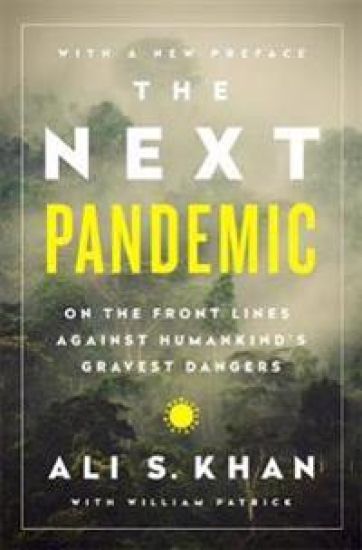
The Next Pandemic

The Next Pandemic

Ali S. Khan; William Patrick

PublicAffairs,U.S.
2020
pokkari
The Next Pandemic is a gripping book that confronts the most urgent question facing our species: when, where, and how will the next major outbreak arrive?Some of history's biggest killers have been infectious diseases: The Black Death killed around 20 million in the 14th century; Spanish Flu killed 50 million in 1918; the AIDS pandemic has killed almost 40 million since 1981. There is no guarantee that we can prevent another such disaster, but whenever a new scare emerges, Dr. Ali Khan is sent to try.This book is Dr. Khan's story of 25 years of containing these near misses, in his long career at the Center for Disease Control. During the 1995 Ebola outbreak in Zaire, Khan worked among Red Cross workers digging mass graves, rescuing struggling patients from near-abandoned hospitals and ultimately finding Patient Zero. In 2001, he traveled to Washington, DC, summoned by a midnight phone call, to prevent anthrax spores from spreading through the Senate Office building's ventilation system. In 2002, he was called to Hong Kong to quarantine victims of SARS, a contagious disease with no cure and no vaccine. In each of these stories, Khan reconstructs the chaos of those first moments on the ground, making life-and-death decisions on limited and conflicting information, with local, federal, and international authorities fighting to contain both the virus and the panic.Through these and other stories, Khan breaks down the sources of the next pandemic: mutation; spillover from other species; lab accidents; bioterrorism; and natural disasters. He shows that the danger of an outbreak is more real than ever in a world of climate change and global commerce, but that we need not only live in fear. His career is a testament to the power of good information, habits, and poise under pressure, as we work to fight whatever exotic contagion comes next.The Next Pandemic is a vivid and necessary book about rampant and violent diseases, and disasters narrowly averted; and the tools we have to keep them at bay.
The Next Pandemic

The Next Pandemic

Ali S. Khan; William Patrick

PublicAffairs,U.S.
2016
sidottu
An inside account of the fight to contain the world's deadliest diseases,and the panic and corruption that make them worseThroughout history, humankind's biggest killers have been infectious diseases: the Black Death, the Spanish Flu, and AIDS alone account for over one hundred million deaths. We ignore this reality most of the time, but when a new threat,Ebola, SARS, Zika,seems imminent, we send our best and bravest doctors to contain it. People like Dr. Ali S. Khan.In his long career as a public health first responder- protected by a thin mask from infected patients, napping under nets to keep out scorpions, making life-and-death decisions on limited, suspect information- Khan has found that rogue microbes will always be a problem, but outbreaks are often caused by people. We make mistakes, politicize emergencies, and, too often, fail to imagine the consequences of our actions. The Next Pandemic is a firsthand account of disasters like anthrax, bird flu, and others,and how we could do more to prevent their return. It is both a gripping story of our brushes with fate and an urgent lesson on how we can keep ourselves safe from the inevitable next pandemic.
Historical Sketches of Canterbury, N(ew) H(ampshire). a Sermon [On Job. VIII. 8, 9] at the Close of the Thirtieth Year of the Author's Ministry.
Title: Historical Sketches of Canterbury, N(ew) H(ampshire). A sermon on Job. viii. 8, 9] at the close of the thirtieth year of the Author's ministry.Publisher: British Library, Historical Print EditionsThe British Library is the national library of the United Kingdom. It is one of the world's largest research libraries holding over 150 million items in all known languages and formats: books, journals, newspapers, sound recordings, patents, maps, stamps, prints and much more. Its collections include around 14 million books, along with substantial additional collections of manuscripts and historical items dating back as far as 300 BC.The HISTORY OF COLONIAL NORTH AMERICA collection includes books from the British Library digitised by Microsoft. This collection refers to the European settlements in North America through independence, with emphasis on the history of the thirteen colonies of Britain. Attention is paid to the histories of Jamestown and the early colonial interactions with Native Americans. The contextual framework of this collection highlights 16th century English, Scottish, French, Spanish, and Dutch expansion. ++++The below data was compiled from various identification fields in the bibliographic record of this title. This data is provided as an additional tool in helping to insure edition identification: ++++ British Library Patrick, William; 1834. 8 . 10410.e.20.
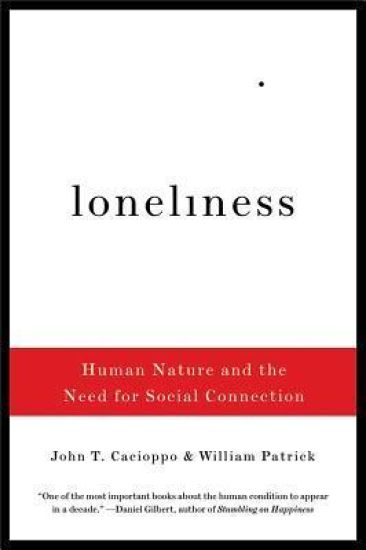
Loneliness

Loneliness

John T. Cacioppo; William Patrick

WW Norton Co
2009
nidottu
University of Chicago social neuroscientist John T. Cacioppo pioneered research on the startling effects of loneliness: a sense of isolation or social rejection disrupts not only our ability to think and will power but also our immune systems, and can be as damaging as obesity or smoking. On the flip side, social connection can be a powerful therapy. Cacioppo’s sophisticated studies relying on brain imaging, analysis of blood pressure, immune response, stress hormones, behavior, and even gene expression show that human beings are simply far more intertwined and interdependent—physiologically as well as psychologically—than our cultural assumptions have ever allowed us to acknowledge. Loneliness traces the evolution of these tandem forces, showing how, for our primitive ancestors, survival depended not on greater brawn but on greater commitments to each other. Serving as a prompt to repair frayed social bonds, the pain of loneliness engendered a fear response so powerfully disruptive that even now, millions of years later, a persistent sense of rejection or isolation can impair DNA transcription in our immune cells. This disruption also impairs our ability to read social signals and exercise social skills, as well as limits our ability to internally regulate our emotions—all of which can combine to trap us in self-defeating behaviors that reinforce the very isolation and rejection that we dread. Loneliness shows us how to overcome this feedback loop to achieve better health and greater happiness. As individuals and as a society, we have everything to gain, and everything to lose, in how well or how poorly we manage our need for social bonds.