
Kirjailija
William Peterson
Kirjat ja teokset yhdessä paikassa: 13 kirjaa, julkaisuja vuosilta 1978-2025, suosituimpien joukossa M. Fabi Quintiliani Institutionis Oratoriae. Vertaile teosten hintoja ja tarkista saatavuus suomalaisista kirjakaupoista.
13 kirjaa
Kirjojen julkaisuhaarukka 1978-2025.

International expositions or world’s fairs are the largest and most important stage on which millions routinely gather to directly experience, express, and respond to cultural difference. Rather than looking at Asian representation at the hands of colonizing powers, something already much examined, Asian Self-Representation at World’s Fairs instead focuses on expressions of an empowered Asian self-representation at world’s fairs in the West after the so-called golden age of the exhibition. New modes of representation became possible as the older exhibitionary order of earlier fairs gave way to a dominant performative order, one increasingly preoccupied with generating experience and affect. Using case studies of national representation at selected fairs over the hundred-year period from 1915-2015, this book considers both the politics of representation as well as what happens within the imaginative worlds of Asian country pavilions, where the performative has become the dominant mode for imprinting directly on human bodies.


International expositions or "world’s fairs" are the largest and most important stage on which millions routinely gather to directly experience, express, and respond to cultural difference. Rather than looking at Asian representation at the hands of colonizing powers, something already much examined, Asian Self-Representation at World’s Fairs instead focuses on expressions of an empowered Asian self-representation at world’s fairs in the West after the so-called golden age of the exhibition. New modes of representation became possible as the older "exhibitionary order" of earlier fairs gave way to a dominant "performative order," one increasingly preoccupied with generating experience and affect. Using case studies of national representation at selected fairs over the hundred-year period from 1915-2015, this book considers both the politics of representation as well as what happens within the imaginative worlds of Asian country pavilions, where the performative has become the dominant mode for imprinting directly on human bodies.
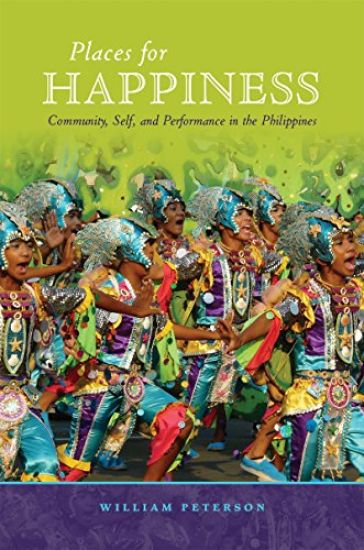
Places for Happiness explores two of the most important performance-based activities in the Philippines: the processions and Passion Plays associated with Easter and the mass-dance phenomenon known as “street dancing.” The scale of these handcrafted performances in terms of duration, time commitment, and productive labor marks the Philippines as one of the world’s most significant and undervalued performance-centered cultures. Drawing on a decade of fieldwork, William Peterson examines how people come together in the streets or on temporary stages, celebrating a shared sense of community and creating places for happiness.The first half of the book focuses on localized and often highly idiosyncratic versions of the Passion of Christ. Peterson considers not only what people do in these events, but what it feels like to participate. The book’s second half provides a window into the many expressions of “street dancing.” Street dancing is inflected by localized indigenous and folk dance traditions that are reinforced at school and practiced in conjunction with religious civic festivals. Peterson identifies key frames that shape and contain the individual in the Philippines, while tracking how the local expands its expressive home by engaging in a dialogue with regional, national, and diasporic Filipino imaginaries.Ultimately Places for Happiness explores how community-based performance responds to and fulfills basic human needs. Many Filipinos rely on family members and immediate neighbors for support and sustenance, and community-based performance assumes a unique and leading role in defining, reinforcing, and celebrating shared belief systems. By bringing forth the internal, phenomenological, and embodied aspects of a range of community-based practices contributing to human happiness, the book offers a cultural framework that interweaves the individual experience with that of the collective, plotting out what resides inside the body through the coordinates of culture.

Crystal Healing: Simple Guide To Understanding The Benefits Of Crystals
William Peterson
Createspace Independent Publishing Platform
2016
nidottu
Places for Happiness explores two of the most important performance-based activities in the Philippines: the processions and Passion Plays associated with Easter and the mass-dance phenomenon known as ""street dancing."" The scale of these hand-crafted performances in terms of duration, time commitment, and productive labor marks the Philippines as one of the world's most significant and undervalued performance-centered cultures. Drawing on a decade of fieldwork, William Peterson examines how people come together in the streets or on temporary stages, celebrating a shared sense of community and creating places for happiness.The first half of the book focuses on localized and often highly idiosyncratic versions of the Passion of Christ. Peterson considers not only what people do in these events, but what it feels like to participate. The book's second half provides a window into the many expressions of ""street dancing."" Street dancing is inflected by localized indigenous and folk dance traditions that are reinforced at school and practiced in conjunction with religious civic festivals. Peterson identifies key frames that shape and contain the individual in the Philippines, while tracking how the local expands its expressive home by engaging in a dialogue with regional, national, and diasporic Filipino imaginaries.Ultimately Places for Happiness explores how community-based performance responds to and fulfills basic human needs. Many Filipinos rely on family members and immediate neighbors for support and sustenance, and community-based performance assumes a unique and leading role in defining, reinforcing, and celebrating shared belief systems. By bringing forth the internal, phenomenological, and embodied aspects of a range of community-based practices contributing to human happiness, the book offers a cultural framework that interweaves the individual experience with that of the collective, plotting out what resides inside the body through the coordinates of culture.
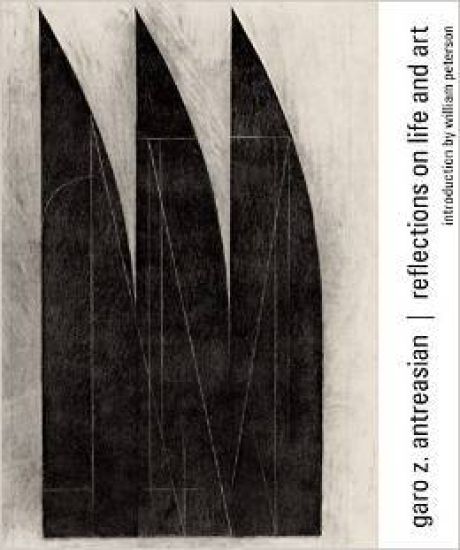
Garo Z. Antreasian (b. 1922) belongs to the great generation of innovators in mid-twentieth-century American art. While influenced by a variety of European artists in his early years, it was his involvement with Tamarind Lithography Workshop starting in 1960 that transformed his work. As Tamarind’s founding technical director, he revolutionized the medium of lithography. He discovered how to manipulate the spontaneous possibilities of lithography in the manner of the Abstract Expressionist painters. In addition to reflecting on his work, he writes movingly about his Armenian heritage and its importance in his art, his teaching, and his love affair with all sorts of artistic media. Illustrating his drawings, paintings, and prints, this book reveals Antreasian as a major American artist.This book was made possible in part by generous contributions from the Frederick Hammersley Foundation and Gerald Peters Gallery.

Bitcoin Goes Kaboom!: Caveat Emptor - Let the Buyer Beware
William Peterson
Createspace Independent Publishing Platform
2013
nidottu