Kirjojen hintavertailu. Mukana 12 390 323 kirjaa ja 12 kauppaa.

Kirjailija

William R. Clark

Kirjat ja teokset yhdessä paikassa: 17 kirjaa, julkaisuja vuosilta 1991-2025, suosituimpien joukossa A History of the Christian Councils. Vertaile teosten hintoja ja tarkista saatavuus suomalaisista kirjakaupoista.

Mukana myös kirjoitusasut: William R Clark

17 kirjaa

Kirjojen julkaisuhaarukka 1991-2025.

A History Of The Councils Of The Church

A History Of The Councils Of The Church

Karl Joseph Von Hefele; William R Clark

Alpha Edition
2021
pokkari
This book has been considered by academicians and scholars of great significance and value to literature. This forms a part of the knowledge base for future generations. So that the book is never forgotten we have represented this book in a print format as the same form as it was originally first published. Hence any marks or annotations seen are left intentionally to preserve its true nature.
Bracing for Armageddon?

Bracing for Armageddon?

William R Clark

Oxford University Press Inc
2008
sidottu
Since September 11th, the threat of a bioterrorist attack-massive, lethal, and unpreventable-has hung in the air over America. Bracing for Armageddon? offers a vividly written primer for the general reader, shedding light on the science behind potential bioterrorist attacks and revealing what could happen, what is likely to happen, and what almost certainly will not happen. The story opens with a riveting account of a bioterrorism scenario commissioned by the U.S. government. Using this doomsday tableau as a springboard, Clark reviews a host of bioterrorist threats (from agroterrorism to a poisoning of the water supply) and examines not only the worst-case menace of genetically engineered pathogens, but also the lethal agents on the CDC's official bioterrorism list, including Smallpox, Anthrax, Plague, Botulism, and Ebola. His overview of attempted bioterrorist attacks to date-such as the failed Aum Shinrikyo attempts in 1995 in Japan and the Anthrax attack in the US following 9/11-bolstered by interviews with a range of experts-shows why virtually all of these attempts have failed. Indeed, he demonstrates that a successful bioterrorism attack is exceedingly unlikely, while a major flu epidemic (such as the deadly epidemic of 1918 that killed millions worldwide) is a virtual certainty. Given the long odds of a bioterrorist attack, Clark asks, has the more than $40 billion the United States has dedicated to the defense against bioterrorism really been well spent? Is it time to move on to other priorities? In contrast to the alarmist fears stoked by the popular media, William Clark here provides a reassuring overview of what we really need to worry about-and what we don't.
In Defense of Self

In Defense of Self

William R. Clark

Oxford University Press Inc
2008
sidottu
We live in a sea of seething microbial predators, an infinity of invisible and invasive microorganisms capable of setting set up shop inside us and sending us to an early grave. The only thing keeping them out? The immune system. William Clark's In Defense of Self offers a refreshingly accessible tour of the immune system, putting in layman's terms essential information that has been for too long the exclusive province of trained specialists. Clark explains how the immune system works by using powerful genetic, chemical, and cellular weapons to protect us from the vast majority of disease-causing microbes-bacteria, viruses, molds, and parasites. Only those microbes our bodies need to help us digest food and process vitamins are admitted. But this same system can endanger us by rejecting potentially life-saving organ transplants, or by overreacting and turning too much force against foreign invaders, causing serious--occasionally lethal--collateral damage to our tissues and organs. Worse yet, our immune systems may react as if we ourselves are foreign and begin snipping away at otherwise healthy tissues, resulting in autoimmune disease. In Defense of Self covers everything from how antibodies work and the strategies the body uses to distinguish self from not self to the nature of immunological memory, the latest approaches to vaccination, and how the immune system will react should we ever be subjected to a bioterrorist attack. Clark also offers important insights on the vital role that the immune system plays in cancer, AIDS, autoimmunity, rheumatoid arthritis, allergies and asthma, and other diseases. Of special interest to all those suffering from diseases related to the immune system, as well as their families, In Defense of Self lucidly explains a system none of us could live without.
In Defense of Self

In Defense of Self

William R. Clark

Oxford University Press Inc
2008
nidottu
Our immune system is the only thing standing between us and a sea of microbial predators that could send us to an early and ugly death. Equipped with genetic, chemical and cellular weapons, it evicts unwelcome microrganisms that find the human body a delightful place to live, carefully admitting only the few microbes that our bodies need to help us digest food and process vitamins. When the system works successfully, the vast majority of disease-causing microbes - bacteria, viruses, molds and a few parasites - are kept at bay. But the immune system isn't perfect. The same system that could save us in the event of a bioterrorist attack, prevents us from accepting potentially life-saving organ transplants. It overreacts at times, turning too much force against foreign invaders, causing serious - occasionally lethal - collateral damage to our tissues and organs. Worse yet, our immune systems may decide we ourselves are foreign and begin snipping away at otherwise healthy tissues, resulting in autoimmune disease. And the system itself is the target of one of the most deadly viruses humans have ever known: HIV, the agent of AIDS. In In Defense of Self, William Clark invites you on a whirlwind tour of your immune system. Along the way, he introduces some of most important medical advances and challenges of the past hundred years, from the development of vaccines and the treatment of allergies, autoimmunity and cancer, to prolonging organ transplants and combating AIDS. William Clark not only explains how a vital part of our bodies works to "serve and protect," he also provides background for the exciting research themes of today that will produce the medical breakthroughs of tomorrow.
Killer Lymphocytes

Killer Lymphocytes

Gideon Berke; William R. Clark

Springer-Verlag New York Inc.
2007
nidottu
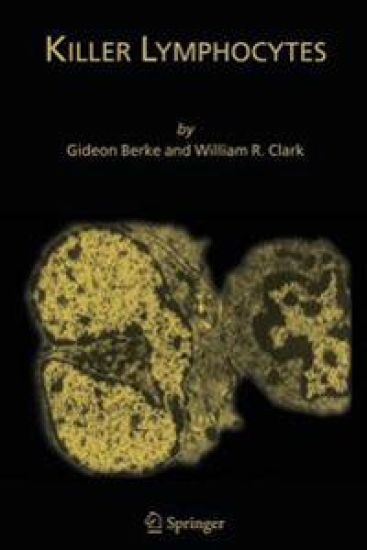
The existence of a unique kind of immune cell – the killer lymphocyt- which destroys other cells in a highly specific manner, has fascinated immunologists for almost half a century. How do these cells, whose precursors have lived in communal harmony with their host, decide that some of their cohabitants must die? And how do they kill them? The definition of killer lymphocytes came from discovery of their roles in a wide range of in vivo phenomena such as transplant rejection, virus infection and its related immunopathologies, and anti-tumor responses. Yet for the most part almost everything we know about these cells has come from studying them in vitro. They have yielded their secrets slowly and reluctantly. To understand fully how they work, geneticists and immunologists had to unravel the major histocompatibility systems of vertebrates, a long and torturous road that provided some of the darkest hours of immunology. The search for antigen-sensing receptors on both T cells and NK cells was scarcely less frustrating. And the holy grail of ce- mediated cytotoxicity – defining the mechanism by which killer cells take down their adversaries – sorely tested the ingenuity, patience and mutual good will of laboratories around the world. These questions have now largely been answered. But do we really understand these cells? We can tame them to a large degree in transplant rejection. It may yet turn out that we can harness their immunotherapeutic potential in treating viral and malignant disease.
Killer Lymphocytes

Killer Lymphocytes

Gideon Berke; William R. Clark

Springer-Verlag New York Inc.
2005
sidottu
The existence of a unique kind of immune cell – the killer lymphocyt- which destroys other cells in a highly specific manner, has fascinated immunologists for almost half a century. How do these cells, whose precursors have lived in communal harmony with their host, decide that some of their cohabitants must die? And how do they kill them? The definition of killer lymphocytes came from discovery of their roles in a wide range of in vivo phenomena such as transplant rejection, virus infection and its related immunopathologies, and anti-tumor responses. Yet for the most part almost everything we know about these cells has come from studying them in vitro. They have yielded their secrets slowly and reluctantly. To understand fully how they work, geneticists and immunologists had to unravel the major histocompatibility systems of vertebrates, a long and torturous road that provided some of the darkest hours of immunology. The search for antigen-sensing receptors on both T cells and NK cells was scarcely less frustrating. And the holy grail of ce- mediated cytotoxicity – defining the mechanism by which killer cells take down their adversaries – sorely tested the ingenuity, patience and mutual good will of laboratories around the world. These questions have now largely been answered. But do we really understand these cells? We can tame them to a large degree in transplant rejection. It may yet turn out that we can harness their immunotherapeutic potential in treating viral and malignant disease.
Are We Hardwired?

Are We Hardwired?

William R. Clark; Michael Grunstein

Oxford University Press Inc
2004
nidottu
Addressing one of the most controversial topics in human biology, the role of genes in governing behaviour, this book is sure to generate widespread interest. Clark and Grunstein are excellent guides to the current scientific understanding, explaining the genetic and molecular basis of human behaviour within the broader context of animal behaviour generally. They develop the subject clearly, building up from the classic twin studies in humans, and from the most basic behaviours such as chemotaxis in paramecia, to corresponding tropisms and memory in roundworms, and memory and learning in fruit flies, then to complex behaviours of mice and humans. They cover all of the politically sensitive issues of behaviour genetics as applied to humans - susceptibilities to disease, eating disorders, aggression, addiction and compulsive behaviours, intelligence, sexual orientation - clearly, and with impeccable balance. The authors show why they feel that substantial parts of our personalities and identities are established by our exact genetic complements, without reducing us to powerless creations our genes. Behaviour is treated as a complex interaction of nature and nurture - to understand ourselves fully, neither can be dismissed out of hand. Clark brings a fine balance and graceful touch to his most ambitious popular book yet.
At War Within

At War Within

William R. Clark

Oxford University Press Inc
1997
nidottu
William Clark's At War Within takes us on a fascinating tour through the immune system, examining the history of its discovery, the ways in which it protects us, and how it may bring its full force to bear at the wrong time or in the wrong place. Scientists have only gradually come to realize that this elegant defence system not only has the potential to help, as in the case of smallpox, but also the potential to do profound harm in health problems ranging from allergies to AIDS, and from organ transplants to cancer. Dr Clark discusses the myriad of medical problems involving the immune system, and systematically explains each one, making the complexities of this delicately balanced mechanism comprehensible to the lay reader.
At War Within

At War Within

William R. Clark

Oxford University Press Inc
1996
sidottu
Examines the interplay between the body's immune and nervous systems, discusses what happens when the immune system is overzealous and attacks healthy cells, and explores recent developments for stimulating a weakened immune system
The Experimental Foundations of Modern Immunology

The Experimental Foundations of Modern Immunology

William R. Clark

John Wiley Sons Inc
1991
nidottu
Adheres to the principle that immunology is best taught by examining those key experiments that have led to our present understanding of how the immune system works--not by simply lumbering students with a compendium of facts. Wherever possible, the book describes the original experiments and resulting data, ranging from classical experiments of the late 19th century to the very latest advances in molecular immunology. In addition, a final section discusses recent advances in immunology as they apply to human disease. The first text on immunology to use this experimental approach, it has been much-copied but remains the most comprehensive text of its type in the field and is suitable for courses at any undergraduate level.