Kirjojen hintavertailu. Mukana 12 595 353 kirjaa ja 12 kauppaa.

Kirjailija

William R. Newman

Kirjat ja teokset yhdessä paikassa: 6 kirjaa, julkaisuja vuosilta 1994-2006, suosituimpien joukossa Alchemy Tried in the Fire. Vertaile teosten hintoja ja tarkista saatavuus suomalaisista kirjakaupoista.

6 kirjaa

Kirjojen julkaisuhaarukka 1994-2006.

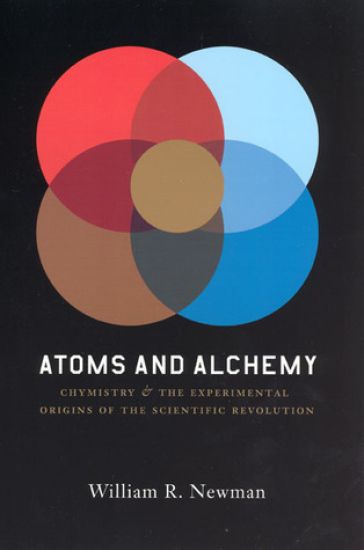
Atoms and Alchemy

Atoms and Alchemy

William R. Newman

University of Chicago Press
2006
nidottu
Since the Enlightenment, alchemy has been viewed as a sort of antiscience, disparaged by many historians as a form of lunacy that impeded the development of rational chemistry. But, in "Atoms and Alchemy", William R. Newman - a historian widely credited for reviving recent interest in alchemy - exposes the speciousness of these views and challenges widely held beliefs about the origins of the Scientific Revolution. Tracing the alchemical roots of Robert Boyle's famous mechanical philosophy, Newman shows that alchemy contributed to the mechanization of nature, a movement that lay at the very heart of scientific discovery. Boyle and his predecessors - figures like the mysterious medieval Geber or the Lutheran professor Daniel Sennert - provided convincing experimental proof that matter is made up of enduring particles at the microlevel. At the same time, Newman argues that alchemists created the operational criterion of an "atomic" element as the last point of analysis, thereby contributing a key feature to the development of later chemistry. "Atoms and Alchemy" thus provokes a refreshing debate about the origins of modern science and will be welcomed - and deliberated - by all who are interested in the development of scientific theory and practice.
Atoms and Alchemy

Atoms and Alchemy

William R. Newman

University of Chicago Press
2006
sidottu
Since the Enlightenment, alchemy has been viewed as a sort of antiscience, disparaged by many historians as a form of lunacy that impeded the development of rational chemistry. But, in "Atoms and Alchemy", William R. Newman - a historian widely credited for reviving recent interest in alchemy - exposes the speciousness of these views and challenges widely held beliefs about the origins of the Scientific Revolution. Tracing the alchemical roots of Robert Boyle's famous mechanical philosophy, Newman shows that alchemy contributed to the mechanization of nature, a movement that lay at the very heart of scientific discovery. Boyle and his predecessors - figures like the mysterious medieval Geber or the Lutheran professor Daniel Sennert - provided convincing experimental proof that matter is made up of enduring particles at the microlevel. At the same time, Newman argues that alchemists created the operational criterion of an "atomic" element as the last point of analysis, thereby contributing a key feature to the development of later chemistry. "Atoms and Alchemy" thus provokes a refreshing debate about the origins of modern science and will be welcomed - and deliberated - by all who are interested in the development of scientific theory and practice.
Promethean Ambitions

Promethean Ambitions

William R. Newman

University of Chicago Press
2005
nidottu
"In Promethean Ambitions", William R. Newman uses alchemy as a means to discuss the thinning boundary between the natural and the artificial. Focusing primarily on the period between 1200 and 1700, Newman examines the labors of pioneering alchemists and the impassioned - and often negative - responses to their efforts. Newman also shows that alchemy was not an unformed and capricious precursor to chemistry; it was an art founded on coherent philosophical and empirical principles - with vocal supporters and even louder critics - that attracted individuals of first-rate intellect. The historical relationship that he charts here between human creation and nature has innumerable implications today. "Promethean Ambitions" ably imbues a millennium-old scientific and ethical debate with modern relevance.
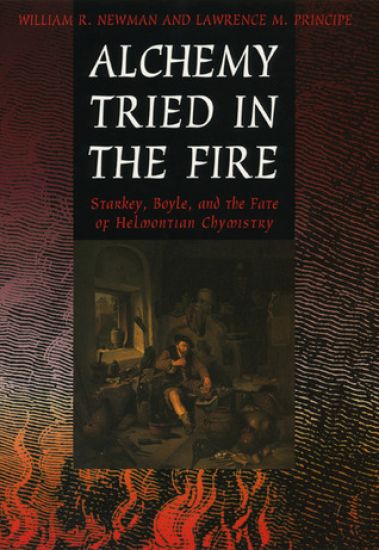
Alchemy Tried in the Fire

Alchemy Tried in the Fire

William R. Newman; Lawrence M. Principe

University of Chicago Press
2005
nidottu
Using the previously misunderstood interactions between Robert Boyle, widely known as "the father of chemistry," and George Starkey, an alchemist and the most prominent American scientific writer before Benjamin Franklin, as their guide, William R. Newman and Lawrence M. Principle reveal the hitherto hidden operations of Starkey's laboratory and argue that many of the principles and practices characteristic of modern chemistry derive from alchemy. By analyzing Starkey's extraordinary laboratory notebooks, the authors show how this American "chymist" translated the wildly figurative writings of traditional alchemy into quantitative, carefully reasoned laboratory practice - and then encoded his own work in allegorical, secretive treatises under the name of Eirenaeus Philalethes. A common emphasis on quantification, material production, and analysis/synthesis, the authors argue, illustrates a continuity of goals and practices from late medieval alchemy down to and beyond the Chemical Revolution.
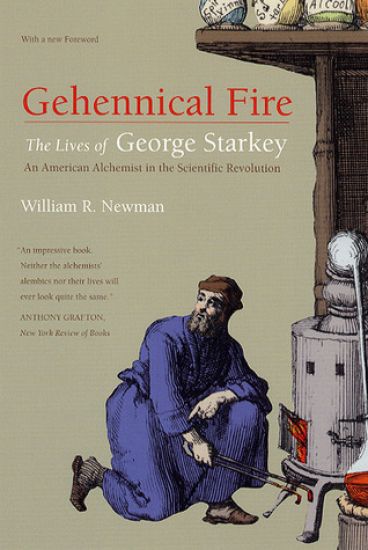
Gehennical Fire

Gehennical Fire

William R. Newman

University of Chicago Press
2003
nidottu
Both the quest for natural knowledge and the aspiration to alchemical wisdom played crucial roles in the Scientific Revolution, as William R. Newman demonstrates in this fascinating book about George Starkey (1628-1665), America's first famous scientist. Beginning with Starkey's unusual education in colonial New England, Newman traces out his many interconnected careers - natural philosopher, alchemist, chemist, medical practitioner, economic projector, and creator of the fabulous adept, "Eirenaeus Philalethes." Newman reveals the profound impact Starkey had on the work of Isaac Newton, Robert Boyle, Samuel Hartlib, and other key thinkers in the realm of early modern science.
Gehennical Fire

Gehennical Fire

William R. Newman

Harvard University Press
1994
sidottu
Reputed to have performed miraculous feats in New England—restoring the hair and teeth to an aged lady, bringing a withered peach tree to fruit—Eirenaeus Philalethes was also rumored to be an adept possessor of the alchemical philosophers’ stone. That the man was merely a mythical creation didn’t diminish his reputation a whit—his writings were spectacularly successful, read by Leibniz, esteemed by Newton and Boyle, voraciously consumed by countless readers. Gehennical Fire is the story of the man behind the myth, George Starkey.Though virtually unknown today and little noted in history, Starkey was America’s most widely read and celebrated scientist before Benjamin Franklin. Born in Bermuda, he received his A.B. from Harvard in 1646 and four years later emigrated to London, where he quickly gained prominence as a “chymist.” Thanks in large part to the scholarly detective work of William Newman, we now know that this is only a small part of an extraordinary story, that in fact George Starkey led two lives. Not content simply to publish his alchemical works under the name Eirenaeus Philalethes, “A Peaceful Lover of Truth,” Starkey spread elaborate tales about his alter ego, in effect giving him a life of his own.