Kirjojen hintavertailu. Mukana 12 595 353 kirjaa ja 12 kauppaa.

Kirjailija

William R. Thompson

Kirjat ja teokset yhdessä paikassa: 36 kirjaa, julkaisuja vuosilta 1988-2026, suosituimpien joukossa The Geography of Power. Vertaile teosten hintoja ja tarkista saatavuus suomalaisista kirjakaupoista.

36 kirjaa

Kirjojen julkaisuhaarukka 1988-2026.

The Geography of Power

The Geography of Power

William R. Thompson; Leila Zakhirova

Cambridge University Press
2026
pokkari
Why are most contemporary autocracies concentrated between Siberia and Central Africa while other regions remain largely democratic? This book uncovers the deep historical forces behind that divide, tracing how geography-particularly the vast steppe grasslands-and political-economic conflicts between nomadic and sedentary societies shaped enduring patterns of power. These structured conflicts reinforced authoritarian persistence across half the globe, creating a binary world with starkly different opportunities and threats. The result is a long-standing geopolitical fault line that continues to shape global politics today, exemplified by the autocratic axis of China, Russia, Iran, and North Korea. Combining insights from geography, history, and political economy, this book offers a compelling explanation of why authoritarianism thrives -and why democracy prevails elsewhere.
The Geography of Power

The Geography of Power

William R. Thompson; Leila Zakhirova

Cambridge University Press
2026
sidottu
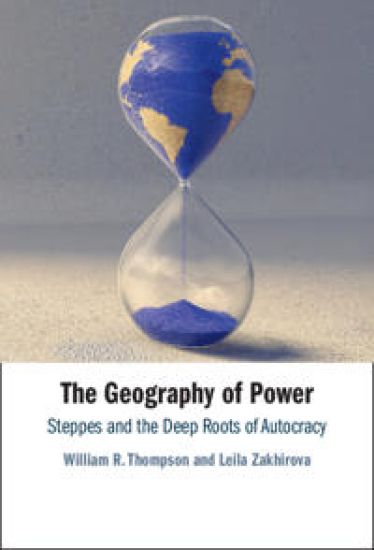
Why are most contemporary autocracies concentrated between Siberia and Central Africa while other regions remain largely democratic? This book uncovers the deep historical forces behind that divide, tracing how geography-particularly the vast steppe grasslands-and political-economic conflicts between nomadic and sedentary societies shaped enduring patterns of power. These structured conflicts reinforced authoritarian persistence across half the globe, creating a binary world with starkly different opportunities and threats. The result is a long-standing geopolitical fault line that continues to shape global politics today, exemplified by the autocratic axis of China, Russia, Iran, and North Korea. Combining insights from geography, history, and political economy, this book offers a compelling explanation of why authoritarianism thrives -and why democracy prevails elsewhere.
Why Regional Orders Do Not Transform

Why Regional Orders Do Not Transform

Imad Mansour; William R. Thompson

BLOOMSBURY PUBLISHING PLC
2026
sidottu
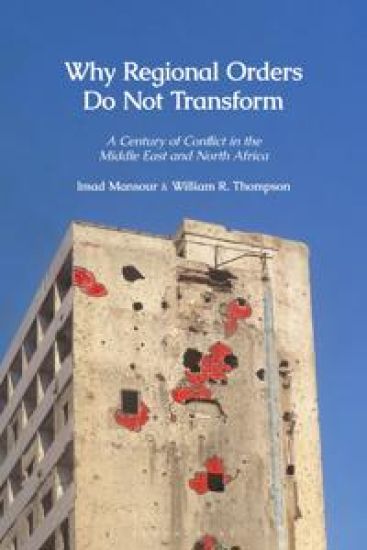
MENA regional order has changed over the last century. However, there has been little structural transformation so existing rules and systems have not been altered. This book examines why despite so much change in the MENA - in the form of wars, economic decline and revival as well as massive societal uprisings - the regional order has not really moved beyond a conflict zone classification. Covering one hundred years from 1922 (the date of the partition of the Ottoman Empire) to 2022, the authors forward an analytical framework and suggest three phases in the regional order and what factors might move the MENA into another categorical order. The analysis offers important theoretical contributions on how dynamism and stasis in regional orders interact and the book offers a new understanding of the concepts of 'rivalry field' and 'conflict axis'.
Piecing Together the Peaces

Piecing Together the Peaces

Alexander K. Antony; William R. Thompson

OXFORD UNIVERSITY PRESS INC
2024
sidottu
Many debates in interstate conflict and peace research address an important yet complex question: how, and to what degree, are the behavior of states and their relationships among one another fundamentally changing? The period after 1945 has seen a significant decline in the degree and intensity of warfare among states. While civil wars remain common, numerous scholars argue that a "long peace" has taken hold in which militarized interstate violence has become less common. Some argue that war has become obsolete as cultural attitudes toward war have changed, while others emphasize cognitive shifts that have reduced overall levels of human violence. Others favor material factors that have altered the historical net benefit of warfare among states. In Piecing Together the Peaces, Alexander K. Antony and William R. Thompson provide a novel explanation for how peace took hold in the international system and why state behavior drastically changed. According to the standard line of reasoning, states need only democratize, liberalize their trade, modernize their economic culture, or choose to forego territorial pursuits to reach peace with another state. As Antony and Thompson argue, most, if not all, of the processes put forward as causes of modern peace are highly intertwined with the macro-process of industrialization. Marshaling a long-view perspective, they show how the introduction of mechanization into production significantly altered nearly all aspects of economic and social life, including the costs and benefits of warfare. Rather than outlining a universal pathway through which states can arrive at peace, Antony and Thompson make the case that industrialization provides the starting point from which we can begin to unpack the transformation in conflict propensities among certain states. A bold challenge to the conventional wisdom that dominates interstate peace research, Piecing Together the Peaces shows that industrialization serves as the foundation for all other factors and processes fueling interstate peace.
Regions, Power, and Conflict

Regions, Power, and Conflict

William R. Thompson; Thomas J. Volgy; Paul Bezerra; Jacob Cramer; Kelly Marie Gordell; Manjeet Pardesi; Karen Rasler; J. Patrick Rhamey Jr.; Kentaro Sakuwa; Rachel Van Nostrand; Leila Zakhirova

SPRINGER VERLAG, SINGAPORE
2023
nidottu
The three main levels of analysis in international relations have been the systemic, the national, and the individual. A fourth level that falls between the systemic and the national is the region. It is woefully underdeveloped in comparison to the attention afforded the other three. Yet regions tend to be distinctive theaters for international politics. Otherwise, we would not recognize that Middle Eastern interstate politics somehow does not resemble Latin American interstate politics or interstate politics in Southern Africa (although once the Middle East and Southern Africa may have seemed more similar in their mutual fixation with opposition to domestic policies in Israel and South Africa, respectively). This book, divided into three parts, first makes a case for studying regional politics even though it must also be appreciated that regional boundaries are also hazy and not always easy to pin down empirically. The second part examines power distributions within regions as an important entry point to studying regional similarities and differences. Two emphases are stressed. One is that regional power assessments need to be conditioned by controlling for weak states which are more common in some regions than they are in others. The other emphasis is on regional power hierarchies. Some regions have strong regional hierarchies while others do not. Regions with strong hierarchies operate much differently from those without them in the sense that the former are more pacific than the latter. The third part of the book focuses on regional differences in terms of conflict behavior, order preferences, rivalries, and rivalry termination.
The Sino-Indian Rivalry

The Sino-Indian Rivalry

Šumit Ganguly; Manjeet S. Pardesi; William R. Thompson

Cambridge University Press
2023
sidottu
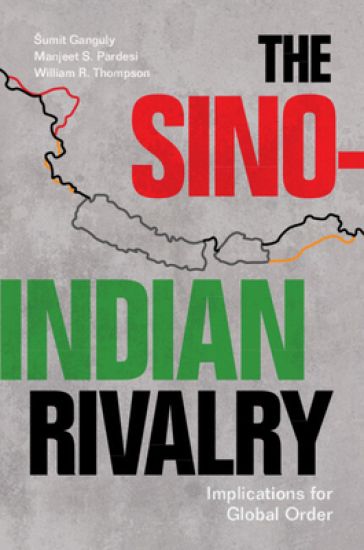
Drawing on a wide body of literature on international rivalries, this comprehensive and theoretically grounded work explains the origins and evolution of the Sino-Indian rivalry. Contrary to popular belief, the authors argue that the Sino-Indian rivalry started almost immediately after the emergence of the two countries in the global arena. They demonstrate how the rivalry has systemic implications for both Asia and the global order, intertwining the positional and spatial dimensions that lie at the heart of the Sino-Indian relationship. Showing how this rivalry has evolved from the late 1940s to the present day, the essays in this collection underscore its significance for global politics and highlight how the asymmetries between India and China have the potential to escalate conflict in the future.
The Sino-Indian Rivalry

The Sino-Indian Rivalry

Šumit Ganguly; Manjeet S. Pardesi; William R. Thompson

Cambridge University Press
2023
pokkari
Drawing on a wide body of literature on international rivalries, this comprehensive and theoretically grounded work explains the origins and evolution of the Sino-Indian rivalry. Contrary to popular belief, the authors argue that the Sino-Indian rivalry started almost immediately after the emergence of the two countries in the global arena. They demonstrate how the rivalry has systemic implications for both Asia and the global order, intertwining the positional and spatial dimensions that lie at the heart of the Sino-Indian relationship. Showing how this rivalry has evolved from the late 1940s to the present day, the essays in this collection underscore its significance for global politics and highlight how the asymmetries between India and China have the potential to escalate conflict in the future.
War and State Making

War and State Making

Karen A. Rasler; William R. Thompson

TAYLOR FRANCIS LTD
2023
nidottu
Originally published in 1989, this is an empirical study of the impact of global war on the expansion and shaping of nation-states. Individual chapters examine the effects of such wars, and the preparation for them, on debt financing, expansion, military spending, welfare spending, GNP and domestic violence. The authors conclude that by virtue of the changes they spurn, global wars are inherently ‘accelerators of social change’.
Analyzing Strategic Rivalries in World Politics

Analyzing Strategic Rivalries in World Politics

William R. Thompson; Kentaro Sakuwa; Prashant Hosur Suhas

SPRINGER VERLAG, SINGAPORE
2022
nidottu
Strategic rivalries are contests between states that view one another as threatening competitors and treat each other as enemies. A disproportionate amount of interstate conflict is generated by a relatively small number of these pairs of states engaged in rivalries that can persist for years. Thus, to understand interstate peace and conflict, it is useful to know how rivalries work in general and more specifically. In the past two decades, a strenuous effort has been mounted to introduce the concept of rivalry and demonstrate its utility in unraveling conflict situations. Yet all rivalries are not exactly alike. We need to move to a more rewarding differentiation of how they differ in general. Principal rivalries are those antagonisms that are most significant to the decision makers in a state. The main distinction on issues about which rivals dispute are positional and spatial concerns. Positional rivalries contend over regional and global influence. Spatial rivals contend over which state deserves to control disputed territory. Interventionary rivalries predominate in sub-Saharan Africa. Their primary focus involves neighboring states attempting to influence who rules and how co-ethnics are treated. This book updates the inventory of strategic rivalries from 1816 to 2020. Principal rivalries are identified for the first time and cover the same period. A theory stressing the two main types of rivalry (positional and spatial) is elaborated and tested. Regional variations on the origins and terminations of spatial rivalry are explored and interpreted. In addition, attention is paid to fluctuations in the intensity of positional rivalries by examining the working of the contemporary major power triangle (United States, Soviet Union/Russia, and China) and, more generally, the dynamics of regional power that are rising in terms of their relative capability and status in the system. Variations in cooperation and termination dynamics both in general andaccording to rivalry type are also examined. Overall, the emphases of the book are split between demonstrating the utility of distinguishing among rivalry types and examining selected rivalry dynamics.
Regions, Power, and Conflict

Regions, Power, and Conflict

William R. Thompson; Thomas J. Volgy; Paul Bezerra; Jacob Cramer; Kelly Marie Gordell; Manjeet Pardesi; Karen Rasler; J. Patrick Rhamey Jr.; Kentaro Sakuwa; Rachel Van Nostrand; Leila Zakhirova

SPRINGER VERLAG, SINGAPORE
2022
sidottu
The three main levels of analysis in international relations have been the systemic, the national, and the individual. A fourth level that falls between the systemic and the national is the region. It is woefully underdeveloped in comparison to the attention afforded the other three. Yet regions tend to be distinctive theaters for international politics. Otherwise, we would not recognize that Middle Eastern interstate politics somehow does not resemble Latin American interstate politics or interstate politics in Southern Africa (although once the Middle East and Southern Africa may have seemed more similar in their mutual fixation with opposition to domestic policies in Israel and South Africa, respectively). This book, divided into three parts, first makes a case for studying regional politics even though it must also be appreciated that regional boundaries are also hazy and not always easy to pin down empirically. The second part examines power distributions within regions as an important entry point to studying regional similarities and differences. Two emphases are stressed. One is that regional power assessments need to be conditioned by controlling for weak states which are more common in some regions than they are in others. The other emphasis is on regional power hierarchies. Some regions have strong regional hierarchies while others do not. Regions with strong hierarchies operate much differently from those without them in the sense that the former are more pacific than the latter. The third part of the book focuses on regional differences in terms of conflict behavior, order preferences, rivalries, and rivalry termination.
American Global Pre-Eminence

American Global Pre-Eminence

William R. Thompson

OXFORD UNIVERSITY PRESS INC
2022
sidottu
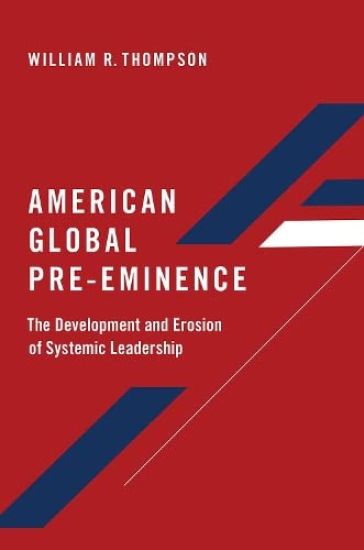
A unique analysis that assesses how we can determine which country will be the next world leader. Will China surpass the United States as the world's leader? In American Global Pre-eminence, William R. Thompson argues that the answer depends on leads in technological innovation, energy, and global reach. These are the forces that influence the hierarchy of global power--a system which began emerging a thousand years ago and started becoming more evident after the 1490s, especially after Dutch activities in the seventeenth century and British operations in the nineteenth century. The US followed in this fashion after 1945. Yet leads do not last forever. Ironically, as it becomes clearer how technological innovation, military force, and energy power interact, the processes under scrutiny may themselves be fundamentally transforming. Thus, Thompson contends, the real policy question is not whether the US is ahead or behind China but, rather, whether it will remain possible for a single state to lead the global system. As technological innovation, energy consumption, and global reach capability grow less concentrated, the prospects for systemic leadership shrink--even as global problems become more complex and acute. With a sweeping analysis of global power, Thompson provides a foundation for understanding the realities and possibilities of lead states past, present, and future.
American Global Pre-Eminence

American Global Pre-Eminence

William R. Thompson

OXFORD UNIVERSITY PRESS INC
2022
nidottu
A unique analysis that assesses how we can determine which country will be the next world leader. Will China surpass the United States as the world's leader? In American Global Pre-eminence, William R. Thompson argues that the answer depends on leads in technological innovation, energy, and global reach. These are the forces that influence the hierarchy of global power--a system which began emerging a thousand years ago and started becoming more evident after the 1490s, especially after Dutch activities in the seventeenth century and British operations in the nineteenth century. The US followed in this fashion after 1945. Yet leads do not last forever. Ironically, as it becomes clearer how technological innovation, military force, and energy power interact, the processes under scrutiny may themselves be fundamentally transforming. Thus, Thompson contends, the real policy question is not whether the US is ahead or behind China but, rather, whether it will remain possible for a single state to lead the global system. As technological innovation, energy consumption, and global reach capability grow less concentrated, the prospects for systemic leadership shrink--even as global problems become more complex and acute. With a sweeping analysis of global power, Thompson provides a foundation for understanding the realities and possibilities of lead states past, present, and future.
Analyzing Strategic Rivalries in World Politics

Analyzing Strategic Rivalries in World Politics

William R. Thompson; Kentaro Sakuwa; Prashant Hosur Suhas

SPRINGER VERLAG, SINGAPORE
2021
sidottu
Strategic rivalries are contests between states that view one another as threatening competitors and treat each other as enemies. A disproportionate amount of interstate conflict is generated by a relatively small number of these pairs of states engaged in rivalries that can persist for years. Thus, to understand interstate peace and conflict, it is useful to know how rivalries work in general and more specifically. In the past two decades, a strenuous effort has been mounted to introduce the concept of rivalry and demonstrate its utility in unraveling conflict situations. Yet all rivalries are not exactly alike. We need to move to a more rewarding differentiation of how they differ in general. Principal rivalries are those antagonisms that are most significant to the decision makers in a state. The main distinction on issues about which rivals dispute are positional and spatial concerns. Positional rivalries contend over regional and global influence. Spatial rivals contend over which state deserves to control disputed territory. Interventionary rivalries predominate in sub-Saharan Africa. Their primary focus involves neighboring states attempting to influence who rules and how co-ethnics are treated. This book updates the inventory of strategic rivalries from 1816 to 2020. Principal rivalries are identified for the first time and cover the same period. A theory stressing the two main types of rivalry (positional and spatial) is elaborated and tested. Regional variations on the origins and terminations of spatial rivalry are explored and interpreted. In addition, attention is paid to fluctuations in the intensity of positional rivalries by examining the working of the contemporary major power triangle (United States, Soviet Union/Russia, and China) and, more generally, the dynamics of regional power that are rising in terms of their relative capability and status in the system. Variations in cooperation and termination dynamics both in general andaccording to rivalry type are also examined. Overall, the emphases of the book are split between demonstrating the utility of distinguishing among rivalry types and examining selected rivalry dynamics.
Climate Change in the Middle East and North Africa

Climate Change in the Middle East and North Africa

William R. Thompson; Leila Zakhirova

Routledge
2021
sidottu
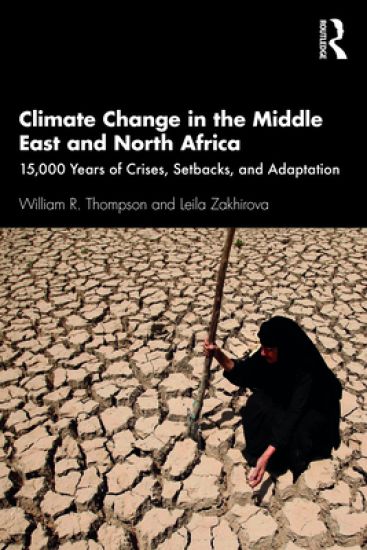
Environmental factors in the Middle East and North Africa (MENA) have played a crucial role in the historical and social development of the region. The book delves into a broad set of historical literature from the past 15,000 years that neglected to consider environmental factors to their full effect. Beyond the broad historic analysis, the chapters derive conclusions for today’s debate on whether climate change leads to more social conflict and violence. Introducing a theoretical framework focused on adaptive cycling, this book probes and refines the role of climate in ancient and modern political-economic systems in the MENA region. It also underscores just how bad the 21st-century environment may become thanks to global warming. While the MENA region may not survive the latest onslaught of deteriorating climate, there is also some interest in how a region that once led the world in introducing all sorts of innovations thousands of years ago has evolved into a contemporary setting characterized by traditional conservatism, poverty, and incessant strife. Emphasizing regional dynamics, the book's central question deals with the role of climate change in the rise and decline of the MENA region. The book will be a key resource to students and readers interested in global warming, including academics and policymakers.
Climate Change in the Middle East and North Africa

Climate Change in the Middle East and North Africa

William R. Thompson; Leila Zakhirova

Routledge
2021
nidottu
Environmental factors in the Middle East and North Africa (MENA) have played a crucial role in the historical and social development of the region. The book delves into a broad set of historical literature from the past 15,000 years that neglected to consider environmental factors to their full effect. Beyond the broad historic analysis, the chapters derive conclusions for today’s debate on whether climate change leads to more social conflict and violence. Introducing a theoretical framework focused on adaptive cycling, this book probes and refines the role of climate in ancient and modern political-economic systems in the MENA region. It also underscores just how bad the 21st-century environment may become thanks to global warming. While the MENA region may not survive the latest onslaught of deteriorating climate, there is also some interest in how a region that once led the world in introducing all sorts of innovations thousands of years ago has evolved into a contemporary setting characterized by traditional conservatism, poverty, and incessant strife. Emphasizing regional dynamics, the book's central question deals with the role of climate change in the rise and decline of the MENA region. The book will be a key resource to students and readers interested in global warming, including academics and policymakers.
Power Concentration in World Politics

Power Concentration in World Politics

William R. Thompson

Springer Nature Switzerland AG
2021
nidottu
This book discusses the role of space, time and cyclical behavior in world politics. More specifically, the political-economic role of lead economies – the world’s most innovative economies for finite periods of time – in world politics. These represent unusual concentrations of new technologies, energy sources, and military capabilities of global reach that play disproportional roles in the conduct of international affairs and the provision of limited governance at the most macro level. They also possess close links to economic growth and intense conflict. The book describes the economic, military and political processes behind the systemic leadership of a state at the international level. It also highlights the economic preconditions of systemic leadership, such as economic monopoly of new technologies and energy, which underlie the system leader’s material advantage over others. Analyzing lead economies and the evolution of power over a number of centuries,the author demonstrates how disruptions wrought by the emergence of new technologies and energy sources are partly responsible for global conflicts. This book appeals to international relations scholars as well as anyone interested in the political economy of systemic leadership, growth, and conflict in world politics.
War and State Making

War and State Making

Karen A. Rasler; William R. Thompson

Routledge
2021
sidottu
Originally published in 1989, this is an empirical study of the impact of global war on the expansion and shaping of nation-states. Individual chapters examine the effects of such wars, and the preparation for them, on debt financing, expansion, military spending, welfare spending, GNP and domestic violence. The authors conclude that by virtue of the changes they spurn, global wars are inherently ‘accelerators of social change’.
Power Concentration in World Politics

Power Concentration in World Politics

William R. Thompson

Springer Nature Switzerland AG
2020
sidottu
This book discusses the role of space, time and cyclical behavior in world politics. More specifically, the political-economic role of lead economies – the world’s most innovative economies for finite periods of time – in world politics. These represent unusual concentrations of new technologies, energy sources, and military capabilities of global reach that play disproportional roles in the conduct of international affairs and the provision of limited governance at the most macro level. They also possess close links to economic growth and intense conflict. The book describes the economic, military and political processes behind the systemic leadership of a state at the international level. It also highlights the economic preconditions of systemic leadership, such as economic monopoly of new technologies and energy, which underlie the system leader’s material advantage over others. Analyzing lead economies and the evolution of power over a number of centuries,the author demonstrates how disruptions wrought by the emergence of new technologies and energy sources are partly responsible for global conflicts. This book appeals to international relations scholars as well as anyone interested in the political economy of systemic leadership, growth, and conflict in world politics.
Racing to the Top

Racing to the Top

William R. Thompson; Leila Zakhirova

Oxford University Press Inc
2018
nidottu
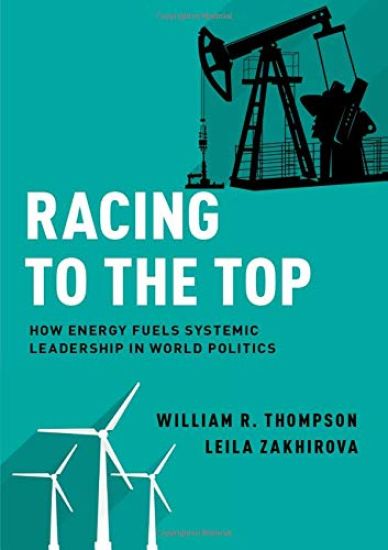
In the international political economy of the last two millennia, there tends to be one state leading the world as the foremost producer of energy and new technology. In Racing to the Top, William R. Thompson and Leila Zakhirova argue that the US and China, like previous leading countries, rely on energy transition, or the development of alternative energy, in order to make new technology relatively inexpensive to develop and to fuel. While the US has historically held the lead, its edge in the global energy economy appears to be eroding, and as energy leadership diminishes, so does the country's position in world politics. Thompson and Zakhirova take a long view in order to show what will be necessary for a new power to emerge as the system leader, then map a path forward for energy policy. Informed by a deep knowledge of world history, political economy, and environmental technology, this book is the first complete overview of energy transitions over the past thousand years.
Racing to the Top

Racing to the Top

William R. Thompson; Leila Zakhirova

Oxford University Press Inc
2018
sidottu
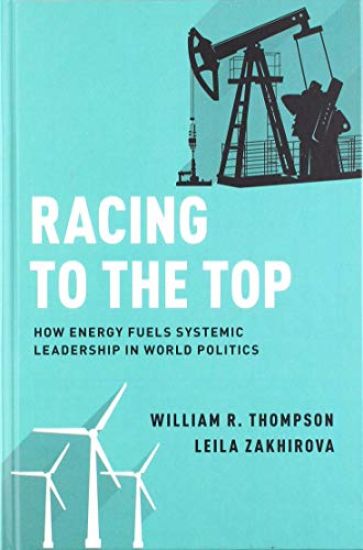
In the international political economy of the last two millennia, there tends to be one state leading the world as the foremost producer of energy and new technology. In Racing to the Top, William R. Thompson and Leila Zakhirova argue that the US and China, like previous leading countries, rely on energy transition, or the development of alternative energy, in order to make new technology relatively inexpensive to develop and to fuel. While the US has historically held the lead, its edge in the global energy economy appears to be eroding, and as energy leadership diminishes, so does the country's position in world politics. Thompson and Zakhirova take a long view in order to show what will be necessary for a new power to emerge as the system leader, then map a path forward for energy policy. Informed by a deep knowledge of world history, political economy, and environmental technology, this book is the first complete overview of energy transitions over the past thousand years.