Kirjojen hintavertailu. Mukana 12 657 676 kirjaa ja 12 kauppaa.

Kirjailija

William Rosen

Kirjat ja teokset yhdessä paikassa: 10 kirjaa, julkaisuja vuosilta 1960-2018, suosituimpien joukossa Miracle Cure: The Creation of Antibiotics and the Birth of Modern Medicine. Vertaile teosten hintoja ja tarkista saatavuus suomalaisista kirjakaupoista.

10 kirjaa

Kirjojen julkaisuhaarukka 1960-2018.

Miracle Cure: The Creation of Antibiotics and the Birth of Modern Medicine
The epic history of how antibiotics were born, saving millions of lives and creating a vast new industry known as Big Pharma. As late as the 1930s, virtually no drug intended for sickness did any good; doctors could set bones, deliver babies, and offer palliative care. That all changed in less than a generation with the discovery and development of a new category of medicine known as antibiotics. By 1955, the age-old evolutionary relationship between humans and microbes had been transformed, trivializing once-deadly infections. William Rosen captures this revolution with all its false starts, lucky surprises, and eccentric characters. He explains why, given the complex nature of bacteria--and their ability to rapidly evolve into new forms--the only way to locate and test potential antibiotic strains is by large-scale, systematic, trial-and-error experimentation. Organizing that research needs large, well-funded organizations and businesses, and so our entire scientific-industrial complex, built around the pharmaceutical company, was born. Timely, engrossing, and eye-opening, Miracle Cure is a must-read science narrative--a drama of enormous range, combining science, technology, politics, and economics to illuminate the reasons behind one of the most dramatic changes in humanity's relationship with nature since the invention of agriculture ten thousand years ago.
The Activation Imperative

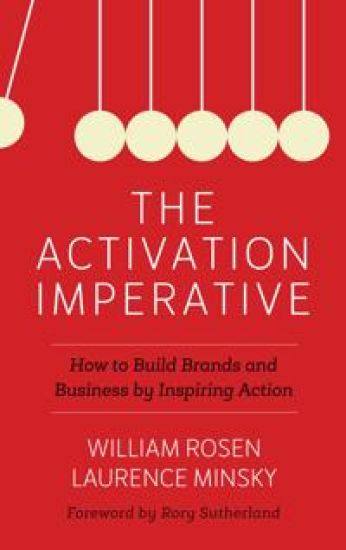
The Activation Imperative

William Rosen; Laurence Minsky; Rory Sutherland

Rowman Littlefield
2018
nidottu
How can marketers navigate the growing array of marketing specialties, media options, and data sources? How can they provide consumers with seamless experiences of value across channels that overcome behavioral barriers and actually deliver results? In The Activation Imperative, William Rosen and Laurence Minsky provide a straightforward guide for marketers to move beyond building brands to activating them—from simply projecting what a brand is to optimizing what it does—to move people closer to transaction. Drawing on years of research and experience with the world’s most sophisticated brands, Rosen and Minsky share a unifying cross-discipline marketing approach designed to impact critical behaviors and more effectively drive business results. With actionable advice and best-in-class examples, Rosen and Minsky offer marketers a road map to manage today’s increasingly fragmented marketing landscape to more efficiently build their brands and their business.
Miracle Cure

Miracle Cure

William Rosen

Viking Press Inc
2017
sidottu
The epic history of how antibiotics were born, saving millions of lives and creating a vast new industry known as Big Pharma. As late as the 1930s, virtually no drug intended for sickness did any good; doctors could set bones, deliver babies, and offer palliative care. That all changed in less than a generation with the discovery and development of a new category of medicine known as antibiotics. By 1955, the age-old evolutionary relationship between humans and microbes had been transformed, trivializing once-deadly infections. William Rosen captures this revolution with all its false starts, lucky surprises, and eccentric characters. He explains why, given the complex nature of bacteria--and their ability to rapidly evolve into new forms--the only way to locate and test potential antibiotic strains is by large-scale, systematic, trial-and-error experimentation. Organizing that research needs large, well-funded organizations and businesses, and so our entire scientific-industrial complex, built around the pharmaceutical company, was born. Timely, engrossing, and eye-opening, Miracle Cure is a must-read science narrative--a drama of enormous range, combining science, technology, politics, and economics to illuminate the reasons behind one of the most dramatic changes in humanity's relationship with nature since the invention of agriculture ten thousand years ago.
The Activation Imperative

The Activation Imperative

William Rosen; Laurence Minsky; Rory Sutherland

Rowman Littlefield
2016
sidottu
How can marketers navigate the growing array of marketing specialties, multiplying media options and data sources, and increasing content saturation to improve effectiveness and return on investment? How can they provide consumers with seamless experiences of value across channels that overcome behavioral barriers and actually deliver results? In The Activation Imperative, William Rosen and Laurence Minsky provide a straightforward guide for marketers to move beyond building brands to activating them—from simply projecting what a brand is to optimizing what it does—to move people closer to transaction. Drawing on years of research and experience with the world’s most sophisticated brands, Rosen and Minsky share a unifying cross-discipline marketing approach designed to impact critical behaviors and more effectively drive business results. They reveal how today’s more personalized and trackable communications illuminate tremendous diversity in paths-to-purchase and explain how to leverage this data to develop more effective strategies and creative targeted to individual inflection points. With actionable advice and best-in-class examples, Rosen and Minsky offer marketers a road map to manage today’s increasingly fragmented marketing landscape to more effectively and efficiently build brands and business.
Street Smart

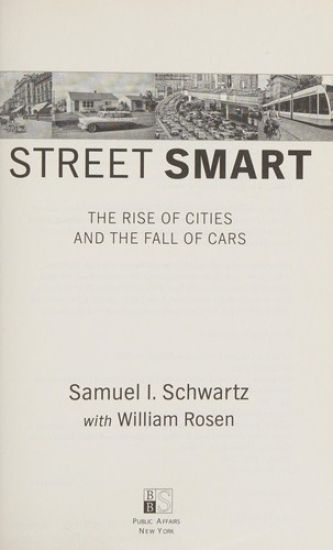
Street Smart

Samuel Schwartz; William Rosen

PublicAffairs,U.S.
2015
sidottu
On a Saturday morning in December 1973, a section of New York's West Side Highway collapsed under the weight of a truck full of asphalt. The road was closed, seemingly for good, and the 80,000 cars that traveled it each day had to find a new way to their destinations. It ought to have produced traffic chaos, but it didn't. The cars simply vanished. It was a moment of revelation: the highway had induced the demand for car travel. It was a classic case of build it and they will come," but for the first time the opposite had been shown to be true: knock it down and they will go away. Samuel I. Schwartz was inspired by the lesson. He started to reimagine cities, most of all his beloved New York, freed from their obligation to cars. Eventually, he found, he was not alone.Since the turn of the twenty-first century, a surreptitious revolution has taken place: every year Americans are driving fewer miles. And the generation named for this new century,the Millennials,are driving least of all. Not because they can't afford to they don't want to. They have better ideas for how to use their streets. An urban transformation is underway, and smart streets are at the heart of it. They will boost property prices and personal fitness, roll back years of congestion and smog, and offer a transformative experience of American urban life. From San Francisco to Salt Lake, Charleston to Houston, the American city is becoming a better and better place to be. Schwartz's Street Smart is a dazzling and affectionate history of the struggle for control of American cities, and an inspiring off-road map to a more vibrant, active, and vigorous urban future.
The Third Horseman

The Third Horseman

William Rosen

Penguin USA
2015
nidottu
The incredible true story of how a cycle of rain, cold, disease, and warfare created the worst famine in European history--years before the Black Death, from the author of Justinian's Flea and the forthcoming Miracle Cure In May 1315, it started to rain. For the seven disastrous years that followed, Europeans would be visited by a series of curses unseen since the third book of Exodus: floods, ice, failures of crops and cattle, and epidemics not just of disease, but of pike, sword, and spear. All told, six million lives--one-eighth of Europe's total population--would be lost. With a category-defying knowledge of science and history, William Rosen tells the stunning story of the oft-overlooked Great Famine with wit and drama and demonstrates what it all means for today's discussions of climate change.
The Most Powerful Idea in the World: A Story of Steam, Industry, and Invention
Hardly a week passes without some high-profile court case that features intellectual property at its center. But how did the belief that one could own an idea come about? And how did that belief change the way humankind lives and works? William Rosen, author of Justinian's Flea, seeks to answer these questions and more with The Most Powerful Idea in the World. A lively and passionate study of the engineering and scientific breakthroughs that led to the steam engine, this book argues that the very notion of intellectual property drove not only the invention of the steam engine but also the entire Industrial Revolution: history's first sustained era of economic improvement. To do so, Rosen conjures up an eccentric cast of characters, including the legal philosophers who enabled most the inventive society in millennia, and the scientists and inventors-Thomas Newcomen, Robert Boyle, and James Watt-who helped to create and perfect the steam engine over the centuries. With wit and wide-ranging curiosity, Rosen explores the power of creativity, capital, and collaboration in the brilliant engineering of the steam engine and how this power source, which fueled factories, ships, and railroads, changed human history. Deeply informative and never dull, Rosen's account of one of the most important inventions made by humans is a rollicking ride through history, with careful scholarship and fast-paced prose in equal measure.
Justinian's Flea: The First Great Plague and the End of the Roman Empire
From the acclaimed author of Miracle Cure and The Third Horseman, the epic story of the collision between one of nature's smallest organisms and history's mightiest empire During the golden age of the Roman Empire, Emperor Justinian reigned over a territory that stretched from Italy to North Africa. It was the zenith of his achievements and the last of them. In 542 AD, the bubonic plague struck. In weeks, the glorious classical world of Justinian had been plunged into the medieval and modern Europe was born. At its height, five thousand people died every day in Constantinople. Cities were completely depopulated. It was the first pandemic the world had ever known and it left its indelible mark: when the plague finally ended, more than 25 million people were dead. Weaving together history, microbiology, ecology, jurisprudence, theology, and epidemiology, Justinian's Flea is a unique and sweeping account of the little known event that changed the course of a continent.
Justinian's Flea

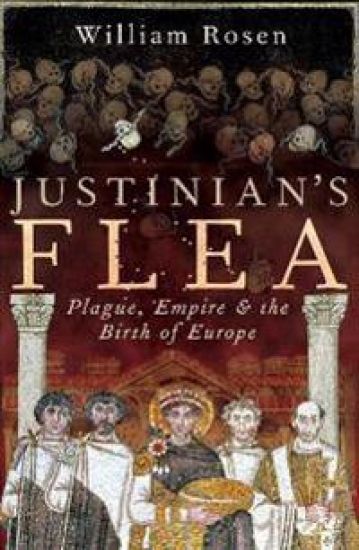
Justinian's Flea

William Rosen

Vintage
2008
pokkari
In the middle of the 6th century, the Yersinia pestis, the bacterium that carries bubonic plague, collided with the world's mightiest empire. With the death of 25 million people, the Roman Empire, under her last great emperor, Justinian, was decimated. This book tells the story of that collision.