Kirjojen hintavertailu. Mukana 12 390 323 kirjaa ja 12 kauppaa.

Kirjailija

William Rosenau

Kirjat ja teokset yhdessä paikassa: 18 kirjaa, julkaisuja vuosilta 2001-2026, suosituimpien joukossa Breaching the Fortress Wall. Vertaile teosten hintoja ja tarkista saatavuus suomalaisista kirjakaupoista.

18 kirjaa

Kirjojen julkaisuhaarukka 2001-2026.

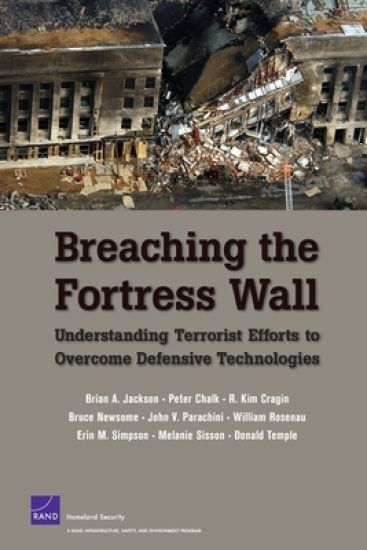
Breaching the Fortress Wall

Breaching the Fortress Wall

Brian A. Jackson; Peter Chalk; Kim Cragin; Bruce Newsome; John V. Parachini; William Rosenau; Erin M. Simpson; Melanie Sisson; Donald Temple

RAND
2006
pokkari
Technology systems play a key role within a larger, integrated strategy to target groups' efforts and protect the public from the threat of terrorist violence. This study draws on relevant data from the history of a variety of terrorist conflicts to understand terrorists' counter-technology efforts. Fully exploring adversaries' counter-technology behaviors can help make the best choices to protect the nation from the threat of terrorism.
Tonight We Bombed the U.S. Capitol: The Explosive Story of M19, America's First Female Terrorist Group
"A deeply-researched and well-written account of" (Peter Bergen, author of United States of Jihad) M19--the first and only domestic terrorist group founded and led by women--as they waged a violent war against racism, sexism, and imperialism in Ronald Reagan's America.1981: Ronald Reagan declared that it is "morning in America" but a small band of well-educated women were planning to combat the status quo at any cost. Having spent their entire adult lives embroiled in political struggles--Vietnam War protests, Hispanic, Native American, and Black liberation, and more--these women had determined that it was time for a final stand. They might not be able to overthrow the government, but they could certainly disrupt it. Together, they formed the May 19th Communist Organization, or "M19," a name derived from the birthday shared by Malcolm X and Ho Chi Minh, two of their revolutionary idols. Together, these six women carried out some of the most shocking operations in the history of domestic terrorism--from prison breakouts and murderous armed robberies to a bombing campaign that wreaked havoc on the nation's capital, its military installations, and New York City. For the first time, the full, fascinating, and terrifying story of M19 is explored by Cold War historian and counterterrorism expert William Rosenau in this "gripping account of this hitherto forgotten terrorist campaign" (Bruce Hoffman, author of Inside Terrorism). Three decades may have passed since these women fought what they saw as an essential battle for self-determination and dignity, but we're still struggling to decipher which side of history their actions fall on and what we should learn from their motivations.
Tonight We Bombed the U.S. Capitol: The Explosive Story of M19, America's First Female Terrorist Group
In a shocking, never-before-told story from the vaults of American history, Tonight We Bombed the US Capitol takes a close look at the explosive hidden history of M19--the first and only domestic terrorist group founded and led by women--and their violent fight against racism, sexism, and what they viewed as Ronald Reagan's imperialistic vision for America.In 1981, President Ronald Reagan announced that it was "morning in America." He declared that the American dream wasn't over, but the United States needed to lower taxes, shrink government control, and flex its military muscles abroad to herald what some called "the Reagan Revolution." At the same time, a tiny band of American-born, well-educated extremists were working for a very different kind of revolution. By the end of the 1970s, many radicals had called it quits, but six veteran women extremists came together to finish the fight. These women had spent their entire adult lives embroiled in political struggles: protesting the Vietnam War, fighting for black and Native American liberation, and confronting US imperialism. They created a new organization to wage their war: The May 19th Communist Organization, or "M19," a name derived from the birthday shared by Malcolm X and Ho Chi Minh, two of their revolutionary idols. Together, these six women carried out some of the most daring operations in the history of domestic terrorism--from prison breakouts and murderous armed robberies, to a bombing campaign that wreaked havoc on the nation's capital. Three decades later, M19's actions and shocking tactics still reverberate for many reasons, but one truly sets them apart: unlike any other American terrorist group before or since, M19 was created and led by women. Tonight We Bombed the US Capitol tells the full story of M19 for the first time, alongside original photos and declassified FBI documents. Through the group's history, intelligence and counterterrorism expert William Rosenau helps us understand how homegrown extremism--a threat that still looms over us today--is born.
US Internal Security Assistance to South Vietnam
This new study of American support to the regime of Ngo Dinh Diem in South Vietnam illuminates many contemporary events and foreign policies. During the Eisenhower and Kennedy administrations, the United States used foreign police and paramilitary assistance to combat the spread of communist revolution in the developing world. This became the single largest internal security programme during the neglected 1955-1963 period. Yet despite presidential attention and a sustained campaign to transform Diem’s police and paramilitary forces into modern, professional services, the United States failed to achieve its objectives. Given the scale of its efforts, and the Diem regime’s importance to the US leadership, this text identifies the three key factors that contributed to the failure of American policy. First, the competing conceptions of Diem’s civilian and military advisers. Second, the reforms advanced by US police training personnel were also at odds with the political agenda of the South Vietnamese leader. Finally, the flawed beliefs among US police advisers based on the universality of American democracy. This study also shows how notions borrowed from academic social science of the time became the basis for building Diem’s internal security forces. This book will be of great interest to all students and scholars of intelligence studies, Cold War studies, security studies, US foreign policy and the Vietnam War in general.
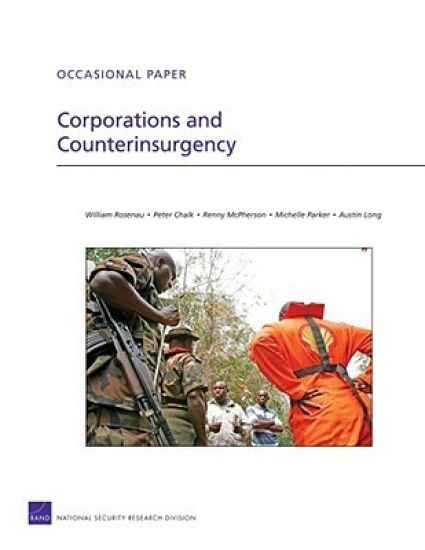
Corporations and Counterinsurgency

Corporations and Counterinsurgency

William Rosenau; Peter Chalk; Renny McPherson; Michelle Parker; Austin Long

RAND
2009
pokkari
Multinational corporations can be significant actors in zones of violent conflict. Corporate actions to shape their environment can sometimes mitigate conflict, but as the authors show in their case studies, corporate activities can help generate and sustain violence.
Subversion and Insurgency

Subversion and Insurgency

William Rosenau

RAND
2007
pokkari
Subversion is a critical insurgent tool, but it has long been ignored by policymakers and analysts. This paper presents a set of case studies to explore the elements of subversion and discusses preliminary ideas for combating subversive activities in the context of the "long war" against violent Islamic extremism.
US Internal Security Assistance to South Vietnam
This new study of American support to the regime of Ngo Dinh Diem in South Vietnam illuminates many contemporary events and foreign policies. During the Eisenhower and Kennedy administrations, the United States used foreign police and paramilitary assistance to combat the spread of communist revolution in the developing world. This became the single largest internal security programme during the neglected 1955-1963 period. Yet despite presidential attention and a sustained campaign to transform Diem’s police and paramilitary forces into modern, professional services, the United States failed to achieve its objectives. Given the scale of its efforts, and the Diem regime’s importance to the US leadership, this text identifies the three key factors that contributed to the failure of American policy. First, the competing conceptions of Diem’s civilian and military advisers. Second, the reforms advanced by US police training personnel were also at odds with the political agenda of the South Vietnamese leader. Finally, the flawed beliefs among US police advisers based on the universality of American democracy. This study also shows how notions borrowed from academic social science of the time became the basis for building Diem’s internal security forces. This book will be of great interest to all students and scholars of intelligence studies, Cold War studies, security studies, US foreign policy and the Vietnam War in general.
The United States, Europe, and the Wider Middle East

The United States, Europe, and the Wider Middle East

Shahram Chubin; Bruce Hoffman; William Rosenau

RAND
2005
pokkari
The proceedings of a group of experts who gathered to discuss the insurgency in Iraq, the Arab-Israeli situation, the terrorist threat, internal security in Saudi Arabia, and Iran and the proliferation of weapons of mass destruction These proceeding present an informal discussion among a group of experts who explored a set of five topics: the insurgency in Iraq, the Arab-Israeli situation, the terrorist threat, internal security in Saudi Arabia, and Iran and the proliferation of WMD. Each topic was addressed with an eye toward understanding their implications for the region as a whole and exploring what the broader consequences might be for American and European policy.
Confronting the Enemy within

Confronting the Enemy within

Peter Chalk; William Rosenau

RAND
2004
pokkari
Reviews four countries' domestic intelligence services to assess whether the creation of such an agency in the United States, apart from the Federal Bureau of Investigation, would be beneficial. (PW); Since the September 11, 2001, attacks, critics have charged that the Federal Bureau of Investigation (FBI), while qualified to investigate terrorist incidents after the fact, is not wel equipped enough to adequately gather and a assess information to prevent attacks. Given the bureau's law enforcement and prosecutorial cultural, many believe that the burden of countering terrorism, the FBI's main focus now, in addition to the load of taking on "ordinary" crime, may be too much. To better inform debate, researchers analyzed the domestic security structures of four allied countries-the United Kingdom, France, Canada, and Australia-weighing both their positive and negative aspects.
Trends in Outside Support for Insurgent Movements

Trends in Outside Support for Insurgent Movements

Daniel L. Byman; Peter Chalk; Bruce Hoffman; William Rosenau; David Brannan

RAND
2001
pokkari
Outside supporters, including state and non-state sponsors, of insurgent movements offer various forms of assistance to insurgents based on a wide range of motivations. The most useful forms of outside support for an insurgent movement include safe havens, financial support, political backing, and direct military assistance. Because states are able to provide all of these types of assistance, their support has had a profound impact on the effectiveness of many rebel movements since the end of the Cold War. However, state support is no longer the only, or indeed necessarily the most important, game in town. Diasporas have played a particularly important role in sustaining several strong insurgencies. More rarely, refugees, guerrilla groups, or other types of non-state supporters play a significant role in creating or sustaining an insurgency, offering fighters, training, or other forms of assistance. This report assesses post-Cold War trends in external support for insurgent movements. It describes the frequency that states, diasporas, refugees, and other non-state actors back guerrilla movements.It also assesses the motivations of these actors and which types of support matter most. This book concludes by assessing the implications for analysts of insurgent movements.