Kirjojen hintavertailu. Mukana 12 595 353 kirjaa ja 12 kauppaa.

Kirjailija

William Roth

Kirjat ja teokset yhdessä paikassa: 21 kirjaa, julkaisuja vuosilta 1989-2021, suosituimpien joukossa The Assault on Social Policy. Vertaile teosten hintoja ja tarkista saatavuus suomalaisista kirjakaupoista.

21 kirjaa

Kirjojen julkaisuhaarukka 1989-2021.

Strategic Decision Making for Successful Planning

Strategic Decision Making for Successful Planning

CJ Rhoads; William Roth

TAYLOR FRANCIS LTD
2021
sidottu
Turbulence is not new to the business world. In fact, turbulence is increasing, and managers are seeing teams spinning their wheels. Management systems are in a state of crisis and operations are more complex. The old top-down operations mode no longer suffices. Today’s businesses demand speed and increased accuracy, forcing everyone to re-evaluate chains of command and tear down the walls between functions. Amid the responsibilities of traditional management lies problem solving. The push is toward moving decision-making authority down the ladder to all levels. Managers are no longer equipped to or capable of making the number and variety of necessary decisions in a vacuum. The current mode is to have employees deal directly with workplace issues and take corrective action without complaint and without management involvement. Coping with this reality and preparation for these improvements in workplace problem solving requires interest and motivation.Strategic Decision Making for Successful Planning can facilitate this by demystifying and simplifying the process. The book bridges philosophy and theory and puts together a practical integration of all the tools necessary to get results from your investment of time, energy, and money. What is unique about this book is while it’s based on a strong academic foundation, it does not get bogged down in the human-planning or psychological process of solving problems. It doesn’t provide "pie-in-the-sky" creative solutions or a five-year process for solving problems and planning for the future. Numerous techniques and tools are included to make the book the right balance between practical and academic. The book also includes an extensive case study to illustrate points made in the text.

Strategic Decision Making for Successful Planning

Strategic Decision Making for Successful Planning

CJ Rhoads; William Roth

TAYLOR FRANCIS LTD
2021
nidottu
Turbulence is not new to the business world. In fact, turbulence is increasing, and managers are seeing teams spinning their wheels. Management systems are in a state of crisis and operations are more complex. The old top-down operations mode no longer suffices. Today’s businesses demand speed and increased accuracy, forcing everyone to re-evaluate chains of command and tear down the walls between functions. Amid the responsibilities of traditional management lies problem solving. The push is toward moving decision-making authority down the ladder to all levels. Managers are no longer equipped to or capable of making the number and variety of necessary decisions in a vacuum. The current mode is to have employees deal directly with workplace issues and take corrective action without complaint and without management involvement. Coping with this reality and preparation for these improvements in workplace problem solving requires interest and motivation.Strategic Decision Making for Successful Planning can facilitate this by demystifying and simplifying the process. The book bridges philosophy and theory and puts together a practical integration of all the tools necessary to get results from your investment of time, energy, and money. What is unique about this book is while it’s based on a strong academic foundation, it does not get bogged down in the human-planning or psychological process of solving problems. It doesn’t provide "pie-in-the-sky" creative solutions or a five-year process for solving problems and planning for the future. Numerous techniques and tools are included to make the book the right balance between practical and academic. The book also includes an extensive case study to illustrate points made in the text.
The Evolution of Management Theory
This is a fascinating investigation of the history of management theory in terms of four interdependent, history-shaping forces: (1) socioeconomic thinking; (2) technological development; (3) organizational size; and (4) marketplace pressures. The book shows not only how management has become as much of an art as a science, but also where it is heading.
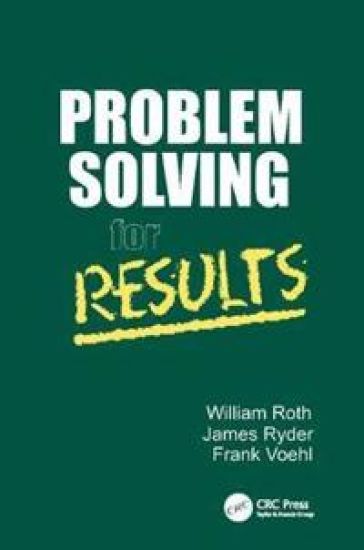
Problem Solving For Results

Problem Solving For Results

William Roth

CRC Press
2017
sidottu
Turbulence is not new to the business world. In fact, the turbulence is increasing and managers are seeing teams spinning their wheels. But now there is a book that addresses these realities-Problem Solving for Results. Management systems are in a state of crisis and operations are more complex. The old top-down operations mode no longer suffices. Today's businesses demand speed and increased accuracy, forcing everyone to re-evaluate chains of command and tear down the walls between functions. Amid the responsibilities of traditional management lies problem solving. The push is toward moving decision-making authority down the ladder to all levels. Managers are no longer equipped to or capable of making the number and variety of necessary decisions in a vacuum. The current mode is to have employees deal directly with workplace issues and take corrective action without complaint and without management involvement. Coping with this reality and preparation for these improvements in workplace problem solving requires interest and motivation. Problem Solving for Results can facilitate this by demystifying and simplifying the process. This book bridges philosophy and theory and puts together a practical integration of all the tools necessary to get results from your investment of time, energy, and money.
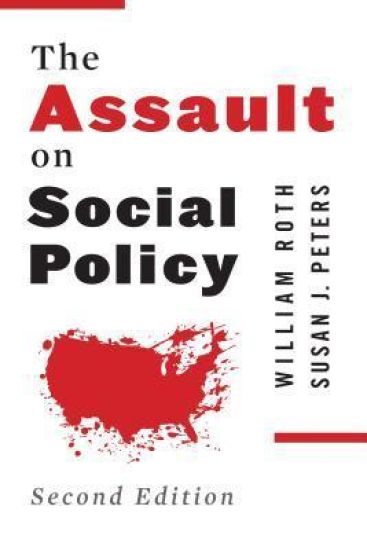
The Assault on Social Policy

The Assault on Social Policy

William Roth; Susan Peters; Bernie Sanders

Columbia University Press
2014
pokkari
Based on incisive analyses of economic globalization, class, politics, and bureaucracy, The Assault on Social Policy examines the ordinary speech used to make poverty and extreme inequality seem acceptable, the corporate strategies co-opting the distribution of wealth and other resources, and the negative effect of these efforts on our more vulnerable citizens, such as those with disabilities, incarcerated individuals, children, and the elderly. This second edition incorporates new research on the hotly contested policies dealing with poverty, welfare, disability, social security, and health care. It also takes stock of the ongoing effects of globalization and adds a chapter on education.
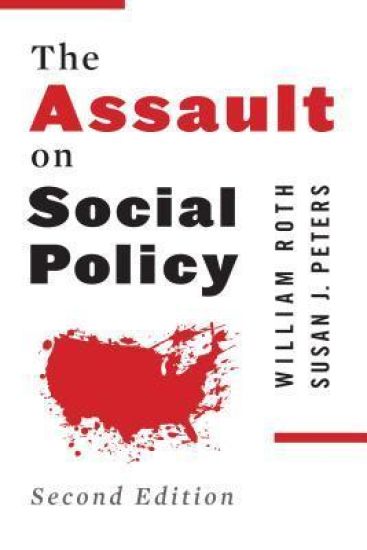
The Assault on Social Policy

The Assault on Social Policy

William Roth; Susan Peters; Bernie Sanders

Columbia University Press
2014
sidottu
Based on incisive analyses of economic globalization, class, politics, and bureaucracy, The Assault on Social Policy examines the ordinary speech used to make poverty and extreme inequality seem acceptable, the corporate strategies co-opting the distribution of wealth and other resources, and the negative effect of these efforts on our more vulnerable citizens, such as those with disabilities, incarcerated individuals, children, and the elderly. This second edition incorporates new research on the hotly contested policies dealing with poverty, welfare, disability, social security, and health care. It also takes stock of the ongoing effects of globalization and adds a chapter on education.
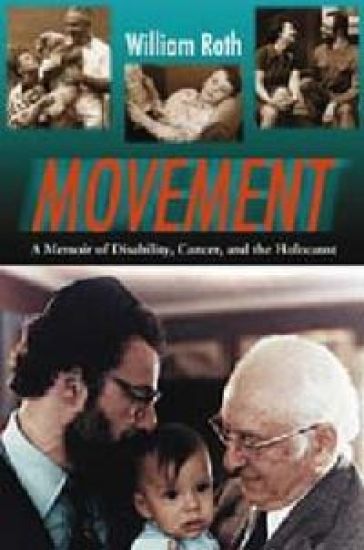
Movement

Movement

William Roth

McFarland Co Inc
2008
pokkari
As William Roth was taking his first steps, members of his family were caught up in the Nazi Holocaust. At age eight, he began to manifest the symptoms of dystonia, a neurological disease characterized by severe movement disorders. And at age forty-seven, he was diagnosed with squamous cell carcinoma of the tonsil, a cancer that would prove as invasive as his genetic disease and as dreadful as his social persecution. This, his memoir, relates the three intertwined narratives and the miraculous success that one man carved from them. Today, at age 65, Roth is more than a survivor. Mobilizing his courage to spearhead the discipline of disability studies, be active in the Disability Rights Movement, influence government policy toward disability, and found the non-profit Center for Computing and Disability, Roth has used his own disability to change the life of disabled people in America.
The Assault on Social Policy

The Assault on Social Policy

William Roth

Columbia University Press
2002
sidottu
American social policy today largely serves global corporate interests rather than the general public, according to William Roth. Based on incisive analyses of economic globalization, class, politics, and bureaucracy, The Assault on Social Policy argues that the perfection of the free market is a myth. Roth analyzes the rhetoric used to make poverty seem acceptable, shows how corporations affect the distribution of wealth and other resources, and considers the effect on disabled people, criminals, children, and health care. He concludes that increased transnational corporate power has created the need for large-scale systematic public policy changes.
The Assault on Social Policy

The Assault on Social Policy

William Roth

Columbia University Press
2002
nidottu
American social policy today largely serves global corporate interests rather than the general public, according to William Roth. Based on incisive analyses of economic globalization, class, politics, and bureaucracy, The Assault on Social Policy argues that the perfection of the free market is a myth. Roth analyzes the rhetoric used to make poverty seem acceptable, shows how corporations affect the distribution of wealth and other resources, and considers the effect on disabled people, criminals, children, and health care. He concludes that increased transnational corporate power has created the need for large-scale systematic public policy changes.
The Roots and Future of Management Theory
Interesting and easy-to-read, The Roots and Future of Management Theory: A Systems Approach provides a comprehensive overview of today's workplace -past, present ,and future. The author brings the key characters in the evolution of management theory to life. Not only will your students understand the roots of our current situation, how workplace change happens, and what forces are involved - they will see how it fits into changes in society as a whole. There have obviously been many changes in the workplace from the Medieval Period to the present, and there will certainly be even more changes in the future. This book explores these changes and connects them to changes in: general philosophy (rationalism, empiricism, pragmatism); religious philosophy (Catholicism, Protestantism); social philosophy (Machiavellian Humanism, Christian Humanism); economic philosophy (laissez faire, Communism); and workplace philosophy (technology as a friend, technology as an enemy). Battles have raged through the ages between these opposing forces, affecting management systems, the quality of working life, and life in general. The author discusses how this has lead to today's quest for a synthesis of the strengths of these forces, and suggests that it has been found in the systems approach. He describes what this synthesis - combined with the powers of the computer - could and should lead to in the future. Written at a level that both graduate and undergraduate student will understand, The Roots and Future of Management Theory provides an overview of management theory. Comprehensive but not overwhelming, this textbook will give your students an understanding the changes in the workplace since the beginning of the industrial age, and offer them some insights into the changes most likely to occur in the 21st century.
Quality Improvement

Quality Improvement

William Roth

CRC Press Inc
1998
sidottu
Quality improvement: it's an attractive concept on paper. So why do the vast majority of quality improvement efforts fail? William Roth knows from experience: as a Ph.D in systems theory, an ex-corporate manager, a professor-and the designer (with the AQP) of a national program to deliver training for quality credentials in the systems approach. His belief: enduring quality improvement is an "all or nothing" situation-requiring a systemic approach, with all the key components and integrations in place and fully integrated right from the start. Quality Improvement: A Systems Perspective explains the sometimes surprising historic roots of the quality improvement movement, and outlines the systems theory on which successful models must be built. Readers then gain access to the hands-on, nuts-and-bolts, how-to-get-it-done details of the five critical phases. Three case studies (two in industry, one in health care) support this traditional but currently shunned model. Along with his unique unified view of quality improvement, Roth explains why it is shunned, and why alternative approaches usually do not produce the desired results. Key obstacles to success are directly identified-top-level management, local union leaders, management education. The ultimate culprit, though, is culture-to which Roth suggests how to move organizations in the right direction, from a systems perspective. With one of the most comprehensive overviews of quality management essentials in one volume, Quality Improvement: A Systems Perspective balances theory and modeling with the details of real-life implementation and success.
Problem Solving For Results

Problem Solving For Results

William Roth

CRC Press Inc
1996
nidottu
Turbulence is not new to the business world. In fact, the turbulence is increasing and managers are seeing teams spinning their wheels. But now there is a book that addresses these realities-Problem Solving for Results. Management systems are in a state of crisis and operations are more complex. The old top-down operations mode no longer suffices. Today's businesses demand speed and increased accuracy, forcing everyone to re-evaluate chains of command and tear down the walls between functions. Amid the responsibilities of traditional management lies problem solving. The push is toward moving decision-making authority down the ladder to all levels. Managers are no longer equipped to or capable of making the number and variety of necessary decisions in a vacuum. The current mode is to have employees deal directly with workplace issues and take corrective action without complaint and without management involvement. Coping with this reality and preparation for these improvements in workplace problem solving requires interest and motivation. Problem Solving for Results can facilitate this by demystifying and simplifying the process. This book bridges philosophy and theory and puts together a practical integration of all the tools necessary to get results from your investment of time, energy, and money.
The Evolution of Management Theory

The Evolution of Management Theory

William Roth

CRC Press Inc
1994
nidottu
This is a fascinating investigation of the history of management theory in terms of four interdependent, history-shaping forces: (1) socioeconomic thinking; (2) technological development; (3) organizational size; and (4) marketplace pressures. The book shows not only how management has become as much of an art as a science, but also where it is heading.
A Systems Approach to Quality Improvement

A Systems Approach to Quality Improvement

William Roth

Praeger Publishers Inc
1991
sidottu
While many quality improvement processes in business have enjoyed initial success, most have eventually failed--not producing the desired long-term results. This is because, though our learning curve is good, we still lack the sophistication requisite to generate the necessary comprehensive whole. This work attempts to help define the ingredients of such a whole. It then offers a case history which allows us to see what happens when the results of these efforts are actually put into place. Finally, it identifies the key obstructions to and long-range societal opportunities resulting from successful implementation of such wholes.According to Roth, there are five necessary phases to any comprehensive quality process: familiarization, team building, training, introduction to statistical measurement techniques, and long-range planning. In addition, truly open communication at all levels and real and continual, as opposed to verbal, top-level management support are crucial. Roth explores the five phases in detail. He then presents a blow-by-blow description of their emplacement at two major manufacturing facilities. This work should be of interest to quality process heads, human resource managers, manufacturing managers, top level executives, and scholars and students of quality improvement.