Kirjojen hintavertailu. Mukana 12 571 561 kirjaa ja 12 kauppaa.

Kirjailija

William Rothman

Kirjat ja teokset yhdessä paikassa: 10 kirjaa, julkaisuja vuosilta 1997-2022, suosituimpien joukossa Hitchcock. Vertaile teosten hintoja ja tarkista saatavuus suomalaisista kirjakaupoista.

10 kirjaa

Kirjojen julkaisuhaarukka 1997-2022.

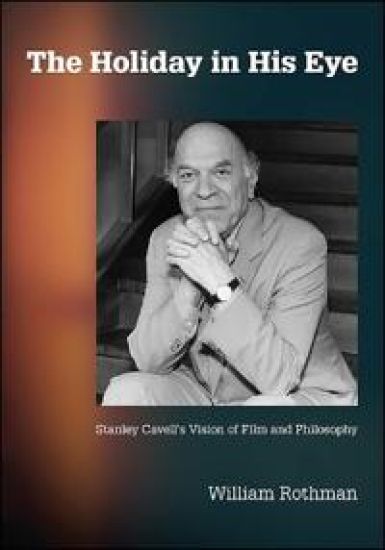
The Holiday in His Eye

The Holiday in His Eye

William Rothman

STATE UNIVERSITY OF NEW YORK PRESS
2022
pokkari
Presents an original, insightful, and compelling vision of the trajectory of Cavell's oeuvre, one that takes his kinship with Emerson as inextricably bound up with his ever-deepening thinking about movies.From The World Viewed to Cities of Words, writing about movies was strand over strand with Stanley Cavell's philosophical work. Cavell was one of the first philosophers in the United States to make film a significant focus of his thought, and William Rothman has long been one of his most astute readers. The Holiday in His Eye collects Rothman's writings about Cavell-many of them previously unpublished-to offer a lucid, serious introduction to and overview of Cavell's work, the influence of which has been somewhat limited by both the intrinsic difficulty of his ideas and his challenging prose style. In these engaging and accessible yet philosophically serious and rigorously argued essays, Rothman presents an original, insightful, and compelling vision of the trajectory of Cavell's oeuvre, one that takes Cavell's kinship with Emerson as inextricably bound up with his ever-deepening thinking about movies.
The Holiday in His Eye

The Holiday in His Eye

William Rothman

State University of New York Press
2021
sidottu
Presents an original, insightful, and compelling vision of the trajectory of Cavell's oeuvre, one that takes his kinship with Emerson as inextricably bound up with his ever-deepening thinking about movies.From The World Viewed to Cities of Words, writing about movies was strand over strand with Stanley Cavell's philosophical work. Cavell was one of the first philosophers in the United States to make film a significant focus of his thought, and William Rothman has long been one of his most astute readers. The Holiday in His Eye collects Rothman's writings about Cavell-many of them previously unpublished-to offer a lucid, serious introduction to and overview of Cavell's work, the influence of which has been somewhat limited by both the intrinsic difficulty of his ideas and his challenging prose style. In these engaging and accessible yet philosophically serious and rigorously argued essays, Rothman presents an original, insightful, and compelling vision of the trajectory of Cavell's oeuvre, one that takes Cavell's kinship with Emerson as inextricably bound up with his ever-deepening thinking about movies.
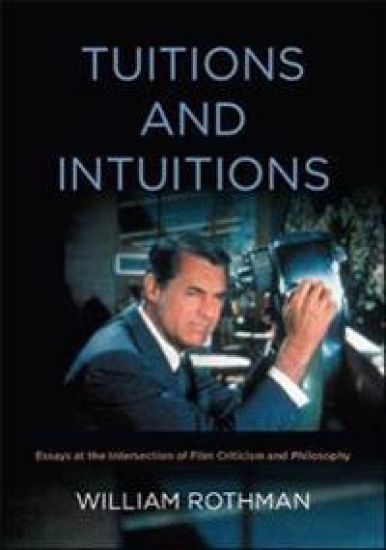
Tuitions and Intuitions

Tuitions and Intuitions

William Rothman

State University of New York Press
2019
pokkari
Makes the case that philosophy has an essential role to play in the serious study of film.William Rothman has long been considered one of the seminal figures in the field of film-philosophy. From his landmark book Hitchcock: The Murderous Gaze, now in its second edition, to the essays collected here in Tuitions and Intuitions, Rothman has been guided by two intuitions: first, that his kind of film criticism is philosophy; and second, that such a marriage of criticism and philosophy has an essential part to play in the serious study of film. In this book, he aspires, borrowing a formulation from Emerson, to "pay the tuition" for these intuitions.Thoughtful, philosophically sophisticated, and provocative, the essays included here address a wide range of films, including classical Hollywood movies; the work of "auteur" directors like Alfred Hitchcock, George Cukor, Yasujiro Ozu, and Woody Allen; performances by John Barrymore and James Stewart; unconventional works by Jean Genet, Chantal Akerman, Terrence Malick, and the Dardenne brothers; the television series Justified; and documentaries by Jean Rouch, Ross McElwee, and Robert Gardner. All the essays address questions of philosophical significance and, taken together, manifest Rothman's lifelong commitment when writing about a film, to respect the film's own ideas; to remain open to the film's ways of expressing its ideas; and to let the film help teach him how to view it, how to think about it, and how to discover what he has at heart to say about it.
Must We Kill the Thing We Love?

Must We Kill the Thing We Love?

William Rothman

Columbia University Press
2014
sidottu
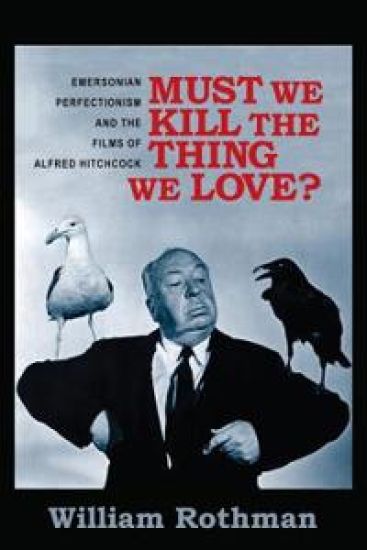
William Rothman argues that the driving force of Hitchcock's work was his struggle to reconcile the dark vision of his favorite Oscar Wilde quote, "Each man kills the thing he loves," with the quintessentially American philosophy, articulated in Emerson's writings, that gave classical Hollywood movies of the New Deal era their extraordinary combination of popularity and artistic seriousness. A Hitchcock thriller could be a comedy of remarriage or a melodrama of an unknown woman, both Emersonian genres, except for the murderous villain and godlike author, Hitchcock, who pulls the villain's strings-and ours. Because Hitchcock believed that the camera has a murderous aspect, the question "What if anything justifies killing?," which every Hitchcock film engages, was for him a disturbing question about his own art. Tracing the trajectory of Hitchcock's career, Rothman discerns a progression in the films' meditations on murder and artistic creation. This progression culminates in Marnie (1964), Hitchcock's most controversial film, in which Hitchcock overcame his ambivalence and fully embraced the Emersonian worldview he had always also resisted. Reading key Emerson passages with the degree of attention he accords to Hitchcock sequences, Rothman discovers surprising affinities between Hitchcock's way of thinking cinematically and the philosophical way of thinking Emerson's essays exemplify. He finds that the terms in which Emerson thought about reality, about our "flux of moods," about what it is within us that never changes, about freedom, about America, about reading, about writing, and about thinking are remarkably pertinent to our experience of films and to thinking and writing about them. He also reflects on the implications of this discovery, not only for Hitchcock scholarship but also for film criticism in general.
Must We Kill the Thing We Love?

Must We Kill the Thing We Love?

William Rothman

Columbia University Press
2014
pokkari
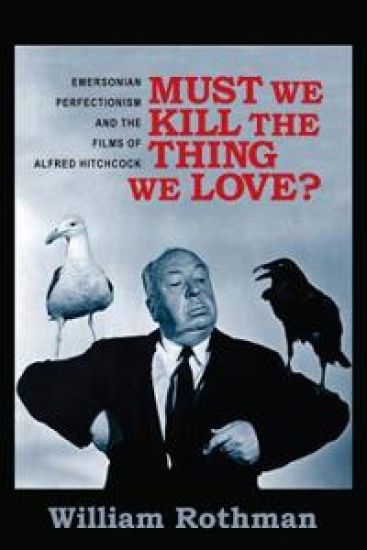
William Rothman argues that the driving force of Hitchcock's work was his struggle to reconcile the dark vision of his favorite Oscar Wilde quote, "Each man kills the thing he loves," with the quintessentially American philosophy, articulated in Emerson's writings, that gave classical Hollywood movies of the New Deal era their extraordinary combination of popularity and artistic seriousness. A Hitchcock thriller could be a comedy of remarriage or a melodrama of an unknown woman, both Emersonian genres, except for the murderous villain and godlike author, Hitchcock, who pulls the villain's strings-and ours. Because Hitchcock believed that the camera has a murderous aspect, the question "What if anything justifies killing?," which every Hitchcock film engages, was for him a disturbing question about his own art. Tracing the trajectory of Hitchcock's career, Rothman discerns a progression in the films' meditations on murder and artistic creation. This progression culminates in Marnie (1964), Hitchcock's most controversial film, in which Hitchcock overcame his ambivalence and fully embraced the Emersonian worldview he had always also resisted. Reading key Emerson passages with the degree of attention he accords to Hitchcock sequences, Rothman discovers surprising affinities between Hitchcock's way of thinking cinematically and the philosophical way of thinking Emerson's essays exemplify. He finds that the terms in which Emerson thought about reality, about our "flux of moods," about what it is within us that never changes, about freedom, about America, about reading, about writing, and about thinking are remarkably pertinent to our experience of films and to thinking and writing about them. He also reflects on the implications of this discovery, not only for Hitchcock scholarship but also for film criticism in general.
Hitchcock

Hitchcock

William Rothman

State University of New York Press
2012
sidottu
An expanded edition of a classic work of film criticism, with a provocative and eloquent new chapter on Marnie, Hitchcock's most heartfelt—and most controversial—film. First published in 1982, William Rothman's Hitchcock is a classic work of film criticism. Written in an engaging style that is philosophically sophisticated yet free of jargon, and using over nine hundred images from the films to illustrate and back up its critical claims, the book follows six different Hitchcock films as they unfold, moment by moment, from first shot to last. In addition to a thoughtful new preface and the original readings of The Lodger (1927), Murder! (1930), The 39 Steps (1935), Shadow of a Doubt (1943), and Psycho (1960), this expanded edition includes a groundbreaking new chapter-now the book's longest-on Marnie (1964), Hitchcock's most heartfelt yet most controversial film. Hitchcock never tired of quoting Oscar Wilde's line, "And all men kill the thing they love." Dark moods therefore prevail in the five original chapters, culminating in the reading of Psycho, but in demonstrating how Marnie overcomes, or transcends, the murderous aspect of Hitchcock's art, this new chapter balances the scales and gives an important new dimension to the book. With exemplary precision, Hitchcock, Second Edition shows how Hitchcock films express, cinematically, serious thoughts about such matters as the nature and relationships of love, murder, sexuality, marriage, and theater-and about their own medium. In so doing, it keeps faith with the idea that Hitchcock was a master, perhaps the master, of what he called the "art of pure cinema." However, insofar as it investigates philosophically the conditions of authorship in the medium of film, it is an auteurist study unlike any other. By attending to the films themselves and to the ways we experience them, rather than allowing some theory to dictate what to say about them, the book proves the fruitfulness of an approach that is open and responsive to the ways serious films are capable of teaching us how to think seriously about them.
Hitchcock

Hitchcock

William Rothman

State University of New York Press
2012
pokkari
An expanded edition of a classic work of film criticism, with a provocative and eloquent new chapter on Marnie, Hitchcock's most heartfelt—and most controversial—film.First published in 1982, William Rothman's Hitchcock is a classic work of film criticism. Written in an engaging style that is philosophically sophisticated yet free of jargon, and using over nine hundred images from the films to illustrate and back up its critical claims, the book follows six different Hitchcock films as they unfold, moment by moment, from first shot to last.In addition to a thoughtful new preface and the original readings of The Lodger (1927), Murder! (1930), The 39 Steps (1935), Shadow of a Doubt (1943), and Psycho (1960), this expanded edition includes a groundbreaking new chapter-now the book's longest-on Marnie (1964), Hitchcock's most heartfelt yet most controversial film. Hitchcock never tired of quoting Oscar Wilde's line, "And all men kill the thing they love." Dark moods therefore prevail in the five original chapters, culminating in the reading of Psycho, but in demonstrating how Marnie overcomes, or transcends, the murderous aspect of Hitchcock's art, this new chapter balances the scales and gives an important new dimension to the book.With exemplary precision, Hitchcock, Second Edition shows how Hitchcock films express, cinematically, serious thoughts about such matters as the nature and relationships of love, murder, sexuality, marriage, and theater-and about their own medium. In so doing, it keeps faith with the idea that Hitchcock was a master, perhaps the master, of what he called the "art of pure cinema." However, insofar as it investigates philosophically the conditions of authorship in the medium of film, it is an auteurist study unlike any other. By attending to the films themselves and to the ways we experience them, rather than allowing some theory to dictate what to say about them, the book proves the fruitfulness of an approach that is open and responsive to the ways serious films are capable of teaching us how to think seriously about them.
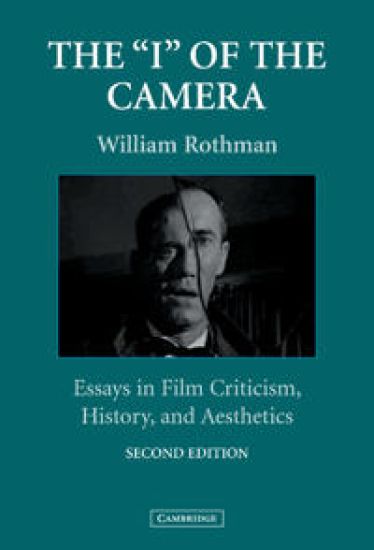
The 'I' of the Camera

The 'I' of the Camera

William Rothman

Cambridge University Press
2003
sidottu
The 'I' of the Camera has become a classic in the literature of film. Offering alternatives to the viewing and criticism of film, William Rothman challenges readers to think about film in adventurous ways that are more open to movies and our experience of them. In a series of eloquent essays examining particular films, filmmakers, genres and movements, and the 'Americanness' of American film, Rothman argues compellingly that movies have inherited the philosophical perspective of American transcendentalism. This second edition contains all of the essays that made the book a benchmark of film criticism. It also includes fourteen essays, written subsequent to the book's original publication, as well as a new foreword. The new chapters further broaden the scope of the volume, fleshing out its vision of film history and illuminating the author's critical method and the philosophical perspective that informs it.
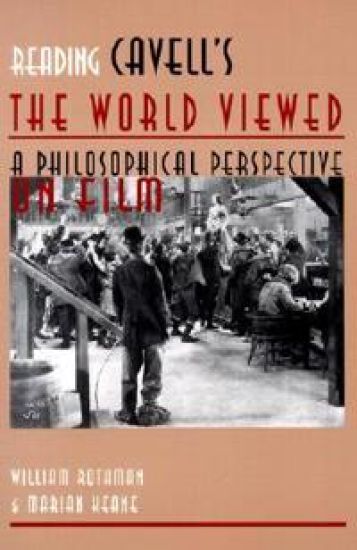
Reading Cavell's the World Viewed

Reading Cavell's the World Viewed

William Rothman

Wayne State University Press
2000
nidottu
In their study of one of Stanley Cavell's greatest yet most neglected books, William Rothman and Marian Keane address this eminent philosopher's many readers, from a variety of disciplines, who have neither understood why he has given film so much attention, nor grasped the place of ""The World Viewed"" within the totality of his writings about film. The authors also reintroduce ""The World Viewed"" to the field of film studies. When the new field entered universities in the late 1960s, it predicated its legitimacy on the conviction that the medium's artistic achievements called for serious criticism and on the corollary conviction that no existing field was capable of the criticism film called for. The study of film needed to found itself, intellectually, upon a philosophical investigation of the conditions of the medium and art of film. Such was the challenge ""The World Viewed"" took upon itself. However, film studies opted to embrace theory as a higher authority than our experiences of movies, divorcing itself from the philosophical perspective of self-reflection apart from which, ""The World Viewed"" teaches, we cannot know what movies mean, or what they are. Rothman and Keane now argue that the poststructuralist theories that dominated film studies for a quarter of a century no longer compel conviction, Cavell's brilliant and beautiful book can provide a sense of liberation to a field that has foresaken its original calling. Read in a way that acknowledges its philosophical achievement, ""The World Viewed"" can show the field a way to move forward by rediscovering its passion for the art of film. The title should be useful to scholars and students of film and philosophy, and to those in other fields, such as literary studies and American studies, who have found Cavell's work provocative and fruitful.
Documentary Film Classics

Documentary Film Classics

William Rothman

Cambridge University Press
1997
pokkari
Documentary Film Classics offers close readings on a number of major films, such as Nanook of the North, Land Without Bread, Night and Fog, Chronicle of a Summer and Don't Look Back. Spanning the history of the documentary film tradition, William Rothman analyses the philosophical and historical issues and themes implicit in these works. Designed to guide film students through the 'texts' of a wide range of documentaries, his readings also focus on the achievements of these works as films per se.