Kirjojen hintavertailu. Mukana 12 657 676 kirjaa ja 12 kauppaa.

Kirjailija

William Schweiker

Kirjat ja teokset yhdessä paikassa: 13 kirjaa, julkaisuja vuosilta 1986-2020, suosituimpien joukossa Religious Ethics. Vertaile teosten hintoja ja tarkista saatavuus suomalaisista kirjakaupoista.

13 kirjaa

Kirjojen julkaisuhaarukka 1986-2020.

Religious Ethics

Religious Ethics

William Schweiker; David A. Clairmont

Wiley-Blackwell (an imprint of John Wiley Sons Ltd)
2020
nidottu
An inclusive and innovative account of religious ethical thinking and acting in the world. Rather than merely applying existing forms of philosophical ethics, Religious Ethics defines the meaning of the field and presents a distinct and original method for ethical reflection through comparisons of world religious traditions. Written by leading scholars and educators in the field, this unique volume offers an innovative approach that reveals how religions concur and differ on moral matters, and provides practical guidance on thinking and living ethically. The book’s innovative method—integrating descriptive, normative, practical, fundamental, and metaethical dimensions of reflection—enables a far more complex and nuanced exploration of religious ethics than any single philosophical language, method, or theory can equal. First introducing the task of religious ethics, the book moves through each of the five dimensions of reflection to compare concepts such as good and evil, perplexity and wisdom, truth and illusion, and freedom and bondage in various theological contexts. Guides readers on understanding, assessing, and comparing the moral teachings and practices of world religionsApplies a disciplined, scholarly approach to the subject of religious ethicsExplores the distinctions between religious ethics and moral philosophyProvides a methodology which can be applied to comparative ethics for various religionsCompares religious traditions to illuminate each of the five dimensions of ethical and moral reflection Religious Ethics: Meaning and Method will help anyone interested in the relation between religion and ethics in the modern world, including those involved in general and comparative religion studies, religious and comparative ethics, and moral theory.

Power, Value, and Conviction

Power, Value, and Conviction

William Schweiker

Wipf Stock Publishers
2019
pokkari
""Schweiker's reflections are strikingly original and they ought to be required reading for everyone in the field of theological ethics."" -Douglas F. Ottati, Professor of Theology and Ethics, Union Theological Seminary and Presbyterian School of Christian Education ""With this new work, Schweiker continues his vital exploration of hermeneutical realism, responsibility ethics, moral formation, and the lives we live in our complex late modern cultures. This is a bracing, complex text that richly rewards those who engage it with the care it requires."" -Jean Bethke Elshtain, Laura Rockefeller Professor of Social and Political Ethics, University of Chicago, and author of Augustine and the Limits of Politics ""Schweiker has a comprehensive knowledge of contemporary moral thought--philosophical and theological, applied and theoretical. He brings a wealth of material together with a unifying theological perspective that sharpens our questions and renews our hope. This is an outstanding achievement."" -Robin W. Lovin, Dean and Professor of Ethics, Perkins School of Theology, Southern Methodist University William Schweiker is the Edward L. Ryerson Distinguished Service Professor of Theological Ethics at the University of Chicago. Born in Des Moines, Iowa (1953) he holds degrees from Simpson College, Duke University and also the University of Chicago. Besides teaching at Chicago, he has also been guest professor at Uppsala University and the University of Heidelberg. Schweiker s writings engage theological and ethical questions attentive to global dynamics, comparative religious ethics, the history of ethics, and hermeneutical philosophy. Schweiker has published five books, numerous articles and award-winning essays, as well as edited and contributed to six volumes, including A Companion to Religious Ethics (2004), a comprehensive and innovative work in the field of comparative religious ethics. He is currently working on a volume, Religious Ethics: Meaning and Method. Ongoing research is for a book on theological ethics and the integrity of life.
Dust that Breathes

Dust that Breathes

William Schweiker

Wiley-Blackwell (an imprint of John Wiley Sons Ltd)
2010
sidottu
In this insightful and look at the practical challenges and possibilities for Christian life in the global age, Schweiker investigates Christianity’s current relevance and discusses how the life of faith can be oriented. Explores the big religious themes of modern life, including religious identity in global times, the role of conscience, integrity, and versions of religious humanismWritten by an author who is internationally recognized as one of the world’s leading theologiansDraws on the work of some prominent contemporary philosophers and theologians to clarify the nature of faithUnique in its appreciation of the ambiguity of religion – in its representations of the highest human achievements as well as the very worst of human actions – using a balanced and engaged approach to discusses contentious theological and intellectual issues
Religion and the Human Future

Religion and the Human Future

David E. Klemm; William Schweiker

Wiley-Blackwell (an imprint of John Wiley Sons Ltd)
2008
sidottu
This powerful manifesto outlines a vision called theological humanism based on the idea that that the integrity of life provides a way to articulate the meaning of religion for the human future. Explores a profound quest to understand the meaning and responsibility of our shared and yet divided humanity amidst the uncertainty of modern societyArticulates the idea that human beings are mixed creatures striving for integrity not only trying to conform to God's willSets forth a dynamic and robust vision of human life beyond the divisions that haunt the humanities, social sciences, theology, and religious studies
Religion and the Human Future

Religion and the Human Future

David E. Klemm; William Schweiker

Wiley-Blackwell (an imprint of John Wiley Sons Ltd)
2008
nidottu
This powerful manifesto outlines a vision called theological humanism based on the idea that that the integrity of life provides a way to articulate the meaning of religion for the human future. Explores a profound quest to understand the meaning and responsibility of our shared and yet divided humanity amidst the uncertainty of modern societyArticulates the idea that human beings are mixed creatures striving for integrity not only trying to conform to God's willSets forth a dynamic and robust vision of human life beyond the divisions that haunt the humanities, social sciences, theology, and religious studies
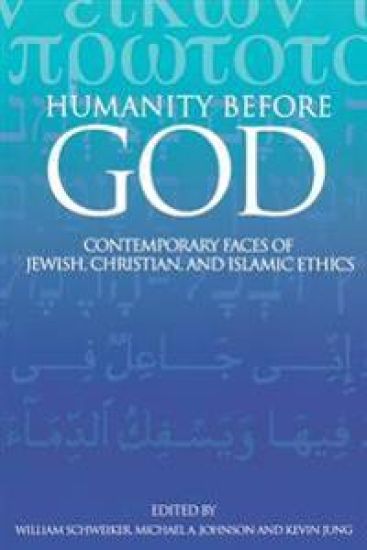
Humanity before God

Humanity before God

Michael Johnson; Kevin Jung; William Schweiker

Augsburg Fortress
2006
pokkari
Does religious extremism represent an inevitable consequence of firmly held beliefs in life-and-death situations? Is there a way out? Gathering ethicists and scholars from the three major and often conflicting monotheistic traditions, each was asked to correlate a religious tradition's sacred texts and tradition with the contemporary world's pluralism and claims about the inalienable sanctity and dignity of human life. The result is that the reader sees "human life before God" in new and profound ways.
Theological Ethics and Global Dynamics

Theological Ethics and Global Dynamics

William Schweiker

Wiley-Blackwell (an imprint of John Wiley Sons Ltd)
2004
sidottu
The nature of ethics has been the subject of much controversy and argument in recent decades. Theological Ethics and Global Dynamics tackles these various debates, offering a wide-ranging, comprehensive, and provocative statement of the nature of theological ethics in global times. Offers an accessible, lively, and provocative statement of the nature of moral philosophy and theological ethics in contemporary times. Tackles various perspectives on debates about distinctly Christian ethics. Argues that we need to reframe the arena in which moral questions are asked. Engages a range of positions, exploring distinctively modern issues such as moral and cultural relativism, globalization, problems of consumption and violence, and religious pluralism. Addresses the complexity of certain ethical decisions, which are difficult and far from clear-cut, and yet presents an ethical understanding which is both humane and deeply religious.
Theological Ethics and Global Dynamics

Theological Ethics and Global Dynamics

William Schweiker

Wiley-Blackwell (an imprint of John Wiley Sons Ltd)
2004
nidottu
The nature of ethics has been the subject of much controversy and argument in recent decades. Theological Ethics and Global Dynamics tackles these various debates, offering a wide-ranging, comprehensive, and provocative statement of the nature of theological ethics in global times. Offers an accessible, lively, and provocative statement of the nature of moral philosophy and theological ethics in contemporary times. Tackles various perspectives on debates about distinctly Christian ethics. Argues that we need to reframe the arena in which moral questions are asked. Engages a range of positions, exploring distinctively modern issues such as moral and cultural relativism, globalization, problems of consumption and violence, and religious pluralism. Addresses the complexity of certain ethical decisions, which are difficult and far from clear-cut, and yet presents an ethical understanding which is both humane and deeply religious.
Responsibility and Christian Ethics

Responsibility and Christian Ethics

William Schweiker

Cambridge University Press
1999
pokkari
The purpose of this book is to formulate a way of thinking about issues of power, moral identity, and ethical norms by developing a theory of responsibility from a specifically theological viewpoint; the author thereby makes clear the significance for Christian commitment of current reflection on moral responsibility. The concept of responsibility is relatively new in ethics, but the drastic extension of human power through various technological developments has lately thrown into question the way human beings conceive of themselves as morally accountable agents. It is this radical extension of power in our time which poses the need for a new paradigm of responsibility in ethics. Schweiker engages in an informed way with what is therefore a highly topical discussion. By developing a coherent theory of responsibility, and inquiring as to its source, the author demonstrates the unique contribution of Christian faith to ethics in our time.
Mimetic Reflections

Mimetic Reflections

William Schweiker

Fordham University Press
1990
sidottu
This book argues that a basic problem in thinking about understanding, temporality, and selfhood is due to "imitative" modes of thought found in much traditional Western philosophy and theology. Given this, the book examines the complex role that "image" and "imitation" play in understanding and its world of meaning, the import of language and narrative for configuring human temporality, and the existence of self. The author's contention is that when critically understood, mimesis, with its roots in performative enactment, holds resources for reconsidering these basic dimensions of human life beyond imitative paradigms of thought.
Mimetic Reflections

Mimetic Reflections

William Schweiker

Fordham University Press
1990
pokkari
This book argues that a basic problem in thinking about understanding, temporality, and selfhood is due to "imitative" modes of thought found in much traditional Western philosophy and theology. Given this, the book examines the complex role that "image" and "imitation" play in understanding and its world of meaning, the import of language and narrative for configuring human temporality, and the existence of self. The author's contention is that when critically understood, mimesis, with its roots in performative enactment, holds resources for reconsidering these basic dimensions of human life beyond imitative paradigms of thought.
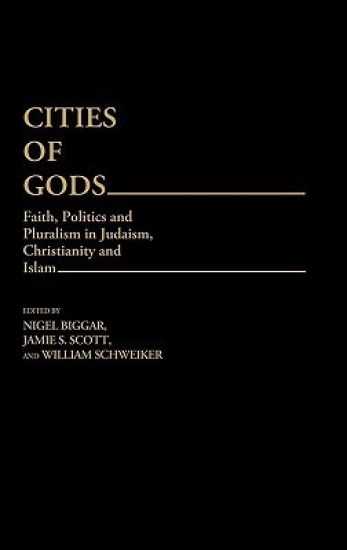
Cities of Gods

Cities of Gods

Nigel Biggar; William Schweiker; Jamie S. Scott

Praeger Publishers Inc
1986
sidottu
In this fertile collection of essays, prominent theologians, philosophers, historians, and social scientists explore the mutual entanglements of religious identity with political activity in religiously plural societies. Four essays are devoted to each of the three great religions of The Book, evidencing the variety of conceptions of such a relation within the same religious tradition and demonstrating how they came to be so conceived. In addition, the three sections together display intriguing similarities between the conceptions that are pertinent to the different traditions. These range from definant theocracy to religious sanction of the liberal, secular state.