
Kirjailija
William Scott
Kirjat ja teokset yhdessä paikassa: 71 kirjaa, julkaisuja vuosilta 1993-2026, suosituimpien joukossa Rental Risk Control. Vertaile teosten hintoja ja tarkista saatavuus suomalaisista kirjakaupoista.
71 kirjaa
Kirjojen julkaisuhaarukka 1993-2026.
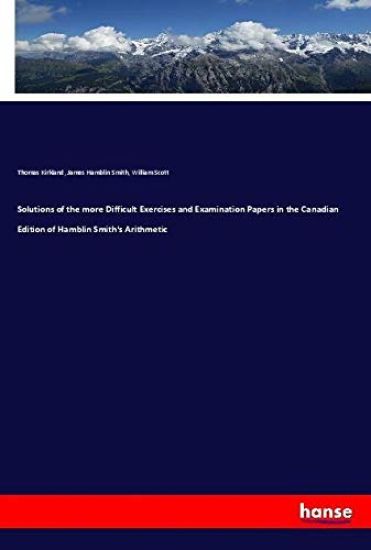
Solutions of the more Difficult Exercises and Examination Papers in the Canadian Edition of Hamblin Smith's Arithmetic
Thomas Kirkland; James Hamblin Smith; William Scott
Hansebooks
2018
nidottu
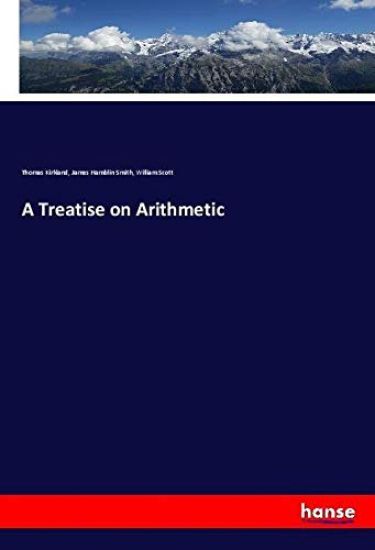
A Treatise on Arithmetic
Thomas Kirkland; James Hamblin Smith; William Scott
Hansebooks
2018
nidottu
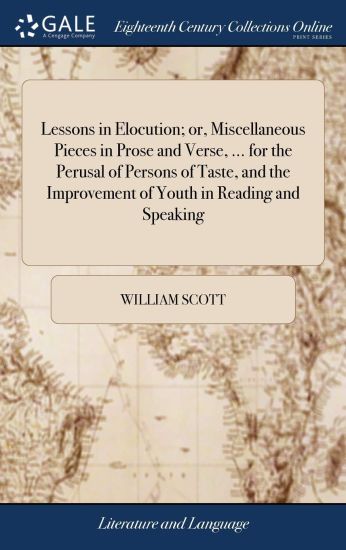
Lessons in Elocution; or, Miscellaneous Pieces in Prose and Verse, ... for the Perusal of Persons of Taste, and the Improvement of Youth in Reading and Speaking
William Scott
Gale Ecco, Print Editions
2018
sidottu
The 18th century was a wealth of knowledge, exploration and rapidly growing technology and expanding record-keeping made possible by advances in the printing press. In its determination to preserve the century of revolution, Gale initiated a revolution of its own: digitization of epic proportions to preserve these invaluable works in the largest archive of its kind. Now for the first time these high-quality digital copies of original 18th century manuscripts are available in print, making them highly accessible to libraries, undergraduate students, and independent scholars.Western literary study flows out of eighteenth-century works by Alexander Pope, Daniel Defoe, Henry Fielding, Frances Burney, Denis Diderot, Johann Gottfried Herder, Johann Wolfgang von Goethe, and others. Experience the birth of the modern novel, or compare the development of language using dictionaries and grammar discourses. ++++The below data was compiled from various identification fields in the bibliographic record of this title. This data is provided as an additional tool in helping to insure edition identification: ++++British LibraryT085037Printer's name from colophon.Edinburgh: printed for, and sold by the compiler: also by C. Elliot, Edinburgh; and T. Longman, London printed by Churnside and Wilson], 1779. xiv,442p.; 12

Elementary Arithmetic on the Unitary System...
William Scott; Thomas Kirkland
Sagwan Press
2018
pokkari
This work has been selected by scholars as being culturally important, and is part of the knowledge base of civilization as we know it. This work was reproduced from the original artifact, and remains as true to the original work as possible. Therefore, you will see the original copyright references, library stamps (as most of these works have been housed in our most important libraries around the world), and other notations in the work.This work is in the public domain in the United States of America, and possibly other nations. Within the United States, you may freely copy and distribute this work, as no entity (individual or corporate) has a copyright on the body of the work.As a reproduction of a historical artifact, this work may contain missing or blurred pages, poor pictures, errant marks, etc. Scholars believe, and we concur, that this work is important enough to be preserved, reproduced, and made generally available to the public. We appreciate your support of the preservation process, and thank you for being an important part of keeping this knowledge alive and relevant.
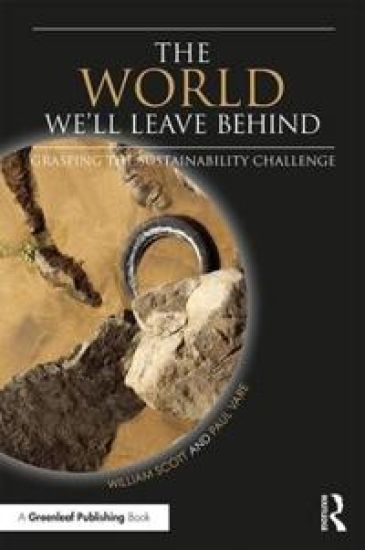
It is now clear that human activity has influenced how the biosphere supports life on Earth, and given rise to a set of connected environmental and social problems. In response to the challenge that these problems present, a series of international conferences and summits led to discussions of sustainable development and the core dilemma of our time: How can we all live well, now and in the future, without compromising the ability of the planet to enable us all to live well?This book identifies the main issues and challenges we now face; it explains the ideas that underpin them and their interconnection, and discusses a range of strategies through which they might be addressed and possibly resolved. These cover things that governments might do, what businesses and large organisations can contribute, and the scope for individuals, families and communities to get involved. This book is for everyone who cares about such challenges, and wants to know more about them.
It is now clear that human activity has influenced how the biosphere supports life on Earth, and given rise to a set of connected environmental and social problems. In response to the challenge that these problems present, a series of international conferences and summits led to discussions of sustainable development and the core dilemma of our time: How can we all live well, now and in the future, without compromising the ability of the planet to enable us all to live well?This book identifies the main issues and challenges we now face; it explains the ideas that underpin them and their interconnection, and discusses a range of strategies through which they might be addressed and possibly resolved. These cover things that governments might do, what businesses and large organisations can contribute, and the scope for individuals, families and communities to get involved. This book is for everyone who cares about such challenges, and wants to know more about them.

The Florists' Manual - A Reference Book for Commerical Florists is an unchanged, high-quality reprint of the original edition of 1899. Hansebooks is editor of the literature on different topic areas such as research and science, travel and expeditions, cooking and nutrition, medicine, and other genres. As a publisher we focus on the preservation of historical literature. Many works of historical writers and scientists are available today as antiques only. Hansebooks newly publishes these books and contributes to the preservation of literature which has become rare and historical knowledge for the future.

The Model of Poesy is one of the most exciting literary discoveries of recent years. A manuscript treatise on poetics written by William Scott in 1599, at the end of the most revolutionary decade in English literary history, it includes rich discussions of the works of Sidney, Spenser, Shakespeare and their contemporaries. Scott's work presents a powerful and coherent theoretical account of all aspects of poetics, from the nature of representation to the rules of versification, with a commitment to relating theory to contemporary practice. For Scott, any theory of literature must make sense not of the classics but of what English writers are doing now: Scott is at the same time the most scholarly and the most relevant of English Renaissance critics. In this groundbreaking edition, Gavin Alexander presents a text of The Model of Poesy framed by a detailed introduction and an extensive commentary, which together demonstrate the range and value of Scott's thought.


The Model of Poesy is one of the most exciting literary discoveries of recent years. A manuscript treatise on poetics written by William Scott in 1599, at the end of the most revolutionary decade in English literary history, it includes rich discussions of the works of Sidney, Spenser, Shakespeare and their contemporaries. Scott's work presents a powerful and coherent theoretical account of all aspects of poetics, from the nature of representation to the rules of versification, with a commitment to relating theory to contemporary practice. For Scott, any theory of literature must make sense not of the classics but of what English writers are doing now: Scott is at the same time the most scholarly and the most relevant of English Renaissance critics. In this groundbreaking edition, Gavin Alexander presents a text of The Model of Poesy framed by a detailed introduction and an extensive commentary, which together demonstrate the range and value of Scott's thought.

William Scott’s Troublemakers explores how a major change in the nature and forms of working-class power affected novels about U.S. industrial workers in the first half of the twentieth century. With the rise of mechanization and assembly-line labor from the 1890s to the 1930s, these laborers found that they had been transformed into a class of “mass” workers who, since that time, have been seen alternately as powerless, degraded victims or heroic, empowered icons who could rise above their oppression only through the help of representative organizations located outside the workplace.Analyzing portrayals of workers in such novels as Upton Sinclair’s The Jungle, Ruth McKenney's Industrial Valley, and Jack London’s The Iron Heel, William Scott moves beyond narrow depictions of these laborers to show their ability to resist exploitation through their direct actions—sit-down strikes, sabotage, and other spontaneous acts of rank-and-file “troublemaking” on the job—often carried out independently of union leadership. The novel of the mass industrial worker invites us to rethink our understanding of modern forms of representation through its attempts to imagine and depict workers’ agency in an environment where it appears to be completely suppressed.
William Scott’s Troublemakers explores how a major change in the nature and forms of working-class power affected novels about U.S. industrial workers in the first half of the twentieth century. With the rise of mechanization and assembly-line labor from the 1890s to the 1930s, these laborers found that they had been transformed into a class of “mass” workers who, since that time, have been seen alternately as powerless, degraded victims or heroic, empowered icons who could rise above their oppression only through the help of representative organizations located outside the workplace.Analyzing portrayals of workers in such novels as Upton Sinclair’s The Jungle, Ruth McKenney's Industrial Valley, and Jack London’s The Iron Heel, William Scott moves beyond narrow depictions of these laborers to show their ability to resist exploitation through their direct actions—sit-down strikes, sabotage, and other spontaneous acts of rank-and-file “troublemaking” on the job—often carried out independently of union leadership. The novel of the mass industrial worker invites us to rethink our understanding of modern forms of representation through its attempts to imagine and depict workers’ agency in an environment where it appears to be completely suppressed.
Paramedics! Test yourself in Pathophysiology
Katherine Rogers; William Scott; Stuart Warner; Bob Willis
Open University Press
2011
nidottu
"This charming little book offers students and professionals alike a chance to review their knowledge of pathophysiology in a simple and easy to use manner … It summarises all key areas and offers the reader a quick questions and answers book which is unique in the paramedic literature world. A fantastic book."Ruth Lambert, Qualified Paramedic, UKParamedics! Test yourself in Pathophysiology is the essential self-test resource to help paramedics revise and excel in their pathophysiology modules and exams.With over 250 questions, 60 glossary terms, fully explained answers and explanations, this book covers the most common presentations seen in the paramedic practice, accessible through:Multiple choice questionsTrue or false questionsFill in the blank questionsLabelling exercisesAn extensive glossary explains all the key terms and disease names Each main body system has its own chapter, so you can get in depth practice for your exams. Body systems covered include: Integumentary system Nervous system and special senses Cardiovascular system Digestive system Inflammation, infection and immunity Musculoskeletal system Endocrine system Respiratory system Urinary system Reproductive systems
Paramedics! Test yourself in Anatomy and Physiology
Katherine Rogers; William Scott; Stuart Warner; Bob Willis
Open University Press
2011
nidottu
"This book is set out in a logical and progressive style allowing students to access required chapters with ease. The test yourself questions allow for a number of different learning styles and will prove an invaluable aid for both learning and revision for paramedic students."Mark Millins, Senior Lecturer Paramedic Science, Teesside University, UK"I found this to be a highly beneficial and interesting resource to test my own knowledge of the basics and the underlying anatomy and physiology of body systems. I would recommend this text to all student Paramedics whilst in the learning phase."Gemma Chapman, Student Paramedic, Brighton University, UK.Paramedics! Test yourself in Anatomy and Physiology is the essential self-test resource to help paramedics revise and excel in their anatomy and physiology modules and exams.Crammed full of over 400 questions, this unique book also includes fully explained answers and explanations to help consolidate learning as you test yourself using:Anatomy artworkMultiple choice questionsTrue or false questionsFill in the blank questionsLabelling exercisesAn extensive glossary explains all the key termsEach main body system has its own chapter, so you can get in depth practice for your exams. Body systems covered include: Integumentary system Nervous system and special senses Cardiovascular system Digestive system Immune and lymphatic systems Musculoskeletal system Endocrine system Respiratory system Urinary system Reproductive systems