Kirjojen hintavertailu. Mukana 12 595 353 kirjaa ja 12 kauppaa.

Kirjailija

William Sheehan

Kirjat ja teokset yhdessä paikassa: 24 kirjaa, julkaisuja vuosilta 2003-2026, suosituimpien joukossa Discovering Mars. Vertaile teosten hintoja ja tarkista saatavuus suomalaisista kirjakaupoista.

24 kirjaa

Kirjojen julkaisuhaarukka 2003-2026.

Discovering Mars

Discovering Mars

William Sheehan; Jim Bell

University of Arizona Press
2021
sidottu
For millenia humans have considered Mars the most fascinating planet in our solar system. We’ve watched this Earth-like world first with the naked eye, then using telescopes, and, most recently, through robotic orbiters and landers and rovers on the surface.Historian William Sheehan and astronomer and planetary scientist Jim Bell combine their talents to tell a unique story of what we’ve learned by studying Mars through evolving technologies. What the eye sees as a mysterious red dot wandering through the sky becomes a blurry mirage of apparent seas, continents, and canals as viewed through Earth-based telescopes. Beginning with the Mariner and Viking missions of the 1960s and 1970s, space-based instruments and monitoring systems have flooded scientists with data on Mars’s meteorology and geology, and have even sought evidence of possible existence of life-forms on or beneath the surface. This knowledge has transformed our perception of the Red Planet and has provided clues for better understanding our own blue world.Discovering Mars vividly conveys the way our understanding of this other planet has grown from earliest times to the present. The story is epic in scope—an Iliad or Odyssey for our time, at least so far largely without the folly, greed, lust, and tragedy of those ancient stories. Instead, the narrative of our quest for the Red Planet has showcased some of our species’ most hopeful attributes: curiosity, cooperation, exploration, and the restless drive to understand our place in the larger universe. Sheehan and Bell have written an ambitious first draft of that narrative even as the latest chapters continue to be added both by researchers on Earth and our robotic emissaries on and around Mars, including the latest: the Perseverance rover and its Ingenuity helicopter drone, which set down in Mars’s Jezero Crater in February 2021.
Solar Eclipses

Solar Eclipses

William Sheehan

REAKTION BOOKS
2026
sidottu
For millennia, solar eclipses have stirred awe and fear. Once seen as omens, they are now celebrated as rare spectacles that unite science and wonder. This accessible, richly illustrated book explores their cultural, emotional and scientific significance, from ancient myths to modern eclipse-chasing expeditions. It traces how eclipses helped unlock secrets of the Sun, and why witnessing one inspires powerful reactions and lifelong fascination. The book also offers practical guidance for planning and observing upcoming eclipses, making it an essential companion for curious observers and seasoned eclipse-hunters alike. Combining historical depth, scientific insight and personal experience, this is the definitive guide to one of nature’s most dramatic and moving celestial events.
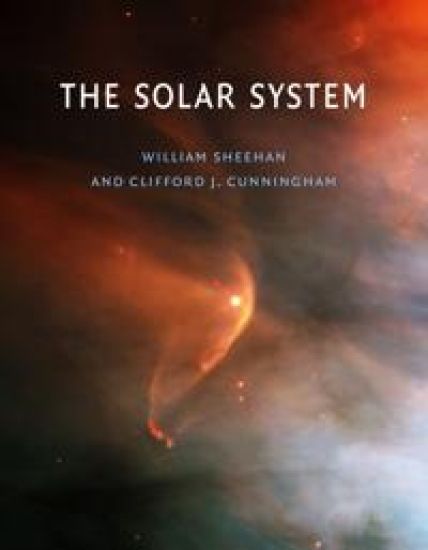
The Solar System

The Solar System

William Sheehan; Clifford J. Cunningham

REAKTION BOOKS
2025
sidottu
As recently as the dawn of the Space Age, the solar system was still largely unknown. The first probes to the Moon, Venus and Mars ushered in a golden age of planetary science, transforming planets from distant mysteries into vividly realized worlds. This book provides a comprehensive, accessible survey of the entire solar system, covering all major planets from Mercury to Saturn, the outer solar system and asteroids. It includes insights from leading scientists through in-person interviews, offering an engaging overview for general readers and amateur astronomers. Noting Earth’s small, beautiful and precarious nature, this book fills a unique niche, presenting the latest discoveries without losing sight of the broader picture, making it essential for anyone interested in our celestial neighbourhood.
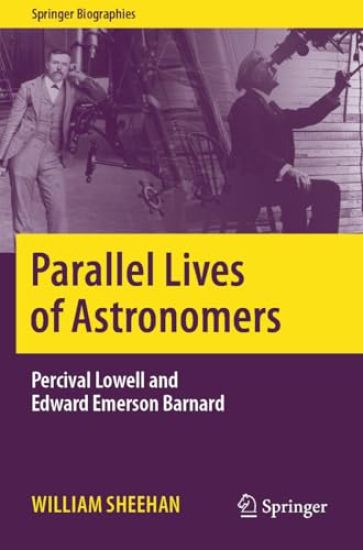
Parallel Lives of Astronomers

Parallel Lives of Astronomers

William Sheehan

Springer International Publishing AG
2024
sidottu
Using the "Parallel Lives" approach adopted by the Greek biographer Plutarch, noted historian of astronomy William Sheehan contrasts the lives and research careers of two famous astronomers, Percival Lowell and Edward Emerson Barnard. Drawing on vast archival materials and hitherto unpublished source materials, Sheehan documents in detail the contributions of these two late 19th and early 20th astronomers. Living at a time when controversies about Mars peaked, when great observatories were being built, and when research increasingly turned away from the Solar System toward the stellar and extra-galactic universe, these observers made spectacular contributions to astronomy. Their work still inspires, and continues in Perseverance rover's explorations of the surface of Mars carrying forward Lowell's dream of showing that Mars may once have been "the abode of life," and in Barnard's pioneering wide-angle photographs of the Milky Way which first showed the sweep, majesty and complexity of the Galaxy. The work of decades of research and writing, Sheehan has produced what is likely to become the definitive work on these two great astronomers. "Parallel Lives marks an important contribution to the history of astronomy. The book is masterful and inventive. William Sheehan could hardly have chosen two more compelling—or contrasting—personalities to analyze in this fascinating dual biography." - David Baron, author of American Eclipse and The Martians, and former Chair in Astrobiology at the Library of Congress. "Sheehan has united scientific acumen, detailed historical research, penetrating insight into character, and narrative virtuosity—and adapted it all to an ancient Greek model—a remarkable achievement!" - Michael Armstrong, Assoc. Prof. Emeritus of Classics, Hobart and William Smith Colleges, Geneva NY William Sheehan's many books include the authoritative biography The Immortal Fire Within: The Life and Work of Edward Emerson Barnard and (with Jim Bell) Discovering Mars: A History of Observation and Exploration of the Red Planet, which has been called the "gold standard of books on Mars" (Michio Kaku).
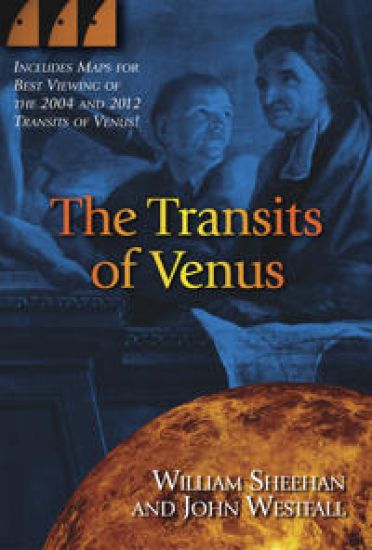
The Transits of Venus

The Transits of Venus

William Sheehan; John Westfall

PROMETHEUS BOOKS
2024
pokkari
In this unique and fascinating history of science, acclaimed popular science writer William Sheehan - who was awarded a Guggenheim Fellowship for Science Writing - and award-winning geographer John Westfall take us back through the centuries to chronicle the intrepid explorations of scientists and adventurers who studied the transits of Venus in the quest for scientific understanding.
Jupiter

Jupiter

William Sheehan; Thomas Hockey

REAKTION BOOKS
2023
nidottu
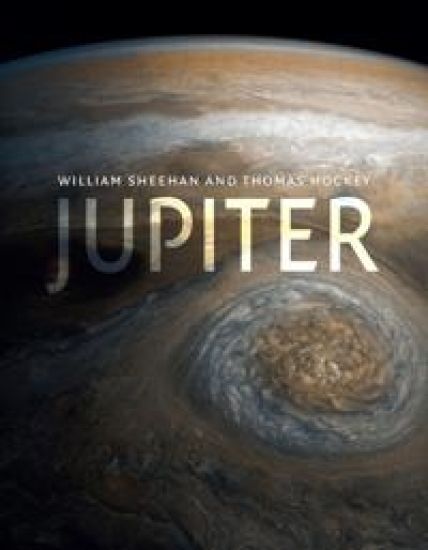
Now available in paperback, this beautifully illustrated volume ranges across the entire history of Jupiter studies, from the naked-eye observations of the Babylonians and the Greeks, through the telescopic discoveries of Galileo and T.E.R. Phillips, to the explosion of information received from space probes. It brings our understanding of Jupiter right up to date and includes preliminary findings from the Juno space probe, while also providing valuable practical information for those who wish to make their own observations of the planet. Introducing planetary science in an accessible and engaging way, Jupiter will appeal to those who wish to have a better understanding of this magnificent planet and its unique place in the solar system.
Venus

Venus

William Sheehan; Sanjay Shridhar Limaye

REAKTION BOOKS
2022
sidottu
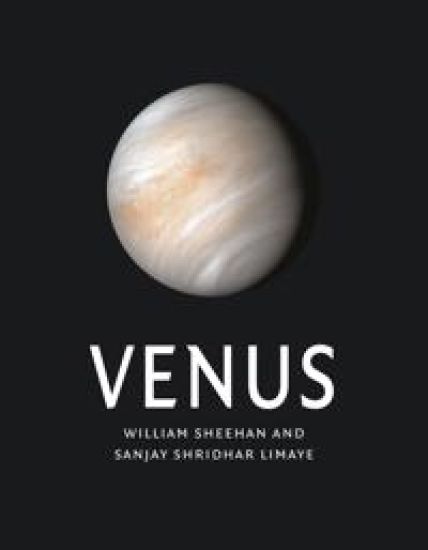
This new and beautifully illustrated account of Venus takes in the most recent research into this mysterious, inhospitable world. Looking at the history of our observations of the planet, from early astronomy to future space missions, it seeks to answer many of the questions that remain unanswered, such as why Venus and Earth, so similar in size and mass, evolved in such different directions, and how Venus acquired its dense carbon-dioxide atmosphere. Above all, it assesses whether life might have escaped from the oven-like temperatures at the surface and evolved to become perpetually airborne – in which case Venus may not be lifeless after all.
Saturn

Saturn

William Sheehan

Reaktion Books
2019
sidottu
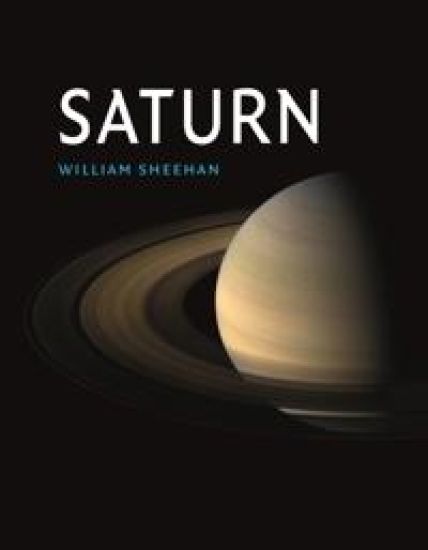
Saturn is the showcase of the Solar System. It may not be the largest of the planets, nor the smallest, nor even the only planet with rings. But it is among the most stunningly beautiful objects in the sky, and is always breathtaking when seen in a telescope.This is a beautifully illustrated, authoritative overview of the entire history of humankind’s fascination with the ringed planet, from the first low-resolution views of Galileo, Huygens and other early observers with telescopes to the most recent discoveries by the spacecraft Cassini, which studied the planet at close range between 2004 and 2017. The book describes the planet from inside out, details the complicated system of rings and their interaction with Saturn’s bevy of satellites, and considers how Saturn formed and the role it played in the early history of the Solar System. Featuring the latest research and a spectacular array of images, it will appeal to the wide audience for astronomy and popular science.
Worlds in the Sky

Worlds in the Sky

William Sheehan

University of Arizona Press
2019
nidottu
Ever since early stargazers discovered that some heavenly bodies wandered among the others, people have been fascinated by the planets. Kepler calculated their orbits from naked-eye observations; Galileo's telescope made it possible to discern their markings; now observations from spacecraft provide electronically enhanced images that bring these distant worlds even closer. In Worlds in the Sky, William Sheehan gives us a history of this long fascination, weaving together scientific history, anecdotes surrounding planetary discoveries, and the personal reflections of an incurable amateur astronomer. He describes how we arrived at our current understanding of the Moon and the planets and shows how certain individuals in history shaped the world's knowledge about the Solar System.The University of Arizona Press's Century Collection employs the latest in digital technology to make previously out-of-print books from our notable backlist available once again. Enriching historical and cultural experiences for readers, this collection offers these volumes unaltered from their original publication and in affordable digital or paperback formats.
Discovering Pluto

Discovering Pluto

Dale P. Cruikshank; William Sheehan

University of Arizona Press
2019
nidottu
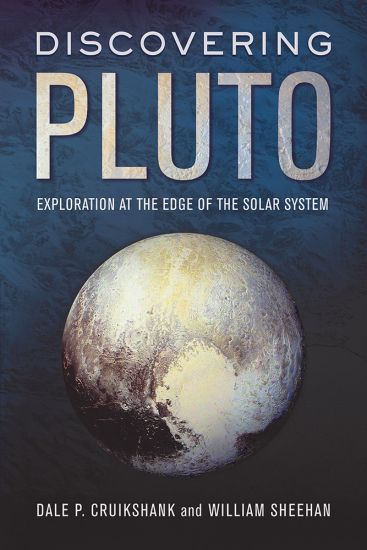
Discovering Pluto is an authoritative account of the exploration of Pluto and its moons, from the first inklings of tentative knowledge through the exciting discoveries made during the flyby of the NASA New Horizons research spacecraft in July 2015. Co-author Dale P. Cruikshank was a co-investigator on the New Horizons mission, while co-author William Sheehan is a noted historian of the Solar System.Telling the tale of Pluto's discovery, the authors recount the grand story of our unfolding knowledge of the outer Solar System, from William Herschel's serendipitous discovery of Uranus in 1781, to the mathematical prediction of Neptune's existence, to Percival Lowell's studies of the wayward motions of those giant planets leading to his prediction of another world farther out. Lowell's efforts led to Clyde Tombaugh's heroic search and discovery of Pluto—then a mere speck in the telescope—at Lowell Observatory in 1930.Pluto was finally recognized as the premier body in the Kuiper Belt, the so-called third zone of our Solar System. The first zone contains the terrestrial planets (Mercury through Mars) and the asteroid belt; the second, the gas-giant planets Jupiter through Neptune. The third zone, holding Pluto and the rest of the Kuiper Belt, is the largest and most populous region of the solar system. Now well beyond Pluto, New Horizons will continue to wend its lonely way through the galaxy, but it is still transmitting data, even today. Its ultimate legacy may be to inspire future generations to uncover more secrets of Pluto, the Solar System, and the Universe.
Mercury

Mercury

William Sheehan

Reaktion Books
2018
sidottu
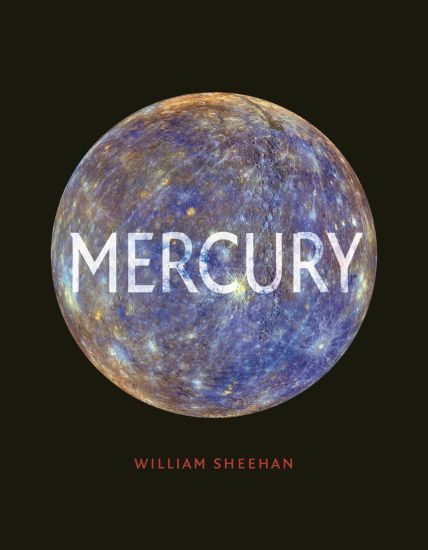
The last of the five naked-eye planets discovered in ancient times, Mercury has long been an elusive, enigmatic world. As seen from the Earth, it never emerges far from the Sun, and astronomers in the telescopic era found it challenging to work out such basic data as its rotation period, the inclination of its axis, and whether or not it possessed an atmosphere.In this up-to-date and beautifully illustrated volume, William Sheehan brings our understanding of the planet into clear focus. He deftly traces the history from the earliest observations right up to the most recent explorations using radar and spacecraft. The planet has been surveyed in great detail, revealing vast volcanic plains, water-ice deposits in craters near the poles, and a remarkable core having the highest iron content of any body of the Solar System. A fascinating world in its own right, Mercury also holds important clues for scientists attempting to better understand the origin and evolution of the Earth.
Jupiter

Jupiter

William Sheehan; Thomas Hockey

Reaktion Books
2018
sidottu
Jupiter is the grandest of all planets. It is by far the largest planet in the solar system and among the brightest objects in the night sky, and its calming presence has inspired humans for centuries. Jupiter was the `beloved star' of the ancient Sumerians and Babylonians, the first serious observers of the planets, and the Pioneer and Voyager spacecraft visited it in the 1970s. Now it is being scrutinized as never before by NASA's Juno spacecraft, as experts begin to have a comprehensive view of the origin, composition and structure of this gas giant world. This beautifully illustrated volume ranges across the entire history of Jupiter studies, from the naked-eye observations of the Babylonians and the Greeks, through the telescopic discoveries of Galileo and T.E.R. Phillips, to the explosion of information received from space probes. It brings our understanding of Jupiter right up to date and includes preliminary findings from the Juno space probe, while also providing valuable practical information for those who wish to make their own observations of the planet. Introducing planetary science in an accessible and engaging way, Jupiter will appeal to those who wish to have a better understanding of this magnificent planet and its unique place in the solar system.
Discovering Pluto

Discovering Pluto

Dale P. Cruikshank; William Sheehan

University of Arizona Press
2018
sidottu
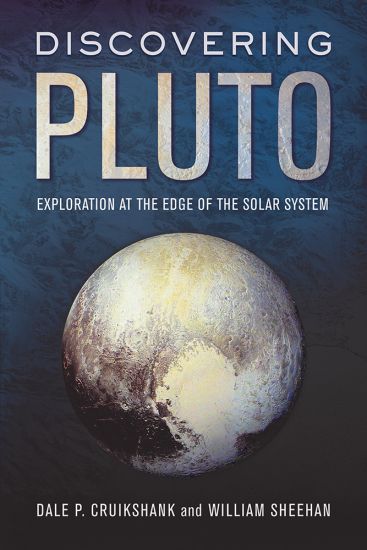
Discovering Pluto is an authoritative account of the exploration of Pluto and its moons, from the first inklings of tentative knowledge through the exciting discoveries made during the flyby of the NASA research spacecraft New Horizons in July 2015. Co-author Dale P. Cruikshank was co-investigator on the New Horizons mission, while co-author William Sheehan is a noted historian of the solar system.Telling the tale of Pluto's discovery, the authors recount the grand story of our unfolding knowledge of the outer solar system, from William Herschel's serendipitous discovery of Uranus in 1781, to the mathematical prediction in 1846 of Neptune's existence, to Percival Lowell's studies of the wayward motions of those giant planets leading to his prediction of another world farther out. Lowell's efforts led to Clyde Tombaugh's heroic search and discovery of Pluto-then a mere speck in the telescope-at Lowell Observatory in 1930.Pluto was finally recognized as the premier body in the Kuiper Belt, the so-called third zone of our solar system. The first zone contains the terrestrial planets (Mercury through Mars) and the asteroid belt; the second, the gas-giant planets Jupiter through Neptune. The third zone, holding Pluto and the rest of the Kuiper Belt, is the largest and most populous region of the solar system.Now well beyond Pluto, New Horizons will continue to wend its lonely way through the galaxy, but it is still transmitting data, even today. Its ultimate legacy may be to inspire future generations to uncover more secrets of Pluto, the solar system, and the universe.
A Hard Local War

A Hard Local War

William Sheehan

The History Press Ltd
2017
nidottu
Following years of discontent over Home Rule and the Easter Rising, the deaths of two Royal Irish Constabulary policemen in Soloheadbeg at the hands of the IRA in 1919 signalled the outbreak of war in Ireland. The Irish War of Independence raged until a truce between the British Army and the IRA in 1921, historical consensus being that the conflict ended in military stalemate. In A Hard Local War, William Sheeham sets out to prove that no such stalemate existed, and that both sides were continually innovative and adaptive. Using new research and previously unpublished archive material, he traces the experience of the British rank and file, their opinion of their opponents, the special forces created to fight in the Irish countryside, RAF involvement and the evolution of IRA reliance on IEDs and terrorism.
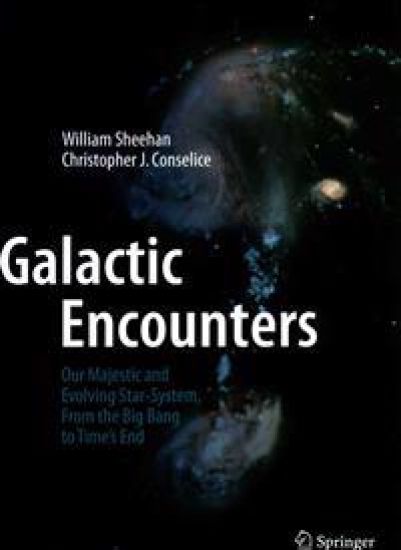
Galactic Encounters

Galactic Encounters

William Sheehan; Christopher J. Conselice

Springer-Verlag New York Inc.
2016
nidottu
Written by William Sheehan, a noted historian of astronomy, and Christopher J. Conselice, a professional astronomer specializing in galaxies in the early universe, this book tells the story of how astronomers have pieced together what is known about the vast and complicated systems of stars and dust known as galaxies. The first galaxies appeared as violently disturbed exotic objects when the Universe was only a few 100 million years old. From that tortured beginning, they have evolved though processes of accretion, merging and star formation into the majestic spirals and massive ellipticals that dominate our local part of the Universe. This of course includes the Milky Way, to which the Sun and Solar System belong; it is our galactic home, and the only galaxy we will ever know from the inside. Sheehan and Conselice show how astronomers’ understanding has grown from the early catalogs of Charles Messier and William Herschel; developed through the pioneeringefforts of astronomers like E.E. Barnard, V.M. Slipher, Henrietta Leavitt, Edwin Hubble and W.W. Morgan; and finally is reaching fruition in cutting-edge research with state-of-the-art instruments such as the Hubble Space Telescope that can see back to nearly the beginning of the Universe. By combining archival research that reveals fascinating details about the personalities, rivalries and insights of the astronomers who created extragalactic astronomy with the latest data gleaned from a host of observations, the authors provide a view of galaxies – and their place in our understanding of the Universe – as they have never been seen before.
Celestial Shadows

Celestial Shadows

John Westfall; William Sheehan

Springer-Verlag New York Inc.
2016
nidottu
Much of what is known about the universe came from the study of celestial shadows. This book looks in detail at the way eclipses and other celestial shadows have given us amazing insights into the nature of the objects in our solar system and how they are even helping us discover and analyze planets that orbit stars other than our Sun. A variety of eclipses, transits, and occultations of the mooons of Jupiter and Saturn, Pluto and its satellite Charon, asteroids and stars have helped astronomers to work out their dimensions, structures, and shapes - even the existence of atmospheres and structures of exoplanets.Long before Columbus set out to reach the Far East by sailing West, the curved shadow of the Earth on the Moon during a lunar eclipse revealed that we inhabit a round world, a globe. More recently, comparisons of the sunlit and Earthlit parts of the Moon have been used to determine changes in the Earth's brightness as a way of monitoring possible effects in cloud coverage which may be related to global warming. Shadows were used by the Greek mathematician Eratosthenes to work out the first estimate of the circumference of the Earth, by Galileo to measure the heights of the lunar mountains and by eighteenth century astronomers to determine the scale of the Solar System itself. Some of the rarest and most wonderful shadows of all are those cast onto Earth by the lovely "Evening Star" Venus as it goes between the Earth and the Sun. These majestic transits of Venus occur at most two in a century; after the 2012 transit, there is not a chance to observe this phenomenon until 2117, while the more common sweep of a total solar eclipse creates one of the most dramatic and awe-inspiring events of nature. Though it may have once been a source of consternation or dread, solar eclipses now lead thousands of amateur astronomers and "eclipse-chasers" to travel the globe in order to experience the dramatic view under "totality." These phenomena are among the most spectacular available to observers and are given their full due in Westfall and Sheehan's comprehensive study.
Planets and Perception

Planets and Perception

William Sheehan

University of Arizona Press
2014
nidottu
Do we really know what we see through a telescope? How does the ocular system construct planetary images, and how does the brain interpret them? Drawing on both astronomical and psychological data, William Sheehan now offers the first systematic analysis of the perceptual and cognitive factors that go into the initial structuring of a planetary image and its subsequent elaboration. Sheehan details the development of lunar and planetary astronomy beginning with Galileo's study of the moon, and focuses particularly on the discover of “canals” on Mars. Through each episode he underscores a perceptual or psychological theme, such as the importance of differences in vision, tachistoscopic perceptual effects, the influence of expectation and suggestion on what one sees, and the social psychology of scientific discovery. Planets and Perception is a provocative book that will intrigue anyone who has ever looked through a telescope. In addition, it offers the psychologically-oriented reader a case history in the processes of perception unlike any other in the literature.
Celestial Shadows

Celestial Shadows

John Westfall; William Sheehan

Springer-Verlag New York Inc.
2014
sidottu
Much of what is known about the universe came from the study of celestial shadows. This book looks in detail at the way eclipses and other celestial shadows have given us amazing insights into the nature of the objects in our solar system and how they are even helping us discover and analyze planets that orbit stars other than our Sun. A variety of eclipses, transits, and occultations of the mooons of Jupiter and Saturn, Pluto and its satellite Charon, asteroids and stars have helped astronomers to work out their dimensions, structures, and shapes - even the existence of atmospheres and structures of exoplanets.Long before Columbus set out to reach the Far East by sailing West, the curved shadow of the Earth on the Moon during a lunar eclipse revealed that we inhabit a round world, a globe. More recently, comparisons of the sunlit and Earthlit parts of the Moon have been used to determine changes in the Earth's brightness as a way of monitoring possible effects in cloud coverage which may be related to global warming. Shadows were used by the Greek mathematician Eratosthenes to work out the first estimate of the circumference of the Earth, by Galileo to measure the heights of the lunar mountains and by eighteenth century astronomers to determine the scale of the Solar System itself. Some of the rarest and most wonderful shadows of all are those cast onto Earth by the lovely "Evening Star" Venus as it goes between the Earth and the Sun. These majestic transits of Venus occur at most two in a century; after the 2012 transit, there is not a chance to observe this phenomenon until 2117, while the more common sweep of a total solar eclipse creates one of the most dramatic and awe-inspiring events of nature. Though it may have once been a source of consternation or dread, solar eclipses now lead thousands of amateur astronomers and "eclipse-chasers" to travel the globe in order to experience the dramatic view under "totality." These phenomena are among the most spectacular available to observers and are given their full due in Westfall and Sheehan's comprehensive study.
Galactic Encounters

Galactic Encounters

William Sheehan; Christopher J. Conselice

Springer-Verlag New York Inc.
2014
sidottu
Written by William Sheehan, a noted historian of astronomy, and Christopher J. Conselice, a professional astronomer specializing in galaxies in the early universe, this book tells the story of how astronomers have pieced together what is known about the vast and complicated systems of stars and dust known as galaxies. The first galaxies appeared as violently disturbed exotic objects when the Universe was only a few 100 million years old. From that tortured beginning, they have evolved though processes of accretion, merging and star formation into the majestic spirals and massive ellipticals that dominate our local part of the Universe. This of course includes the Milky Way, to which the Sun and Solar System belong; it is our galactic home, and the only galaxy we will ever know from the inside. Sheehan and Conselice show how astronomers’ understanding has grown from the early catalogs of Charles Messier and William Herschel; developed through the pioneeringefforts of astronomers like E.E. Barnard, V.M. Slipher, Henrietta Leavitt, Edwin Hubble and W.W. Morgan; and finally is reaching fruition in cutting-edge research with state-of-the-art instruments such as the Hubble Space Telescope that can see back to nearly the beginning of the Universe. By combining archival research that reveals fascinating details about the personalities, rivalries and insights of the astronomers who created extragalactic astronomy with the latest data gleaned from a host of observa tions, the authors provide a view of galaxies – and their place in our understanding of the Universe – as they have never been seen before.